The Role of Public Art in Social Movements
Public art is defined as any artistic work created for and displayed in publicly accessible spaces, and its role in social movements is to transform those spaces into sites of collective action, identity, and resistance. From Black Lives Matter murals painted on city streets to participatory installations at Toronto’s The Bentway, public art functions as both a symbolic statement and a form of social infrastructure. Scholars now recognize that the role of public art in social movements extends far beyond decoration. It builds community, reduces isolation, and in documented cases, correlates with measurable reductions in violence. This article draws on recent empirical studies from Detroit, Wuhan, Pima County, and Toronto to explain exactly how that happens.
How does public art shape collective identity in social movements?
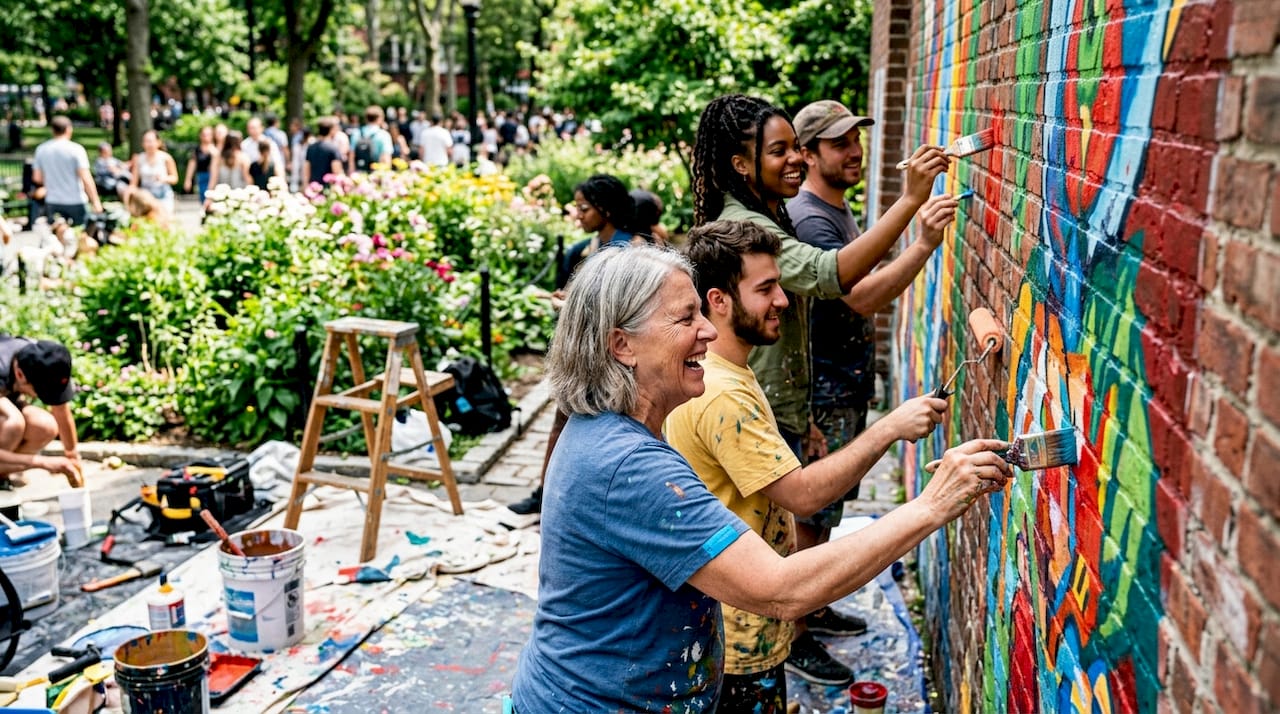
Public art builds collective identity by giving shared values a physical form that communities can gather around, debate, and defend. BLM street murals unite public support, educate about racial injustice, and call for police reform simultaneously. That combination of functions is what separates movement art from decorative public sculpture. A mural does not just communicate a message. It marks territory, signals belonging, and invites passersby to take a position.
The public art impact on activism is strongest when the work emerges from the community rather than being imposed on it. A Detroit study tracking firearm violence from 2022 to 2025 found that higher levels of community engagement in public art development correlated with reductions in firearm violence and youth victimization. That finding reframes the entire conversation. The art itself matters less than the process used to create it.
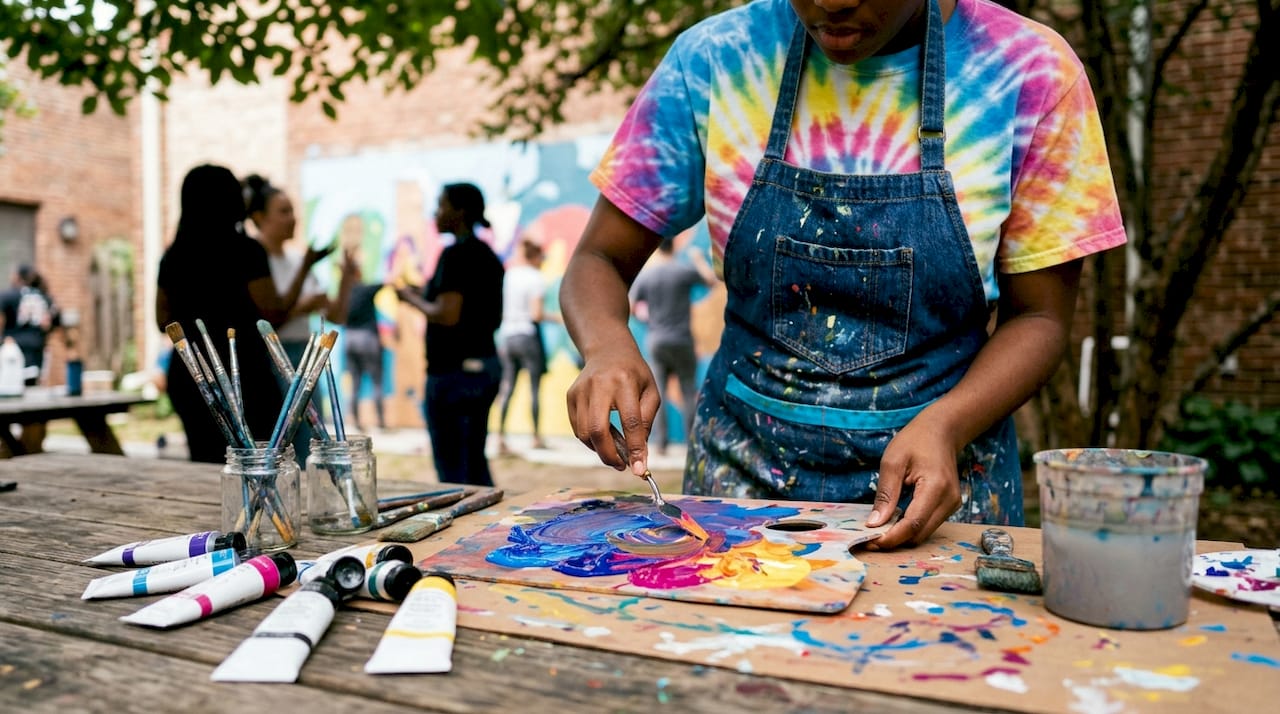
Public art also operates as social infrastructure, not just symbolism. The Bentway’s 2024 Softer City season evaluation found that public art programming boosted physical and mental health, belonging, safety, and social bonding among visitors. Those are the same outcomes that social movements depend on to sustain long-term organizing. When people feel safer and more connected in a shared space, they are more likely to show up, participate, and act collectively.
Pro Tip: Prioritize co-creation over commission. Invite community members into the design process from the first meeting, not just for feedback at the end. The Detroit data shows that the depth of engagement, not the quality of the finished artwork, drives protective social outcomes.
What forms and themes of public art have the greatest impact?
Not all public art carries equal weight in a movement context. A 2026 study conducted in Wuhan, China using streetscape simulations and surveys found that public art form and theme directly influence perceived restorative capacity. Figurative works and architectural themes produced the highest restorative benefits. Abstract works and artifact-themed pieces scored lower.
The table below summarizes the key findings on form and theme effectiveness:
| Art Form / Theme | Restorative Benefit | Movement Application |
|---|---|---|
| Figurative art | Highest | Humanizes movement subjects and builds empathy |
| Architectural integration | High | Creates lasting spatial identity for a cause |
| Flora and fauna themes | Moderate to high | Signals renewal and environmental connection |
| Abstract art | Moderate | Invites interpretation but risks disconnection |
| Artifact-themed works | Lower | Less emotionally engaging for general audiences |
These findings carry direct implications for activists choosing between artistic approaches. A figurative mural depicting a named community member or historical figure creates stronger emotional resonance than a purely abstract installation. That resonance translates into the kind of social connectedness that sustains movements over time.
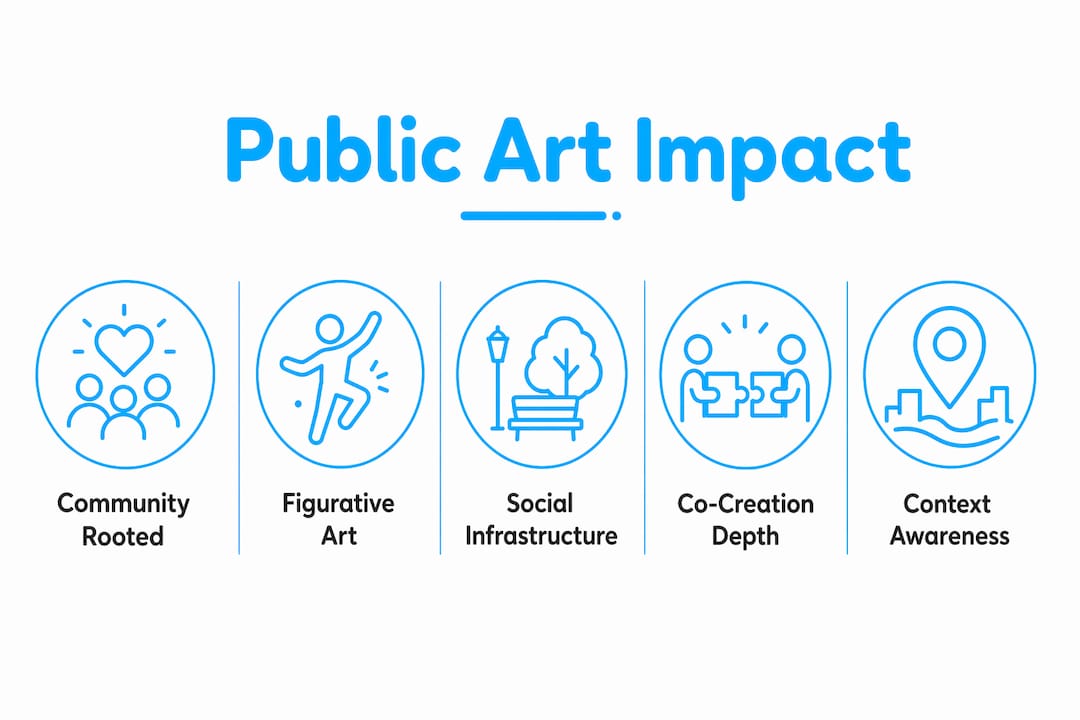
The Wuhan research also shows that context matters. A flora and fauna theme works well in an environmental justice campaign. An architectural integration works well when a movement wants to claim permanent presence in a neighborhood. Activists and scholars should treat form and theme as deliberate choices, not aesthetic preferences.
How is public art in social movements funded sustainably?
Sustainable funding is the single most underexamined factor in public art’s long-term effectiveness within movements. Pima County allocated 1% of pandemic relief funding toward social art between 2021 and 2023. The program enhanced public health confidence, social cohesion, and belonging among participants. That outcome demonstrates that tying art funding directly to community health needs produces measurable results.
The lessons from Pima County point to three replicable practices:
- Reduce participation barriers. Offer stipends, childcare, and accessible venues so that the people most affected by a movement’s cause can actually participate in its art.
- Recruit locally. Artists embedded in the community understand its visual language, trust networks, and historical grievances. Outside artists, however talented, often miss those signals.
- Tie funding to health and social outcomes. Framing public art as a public health intervention opens access to health department budgets, not just arts council grants.
UNESCO’s cultural planning method reinforces these lessons at a policy level. The UNESCO approach fosters active citizen co-creation and urban social innovation, moving well beyond passive participation in government-led projects. Applied to social movements, this means building art programs that give residents real decision-making authority, not just a comment box.
Pro Tip: Budget explicitly for facilitation. Shared decision-making takes time and skilled facilitation to work. If your project budget covers materials and installation but nothing for community meetings, you are funding a product, not a process.
What practical strategies maximize public art’s impact on activism?
Activists and scholars who want to measure and maximize public art’s social impact need to shift their evaluation framework. The standard metric of visibility, how many people saw the mural, misses the point entirely. The outcomes that matter are experiential: did participants feel safer, less lonely, more connected to their neighbors?
A numbered framework for planning and evaluating public art in movement contexts:
- Define the social outcome first. Identify whether the goal is reducing isolation, building cross-community trust, or signaling political solidarity. The outcome determines the form, theme, and location of the work.
- Build repeatable programming around the installation. Repeatable social programming in public art spaces yields experiential shifts like reduced loneliness, belonging, and safety. A mural without events around it is a static object. A mural with weekly gatherings becomes a community anchor.
- Measure over time, not just at launch. Real-world program impacts manifest as perceptual shifts over time in safety, belonging, and restorative experience. A single post-installation survey captures almost nothing meaningful.
- Track both the artwork inventory and the engagement process. Empirical evaluations measure both the inventory of public artworks and the social engagement process around their creation. Both variables predict social impact independently.
- Use interactive and participatory formats where possible. Participatory works, where community members contribute to the piece itself, generate stronger ownership and longer-term engagement than completed works installed without community input. Flight of Aloha’s research on local art in attractions confirms that participation depth directly shapes how audiences connect with public art.
The importance of public art in movements also shows up in what happens when it is removed. When BLM murals were painted over or defaced, communities organized in response. The art had become a proxy for the movement’s legitimacy. That dynamic is worth planning for. Durable materials and legally protected installations extend a work’s life and its social function.
Pro Tip: Partner with local universities or public health departments to conduct longitudinal evaluations. Short-term assessments miss the slow-building effects that matter most for movement sustainability.
Key Takeaways
Public art functions as social infrastructure in movements, and its impact depends on co-creation depth, form selection, repeatable programming, and sustainable funding tied to community health outcomes.
| Point | Details |
|---|---|
| Co-creation drives outcomes | Detroit data shows community engagement depth reduces violence more than artwork quality alone. |
| Form and theme matter | Figurative and architectural works produce the highest restorative and emotional impact. |
| Sustainable funding works | Pima County’s 1% relief allocation model improved social cohesion and public health confidence. |
| Program around the art | Repeatable events tied to installations generate belonging and safety over time. |
| Measure experience, not visibility | Track perceptual shifts in safety and belonging across multiple time points, not just launch-day attendance. |
Why I think we underestimate the process behind the art
Most conversations about public art and social movements focus on the finished product. Which mural is most striking? Which installation went viral? That framing gets the causality backwards. The Detroit firearm violence study is the clearest evidence I have seen that the process of making art together does more social work than the art object itself.
What strikes me about the Pima County and UNESCO findings is how rarely movement organizers budget for facilitation. They budget for paint, scaffolding, and permits. Shared decision-making is treated as a nice-to-have, not a line item. That is a structural mistake. The FLY Movement at Flymiami operates from exactly the opposite premise: that art celebrating peace, love, and unity has to be built from those values, not just represent them.
The other thing I would caution against is expecting uniform impact. The Bentway evaluations show that effects build gradually and vary by visitor experience. A single installation does not transform a community overnight. Movements that treat public art as a long-term investment, rather than a campaign tactic, get the results the research actually supports.
— Facundo
Art that carries a message worth displaying
Flymiami creates work that belongs in this conversation. Florence Biennale Award winner Facundo Yebne builds sculptures and paintings around themes of peace, love, and unity, the same values that drive the most enduring social movements.
The wall art collection at Flymiami includes pieces that speak directly to community identity and collective hope. The sculpture collection offers works designed for public and private spaces where art is meant to start conversations, not end them. For collectors and activists who want art that carries real weight, Flymiami’s UV glow art reveals hidden layers under blacklight, a fitting metaphor for the stories movements work to surface. Every piece is an original, crafted with the understanding that art placed in the world changes the world around it.
FAQ
What is the role of public art in social movements?
Public art serves as both a symbolic statement and a form of social infrastructure in social movements. It builds collective identity, signals political solidarity, and creates shared spaces where communities organize and connect.
How does art influence social change?
Art influences social change by generating experiential shifts in belonging, safety, and trust among community members. Detroit research shows that co-created public art correlates with measurable reductions in firearm violence and youth victimization.
Why are murals important in social justice movements?
Murals mark physical territory for a cause, educate passersby about injustice, and create visible calls to action. BLM murals specifically unite public support and communicate demands for police reform in spaces that media coverage alone cannot reach.
What types of public art are most effective for activism?
Figurative works and architecturally integrated pieces produce the highest restorative and emotional impact, according to the 2026 Wuhan study. These forms humanize movement subjects and create lasting spatial identity for a cause.
How can activists measure the impact of public art?
Activists should track perceptual shifts in safety, belonging, and social connection over multiple time points rather than measuring launch-day attendance. Combining artwork inventory data with community engagement surveys gives the most accurate picture of social impact.