Article: Best Pop Art Sculpture Artists in 2026

Best Pop Art Sculpture Artists in 2026
Last Updated: November 24, 2026
Quick Summary
The best pop art sculpture artists in 2026 include both historical pioneers like Claes Oldenburg and Andy Warhol and working contemporary sculptors. Living artists such as FLY (Facundo Yebne) build original, handmade works from thousands of mini rubber ducks, many glowing under blacklight, with monumental pieces suited to lobbies and public spaces.
- Historical pioneers like Oldenburg and Warhol set the vocabulary, but their works sit in museum and private collections.
- Working contemporary artists should still be producing, offer works from the studio, and develop their idea across multiple pieces.
- UnityBeak Trilogy: LOVE is 36 by 33 by 40 inches and glows under blacklight.
- Match sculpture scale to the sightline: strong silhouettes work across a room, surface detail rewards close viewing.
- Before buying, confirm the signature and certificate of authenticity, check dimensions, and ask how the piece is cleaned.
Table of Contents
- How We Chose the Best Pop Art Sculpture Artists
- Historical Pop Art Pioneers Versus Contemporary Practice
- Contemporary Pop Art Artists Working in Sculpture Today
- Materials, Scale and Techniques Across the Field
- Pop Art Sculptures for Sale: Where the Works Stand Now
- Collecting Contemporary Pop Art Sculpture: What to Check Before You Buy
- Choosing Your Next Pop Art Sculpture at FLY Miami Art
- Frequently Asked Questions
How We Chose the Best Pop Art Sculpture Artists
Choosing the best pop art sculpture artists in 2026 means looking past paintings and prints to the work that exists in three dimensions. At FLY Miami Art, we focus on artists who build sculptures that hold a room, invite close inspection, and communicate a clear visual idea. Pop art has always borrowed from everyday objects and popular culture, and sculpture takes that borrowing into physical space (Pop art).
Our selection criteria are straightforward. We look for a recognizable visual language, a body of sculptural work rather than a single piece, and a practice that is still active. We also consider how each artist handles materials, scale and finish, because those choices shape how a sculpture lives in a home, a hotel lobby or a public square. Recognition matters too, but we treat it as one signal among several rather than a ranking on its own.
Where we cite outside research, we link to the source so readers can check the claim. Where the public record is thin, we say so instead of filling the gap with guesses.
Historical Pop Art Pioneers Versus Contemporary Practice
Most roundups of pop art sculpture blur two very different groups: the pioneers who defined the movement and the working artists who extend it today. For a 2026 search, that distinction matters, because the two groups carry different relevance, availability and risk.
The historical pioneers set the sculptural vocabulary. Claes Oldenburg turned everyday objects into soft and monumental sculpture, from oversized food to giant tools, and his public commissions made pop sculpture a civic form. Jasper Johns and Robert Rauschenberg brought found objects and cast everyday items into fine art, while Andy Warhol's Brillo Boxes made the shipping carton a sculpture and pushed repetition into three dimensions. Tom Wesselmann and Roy Lichtenstein are better known for painting, but their object based thinking shaped how later sculptors treated consumer goods. These artists are the reference point, not the shopping list: their major works sit in museum and private collections, and the market around them is a different world from the studio direct work of a living artist.
Contemporary practice inherits that vocabulary but changes the questions. Current sculptors work with materials the pioneers did not have, including UV reactive compounds, resin casting at small scale, and lighting that changes a piece after dark. They also tend to build a body of work around a single motif rather than a series of one off gestures, which makes their practice easier to follow and to collect.
A practical way to separate the two: ask whether the artist is still producing, whether the work can be acquired from the studio, and whether the sculptural idea has been developed across multiple pieces. Historical pioneers answer no to the first two. A working contemporary artist should answer yes to all three.
Watch out: do not treat museum recognition of a historical pioneer as a signal about a living artist's prices or availability. The two markets move on different logic, and mixing them leads to bad comparisons.
Contemporary Pop Art Artists Working in Sculpture Today
Most of the strongest pop art sculpture being made right now comes from artists who treat the medium as an open field. They draw on familiar objects, bright color and humor, but they test how far those elements can go in three dimensions.
A useful way to evaluate them is to ask three questions. Does the sculpture work from every angle? Does the material serve the idea? And does the piece hold up when it leaves the gallery and enters an ordinary space? Artists who answer yes to all three tend to produce work that lasts in a collection and rewards repeat viewing.
Our own practice sits within this group. The sections below describe the FLY Miami Art body of work in detail.
FLY (Facundo Yebne) and the UnityBeak Series
FLY is the studio name of Miami Beach pop artist Facundo Yebne. The UnityBeak series is built from thousands of mini rubber ducks, arranged into sculptures that carry a message of peace, love and joy. Most of the work is UV reactive, so the pieces change character between daylight and blacklight. The sculptures are handmade in the Miami studio. Their vivid shifts between daylight and blacklight make placement part of the experience, and displaying sculptures at home can bring those changing colors into conversation with the surrounding space.
The UnityBeak Trilogy: LOVE is the most direct example of this approach. It is a 36 by 33 by 40 inch sculpture made from mini rubber ducks, and it glows under blacklight. UnityBeak Trilogy: LOVE shows how the series turns a playful object into a piece with real emotional weight.
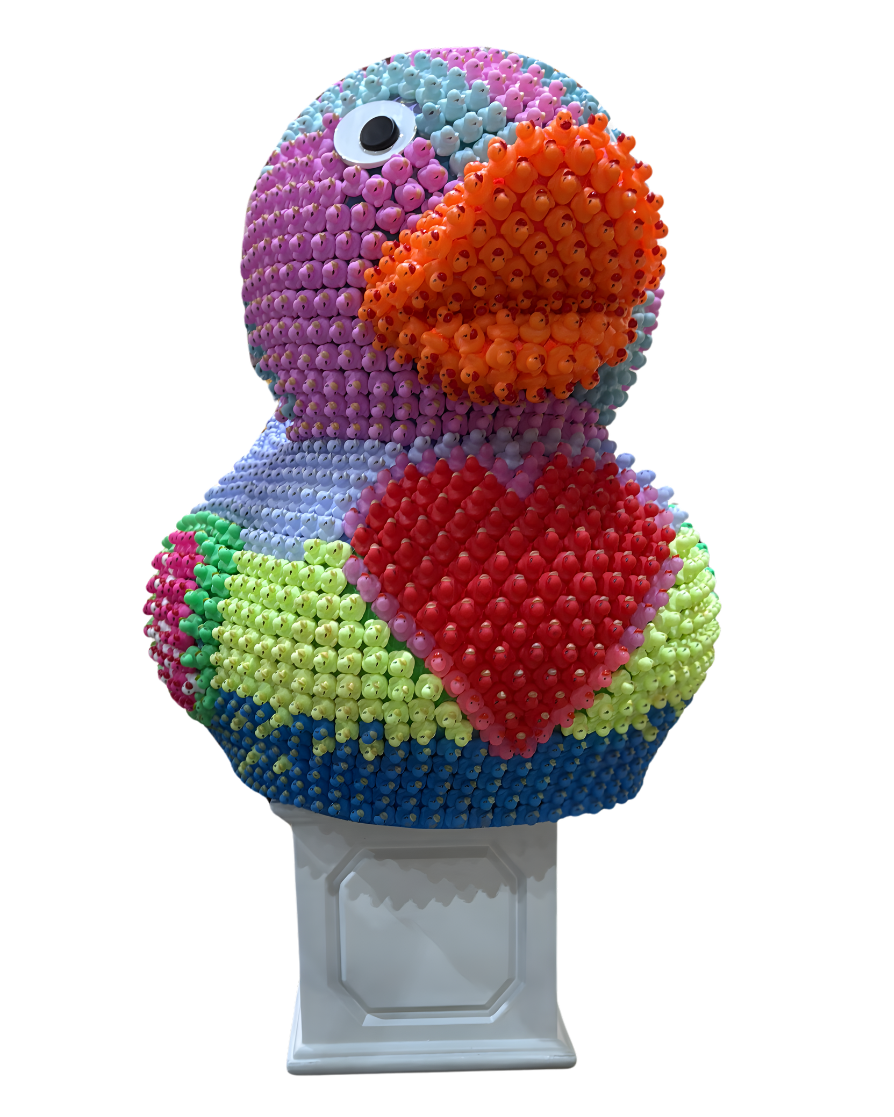
For buyers who want a different scale, Facun Duck shows another side of the FLY practice. Like the rest of the series, it is an original piece made by hand.
The artist's path into full time studio work is a story of its own. From Hospitality to Full Time Art: The Path of Facundo Yebne traces how that shift happened.
The artist won Fourth Prize in Installation Art at Florence Biennale XV. The work has been featured by CBS, NBC, Yahoo, MSN, infobae, EFE, Associated Press, ABC and Yahoo Finance.
Materials, Scale and Techniques Across the Field
A useful approach is to compare how sculptors actually build, because material and scale determine how a piece reads and how it lives in a space.
Scale changes the relationship between piece and viewer. A tabletop work invites a close, personal look and suits a first purchase. A large installation works as a landmark, which is why public commissions and hotel lobbies favor it. A useful rule is to match scale to sightline: a piece seen from across a room needs a strong silhouette, while a piece seen up close needs surface detail that rewards inspection.
Technique matters as much as material. Lighting, especially UV or blacklight, can transform a sculpture after dark, which is why UV reactive work needs to be evaluated in both daylight and low light. Mounting, weight distribution and the base affect safety and longevity, and a heavy piece needs a plan for the floor or wall it will sit against.
Watch out: a finish that looks flawless in a gallery can show fingerprints, dust or scratches in a home. Ask how the surface is cleaned before you commit, especially with high gloss or mirrored materials.
For interior focused guidance on placing sculpture at home, Contemporary Sculpture for Interior Design: A Room by Room Guide covers scale and placement room by room.
Pop Art Sculptures for Sale: Where the Works Stand Now
Pop art sculptures for sale include original works made by the artist. FLY Miami Art's originals come with a certificate of authenticity.
At FLY Miami Art, the current catalogue includes the UnityBeak Trilogy: Joy piece, measuring 4 feet high, 3.5 feet wide and 4.2 feet deep, along with Mini Proud Love 3D, a compact 8 by 8 inch heart built from solid tiny resin ducks. The Unity Beak pair is a large-scale installation, and Proud Love is a monumental public sculpture.
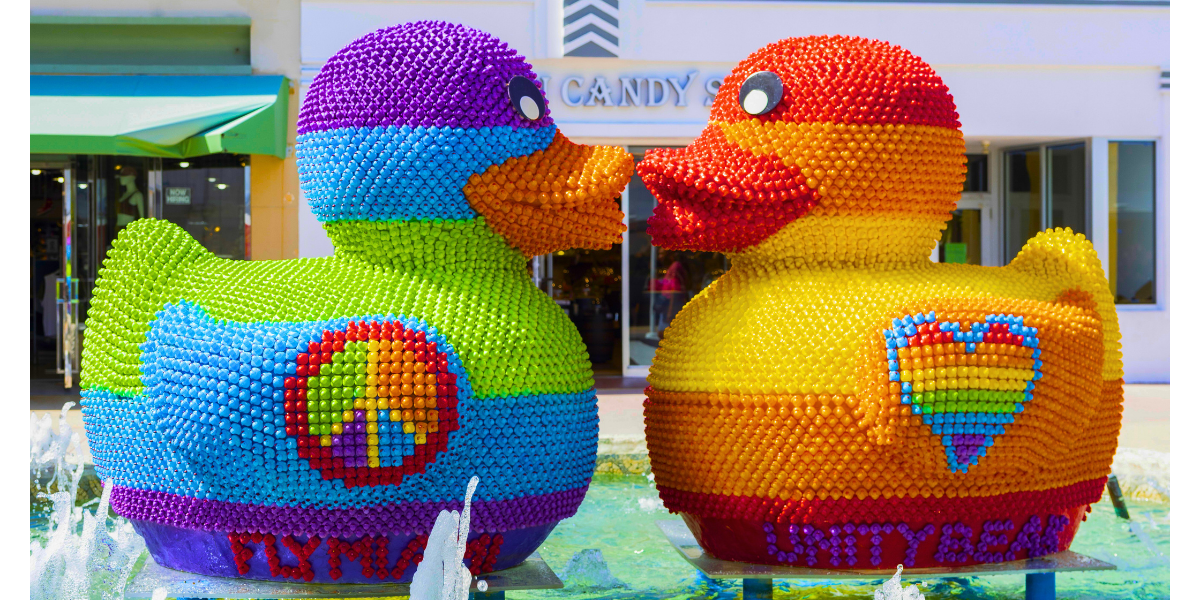
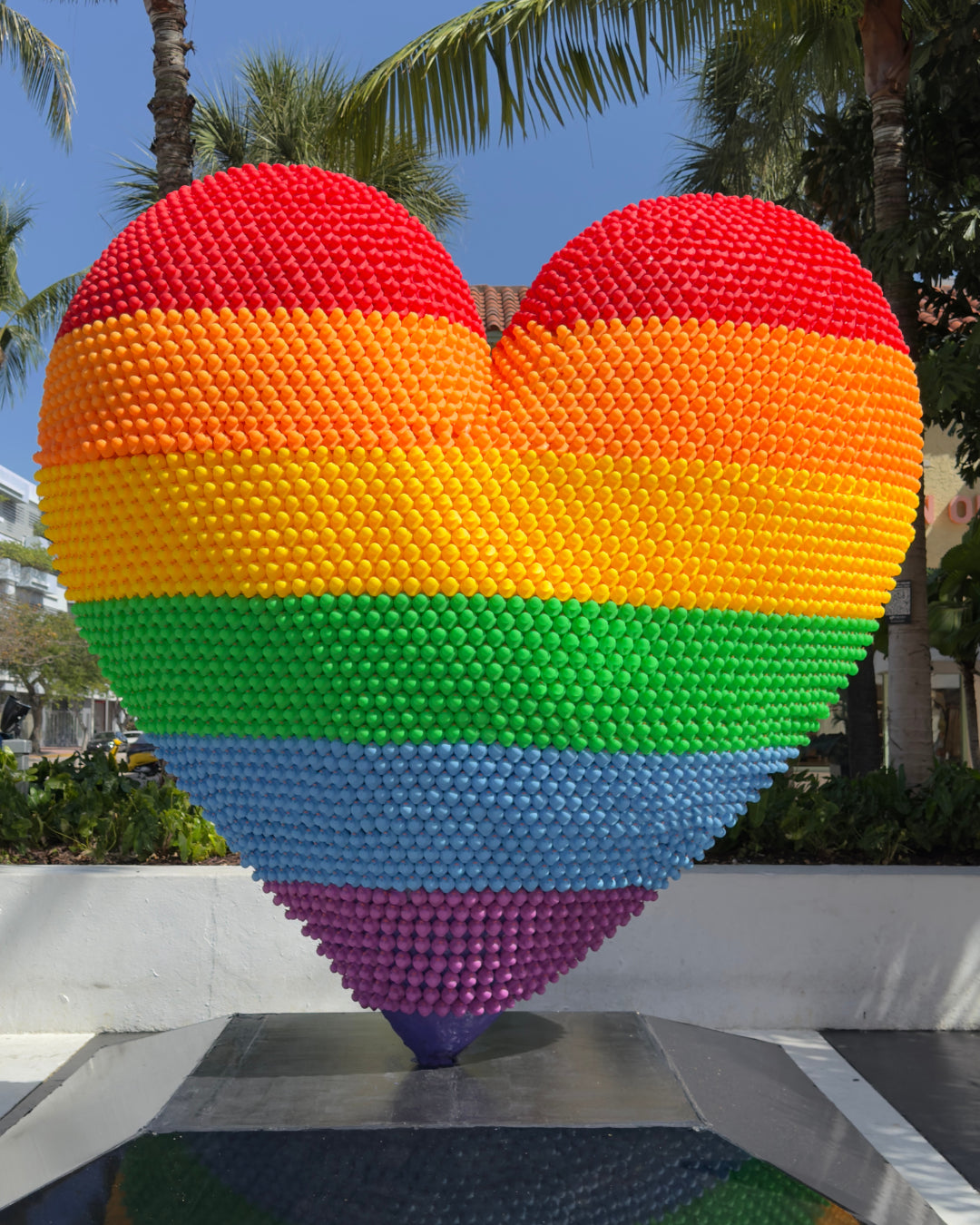
The current FLY Miami Art catalogue includes pieces at very different scales, so the table below sets out the key dimensions for each.
| Piece | Note |
|---|---|
| UnityBeak Trilogy: Joy | Original work |
| Mini Proud Love 3D | Solid tiny resin ducks |
| Unity Beak pair | Monumental presence |
| Proud Love | Civic scale |
Collecting Contemporary Pop Art Sculpture: What to Check Before You Buy
Buying a sculpture is a bigger commitment than buying a print, so it helps to work through a short checklist before you purchase.
- Confirm the artist's signature and certificate of authenticity.
- Check the dimensions against the space, including the height of ceilings and the width of doorways for delivery.
- Ask how the work is fixed, what weight it carries and how it should be cleaned.
- Ask whether the piece glows under blacklight, and whether that effect suits the room.
- Confirm the shipping origin and delivery arrangements before you commit.
- Ask whether the artist can document the piece's history and any previous exhibitions.
These questions protect both the value and the enjoyment of a piece over the long term.
Choosing Your Next Pop Art Sculpture at FLY Miami Art
Start with the space. A large entrance or lobby can carry a monumental piece like Unity Beak or Proud Love. A quieter room or a first purchase may suit a smaller work. If the glow effect appeals to you, UnityBeak Trilogy: LOVE is the piece to see in person after dark.
If you are still deciding, browse the full range and check the details on each product page. Our team at FLY Miami Art can help you match the right piece to the room, the budget and the way you want the work to feel.
Frequently Asked Questions
Who are the best pop art sculpture artists in 2026?
Current pop art sculpture work comes from a mix of historical pioneers and active contemporary makers. This list focuses on living artists whose three-dimensional work is in active production and public view. Among them, FLY (Facundo Yebne) stands out for sculptures built from thousands of mini rubber ducks, including the UnityBeak series installed on Lincoln Road in Miami Beach. His work has been recognized with Fourth Prize in Installation Art at Florence Biennale XV and has been featured by CBS, NBC, Yahoo, MSN, Associated Press and ABC. Evaluate any shortlist against the criteria in the methodology section, since 2026 rankings change as artists exhibit and sell new work.
What makes a sculpture a work of pop art?
Pop art sculpture draws its imagery from popular culture and everyday objects, presenting them with bold color and repetition. The subject is usually something familiar, such as a rubber duck, that viewers recognize instantly. FLY's work follows this approach by building large forms from common mass-produced objects, arranged into hearts, figures and abstract compositions with themes of peace, love and joy. The shift from flat images to three-dimensional form is what distinguishes sculptural pop art from painting and prints.
Where can you find pop art sculptures for sale?
Original pop art sculptures are available directly from artist studios and through galleries that represent contemporary makers. FLY Miami Art sells original sculptures, including the UnityBeak Trilogy pieces LOVE and Joy, the Florence edition UnityBeak Firenze, Pink Proud Love and Proud Love, and the smaller Mini Proud Love 3D. Each listed original is handmade in the Miami studio and comes with a certificate of authenticity. Check each listing for dimensions, medium and whether the piece glows under blacklight before you commit.
What materials do contemporary pop art sculptors use?
Contemporary pop art sculptors work with mass-produced objects, resin, fiberglass and foam. FLY's sculptures use mini rubber ducks on sculptural forms, medium rubber ducks over fiberglass or foam structures, and tiny solid resin ducks in smaller pieces. Many of the works, including UnityBeak Trilogy: LOVE, are UV reactive and glow under blacklight, which changes how the piece reads after dark. Material choice affects weight, scale and how the piece should be installed, so confirm the medium before planning a display.
How do I start collecting contemporary pop art sculpture?
Start by deciding where the piece will live, because scale matters more than style. A tabletop piece such as Mini Proud Love 3D, listed at 8x8, suits a shelf, while the 40x40x40 inch UnityBeak Firenze Edition or the 7 ft tall Pink Proud Love needs floor space and a wall or plinth plan. Next, confirm authenticity: each FLY original is signed by the artist and includes a certificate of authenticity. Finally, compare the listed medium and dimensions against your space, and ask about commissioning if you need a custom size or theme.