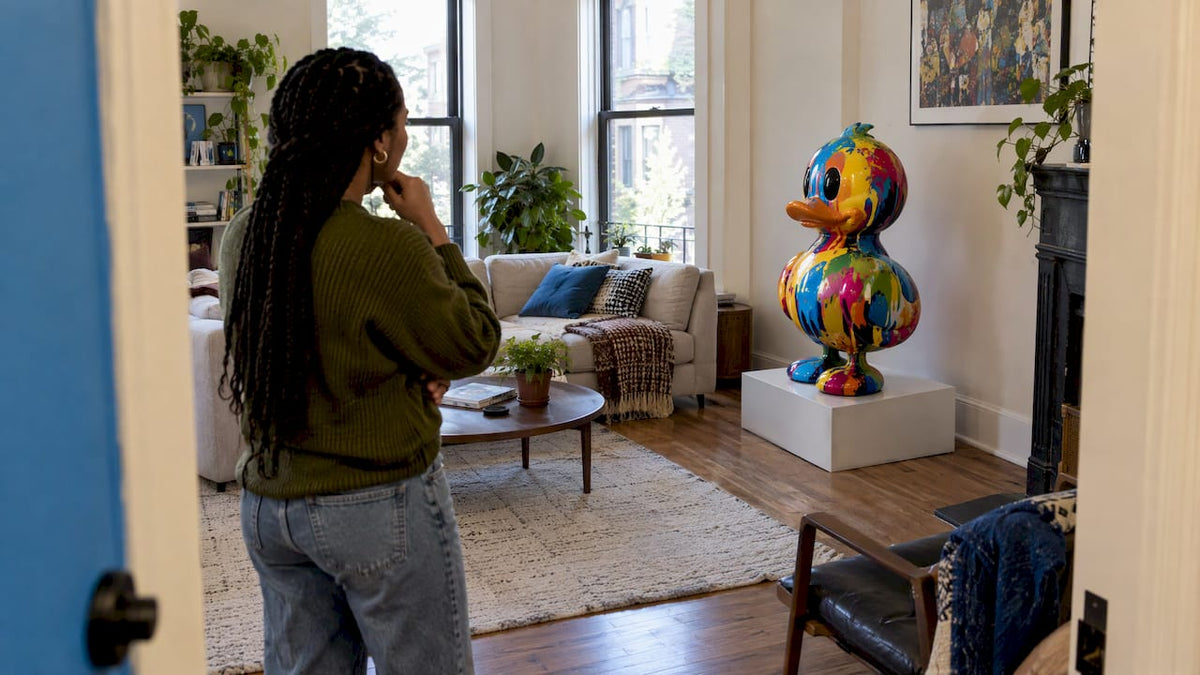
Contemporary Sculpture for Interior Design: A Room-by-Room Guide
Quick Summary
Contemporary sculpture can anchor a room when you match its style to the room's energy and place it with care. Keep one strong piece as the focal point, sized to about one third of a console or 60 to 75 percent of a wall, and light it in daylight and accent light.
- Match the sculpture style to the room's energy, not just its color palette.
- On a console, let the sculpture span about one third of the surface width.
- Place a floor sculpture's visual center at 40 to 48 inches for a seated viewer.
- Leave at least 18 inches of open floor around a floor sculpture.
- Plan lighting in two layers: daylight for texture and a focused spotlight for depth.
Table of Contents
- Choosing Sculpture Styles: Abstract, Figurative and Pop
- How to Decorate with Sculptures: Scale, Sightlines and Spacing
- Living Room Sculpture Ideas and Placement
- Large Sculptures for Home Decor: Materials, Stability and Safety
- Sculpture in Interior Design Across Other Rooms
- Lighting Your Sculpture: Daylight and Blacklight Effects
- Choosing Your First Sculpture for Your Space
- Frequently Asked Questions
Contemporary sculpture can change how a room feels, and the right piece can anchor an entire interior. This room-by-room guide explains how to choose, place and light sculpture so it works in your home. Whether you are styling a living room or a hotel lobby, the same principles of scale, sightlines and light apply.
Sculpture adds form, texture and depth that paintings alone cannot provide. A sculpture occupies real space, casts shadows and invites a viewer to walk around it. That physical presence is why designers use sculpture as a statement piece and a focal point.
Choosing Sculpture Styles: Abstract, Figurative and Pop
Contemporary sculpture comes in several broad styles. Each one suits a different mood.
- Abstract pieces use shape, color and form without literal subjects. They work well in minimal rooms.
- Figurative pieces depict people or animals. They add warmth and a human presence.
- Pop pieces use bright color and playful references. They suit spaces that should feel lively.
A useful rule: match the style to the room's energy, not just its color palette. A calm bedroom may suit a quiet abstract form, while a social living room can carry a bolder pop piece.
How to Decorate with Sculptures: Scale, Sightlines and Spacing
Choosing a statement piece by eye works for stylists who do it daily. For everyone else, a few working rules make the decision repeatable.
Start with the wall or surface, not the sculpture. A common pattern among interior designers is to treat the available width as a budget. On a console or sideboard, the sculpture should occupy roughly one third of the surface width, leaving the rest open. On a wall, a piece that spans about 60 to 75 percent of the wall width reads as intentional rather than stranded. A sculpture that fills less than half the wall tends to look lost, and one that fills the whole wall leaves no breathing room.
Height matters as much as width. For a floor piece viewed from a sofa, the visual center of the sculpture should sit near the seated viewer's eye line, roughly 40 to 48 inches from the floor. For a standing viewer in an entryway, aim for the center of the piece at about 55 to 65 inches.
Clearance is the rule most people skip. Leave at least 18 inches of open floor around a floor sculpture so it can be walked around, and keep 24 to 36 inches clear along main walking paths. In a tight corner, a piece that touches two walls reads as furniture rather than art. Pull it forward slightly so light can wrap around the form.
Sightlines decide placement more than the wall does. Stand at the main seating position and at the room's entrance. The sculpture should be visible from at least one of those points without moving furniture. If it is only visible from the sofa, it becomes a private object. If it is only visible from the door, it becomes a greeting. Decide which you want before you place it.
Negative space is part of the design. Empty area around a sculpture helps the eye settle on its form, and it also protects the piece from being knocked. Placing a sculpture directly behind a sofa or chair back can hide the lower half of the form.
Finally, group with restraint. Two or three pieces on one surface can work if they share a material or color and differ in height by at least a third. More than three small pieces on one surface usually reads as clutter rather than a collection.
The table below summarises the placement guidelines from this section so you can check each measurement quickly.
| Placement | Guideline | Note |
|---|---|---|
| Console or sideboard | Sculpture spans about one third of surface width | Leaves the rest of the surface open |
| Wall piece | Spans about 60 to 75 percent of wall width | Under half the wall looks lost |
| Floor piece, seated view | Visual center at 40 to 48 inches | Near a seated viewer's eye line |
| Floor piece, entryway | Visual center at 55 to 65 inches | Suits a standing viewer |
| Tabletop piece | Top at 55 to 70 inches from floor | Sits in the natural viewing band |
| Clearance around floor sculpture | At least 18 inches of open floor | 24 to 36 inches along walking paths |
| Group on one surface | Two or three pieces | Heights differ by at least a third |
Living Room Sculpture Ideas and Placement
The living room is where a sculpture earns the most attention. Guests spend time here, so the piece should reward a closer look.
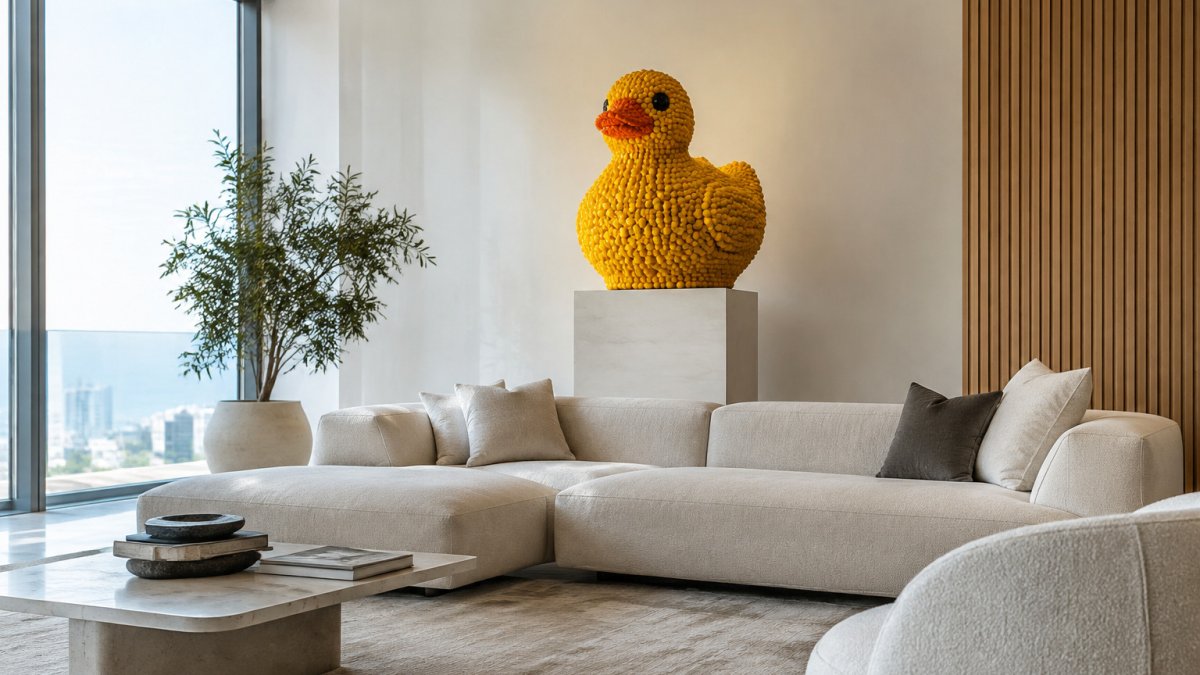
Good placement options include:
- A floor sculpture beside a sofa, set at roughly the height of a seated person's eye line
- A tabletop piece on a console or low sideboard
- A piece in a corner that a window light can reach
Keep one sculpture as the clear focal point. For practical lighting and setup advice before you choose a glowing piece, read Blacklight Interior Design That Lasts. For a compact, collectible option, the Mini Proud Love 3D is an 8x8 sculpture that suits a shelf or side table.
Large Sculptures for Home Decor: Materials, Stability and Safety
A large sculpture changes a room, but it also changes what the room has to carry. This section covers the practical side that inspiration pages usually skip: what the piece weighs, how it stays upright, and how its material behaves over time.
Start with weight and floor. A floor sculpture concentrates load on a small base, so the pressure per square inch can be higher than the piece's total weight suggests. On upper floors, keep heavy pieces near load bearing walls rather than the center of a span. On wood floors, use a felt or rubber pad under the base to spread load and prevent scratches. On tile, a thin rubber mat does the same job and also stops the piece from sliding.
Stability is a design decision, not an afterthought. A tall, narrow piece with a small footprint is the most likely to tip. A common pattern is to keep the base footprint at least one third of the piece's height for freestanding work, and to anchor anything taller than about 48 inches to the wall with a discreet bracket or strap. For pieces near doorways, stairs, or play areas, anchoring is not optional.
Material choice should follow the room's conditions, not just its palette. Metal resists humidity and is easy to wipe down, but polished finishes show fingerprints and can patina in salt air. Stone and marble hold up to sunlight but are heavy and can stain from spills, so seal porous stone in kitchens and dining areas. Wood moves with humidity, so keep wooden pieces away from radiators and drafty windows.
Sunlight is the quiet risk. Strong direct sun can fade pigments and dry out finishes over months, not days. If a piece sits in a bright window, rotate it a quarter turn every few weeks so one side does not take all the light.
Installation deserves the same care as the purchase. Measure the doorway and the path to the room before the piece arrives, since a large work that cannot clear a turn is a problem no amount of styling solves. Have two people lift anything above about 40 pounds, lift from the base rather than the top, and set the piece down before adjusting its position rather than dragging it. Once placed, check stability by applying light pressure at the top.
For homes with children or pets, treat the sculpture like furniture. Keep floor pieces out of running paths, anchor tall work, and avoid small removable parts at floor level. A secure piece looks deliberate, and it lets you enjoy the form instead of worrying about it.
Sculpture in Interior Design Across Other Rooms
Sculpture is not limited to living rooms. Each room has its own role.
- Entryways: A sculpture here makes the first impression. Choose something bold and easy to read from the door.
- Bedrooms: A quieter abstract form suits rest and calm.
- Dining rooms: A sculpture on a sideboard can echo the room's warmth without competing with the table.
- Offices and hospitality spaces: A single strong piece can reflect a brand's personality.
For hospitality projects, the UnityBeak Firenze Edition shows how a site-specific installation can carry meaning into a shared space.
Lighting Your Sculpture: Daylight and Blacklight Effects
Light changes a sculpture completely. Daylight shows form, texture and color. Most FLY Miami Art works are UV reactive, which means they glow under blacklight.
Plan lighting in two layers:
- Daylight: Position the piece where natural light shows its texture without harsh glare.
- Accent light: A focused spotlight adds shadow and depth after dark.
For a fuller look at how UV reactive work changes between day and night, read Blacklight Art in Daylight: What You See With the Lamp Off. For a glowing centerpiece, the UnityBeak Trilogy: LOVE is designed to transform under blacklight.
Choosing Your First Sculpture for Your Space
Start with one piece. A single strong sculpture makes a bigger impact than several small ones.
Ask yourself these questions before you buy:
- How large is the wall or surface where it will sit?
- What mood should the room have?
- Will the piece be seen in daylight, under lights, or both?
- Do you want a quiet form or a bold statement?
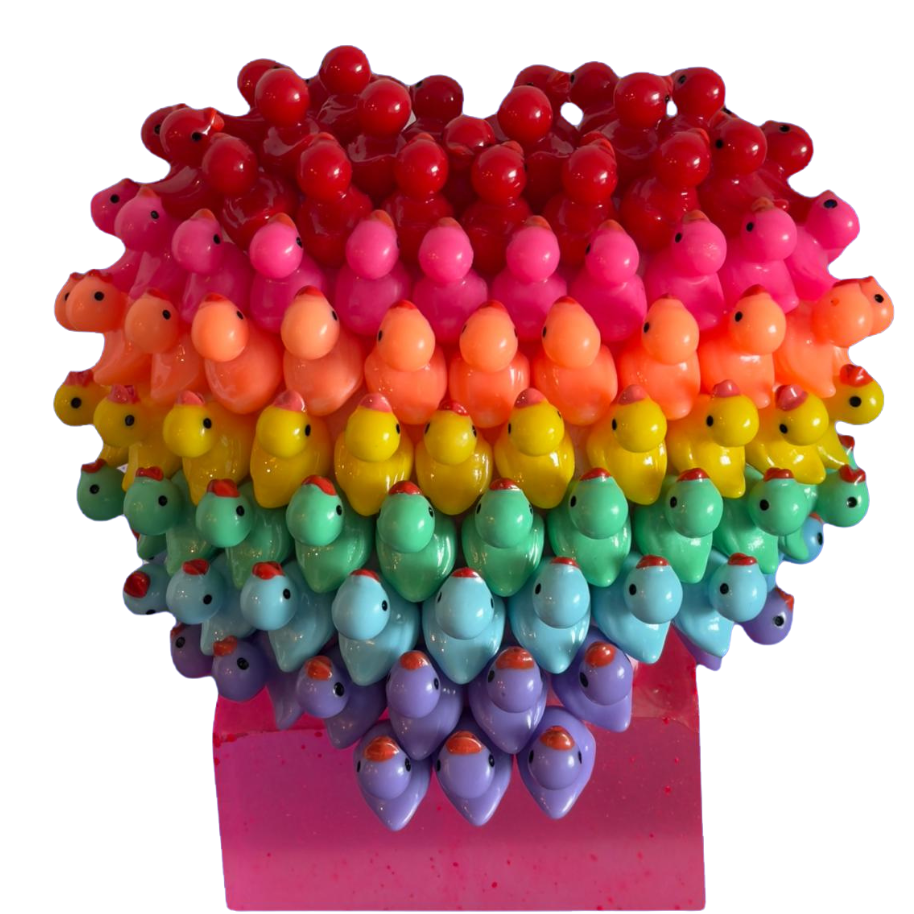
A first piece should feel like a choice you will enjoy for years. The Pink Proud Love offers a bold statement at larger scale, built from medium rubber ducks over a fiberglass structure.

If you want more guidance on choosing a focal piece, see One Hero Piece: Pop Art Interior Design for Modern Homes and Small Space Sculpture: How to Choose and Place It.
Ready to bring light and meaning into your home? Explore the collection at FLY Miami Art and find the piece that suits your room.
Frequently Asked Questions
How do you choose sculpture for an interior?
Start with the room's existing palette, scale and purpose. Measure the wall or floor space where the piece will sit, and choose a sculpture whose height and width leave clear space around it. Pick a form or finish that echoes one material already in the room, such as metal fixtures or natural wood, so the piece feels considered rather than random. Test the placement with painter's tape outlines before you commit, and live with the idea for a few days to see whether it still fits the way you use the space.
Where should you place a sculpture in a living room?
Place a sculpture where it can be seen from the main seating area without blocking movement. A console table, a corner plinth or a spot in line with the sofa works well. Avoid placing it directly against a busy wall where it will compete with other objects. If the room has a strong architectural feature such as a fireplace or large window, a sculpture can sit beside it to create a balanced focal point.
How do you display a large sculpture at home?
Give a large sculpture room to breathe by keeping at least a comfortable walking distance around its base. Set it on a stable, level surface that can carry its weight, and check that the floor or plinth is secure before placement. Light it from the side with a warm source to reveal texture and depth. Keep surrounding objects low and simple so the sculpture remains the dominant form in the room.
How do you choose the right size sculpture for a room?
Match the sculpture's visual weight to the room's volume and to the furniture beside it. A piece roughly two thirds the height of the nearby sofa back or console often reads as proportionate in a living room. In larger spaces, a bigger piece or a small group of pieces can hold the room together. When in doubt, mock up the height and width with cardboard or tape on the floor and view it from the main seating position.