How to Maintain Resin Sculptures for Long-Term Display
Quick Summary
Keep resin sculptures out of direct sunlight, away from heat sources and in a room with steady humidity, since these three factors cause most long term damage. Clean them gently with a soft cloth, lukewarm water and a drop of mild soap, and avoid harsh solvents or abrasive pads.
- Dust the piece once a week with a soft, dry microfiber cloth or soft-bristled brush.
- Never use abrasive pads, scouring powder, ammonia-based cleaners, acetone or alcohol.
- Dry the piece right away so moisture does not sit in crevices.
- Place the sculpture away from south and west facing windows or filter the light with UV blocking film.
- Handle the piece with two hands, supporting the base and never lifting it by a thin limb.
Table of Contents
- What Resin Sculptures Need to Stay in Good Condition
- How to Clean Resin Sculptures Without Dulling the Finish
- Protecting Resin Sculptures From Light, Heat and Humidity
- How to Protect Resin Outdoor Statues From Weather and UV
- How Long Resin Statues Last and What Shortens Their Life
- Handling, Moving and Repairing Minor Surface Damage
- Booking Your Next Step With FLY Miami Art
- Frequently Asked Questions
What Resin Sculptures Need to Stay in Good Condition
Resin sculptures can last for many years when they get the right care. The main threats are dust, direct sunlight, heat, humidity and rough handling. Knowing these risks helps you prevent damage before it starts.
Resin is strong, but it is not indestructible. Most problems come from the environment around the piece, not from the piece itself. A sculpture that sits in a bright window, near a heater or in a damp room will fade, warp or cloud over time.
Here is what a resin piece needs to stay in good shape:
- A stable spot: Away from direct sun, heaters, air vents and damp areas
- Gentle cleaning: Soft cloths, mild soap and no harsh solvents
- Regular dusting: Light, frequent dusting beats heavy scrubbing
- Careful handling: Two hands and a firm grip when moving the piece
- Protection from UV: Blinds, film or a display case near windows
Most of the work is simple habit. Set a routine, keep the piece out of harm's way, and clean it gently. The rest of this guide shows you how.
How to Clean Resin Sculptures Without Dulling the Finish
Clean your resin sculpture with a soft cloth, lukewarm water and a drop of mild, pH-neutral soap. Harsh cleaners strip the surface gloss and leave a dull film that is hard to undo.
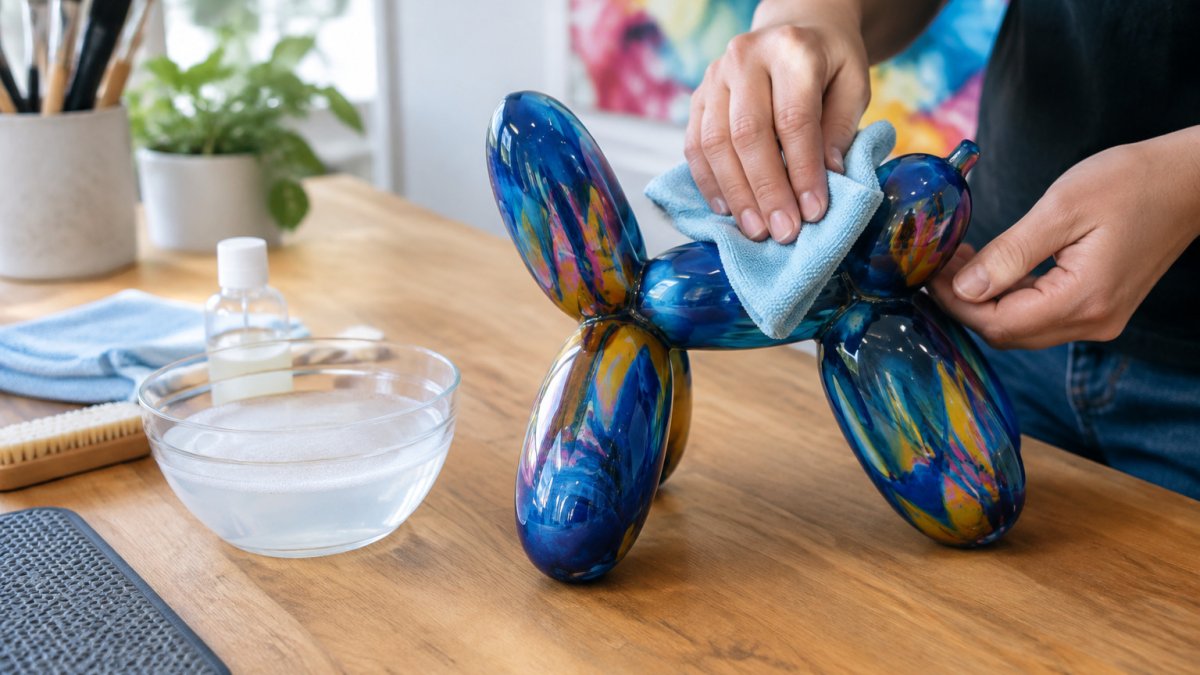
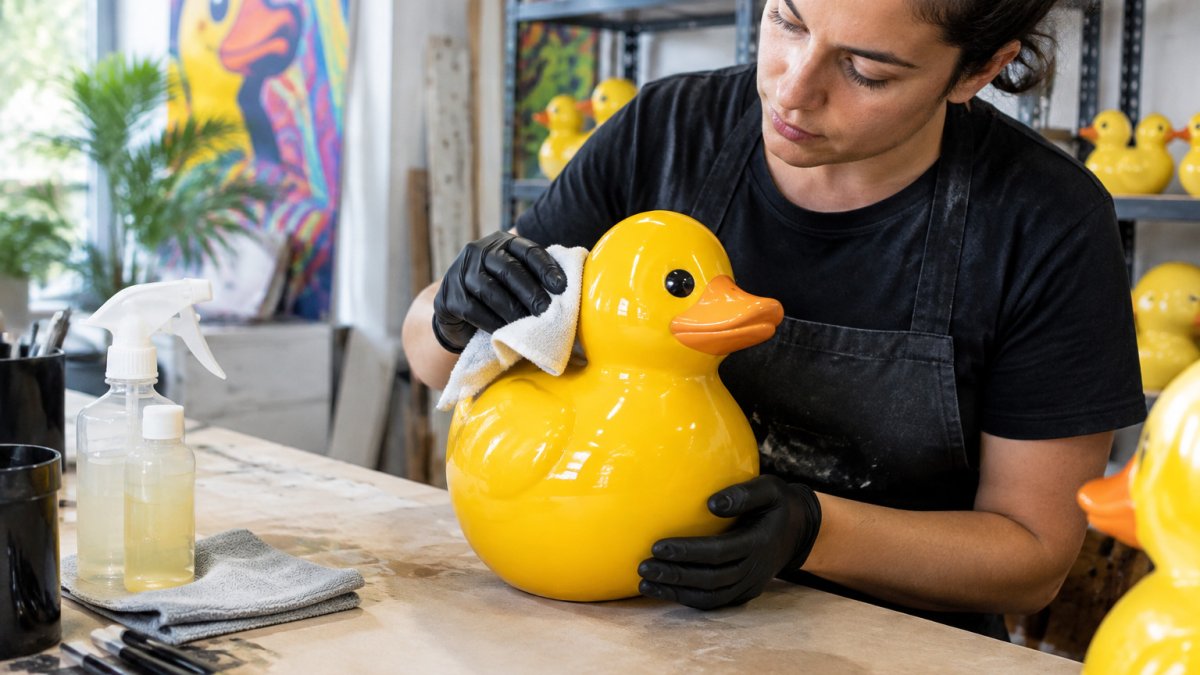
Start by dusting the piece so loose grit does not scratch the surface during washing. Then dampen a microfiber cloth in the soapy water, wring it out well, and wipe in small, gentle circles. Rinse with a second cloth dampened with plain water, and dry the piece right away with a clean, dry cloth.
A few rules keep the finish bright:
- Never use abrasive pads, scouring powder or ammonia-based cleaners
- Skip paper towels, which can leave micro-scratches
- Avoid acetone, alcohol and other solvents that can cloud resin
- Test any new cleaner on a hidden spot first
- Dry all crevices so moisture does not sit in details
A common mistake is using too much water or too much soap. Less is better. A damp cloth lifts grime without leaving a residue that attracts more dust.
Dusting Resin Statues Safely and Often Enough
Dust your resin statue once a week with a soft, dry microfiber cloth or a soft-bristled brush. Regular light dusting stops grime from building up and makes deep cleaning less necessary.
Work from the top down so dust falls onto areas you have not cleaned yet. Use a small, soft brush for fine details, folds and undercuts. A can of compressed air also works well for hard-to-reach spots, but hold it at a distance so you do not blow dust into seams.
Dust that sits for months can bond to the surface and become harder to remove. That is why short, frequent dusting is better than occasional heavy cleaning. Dusting also gives you a chance to spot early signs of trouble, such as hairline cracks, cloudy patches or loose parts.
Keep the finish bright by avoiding the common cleaning mistakes below.
| Mistake | Why it hurts | Better choice |
|---|---|---|
| Abrasive pads or scouring powder | Creates micro-scratches | Soft microfiber cloth |
| Paper towels | Can leave micro-scratches | Clean microfiber cloth |
| Acetone or alcohol | Can cloud resin | Mild, pH-neutral soap |
| Ammonia-based cleaners | Strips surface gloss | Lukewarm water with a drop of soap |
| Too much water or soap | Leaves residue that attracts dust | Damp cloth, used sparingly |
| Skipping drying | Moisture sits in crevices | Dry the piece right away |
Protecting Resin Sculptures From Light, Heat and Humidity
Keep resin sculptures out of direct sunlight, away from heat sources and in a room with steady humidity. These three factors cause most long term damage, including yellowing, warping and surface cloudiness. The difference between a piece that looks new after ten years and one that dulls in three often comes down to how precisely you manage light, heat and moisture.
Light and UV yellowing: UV rays break down the polymer chains in resin, and the visible result is yellowing or fading. This is not just a surface issue. Over time, UV exposure can change the chemistry of the outer layer, making it brittle and more prone to cracking. Place your piece away from south and west facing windows, or filter the light with UV blocking film or sheer curtains. For pieces with UV reactive finishes, constant exposure can change how they look under blacklight, so rotate the piece or use a display case with UV filtering glass. Watch out: some UV sprays contain solvents that can cloud certain resins, so test on a hidden spot first and choose a product labeled for use on plastics or resin.
Heat and thermal stress: High temperatures soften resin and can cause it to bend or crack. Keep the sculpture away from radiators, fireplaces, heating vents and sunny shelves. Sudden temperature swings are also hard on the material, so avoid spots that get hot in the day and cold at night. A less obvious risk is thermal expansion and contraction at joints or seams, which can loosen bonds over time. If the piece is in a room with large windows, move it a few feet back from the glass to buffer temperature spikes.
Humidity and moisture: Damp air can cause surface haze and attract mould or dust (the WHO). Aim for a steady, moderate indoor climate and avoid bathrooms, kitchens and basements. A dehumidifier or air conditioner can help in humid areas. Moisture trapped in crevices is a frequent cause of surface cloudiness that looks like damage but is often reversible with gentle drying.
Material specific nuances: Not all resin behaves the same.
Simple placement choices protect your investment more than any cleaner. Think about the spot before you display the piece, not after the damage shows up.
How to Protect Resin Outdoor Statues From Weather and UV
Outdoor resin statues need the most protection because they face sun, rain, temperature swings and dirt every day. Use a shaded or covered location, and check the piece often for early signs of wear.
Choose a spot that gets indirect light, such as under a porch, awning or tree canopy. If the statue must sit in full sun, rotate it now and then so the exposure is more even. Raise it slightly off wet ground so water does not pool at the base.
For outdoor care, follow these steps:
- Rinse off dust, pollen and bird droppings every few weeks
- Dry the piece after heavy rain or dew
- Bring the statue indoors during storms, heavy snow or extreme heat
- Check seams and joints each season for cracks or lifting
- Apply a UV-protective sealant only if the maker recommends it
Expect more frequent cleaning and inspections, and plan for a gentle reapplication of protection if the surface starts to dull.
How Long Resin Statues Last and What Shortens Their Life
A well-kept resin statue can last for many years indoors. The exact lifespan depends on the finish and how the piece is cared for.
Several factors shorten a statue's life:
- Constant direct sunlight: Causes yellowing and fading over time
- Heat exposure: Can soften, warp or crack the material
- Moisture trapped in crevices: Encourages haze, mould and surface damage
- Harsh cleaners: Strip the finish and leave the surface dull
- Rough handling: Chips, cracks and loose parts often come from drops or bumps
Careful display and gentle cleaning help protect a piece over time. If you notice fading or cloudiness early, you can often reverse or slow it before the damage spreads.
Handling, Moving and Repairing Minor Surface Damage
Handle resin sculptures with two hands, support the base and never lift them by a thin limb or protruding part. Careful handling prevents most breaks, and small surface marks can often be repaired at home. The key is knowing which repairs are safe to attempt and which ones risk making the damage worse.
When moving a piece, clear the path first, wrap it in a soft cloth or padded blanket, and carry it close to your body. Avoid stacking other objects on top of it during transport. For larger pieces, use both hands under the base and keep the sculpture upright rather than tilting it, since resin can stress at thin joints.
For minor scratches or scuffs, try these gentle steps:
- Clean the area with mild soap and water, then dry it fully.
- Test a tiny amount of fine polishing compound on a hidden spot.
- Work the compound onto the scratch with a soft cloth in light, small circles.
- Wipe away residue and inspect the result in good light.
When to stop and call a professional: For deep cracks, large chips, structural breaks or cloudy patches, contact FLY Miami Art for guidance.
Booking Your Next Step With FLY Miami Art
Caring for a resin sculpture is easier when you know how to display it. If you are thinking about adding a new work to your collection, you can explore FLY Miami Art's sculptures and what each piece offers before you decide.
Last Updated: November 19, 2026
Frequently Asked Questions
How long do resin sculptures last?
A resin sculpture kept indoors, out of direct sunlight and in stable humidity, can keep its color and finish for many years. Lifespan shortens quickly with heavy sun exposure, temperature swings and harsh cleaning. Regular gentle dusting, a stable display spot and periodic checks for yellowing or surface haze are the simplest ways to protect the piece. For outdoor pieces, plan on more frequent inspection, since UV and weather exposure are the main factors that limit how long the finish stays bright.
How often should you dust a resin sculpture?
Dust a resin sculpture every one to two weeks in a typical indoor room, and more often if the display sits near a window or in a dusty area. Use a soft-bristled brush or a dry microfiber cloth with light, even strokes. Dust that sits on the surface can scratch or dull the finish over time when it is wiped dry, so removing it regularly keeps the surface clear and reduces the need for deeper cleaning.
Can sunlight damage a resin sculpture?
Yes. Direct sunlight, especially strong UV exposure, can cause yellowing, fading and gloss loss in resin over time. Position indoor sculptures away from direct sun through windows and use UV-filtering glass or window film where possible. Most FLY Miami Art pieces are UV reactive and glow under blacklight.
How should you clean a resin sculpture without damaging its finish?
Clean with a pH-neutral soap diluted in lukewarm water and a soft microfiber cloth. Avoid abrasive pads, solvents and harsh household cleaners, since they can cloud or micro-scratch the surface. Dry the piece gently after rinsing and check for residue in crevices. Test any product on a hidden area first. For pieces with damage or significant discoloration, contact FLY Miami Art for guidance or a quote on professional care.