Buy Limited Edition Sculpture Online: 2026 Buyer's Guide
Table of Contents
- Why Buy Limited Edition Sculpture Online in 2026
- How to Verify Art Authenticity Online Before You Buy
- Edition Sizes, Numbering, and What Makes a Sculpture Rare
- Materials, Styles, and Price Ranges in the Sculpture Market
- How to Display Luxury Sculptures in Residential Spaces
- Commissioning Custom Art Sculptures for Homes and Public Spaces
- Shipping, Returns, and What to Expect at Checkout
- Frequently Asked Questions
Last Updated: October 6, 2026
Why Buy Limited Edition Sculpture Online in 2026
Buying limited edition sculpture online has become the most direct route to owning serious contemporary art, and 2026 is the year collectors stopped treating it as a compromise. Online art sales have grown into a major share of the global market, according to Art Basel and UBS Art Market Report, and buyers now expect the same provenance documentation from a studio website that they once expected from a gallery. At FLY Miami Art, we create pop art sculptures in our Miami studio for collectors, designers, and city planners, and we have watched the buying process change from intimidating to almost effortless.
The appeal is simple. A numbered edition gives you a genuine work of art with a fixed quantity, a documented origin, and a price that does not require an auction paddle. Below, we break down authenticity checks, edition sizes, materials, installation, and what actually happens at checkout, so your first online purchase feels informed rather than risky.
How to Verify Art Authenticity Online Before You Buy
Verifying authenticity online comes down to three things: a signature, a numbered edition, and paperwork that matches the piece. Ask for all three before you pay.
A legitimate limited edition sculpture should arrive with a signed certificate of authenticity that states the artist's name, the title, the edition size, and the specific number of your piece. The number on the certificate must match the number marked on the sculpture itself. If a seller cannot show you that match in writing, walk away.
Here is a checklist we suggest running through before any purchase:
- Artist's signature visible on the piece or its base
- Edition number present, for example 7/50, with the total quantity stated
- Certificate of authenticity signed by the artist or studio
- Provenance history: where the piece has been shown or sold before
- Studio contact details you can verify independently
- Clear photographs of the actual piece, not a stock rendering
For additional guidance on documentation standards, the International Council of Museums ethics guidelines outline how institutions record provenance, and the same principles apply to private purchases.
Edition Sizes, Numbering, and What Makes a Sculpture Rare
Edition size is the single strongest signal of scarcity, and it directly shapes long term value. A sculpture released in an edition of 8 is fundamentally different from one released in an edition of 500, even when the design is identical.
Understanding the numbering system takes two minutes. The first figure is your piece; the second is the total run. So 3/25 means you own the third of twenty five. Artists sometimes reserve a small number of artist's proofs outside the main run, which are marked AP rather than numbered.
Edition Size |
Scarcity Level |
Typical Buyer |
Resale Outlook |
|---|---|---|---|
1 to 10 |
Very high |
Serious collectors |
Strongest |
11 to 50 |
High |
Collectors, designers |
Strong |
51 to 150 |
Moderate |
First time buyers |
Fair |
151 to 500 |
Low |
Decorative buyers |
Limited |
Open edition |
None |
Casual buyers |
Minimal |
Smaller editions also tend to carry more artist involvement per piece. When we produce a limited edition at FLY Miami Art, each sculpture is handmade in our Miami studio rather than mass produced.
Materials, Styles, and Price Ranges in the Sculpture Market
Materials decide how a sculpture ages, how it photographs, how it behaves under different lighting, and, critically, what it costs you to own over time.
Bronze. The traditional collector material. Cast bronze is dense, holds fine detail, and develops a patina that most buyers consider an asset rather than damage. It is also heavy, which raises shipping and crating costs, and it can be scratched by abrasive cleaning.
Glass. Glass sculpture reads as refined and catches light in ways no other material does. The trade off is fragility: glass is the material most likely to arrive damaged if crating is poor, and it is the least forgiving in high traffic rooms or homes with children and pets.
Porcelain and ceramic. Porcelain allows fine, thin forms and crisp glazes, and it suits interiors that favor restraint. It chips rather than dents, so a single impact can be permanent. Display it on a stable surface away from doorways and shelving that gets rearranged often.
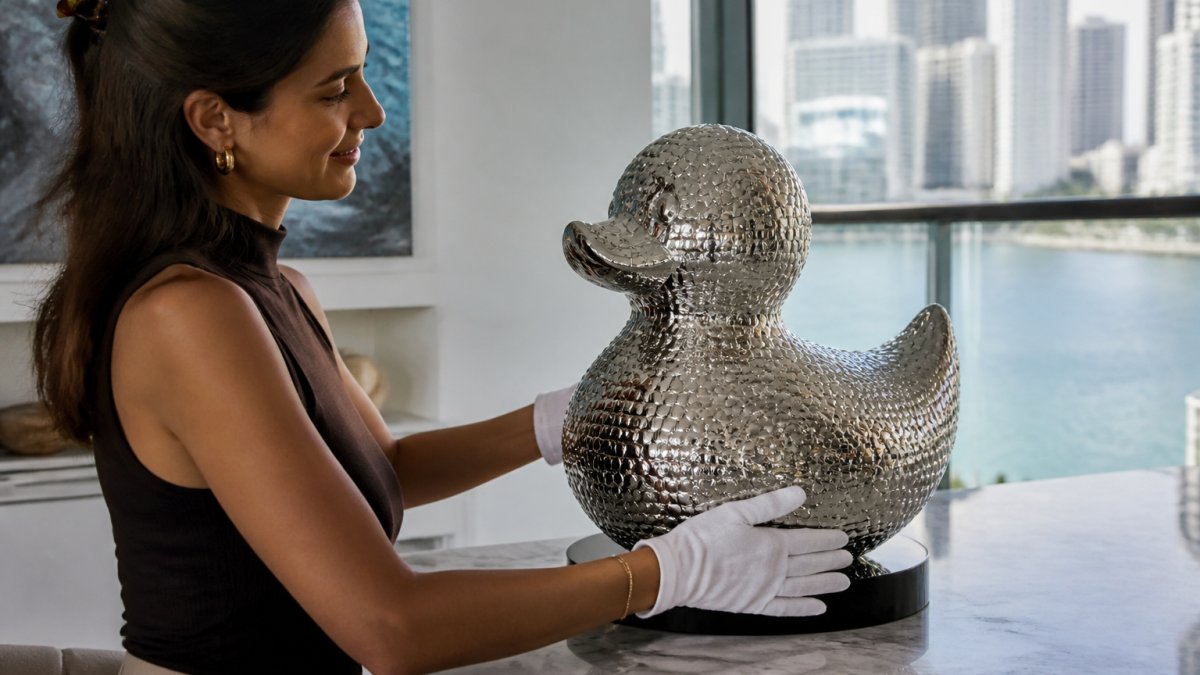
Silver and mixed metals. Silver sculpture reads as jewelry for a room and appeals to buyers who want a piece that reflects light and pairs with existing metal fixtures. Silver tarnishes, so it needs periodic polishing, and polished surfaces show fingerprints.
Resin, rubber, and UV reactive finishes. Contemporary pop and kinetic work often uses resin, rubber, or coated finishes. These are lighter and cheaper to ship, and UV reactive coatings let a piece shift character under blacklight, a genuine display advantage if you plan evening lighting.
Style and subject matter. Art Deco figures, kinetic sculpture that moves with air currents, abstract forms, and contemporary pop art all attract different buyers.
How price is actually set. Pricing across the sculpture market depends on edition size, material, scale, and the artist's standing, in roughly that order of impact for emerging and mid career artists.
What most guides miss is that material choice is often reversible in perception but not in cost. Match the material to the room before you match it to the trend.
How to Display Luxury Sculptures in Residential Spaces
Displaying luxury sculptures well is about giving the piece room to breathe and lighting it deliberately. A sculpture crowded by furniture reads as clutter; the same piece on a clean pedestal reads as a statement.
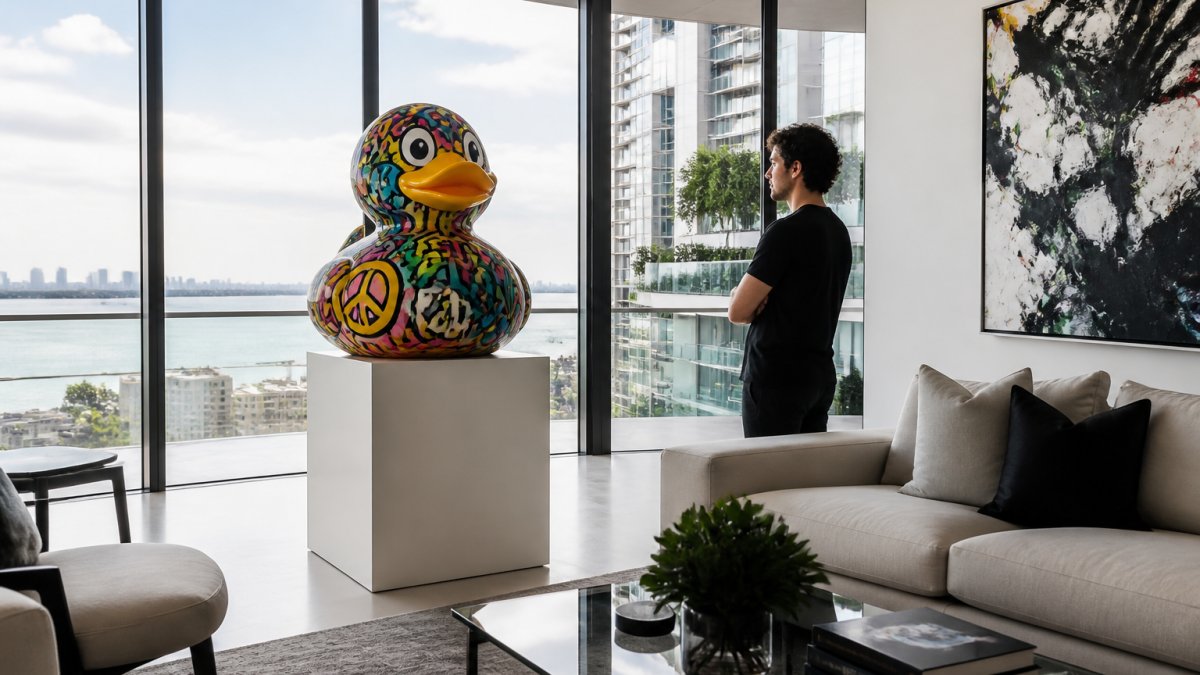
A contemporary living room with a large, colorful pop art rubber duck sculpture on a pedestal, natural light from floor to ceiling windows, minimalist furniture, and a person standing nearby admiring the piece
Start with sightlines. Place the sculpture where it is visible from the main seating area and from the room's entrance. A pedestal or plinth raises the piece to eye level and protects it from accidental contact. Weight matters too: larger works need a base rated for their mass, and a structural check is worth the small cost.
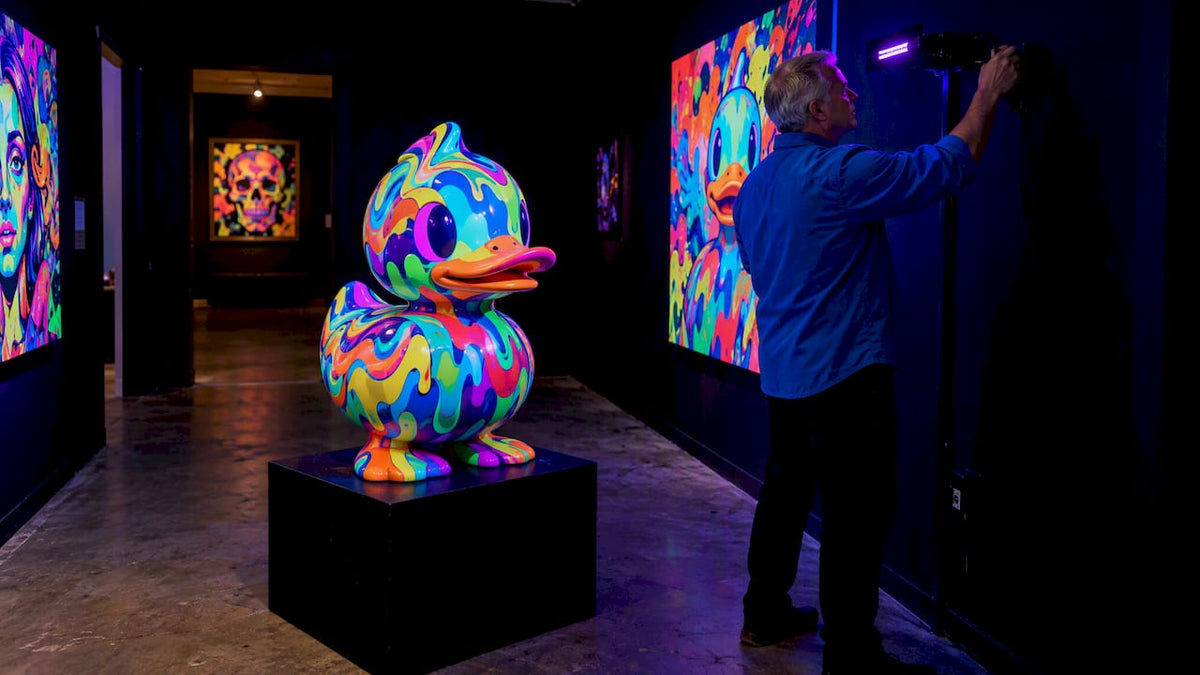
Lighting changes everything. Most of our work is UV reactive and glows under blacklight, so the same sculpture delivers a calm daytime presence and a completely different evening experience. Interior designers we work with often plan two lighting circuits for this reason: one warm white for daily living, one blacklight for entertaining.
Keep direct sunlight off pigmented surfaces, dust with a soft dry cloth, and avoid placing pieces near heating vents. That is the entire maintenance routine for most contemporary work.
Commissioning Custom Art Sculptures for Homes and Public Spaces
Commissioning custom art sculptures turns a purchase into a collaboration, and the process is more structured than most first time buyers expect. A commission typically moves through four stages: brief, concept, production, and installation.
The brief is where the project succeeds or stalls. Bring dimensions, photographs of the space, budget parameters, and a deadline. For municipal and hospitality projects, bring the approval chain as well, because public art usually needs approval from more than one department.
From there, the artist develops the concept, often supported by technical drawings or a 3D rendering so you can see the piece in place before fabrication begins. For large installations, a virtual recreation of the space helps stakeholders approve a direction without waiting for the physical build.
Timelines vary with scale and complexity. We recommend starting the conversation at least one season ahead of your installation date, and earlier for public projects with permitting requirements.
Shipping, Returns, and What to Expect at Checkout
Shipping and returns are where online sculpture buying either earns trust or loses it, and where the advertised price and the real price diverge. Most listings show a shipping line and a returns window; almost none walk you through the total cost of getting a sculpture to your wall and keeping it there. This section does.
What the checkout total should include. A complete order confirmation should itemize the artwork, the edition number, the shipping method, insurance, the estimated delivery window, and the returns policy. If any of those are missing, ask before you pay.
Packing and crating. Sculpture is not shipped like a print. Ask how the piece is packed, not just how fast it ships. A seller who cannot describe the packing method is a risk on any fragile material.
Insurance and valuation. Insured shipping should cover the full purchase price, not a default carrier cap. Confirm the declared value on the shipment matches what you paid, because a claim on an under declared piece will only pay out the declared amount.
Customs, duties, and taxes. For international orders, confirm in writing who handles customs documentation and who pays duties and import taxes. A common pattern is that the buyer pays duties on delivery, which can add a meaningful percentage to the landed cost. Ask for an estimate before you commit, and keep the commercial invoice with the certificate of authenticity.
Return shipping and exclusions. A 30 day returns window is a reasonable standard for undamaged work, but read three clauses carefully: who pays return shipping, whether the piece must be returned in original crating, and whether commissioned pieces are excluded. Commissions are frequently not returnable because they cannot be resold, so that clause matters more than the window length.
Installation and placement costs. Large or heavy works may need a base rated for their mass, a structural check, and in some cases professional installation. Ask whether installation support is included or quoted separately, it is one of the most commonly overlooked line items in a sculpture budget.
Checkout Item |
What to Confirm |
Why It Matters |
|---|---|---|
Edition number |
Matches certificate |
Proves rarity |
Shipping method |
Insured and tracked |
Protects your purchase |
Declared value |
Matches purchase price |
Determines claim payout |
Duties and customs |
Who pays, estimated amount |
Avoids surprise fees |
Returns window |
Length, exclusions, return shipping |
Sets your risk |
Installation support |
Included or quoted |
Affects total cost |
Frequently Asked Questions
What should I look for when buying limited edition sculptures online?
Check four things before you buy: the edition size and whether your piece is numbered, the artist's signed certificate of authenticity, the materials and dimensions listed on the product page, and the seller's return policy. Look for documentation of provenance, such as gallery history or exhibition records. Reliable sellers show real installation photos, not just studio shots. If a listing skips edition numbers or authenticity documents, ask before you pay.
How do I verify the authenticity of a limited edition sculpture?
Ask for a signed and numbered certificate from the artist or studio, plus a record of the edition size (for example, 3 of 25). Cross check the artist's name against their official website, press coverage, or exhibition history. For FLY Miami Art, the studio's Florence Biennale XV award and media features (CBS, NBC, Associated Press) are verifiable. If provenance feels vague, request more documentation before buying.
How are limited edition sculptures shipped safely?
Sculptures ship in custom foam lined crates or double walled boxes with the piece secured away from the container walls. Ask the seller whether shipping includes tracking, insurance, and white glove delivery for large pieces. Always confirm who covers damage in transit and keep the original packaging if you may resell later.
Can I commission custom limited edition sculptures for my home?
Yes. Commissioning custom art sculptures usually starts with a brief covering size, materials, colors, and where the piece will live. The artist then shares concept sketches or 3D renderings before production begins. Timelines vary by scale and complexity, so confirm dates early if you have a deadline. FLY Miami Art takes commissions for collectors, hotels, and public events, with the studio handling design through installation. Pricing depends on size, materials, and delivery.