KAWS vs Jeff Koons: How Their Art Styles Differ
Last Updated: November 15, 2026
Quick Summary
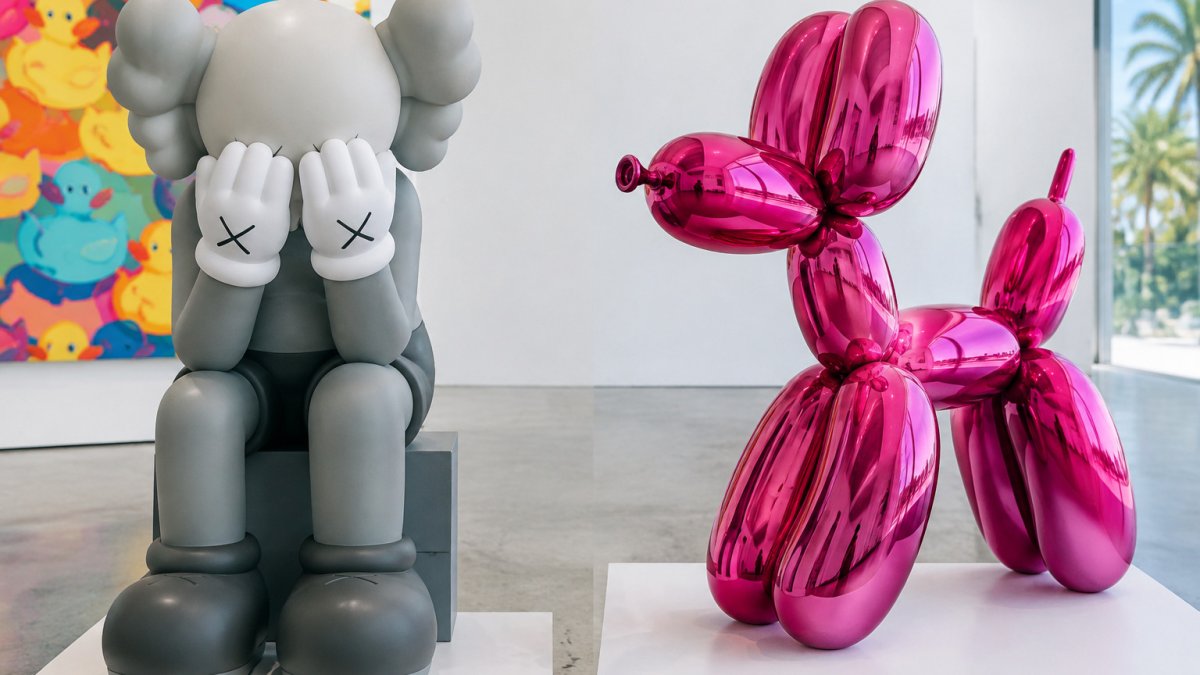
KAWS vs Jeff Koons comes down to imagery and finish. KAWS builds work from cartoon characters with crossed out eyes, often painted with a glossy, graphic clarity. Jeff Koons uses inflated forms and mirror polished surfaces that reflect the viewer and the room.
- KAWS draws on comics, toys and street culture, with recognizable characters like the Companion.
- Jeff Koons favors mirror polished stainless steel and inflated forms that look light but are built to last.
- KAWS work often reads as a familiar character, while Koons work reads as a reflective object.
- Judge finish in person, since photos of polished metal sculpture often exaggerate the shine.
- Decide which effect you want in a room before choosing between the two artists.
Table of Contents
- Two Artists, Two Approaches to Pop Imagery
- What Kind of Art Style Is KAWS?
- Jeff Koons Art Style: Scale, Polish and Consumer Icons
- Side-by-Side: Imagery, Materials and Production
- KAWS Companion Meaning and Recurring Motifs
- Audience, Accessibility and Cultural Context
- Choosing Work by Style: A Visual Reading Framework
- Frequently Asked Questions
FLY Miami Art, the studio of Miami Beach pop artist Facundo Yebne, has built its reputation on bright, playful work that carries a message. Readers searching for kaws vs jeff koons often want to know how their styles differ in imagery, materials and meaning. This guide from FLY Miami Art walks through those differences in plain terms, so you can judge which approach fits your taste or your space.
Two Artists, Two Approaches to Pop Imagery
Both artists draw on popular culture, but they start from different places. KAWS works from cartoon characters and toy-like figures that carry a sense of street culture. Jeff Koons takes everyday objects and inflates them into large, high-gloss forms. The result is two bodies of work that look related at a glance but feel very different up close.
Comparing them helps clarify what each artist is trying to do, and a kaws vs jeff koons side-by-side reading makes the choice easier.
What Kind of Art Style Is KAWS?
KAWS is a pop art style built around recognizable characters, cross-eyed faces and simplified forms. The visual language borrows from comics, toys and graphic design. Recurring figures appear across paintings, sculptures and toy editions, which gives the work a consistent signature.
Here is what to look for when reading a KAWS piece:
- Characters: Familiar cartoon-like figures with crossed-out eyes.
- Scale: Works range from small collectible toys to large public sculptures.
- Surface: Glossy, painted finishes that read clearly from a distance.
Jeff Koons Art Style: Scale, Polish and Consumer Icons
Jeff Koons is known for mirror-polished surfaces and objects drawn from consumer culture, such as balloon animals and inflatable toys. His sculptures often reach monumental size, and the reflective finish invites viewers to see themselves in the work. Balloon forms and childhood imagery appear throughout his output.
Watch for these traits in a Koons piece:
- Finish: Highly reflective, often stainless steel or painted to a mirror shine.
- Forms: Inflated shapes that look light but are built to last.
- Tone: Playful on the surface, with a deliberate tension about mass-produced imagery.
Side-by-Side: Imagery, Materials and Production
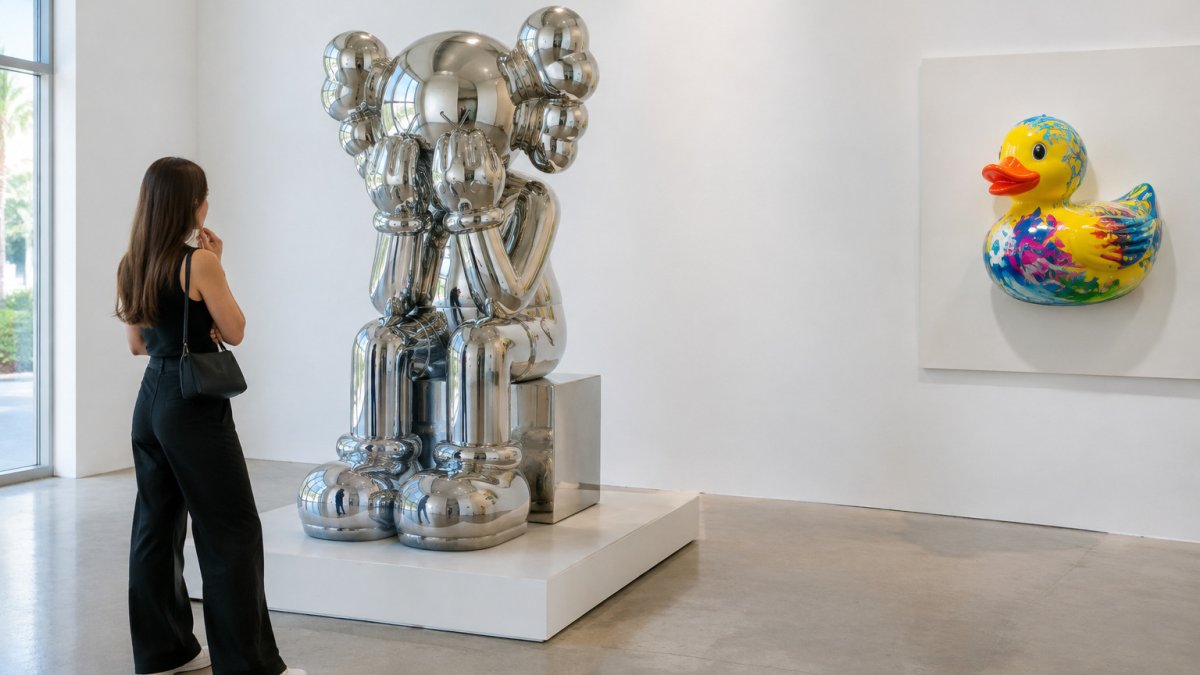
The two styles differ most in how the work is made and what the surface does with light. KAWS leans on painted figures and character design. Koons relies on polished metal and large scale fabrication. Both are monumental in ambition, but the handling of reflection separates them.
| Aspect | KAWS | Jeff Koons |
|---|---|---|
| Core imagery | Cartoon characters, crossed out eyes, the Companion | Balloon forms, inflatable toys, readymade objects |
| Typical finish | Painted, glossy, matte in places | Mirror polished stainless steel, high gloss paint |
| Production | Studio painting plus fabrication partners | Large scale fabrication teams and specialist foundries |
| Art historical root | Street art, graffiti, comics, toy culture | Pop art, Duchamp readymades, consumer display |
| Viewer response | Recognition and familiarity | Reflection and self awareness |
How the work is actually made. This is the part most comparisons skip.
Materials and finish. KAWS favors painted surfaces, vinyl and cast forms, and a graphic clarity that survives being shrunk to a toy or blown up to a public plaza. Koons favors stainless steel polished to a mirror, plus high gloss paint on inflatable inspired shapes. The mirror finish is the point: it pulls the room and the viewer into the piece. A painted KAWS figure keeps its color and outline; a polished Koons form changes with every angle and every light source.
Art historical references. KAWS sits in a line that runs from comics and street culture into Pop art, and his crossed out eyes read as a signature more than a statement. Koons sits in a line that runs from Marcel Duchamp's readymades through Andy Warhol and into the display logic of advertising and retail. That lineage explains why Koons work often feels like a luxury object and KAWS work often feels like a character you already know.
Market context, with dates. Auction attention for both artists peaked in different cycles.
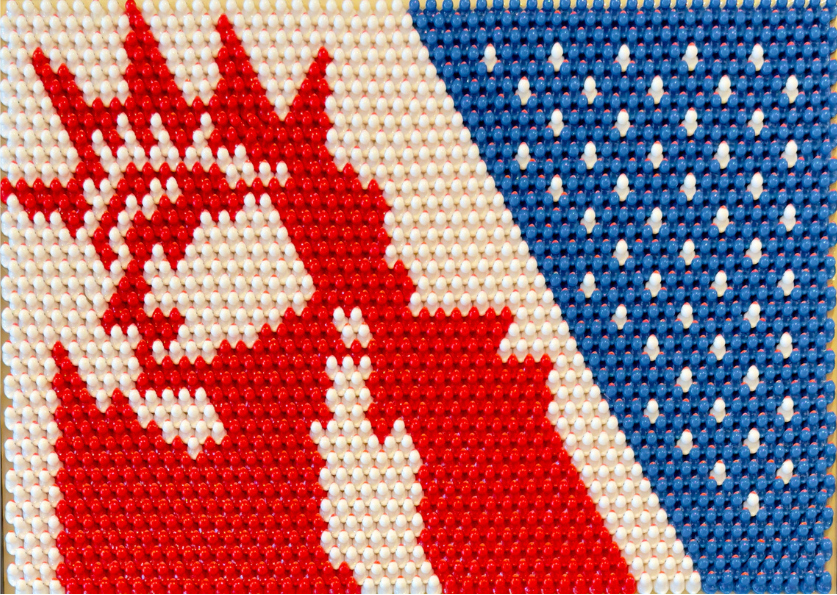
For a closer look at how an original works in practice, FLY Miami Art's Peace, We All Need Some shows how repetition and color can build a bold visual statement from many small parts.
Watch out: photos of polished metal sculpture often exaggerate the shine, so judge finish in person or in video under neutral light before you compare it to a painted piece.
KAWS Companion Meaning and Recurring Motifs
The KAWS Companion is one of the artist's most recognizable figures. It appears across many works and reads as a stand-in for a shared emotional experience. Its recurring presence builds familiarity, so each new appearance feels like a return to a known character.
Motifs like this matter because they give collectors a way to read a body of work. A repeated figure signals intent, and the emotional effect often comes from that repetition rather than from any single piece.
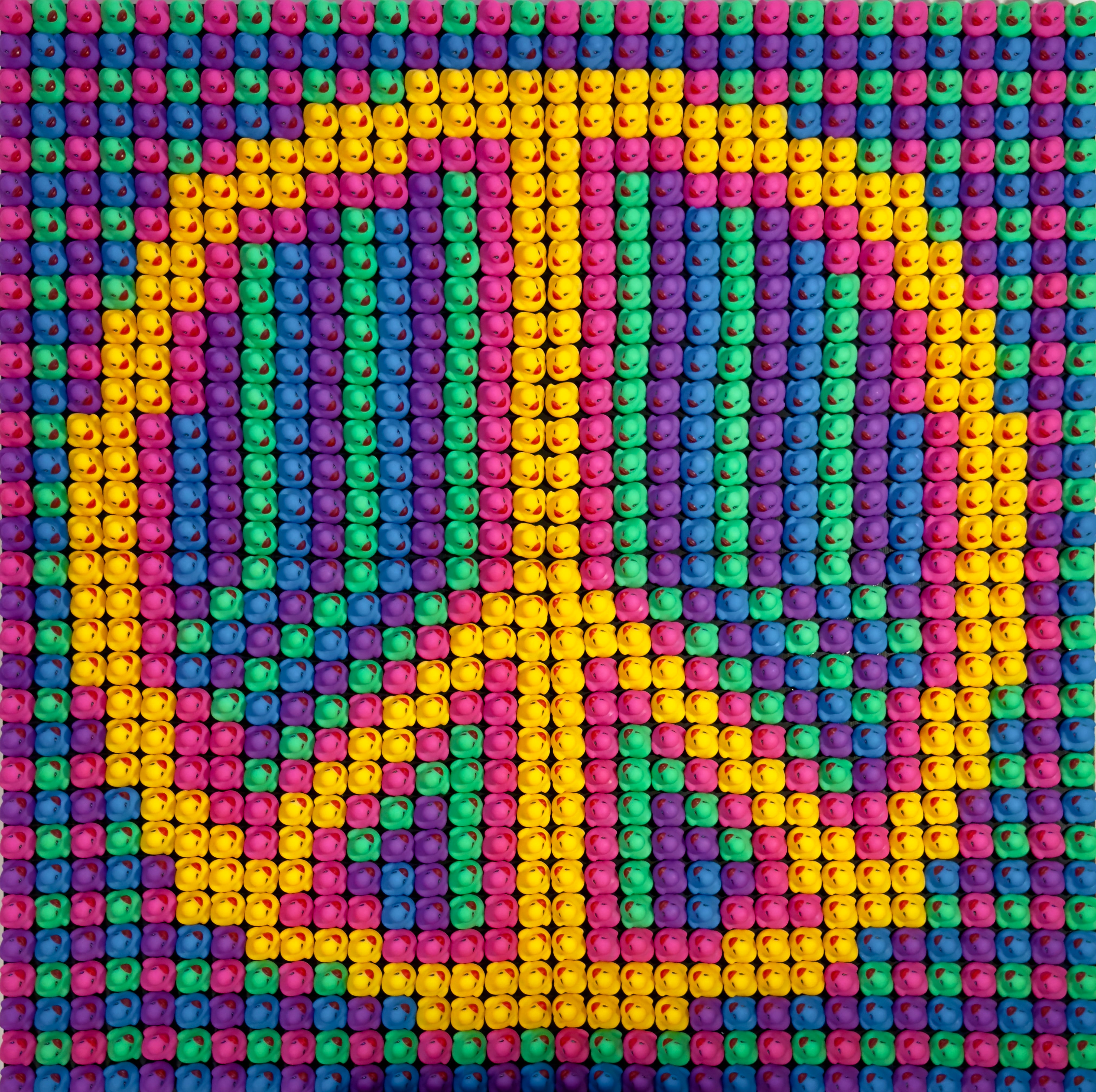
The idea of building meaning through repetition also appears in FLY Miami Art's Peace, We All Need Some series, where a symbol emerges from many identical elements arranged in a grid.
Audience, Accessibility and Cultural Context
Both artists reach wide audiences, but the routes are almost opposite, and that difference explains most of the confusion people feel when comparing them.
KAWS: street roots, toys and social media. Accessibility here means low entry points: a small vinyl figure, a poster, a public installation you can walk up to without a ticket.
Koons: institutions, spectacle and public plazas. His audience skews toward museum goers and tourists, and the entry point is usually a visit rather than a purchase.
What each route does to the reading of the work. When an artist's work circulates as a toy, viewers tend to read it as a character with a personality. When it circulates as a monument, viewers tend to read it as a statement about culture. Neither reading is wrong, but they are not the same, and mixing them up is the most common mistake in KAWS versus Koons comparisons.
The Pop art question. Pop art has long questioned the line between high art and consumer goods, and both artists sit inside that conversation. Koons pushes the consumer object toward luxury finish. KAWS pushes the cartoon toward collectible and public form. The cultural context that matters is not which one is more serious, but which one is doing the questioning more visibly.
A practical note for buyers. Audience matters when you choose work for a space. A piece that reads as a familiar character tends to start conversations with guests; a piece that reads as a reflective object tends to change with the room. Decide which effect you want before you decide which artist you like.
FLY Miami Art's own work is handmade in the Miami studio, and most of it is UV reactive and glows under blacklight. The artist won Fourth Prize in Installation Art at Florence Biennale XV, and the work has been featured by CBS, NBC, Yahoo, MSN, infobae, EFE, Associated Press, ABC and Yahoo Finance.
Choosing Work by Style: A Visual Reading Framework
A simple framework can help you judge a piece before you buy. Ask four questions:
- What is the core image? Is it a character, an object or a symbol?
- How is the surface finished? Is it painted, polished or textured?
- What is the scale? Will it suit a room, a lobby or a gallery wall?
- What emotional tone does it set? Playful, reflective or quietly provocative?
Answering these questions gives you a clear reason for your choice. If you want an original work with a clear message, FLY Miami Art's Be a King piece shows how a single symbol can carry a strong statement at a manageable scale.
Use the framework to compare pieces across styles, not just artists. Two works by the same artist can differ widely in finish and scale, and that difference often matters more than the name on the label.
Choosing between KAWS and Jeff Koons comes down to what you want a piece to say and how it should sit in your space. Explore the FLY Miami Art collection to see how original, meaning-driven pop art fits your own taste.
Frequently Asked Questions
What kind of art style is KAWS?
KAWS works in contemporary pop art, drawing on cartoon imagery, toy design and street culture. His signature visual language includes crossed-out eyes, figures based on the Mickey Mouse and Snoopy silhouettes, and inflatable-looking forms. The work blends fine art with commercial character design, and KAWS often reworks familiar popular culture icons into sculptures, paintings and prints that read instantly at a distance and reward closer looking at the surface and proportion.
What art style does Jeff Koons use?
Jeff Koons is associated with Neo-Pop and a highly finished, mirror-polished approach to sculpture. His work often uses stainless steel, high-gloss surfaces and monumental scale to present everyday objects such as balloon animals, inflatable toys and consumer goods. Koons is known for treating mass-produced imagery with a sense of spectacle and sentiment, and his fabrication methods emphasize precision and a flawless, reflective finish.
What does KAWS's Companion figure mean?
The Companion is one of KAWS's best-known characters, a figure with crossed-out eyes and a tongue-out expression. Its meaning is often read as a mix of playfulness and melancholy, reflecting the emotional tone of childhood imagery reworked for adult audiences. Interpretations vary, and KAWS has tended to leave the figure open, so viewers often connect it to personal experience rather than a single fixed message.
How do KAWS and Jeff Koons use popular culture differently?
Both artists draw on popular culture, but they approach it differently. KAWS tends to reimagine characters and cartoon forms with a street-influenced, illustrative sensibility, while Jeff Koons presents consumer objects and childhood toys with polished, monumental finish and a sense of spectacle. KAWS emphasizes character and recognition, and Koons emphasizes material transformation and the glamour of mass-produced things.
Why is KAWS so popular?
KAWS has built a large following through a recognizable visual language, collaborations and a strong presence across galleries, public installations and collectible toys. His characters are instantly legible, which helps the work reach audiences who do not usually visit museums. Accessibility, cultural visibility and the emotional familiarity of his figures all contribute to the wide interest in his work.