Sculpture's Role in Urban Placemaking: A Practitioner's Guide
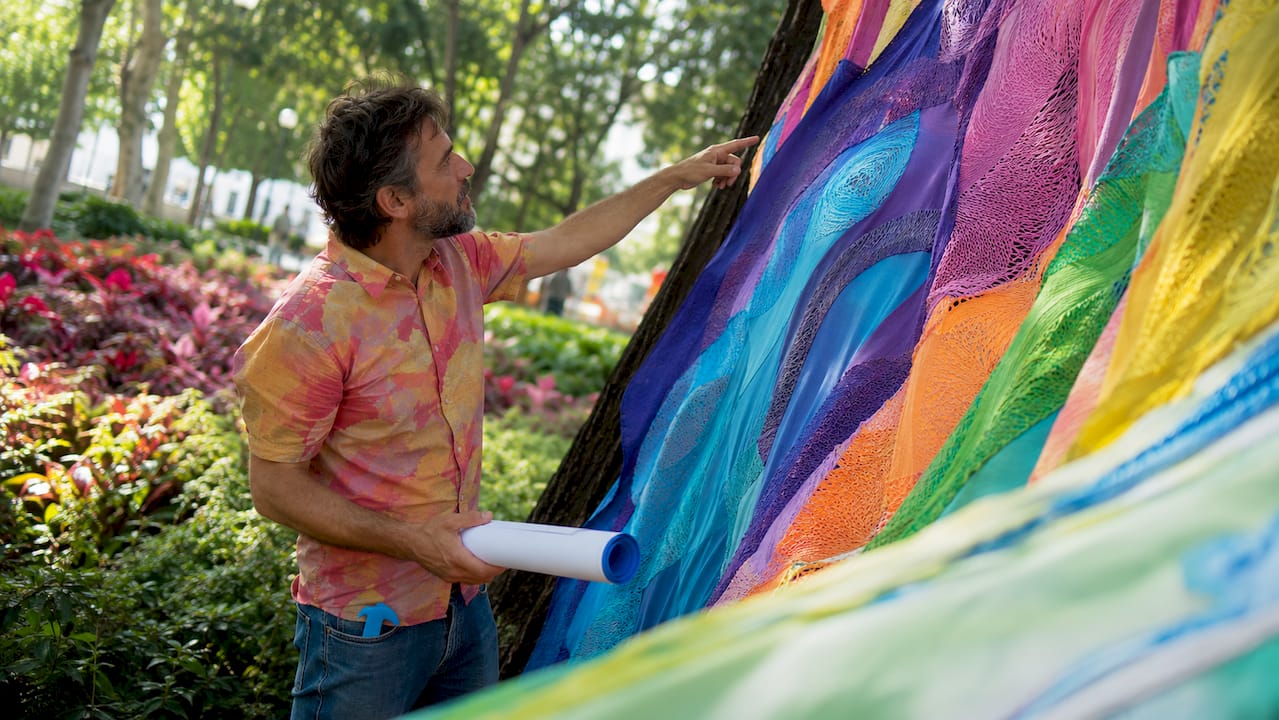
Sculpture is defined as the most spatially powerful tool in urban placemaking, transforming generic public areas into destinations with identity, memory, and social life. The role of sculpture in urban placemaking goes beyond aesthetics. Sculptures function as civic infrastructure, anchoring public spaces the way transit nodes and parks do. Early integration of sculpture with architecture and programming has been shown to increase dwell time by 50%, boost positive sentiment by 63%, and raise recommendation rates by 77%. Those numbers describe a measurable shift in how people experience and value a place.
What is the role of sculpture in urban placemaking?
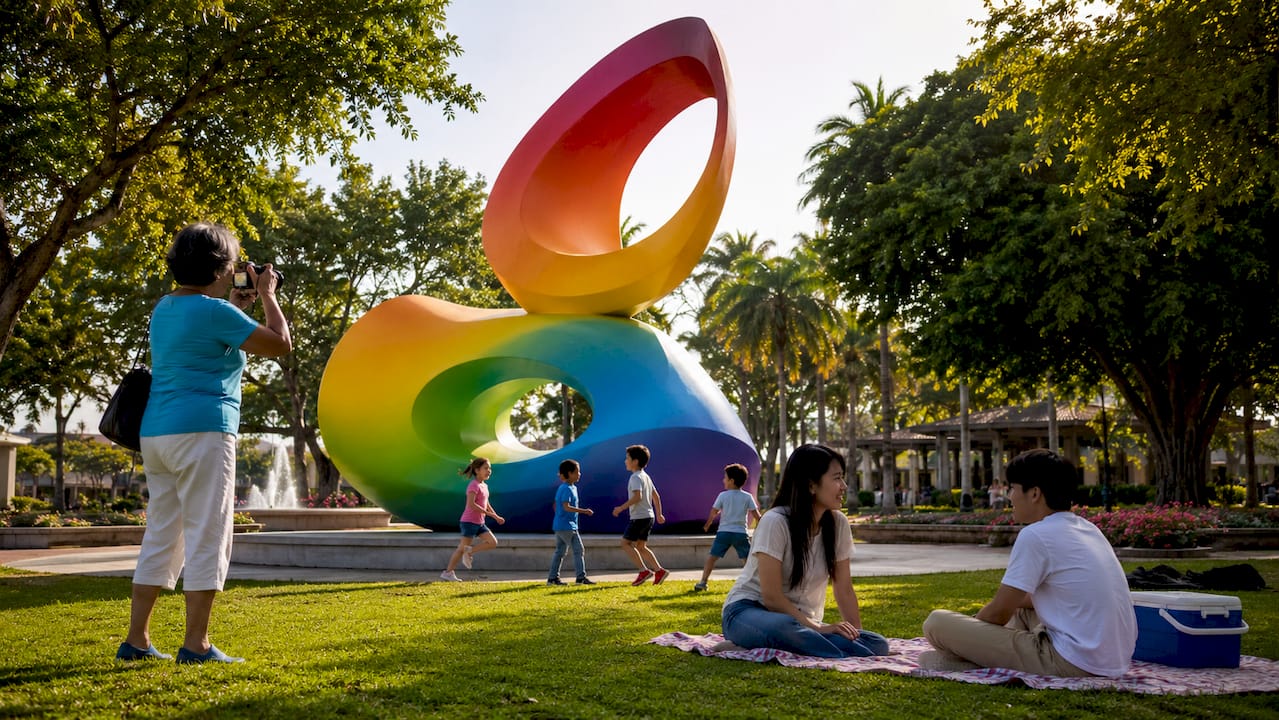
Sculpture gives a public space its face. A well-placed three-dimensional work creates a visual anchor that people orient themselves around, return to, and photograph. That behavior is not accidental. Sculptures serve as landmarks and social focal points that shift public art from passive visual experience to active, interactive encounter. The difference matters enormously for planners and developers trying to move foot traffic and build community attachment.
The social mechanics work because sculpture occupies physical space in a way that murals and signage cannot. People walk around it, touch it, sit near it, and use it as a meeting reference. This three-dimensional quality makes sculpture a natural “ice breaker,” giving strangers a shared object to react to and discuss. Statues and large-scale installations in cities like Chicago’s Millennium Park or Miami’s Wynwood district have become community icons precisely because they gave people a reason to gather, not just pass through.
Pro Tip: When selecting a sculpture for a public plaza, prioritize works that invite physical proximity. Pieces with varied viewing angles, accessible bases, or interactive surfaces generate longer stays and more social contact than purely visual monuments.
Urban planners often underestimate how much a single well-chosen sculpture can define a neighborhood’s identity. A piece that reflects local history, culture, or aspiration becomes a symbol residents claim as their own. That sense of ownership translates directly into stewardship, reduced vandalism, and stronger community investment in the surrounding space.
- Sculptures create visual landmarks that anchor wayfinding and spatial memory.
- Three-dimensional form invites physical engagement that flat art cannot replicate.
- Iconic works become gathering points, generating repeat visits and social interaction.
- Community-identified sculptures reduce vandalism and increase resident stewardship.
- Photo opportunities around sculpture extend a location’s reach through social media sharing.
Why early integration of sculpture amplifies placemaking outcomes
The timing of sculpture within a project lifecycle determines most of its impact. Sculpture introduced after construction is complete tends to feel decorative and disconnected. Sculpture planned from the start shapes the spatial sequence, informs seating placement, and aligns with the programming calendar. Experts frame art as civic infrastructure, arguing it should be treated as foundational to urban identity and economic value, not added as a finishing touch.
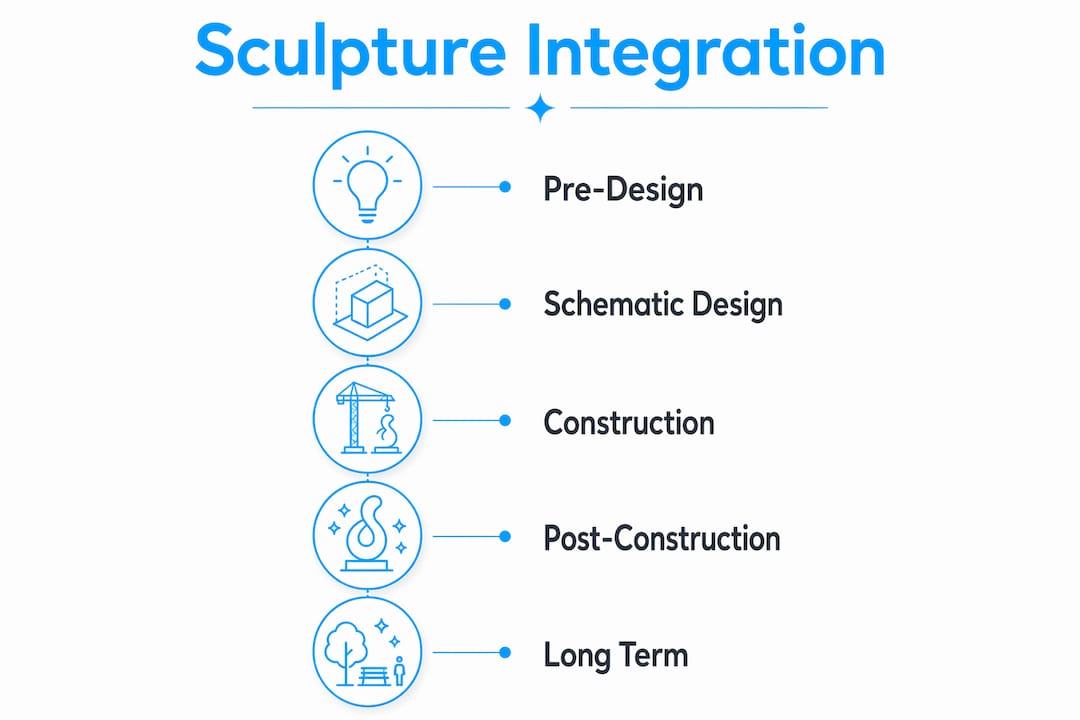
The measurable benefits of early integration are significant. When public art is woven into the design process alongside architecture and landscape, spaces perform better on every social metric. The 50% increase in dwell time cited in corporate placemaking research reflects what happens when sculpture is part of a coherent spatial experience rather than an isolated object. Longer dwell time means more spending at nearby retail, more social interaction, and stronger place attachment over time.
Pro Tip: Bring a sculptor or public art consultant into the project team at the schematic design phase, not after construction documents are complete. Early involvement costs less and produces far better spatial integration.
The economic case for early sculpture integration is also well established. Public art that reflects community identity builds trust, which in turn supports property values and commercial activity in surrounding blocks. Placemaking scholars describe this as the “place = space + use” equation. Sculpture activates use by giving people a reason to occupy a space, not just cross it.
| Integration stage | Typical outcome |
|---|---|
| Pre-design (concept phase) | Sculpture shapes spatial layout, seating, and sightlines from the start |
| Schematic design | Sculpture informs material palette and programming zones |
| Construction documents | Limited integration; sculpture risks feeling disconnected from space |
| Post-construction | Sculpture functions as decoration only; minimal placemaking impact |
How does community engagement shape sculptural placemaking?
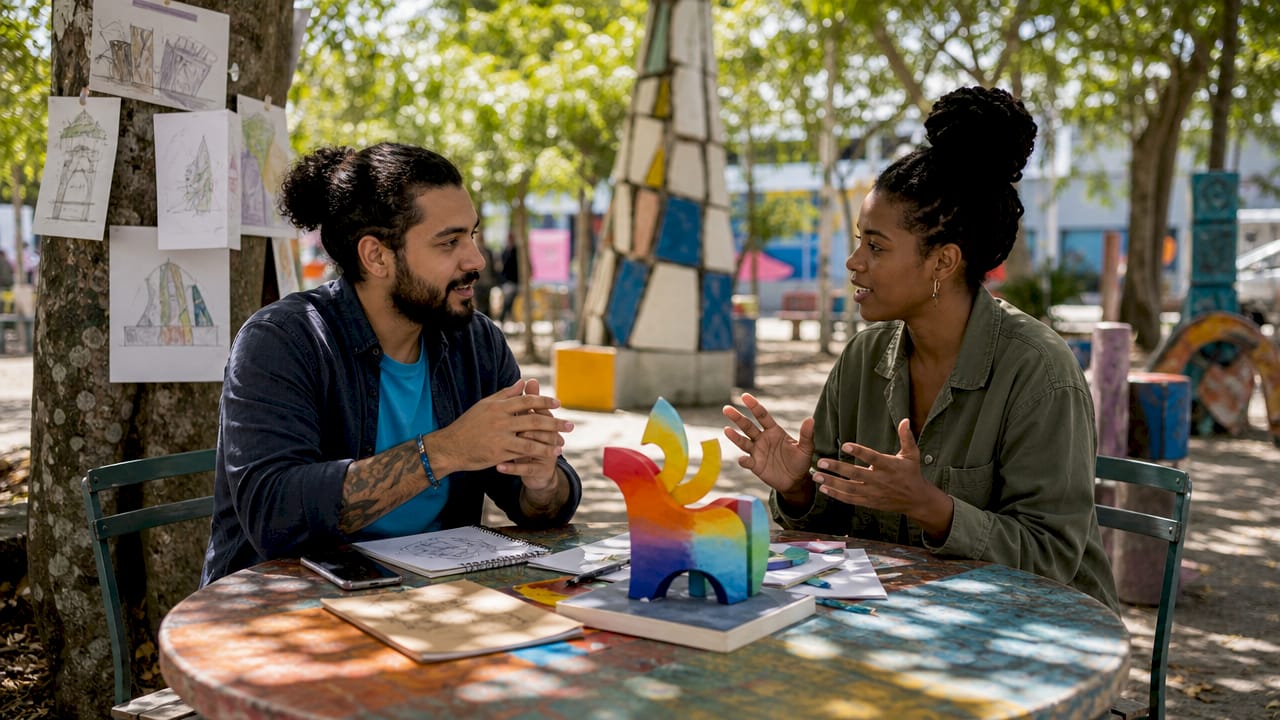
Community-based sculptural placemaking starts with listening, not designing. The most effective practitioners begin at the neighborhood scale, asking residents what questions and concerns matter to them before any concept is formed. Effective community-based practice requires relationship-building and iterative dialogue that shapes both the content and form of the final work. This is fundamentally different from a studio practice where the artist works independently toward a personal vision.
The distinction matters because community resistance to public sculpture is almost always a symptom of insufficient engagement, not aesthetic disagreement. When residents feel consulted and reflected in a work, they defend it. When they feel a piece was imposed, they ignore or damage it. Starting engagement with local issues and questions rather than finished concepts reduces resistance and produces sculptures that carry authentic local meaning for years.
A structured community engagement process for sculptural placemaking typically follows these steps:
- Map the neighborhood. Identify community organizations, informal leaders, and underrepresented groups before any outreach begins.
- Ask open questions. Start with what residents value, what they want to change, and what stories they want told. Avoid presenting concepts at this stage.
- Hold iterative dialogue. Share early sketches and material ideas in multiple sessions. Revise based on feedback, and show residents how their input changed the work.
- Co-develop the brief. Write the final sculpture brief with community input embedded, not appended.
- Plan for ongoing stewardship. Identify community members who will take ownership of the work’s maintenance and programming after installation.
Public art shaped through a public process carries community meaning that no amount of artistic skill alone can manufacture. That meaning is what makes a sculpture endure as a social anchor rather than fade into background noise.
Practical considerations: durability, maintenance, and programming
A sculpture that deteriorates or becomes unsafe within five years fails its placemaking mission regardless of its artistic quality. Maintenance planning must begin at the material selection stage, not after installation. This means specifying materials rated for outdoor exposure and public contact, building inspection schedules into the project budget, and establishing clear protocols for cleaning, repair, and eventual removal. Skipping this step is the single most common reason public sculptures become liabilities rather than assets.
Environmental design around a sculpture determines whether it functions as a genuine meeting point or an isolated photo stop. Sculpture commissions paired with seating, lighting, and programming become reliable gathering anchors. Without those supporting elements, even a striking work fails to hold people in the space. Sightlines matter too. A sculpture hidden behind a planter or obscured by signage loses its landmark function entirely.
Programming is the multiplier that most planners underuse. A sculpture that hosts a weekly farmers market, a seasonal light installation, or a community performance series generates far more social activity than one that simply stands in a plaza. The work becomes a backdrop for lived experience, which deepens its meaning and extends its relevance across seasons and years.
- Select materials rated for continuous outdoor exposure and high public contact.
- Budget for annual inspection, cleaning, and minor repair from project inception.
- Design seating, lighting, and clear sightlines as part of the sculpture’s spatial setting.
- Schedule at least two to three programming activations per year around the sculpture.
- Avoid placing sculpture in residual or leftover spaces where foot traffic is minimal.
Key takeaways
Sculpture functions as civic infrastructure in urban placemaking, and its impact depends on early integration, community collaboration, and sustained environmental design.
| Point | Details |
|---|---|
| Sculpture as civic infrastructure | Treat sculpture as foundational to urban identity, not as a decorative add-on. |
| Early integration multiplies impact | Introducing sculpture at the concept phase increases dwell time, sentiment, and recommendation rates. |
| Community engagement reduces resistance | Starting with neighborhood questions rather than finished concepts produces authentic, lasting works. |
| Environmental design activates gathering | Seating, lighting, and sightlines determine whether sculpture becomes a true social anchor. |
| Maintenance planning is non-negotiable | Material selection and inspection schedules must be set before installation, not after. |
Sculpture is no longer optional in serious urban design
I have watched the conversation around public art shift dramatically over the past decade. When I started working with sculpture in public contexts, the standard argument was that art was a luxury, something added when budgets allowed. That argument is now indefensible. The evidence from placemaking research is clear: spaces without strong sculptural anchors underperform on every social and economic metric that matters to planners and developers.
What I find most practitioners still get wrong is the sequence. They commission the sculpture after the space is designed, then wonder why it feels like an afterthought. The works that genuinely transform a neighborhood are always the ones where the sculptor was in the room during schematic design, arguing about sightlines and seating with the architect. That collaboration produces something neither discipline could create alone.
The other mistake I see constantly is treating community engagement as a box to check rather than a genuine design input. The communities I have worked with in Miami and beyond have consistently pushed sculpture concepts toward something more specific, more honest, and more durable than what any studio process would have produced. Real listening changes the work. It also changes the community’s relationship to the work, which is ultimately what determines whether a sculpture becomes a landmark or a forgotten object.
The future of sculptural placemaking belongs to artists who can hold both the aesthetic and the social dimensions simultaneously. Flymiami’s work, rooted in themes of peace, love, and unity, points in exactly that direction. The FLY movement treats sculpture not as monument but as invitation, which is precisely what effective placemaking requires.
— Facundo
Flymiami’s sculpture collections for urban placemaking projects
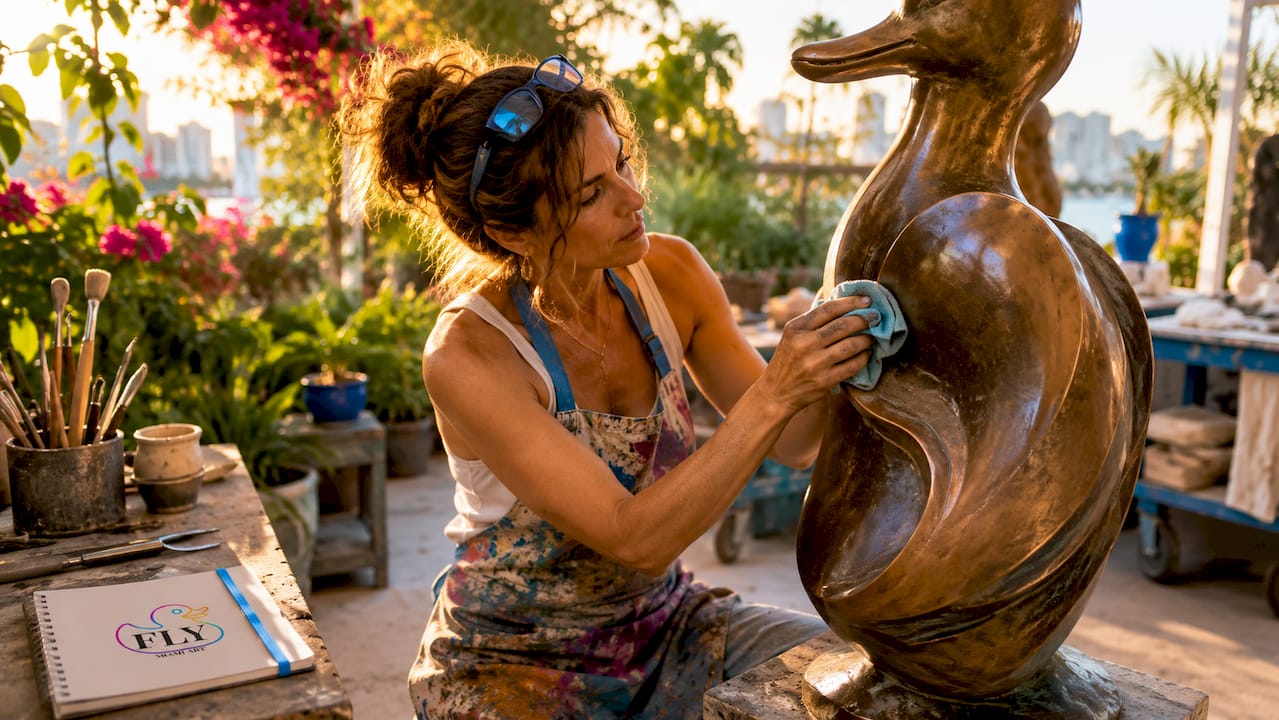
Urban planners and community developers looking for sculptural works that carry genuine emotional weight have a direct resource in Flymiami. Led by Florence Biennale Award winner Facundo Yebne, Flymiami produces public-ready sculptures that combine pop art energy with UV-reactive materials, creating works that perform differently across day and night environments.
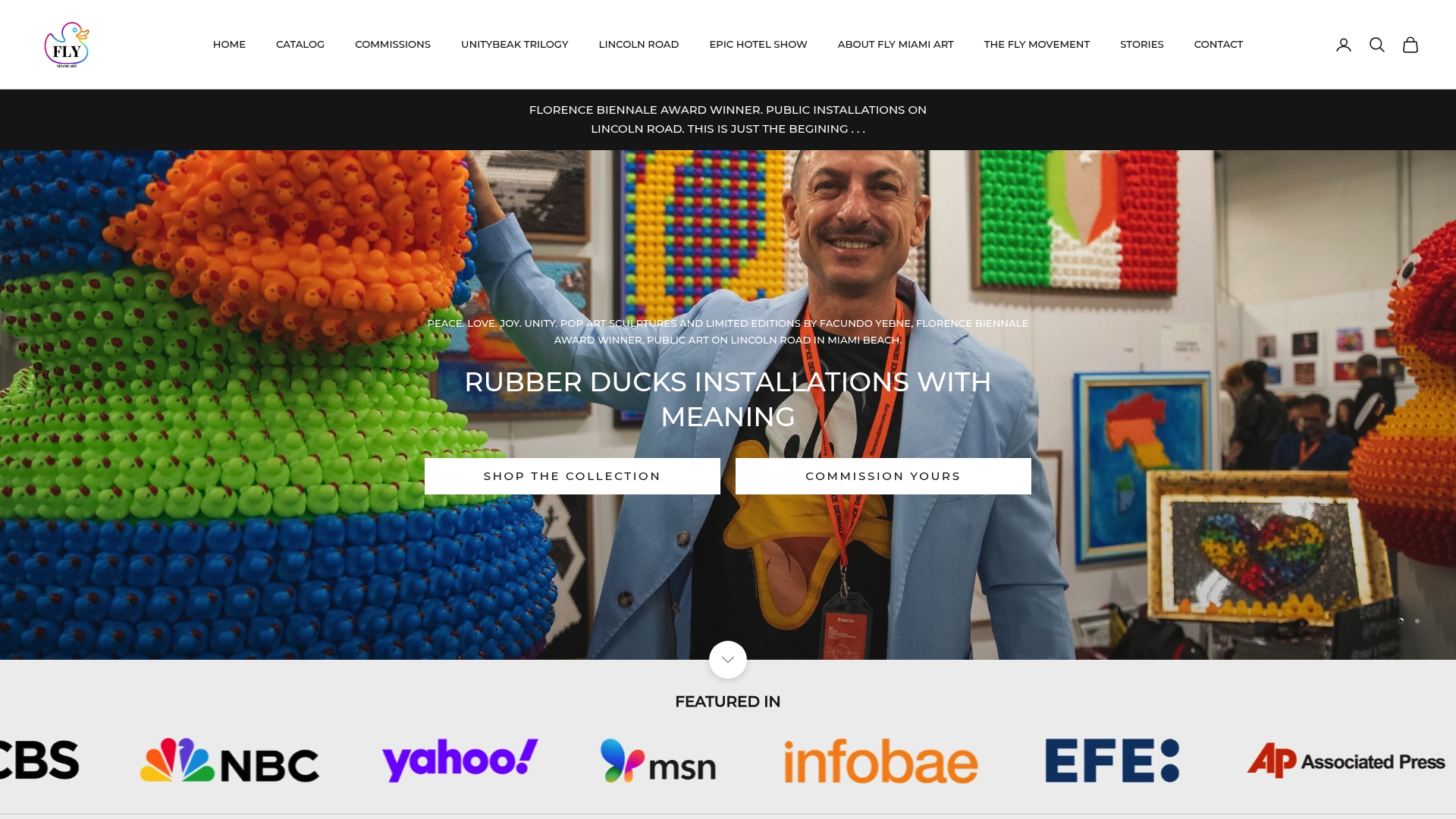
The collection spans statement pieces designed for high-traffic public settings and more intimate works suited to courtyards, hotel lobbies, and cultural venues. Flymiami also works on custom installations for developers and municipalities seeking site-specific commissions. Each piece is built for public exposure, with material quality and craftsmanship that support the long-term maintenance standards serious placemaking requires. Contact the Flymiami team directly to discuss how a specific work or custom commission can anchor your next public space project.
FAQ
What is the role of sculpture in urban placemaking?
Sculpture functions as a spatial anchor and social catalyst in urban placemaking, giving public spaces identity, encouraging gathering, and increasing dwell time. Early integration with architecture and programming produces the strongest measurable outcomes.
How does public art impact neighborhood perceptions?
Public art improves perceptions of neighborhood safety, cleanliness, and friendliness, with peer-reviewed research using Philadelphia murals showing statistically significant improvements at the neighborhood scale.
When should sculpture be introduced in a placemaking project?
Sculpture should enter the project at the concept or schematic design phase. Introduction after construction is complete limits spatial integration and reduces the work’s placemaking effectiveness to decoration.
How does community engagement improve sculptural placemaking?
Starting engagement with neighborhood questions rather than finished concepts reduces resistance and produces sculptures with authentic local meaning. Iterative dialogue between artists and residents shapes both the content and form of the final work.
What practical steps support a sculpture’s long-term success in public spaces?
Select materials rated for outdoor exposure and public contact, build inspection and cleaning schedules into the project budget from the start, and pair the sculpture with seating, lighting, and regular programming to sustain social activation.