One Focal Glow: Blacklight Interior Design That Lasts
Blacklight interior design uses UV-A light fixtures to activate fluorescent pigments in paint, fabric, and art, turning ordinary rooms into glowing, layered spaces after dark. The fastest, most reliable way to try it is pairing one UV LED bar with a single UV-reactive focal piece, like a tapestry or a sculptural art piece, rather than flooding the whole room. Start small. A single glowing focal point reads as intentional; five random neon accents read as a dorm room accident.
TL;DR:
- Using a single UV-A LED bar focused on one focal piece provides the most reliable glow without overwhelming the space.
- Materials like UV-reactive paint, printed tapestries, and certain textiles glow vividly, but quality affects durability and brightness over time.
- Distributing glow accents across three key areas, anchored by one large piece, creates a balanced and intentional blacklight design.
- Placement of UV fixtures within 2 to 5 feet of the surface ensures even activation, and dust buildup can diminish glow quality if surfaces aren’t cleaned regularly.
- Authentic UV-A lighting is essential; RGB strips only mimic purple hues and do not activate fluorescent materials properly.
Table of Contents
- 8 High-Impact Blacklight Room Ideas To Try First
- What Type of UV Lighting Fits Your Space?
- Which Materials Actually Glow Under Blacklight?
- The Rule of Three and Other Placement Rules
- Setup Checklist: Mounting, Cost, and Basic Safety
- How Artists Use UV-Reactive Art in Real Spaces
- Where Blacklight Design Actually Came From
- Why Blacklight Rooms Feel Different to Be In
- Fixing the Most Common Blacklight Mistakes
- Design Intent Over Spectacle
- FLY Miami Art: Commissions, Originals, and Glow Guidance
- Sources
- FAQ
8 High-Impact Blacklight Room Ideas To Try First
You don’t need to gut a room to test this out. Start with one of these, see how it feels, then build outward.
- A single glow tapestry over the bed or sofa paired with one UV bar mounted above it.
- A UV-reactive sculpture on a shelf or console, lit from a low angle for dramatic shadow play.
- Ceiling stars or constellation decals in a bedroom, activated only at night.
- A gaming corner accent wall using UV LED strips behind a monitor for edge glow without eye strain.
- White or pastel textiles (a throw blanket, curtain sheers) that pick up ambient UV glow without dedicated paint.
- A hallway “reveal” moment, where one framed UV piece is the only glowing object in transit space.
- Bathroom accent lighting behind a mirror or plant shelf for a spa-like, otherworldly wash.
- An event or studio corner with a portable UV bar clipped to a tripod for temporary installations.
Each idea scales up or down depending on budget and commitment. The tapestry and sculpture routes tend to deliver the strongest payoff for the least electrical work.
What Type of UV Lighting Fits Your Space?
Not all “blacklight” is the same light, and picking the wrong type is the most common reason a setup looks weak or washed out.
UV-A LED bars are the modern default: low heat, long lifespan, and available in plug-and-play strips or wands. Fluorescent blacklight tubes (the classic tube-style fixture) throw a wider, more even wash across a larger wall, but run hotter and need a mounted fixture housing. RGB LED strips are not true UV. They can mimic a purple glow but won’t activate fluorescent pigment the way a real UV-A source does, so don’t substitute one for the other if you want objects to actually fluoresce.
For placement, a single UV bar positioned roughly 2 to 5 feet from a tapestry or painted surface gives the most even activation for a typical room display. Wider walls need either a longer bar or two smaller units angled inward.
- UV-A LED bars: best for focal pieces, low heat, dimmable options available
- Fluorescent tubes: best for wide wall washes, runs warmer, needs fixture mounting
- RGB LED strips: mood lighting only, does not trigger true fluorescence
Most bars now come with smart plugs or remote dimmers, which matters more than it sounds. A blacklight at full intensity all night is harsh; dimmed to 40 to 60 percent, it’s ambient.
Pro Tip: Test any new UV fixture on a white t-shirt first. If the shirt glows bright blue-white in under a second, the bulb is strong enough to activate most fluorescent paints and inks in your room.
Which Materials Actually Glow Under Blacklight?
Some materials fluoresce beautifully. Others just sit there looking flat, and that gap trips up a lot of first-time buyers.
UV-reactive paints need clean, primed surfaces. Skip textured or glossy walls if you want crisp glow lines. Most UV paint brands recommend two thin coats over one thick one, since thick layers can crack as they dry. Printed UV tapestries and posters rely on enhanced UV inks layered under standard color, which is why glow tapestries look vivid under normal light and reveal an intensified layer of detail once the blacklight switches on. That dual-layer effect is the whole appeal: one piece, two moods.
Beyond paint and prints, a few reliable performers:
- White and pastel textiles glow faintly even without special treatment
- UV-reactive resin and acrylic sculptural pieces hold color intensity for years
- Certain fabric dyes (particularly whites and neon synthetics) fluoresce under UV without any special ink
- Standard household dust and lint also glow, which is why cleaning matters more here than in most rooms
Durability varies a lot by product quality. Cheaper UV paints fade within a year or two of regular exposure; gallery-grade pigments used in fine art pieces hold their intensity far longer. Clean glow pieces with a dry microfiber cloth only. Water and glass cleaner can dull UV pigment over repeated use.
The Rule of Three and Other Placement Rules
Interior designers apply a simple rule when working with neon or UV accents: distribute the glow across three locations in a room, such as one artwork, one small object, and one architectural detail, instead of scattering color everywhere. Three points of glow reads as composed. Six points reads as chaos.
The same guidance suggests anchoring one dominant piece, like a large tapestry or sculpture, and letting everything else act as a supporting accent rather than competing for attention. Pair that anchor with textured neutrals: velvet cushions, raw wood shelving, matte stone. The contrast between glowing color and grounded material is what makes a UV room look designed rather than accidental.
- Anchor piece: one large UV artwork or sculpture as the visual center
- Supporting accents: a small glowing object and one architectural detail (a doorframe edge, a shelf lip)
- Balance material: velvet, wood, or matte stone to offset the glow without competing with it
Color choice shifts the mood substantially. Blues and purples feel calm and almost aquatic. Pinks and magentas skew energetic, better suited to a gaming setup or event corner than a bedroom meant for winding down. Greens read as more clinical or alien, which works well for a studio or creative workspace but can feel cold in a living room.
Setup Checklist: Mounting, Cost, and Basic Safety
Before anything goes on the wall, run through this order:
- Choose your focal piece first, then buy lighting to match its size, not the other way around.
- Measure the wall distance and pick a fixture (bar or tube) rated for that coverage.
- Test the fixture on the piece before permanent mounting, checking the viewing angle and glow intensity from where you’ll actually sit.
- Mount the fixture using appropriate anchors for wall type, and route cabling along baseboards or behind furniture.
- Dim-test at night before calling the install finished.
Budget-wise, a basic UV LED bar and small poster setup can be affordable. A mid-range room with a quality tapestry, dimmable bar, and mounting hardware may cost more depending on selection. Commissioned art pieces sit well above that, priced individually depending on scale and material.
On safety, most UV LED fixtures run cool enough for standard indoor use when installed per the manufacturer’s instructions, but avoid staring directly into the bulb for extended periods and keep cabling clear of walkways.
Pro Tip: If a room will host guests or kids, mount lights above eye level and angled downward. It kills glare and keeps the glow effect from turning into an eye-strain complaint.
How Artists Use UV-Reactive Art in Real Spaces
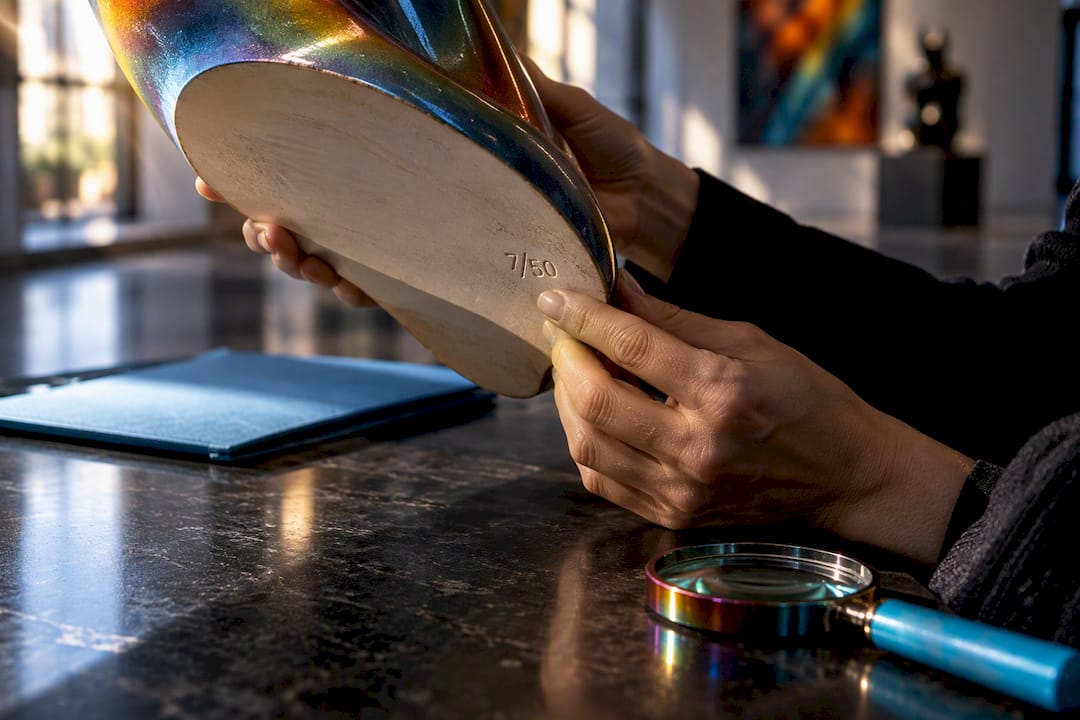
Commissioned UV-reactive pieces show up in three common settings: private wall art in homes, sculptural accents in lobbies or studios, and larger installations at events where a single glowing centerpiece anchors a room for a few hours.
Displaying gallery-quality UV work differs from displaying a printed poster. Viewing distance, mounting height, and how the piece interacts with ambient room lighting all affect how the glow reads to a viewer standing across the room versus up close.
If you’re commissioning a piece, ask directly about pigment quality, expected fade timeline, and cleaning requirements before committing. Reputable UV artists will have clear answers to all three.
- Wall art: best for living rooms, offices, and hallways with a defined focal wall
- Sculptural pieces: better for shelves, entryways, or lobby corners with 360-degree viewing
- Installations: temporary setups for events, often built around one dominant glowing centerpiece
Where Blacklight Design Actually Came From
Blacklight decor didn’t start in interior design magazines. It came out of 1960s and 1970s counterculture, where UV posters, black light paint, and fluorescent psychedelic art became a signature of underground clubs, college dorm rooms, and concert venues. Velvet blacklight posters, often depicting cosmic or surreal imagery, were a specific product category sold at head shops and roadside stands for decades.
The aesthetic cycled through phases after that. Arcades and laser tag venues in the 1980s and 1990s adopted UV lighting for practical reasons: it hid wear on carpets and walls while making neon paint pop for gameplay atmosphere. Rave culture in the 1990s pushed UV further into mainstream nightlife, pairing blacklight with white clothing and face paint for a specific visual language.
What’s changed in recent years is the shift from novelty décor to considered design. UV-reactive elements used to mean a cheap poster and a bare fluorescent tube screwed into a closet fixture. Now the same core technology gets applied through curated art commissions, designed lighting placement, and materials chosen for how they perform under UV rather than grabbed off a clearance shelf. The counterculture roots are still visible, but the execution has moved from a dorm room accident to intentional room design, which is exactly the gap this article is trying to close.
Why Blacklight Rooms Feel Different to Be In
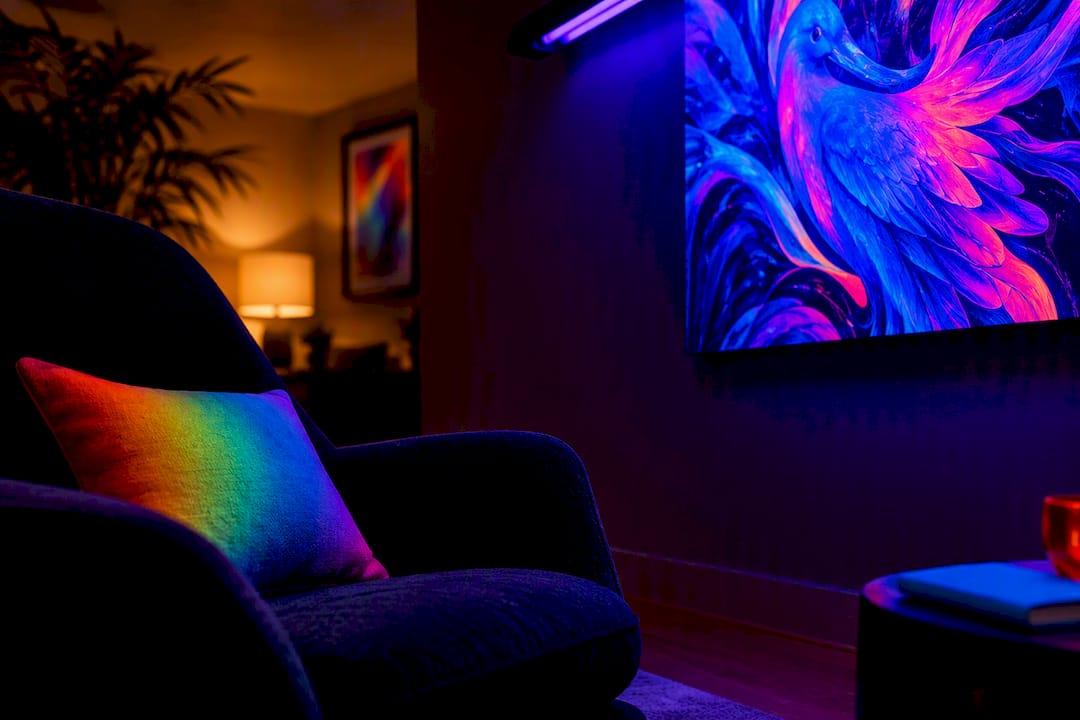
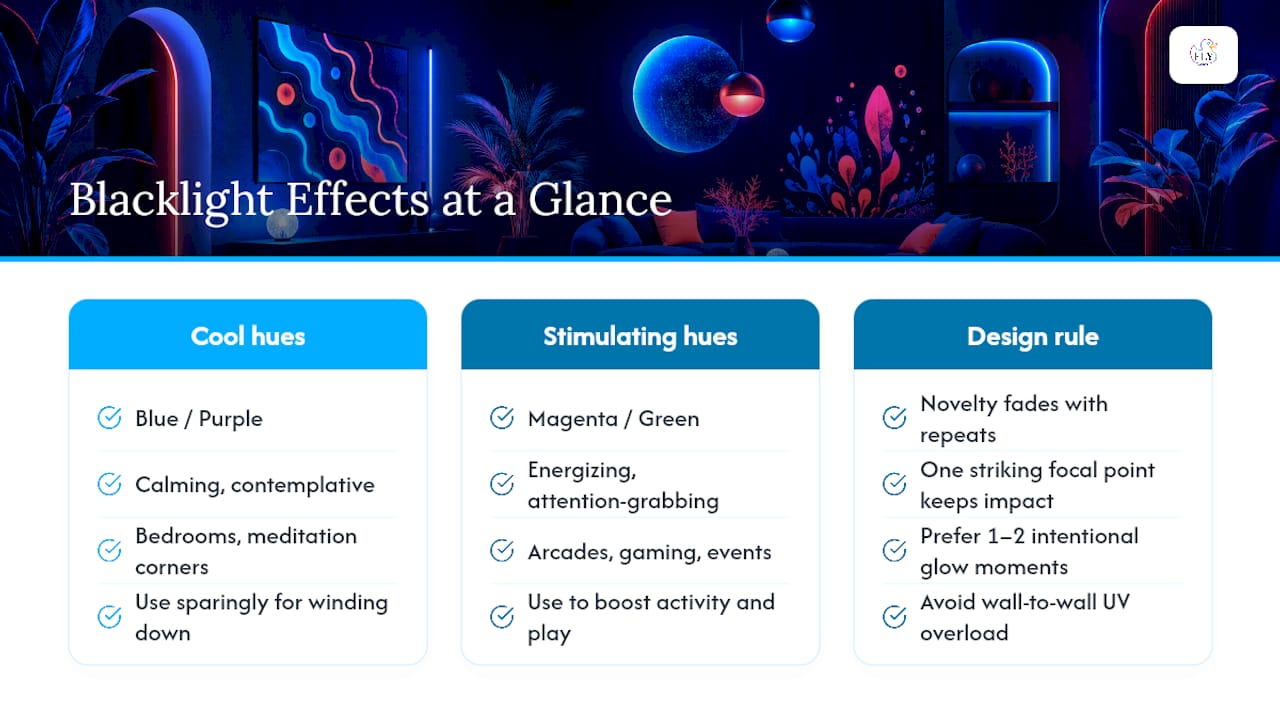
A dimly lit room with one glowing focal point changes how people behave in it, and it’s not just aesthetics. Lower ambient light naturally lowers arousal and encourages quieter conversation, which is part of why blacklight setups feel calming in a bedroom or meditation corner but energizing in a gaming or event context, depending on color choice.
Blue and purple UV tones tend to read as cool and contemplative, which fits spaces meant for winding down. Magenta and green skew more stimulating, which is why arcades, gaming rooms, and event spaces lean toward those hues rather than soft blues. The color decision isn’t just visual preference; it sets the emotional register of the whole room before anyone says a word.
There’s also a novelty effect worth naming honestly. The first time someone walks into a UV-lit room, the reveal of hidden glow detail in art or fabric creates a small jolt of surprise, almost like discovering a secret layer to something familiar. That reaction fades with repeated exposure, which is exactly why designers recommend restraint: a single striking focal piece keeps delivering that moment every time a guest sees it, while an overloaded room of neon everywhere loses its impact within a few visits because there’s no single thing left to notice.
The psychological upside is real, but it’s fragile. Overdo the glow and the room stops feeling curated and starts feeling like a novelty shop. Underdo it and the effect barely registers. The sweet spot, based on what actually holds attention over time, sits closer to one or two intentional glow moments than a wall-to-wall UV takeover.
Fixing the Most Common Blacklight Mistakes
The number one complaint from first-time UV rooms is that nothing looks like it’s supposed to glow. Usually the culprit is fixture type: RGB strips mimicking purple light don’t trigger real fluorescence, so if nothing’s reacting, check whether the bulb is genuine UV-A before assuming the paint or fabric failed.
Weak or patchy glow on a tapestry or painted wall often traces back to distance. Fixtures placed too far from the surface spread the UV output too thin to fully activate pigment, which is why a bar positioned in the 2 to 5 foot range from the piece tends to outperform one mounted across the room “for a wider effect.”
Dust is the quiet killer of a good UV room. Because dust and lint fluoresce under blacklight almost as readily as your décor does, a room that looked crisp on install day can look hazy and gray within weeks if surfaces aren’t wiped down regularly. Wipe fixtures and nearby surfaces with a dry microfiber cloth on a biweekly basis, more often in dry climates with higher dust turnover.
Fading is the other long-term issue. Budget UV paints and low-grade printed posters lose intensity noticeably within a year or two of regular use, especially if they’re also exposed to daytime sunlight, which degrades fluorescent pigment faster than UV light does. If a piece matters enough to be a room’s anchor, it’s worth spending more upfront on better pigment rather than replacing a faded poster every winter.
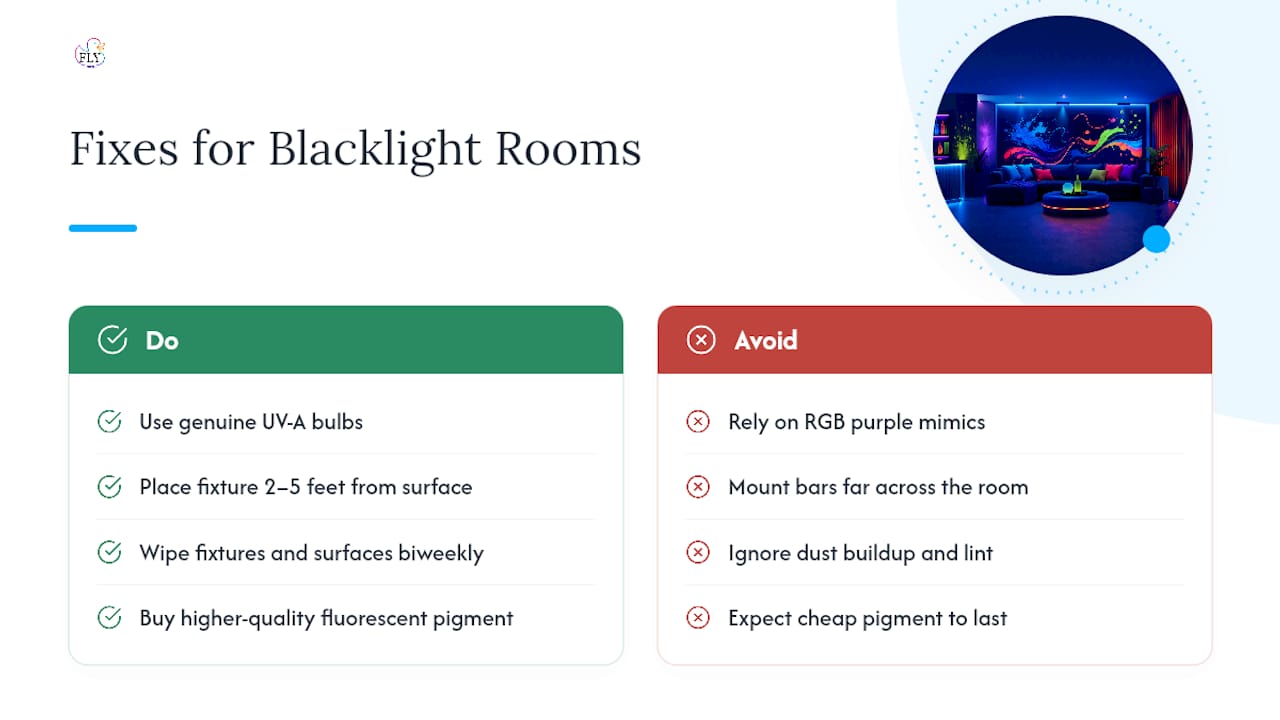
Finally, glare and eye fatigue show up when a bar is mounted at eye level pointed outward rather than angled down onto the art. Reposition the fixture above the sightline first before assuming the bulb itself is too strong.
Design Intent Over Spectacle
The instinct with blacklight is always to add more glow. Resist it. A room with one deliberate focal piece under a well-placed UV bar holds attention longer than a room where every surface competes for the same light. Restraint isn’t a compromise here. It’s the actual design skill.
The pieces I build are meant to be discovered slowly, with detail that only shows itself under UV. That only works if the room around the piece gives it room to breathe.
— Facundo
FLY Miami Art: Commissions, Originals, and Glow Guidance
Most blacklight decor on the market is mass-produced: printed posters, generic tapestries, the same designs sold under a dozen different labels. Flymiami offers unique art pieces made using UV-reactive pigments layered by hand rather than mass produced or printed, led by artist Facundo Yebne.
If you want a ready-made anchor piece, browse the UV/Glow Art collection or the broader Originals line for one-of-a-kind sculptural and wall pieces. If you have a specific space in mind and want something built to fit it, a custom glow piece commission gets you a handcrafted work designed around your room, your colors, and your wall. Start by browsing the full catalog at Flymiami and reaching out about a commission for the space you’re planning.
Sources
- How to Make a Neon (Yes, Neon) Interior Work - Dwell
- Enchanted Forest Glow | Official GlowCreations UV Art Decor
FAQ
What Colors Show Up Best Under Blacklight?
White, neon-dyed fabrics, and fluorescent pigments (especially in blues, purples, and pinks) react most strongly to UV-A light. Pastels and off-whites glow faintly too, which makes them useful for subtle ambient effects rather than a bold focal statement.
What Is the Rule of Three in Blacklight Design?
Designers recommend placing glow accents in three locations, such as an artwork, a small object, and an architectural detail, rather than covering every surface. It keeps the room feeling composed instead of cluttered.
How Much Does a Blacklight Setup Cost?
A basic UV LED bar and small poster setup can be affordable, while a mid-range room with a quality tapestry, dimmable bar, and mounting hardware may cost more depending on selection. Commissioned art pieces are priced individually. Flymiami’s custom glow piece pricing is available by request.
What Are Some Creative Blacklight Decor Ideas?
Strong starter ideas include a single glow tapestry over a bed, a UV-reactive sculpture lit from a low angle, or LED strip lighting behind a gaming desk. Each works best as one focal point rather than several competing glow sources in the same room.
Do I Need a Special Bulb for UV Art To Glow?
Yes. Genuine UV-A LED bars or fluorescent tubes activate fluorescent pigment, while standard RGB LED strips only mimic a purple color without triggering real fluorescence. Check the bulb type before assuming a piece isn’t working.