How to Rotate Pop Art Displays at Home
Rotating pop art displays at home is the practice of systematically swapping, repositioning, and refreshing artworks to keep your living space visually alive. Unlike static gallery walls, a rotation system treats your home like a living exhibition, where pieces cycle in and out based on season, mood, or cultural moment. The right tools make this practical rather than tedious. Magnetic floating frames with UV-grade acrylic protect your prints while enabling swaps in minutes, and digital layout planners let you preview changes before touching a single wall. This guide covers the tools, planning methods, and design principles that make home art rotation work.
How to rotate pop art displays at home with the right tools
The tools you choose determine how often you actually rotate your collection. The wrong setup makes swapping feel like a construction project. The right one makes it feel like rearranging books on a shelf.
Frames and mounting systems
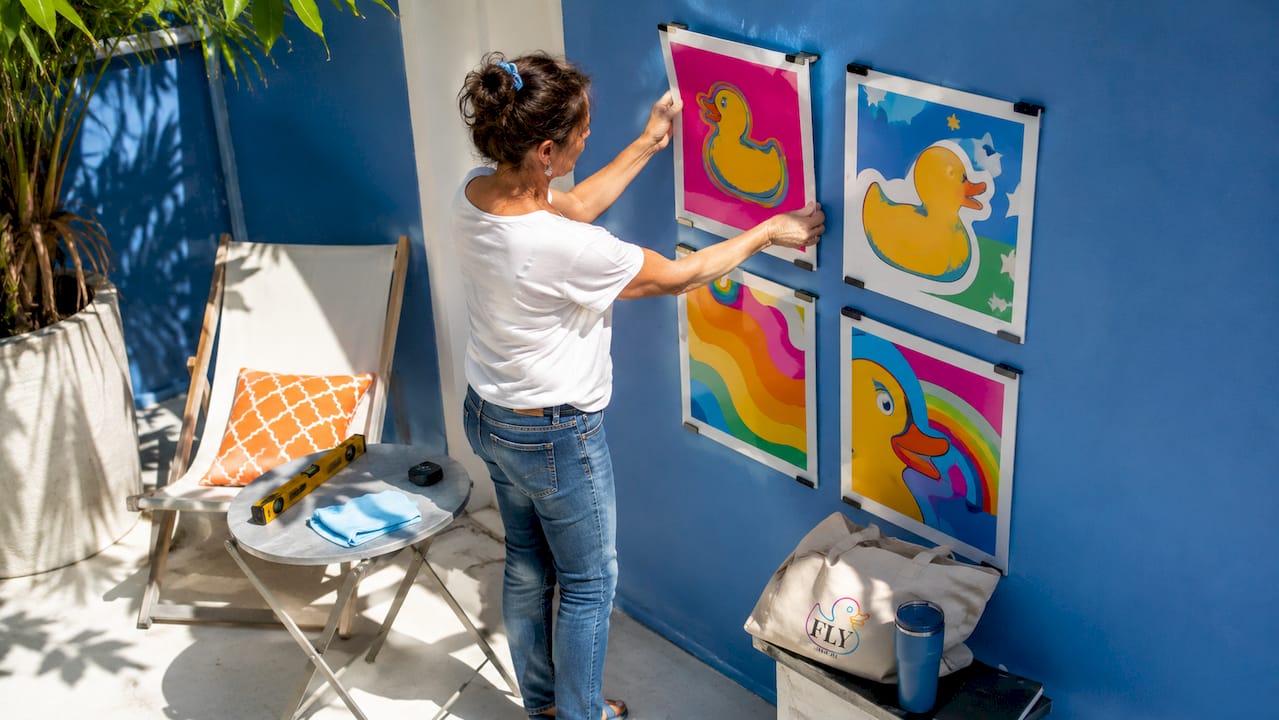
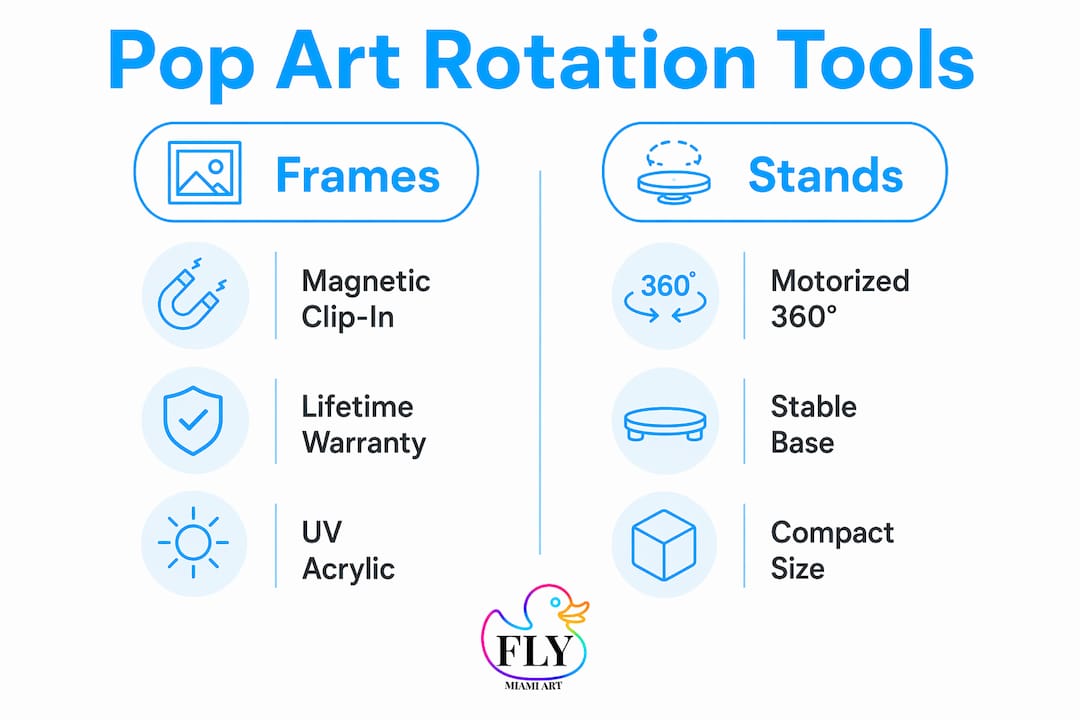
Magnetic clip-in frames are the gold standard for flat pop art. Modern magnetic frames use UV-grade acrylic that shields prints from light damage and allow you to swap artwork in under five minutes. The hardware stays fixed to the wall permanently. Only the art moves. That separation of hardware from artwork is what makes frequent rotation sustainable over years without turning your walls into patchwork.
For prints you rotate seasonally, look for frames with lifetime-warranty mounting systems. Seasonal refresh strategies built around these systems mean the heavy hardware never comes down, only the art inside it changes. This preserves the wall surface and keeps installation quality consistent across dozens of swaps.
Digital planning tools
Before you move anything physical, plan it digitally. Open-source gallery wall planning tools let you upload images of your actual art, drag and drop layouts, and preview arrangements against a background-removed wall simulation. These tools offer over a dozen standard layout templates. That preview step eliminates the trial-and-error damage that comes from hammering nails in the wrong spots repeatedly.

Rotating stands for 3D art
Pop art sculptures and figurines need a different approach entirely. Motorized 360-degree rotating stands with 15cm diameter platforms accommodate a range of sculpture sizes and run on USB or battery power. Adjustable speed settings let you control how fast a piece turns, which matters when the art is bold and visually dense. A slow rotation draws the eye in. A fast one creates distraction.
| Display tool | Best for | Ease of swap | Key feature |
|---|---|---|---|
| Magnetic clip-in frame | Flat prints and posters | Very easy | UV-grade acrylic protection |
| Standard picture rail | Mixed media, varied sizes | Easy | No wall damage, adjustable |
| Motorized rotating stand | Sculptures and figurines | Moderate | Adjustable speed, USB or battery |
| Digital gallery planner | Pre-installation layout | N/A | Drag-and-drop simulation |
Pro Tip: Mount your heaviest hardware once and never remove it. Swap only the art inside the frame. This single habit extends your wall’s lifespan and cuts rotation time from an hour to ten minutes.
How to plan a rotating pop art gallery wall at home
Planning a rotation before executing it prevents the most common mistake: hanging art impulsively and then living with a wall that never quite works. A structured workflow makes the difference between a gallery wall and a cluttered one.
Step-by-step rotation workflow
- Audit your collection. Lay every piece flat on the floor. Group by size, color palette, and theme. You need to know what you own before you can plan what to show.
- Define your rotation zones. Assign specific wall areas to specific categories, such as a bold single statement piece above a sofa, a grid of smaller prints in a hallway, or a sculpture on a console table.
- Plan digitally first. Upload your art to a gallery wall planning tool and simulate the layout. Adjust spacing and sizing before touching the wall.
- Install permanent hardware. Hang frames, rails, or stands once. Use a level. Get this right the first time.
- Set a rotation schedule. Quarterly rotations align naturally with seasons. Monthly rotations work well if you have a large collection and want frequent change.
- Document each configuration. Photograph your wall after every rotation. This reference prevents you from repeating the same arrangement and helps you track what worked.
Displaying pop art chronologically
One underused approach is to display pop art chronologically at home, moving through the movement’s history from the 1950s British origins through American Pop’s mass-culture explosion to contemporary interpretations. This turns your wall into a timeline. Rotate pieces in and out as you acquire new work, always maintaining the historical arc. It gives guests a conversation starter and gives you a curatorial purpose beyond pure decoration.
| Rotation approach | Frequency | Best suited for |
|---|---|---|
| Seasonal themes | Every 3 months | Homeowners with medium collections |
| Chronological arc | As collection grows | Art enthusiasts building over time |
| Cultural or news-driven | Monthly or event-based | Collectors engaged with current events |
| Color-led rotation | Biannually | Rooms with fixed neutral palettes |
What design principles keep rotating pop art visually balanced?
Interior designers consistently warn that the biggest mistake with pop art is overpowering a room. Bold color, graphic lines, and high contrast are the genre’s strengths. They are also its risks. The solution is not to tone down the art. It is to control everything around it.
Balancing vibrancy with neutral surroundings
Pair vibrant pop art with matte white, warm gray, or natural wood surfaces. The neutral background acts as visual breathing room. When you rotate a new piece in, the neutral wall absorbs the color shift without the room feeling chaotic. Curators from the Andy Warhol Foundation describe pop art’s ethos as accessibility and mass appeal. That accessibility works best when the art has space to speak rather than compete with its surroundings.
Grouping by theme and cultural moment
Thematic grouping is the technique that separates a thoughtful rotation from a random one. Group pieces by cultural reference, color family, or social theme. An exhibition like American Pop at the Hood Museum rotates displays to deepen engagement and cultural discourse. You can apply the same logic at home by cycling in pieces that respond to current events, seasons, or personal milestones.
Design do’s and don’ts for rotating pop art:
- Do use consistent frame finishes across a wall to unify varied art styles.
- Do leave at least 2–3 inches of breathing space between pieces in a grid.
- Do anchor a large statement piece before building smaller works around it.
- Don’t mix more than three dominant colors in a single wall zone.
- Don’t hang art at random heights. Eye level is 57 inches from the floor, the museum standard.
- Don’t rotate every piece at once. Swap one or two at a time to maintain visual continuity.
Pro Tip: Treat your rotating display like a visual scrapbook. Each rotation tells a chapter of your taste, your mood, and the cultural moment you are living in. That narrative quality is what makes the practice feel meaningful rather than decorative.
How to handle 3D pop art and sculptures in a rotating home display
Three-dimensional pop art introduces challenges that flat prints do not. Weight distribution, viewing angle, and lighting all affect how a sculpture reads in a space. Getting these right transforms a figurine on a shelf into a genuine focal point.
Choosing and positioning rotating stands
Balancing the center of gravity on a rotating stand is the single most important technical factor. A piece that wobbles loses its authority immediately. Choose stands with a wide, stable base relative to the sculpture’s height. For pieces with an uneven weight distribution, place the heavier side toward the stand’s center. Speed adjustment is equally critical. Vibrant, color-saturated pop art sculptures benefit from slow rotation speeds that let the viewer absorb each angle. Fast rotation creates visual fatigue with bold work.
Lighting placement should account for the rotation. A fixed spotlight that illuminates one side of a static sculpture becomes a strobe effect on a rotating one. Use ambient lighting from multiple angles, or position the stand where natural light wraps around the piece evenly. Flymiami’s UV-reactive sculptures add a second layer to this consideration: under blacklight, hidden patterns emerge, making the rotation reveal new visual information with every turn.
3D art rotation checklist
- Confirm the stand’s diameter and weight capacity before placing any sculpture.
- Test rotation speed at the slowest setting first and increase gradually.
- Check for wobble by running the stand empty before loading the piece.
- Position the stand at least 12 inches from wall edges to allow full rotation clearance.
- Dust sculptures before each rotation to maintain surface quality under direct light.
- Photograph each placement configuration for future reference.
For collectors interested in why sculptural art outperforms flat wall decor in terms of spatial impact, the rotation factor is a key reason. A sculpture that turns gives a room a living quality that no print can replicate.
Key Takeaways
Rotating pop art displays at home works best when permanent hardware stays fixed, only the art moves, and every swap is planned digitally before touching the wall.
| Point | Details |
|---|---|
| Use modular framing | Magnetic frames with UV acrylic protect art and enable swaps in minutes without wall damage. |
| Plan digitally first | Gallery wall planning tools simulate layouts and prevent costly installation errors. |
| Set a rotation schedule | Quarterly or monthly rotations tied to seasons or cultural moments keep displays fresh. |
| Balance bold art with neutral space | Pair vibrant pop art with matte or neutral backgrounds to prevent visual overwhelm. |
| Handle 3D art with care | Balance center of gravity on rotating stands and use slow speeds for bold, color-dense sculptures. |
Why rotation is the most honest thing you can do with pop art
Pop art was never meant to be permanent. Andy Warhol made that clear. The whole point of the movement was to mirror the disposability and constant churn of consumer culture. When you hang a piece and leave it for five years, you are doing the opposite of what the genre asks of you.
I have been working with pop art for years, and the collectors who get the most out of their pieces are the ones who treat their walls as active spaces. They swap work in when it feels relevant and pull it back when it stops speaking to them. That responsiveness is not restlessness. It is curatorial instinct.
The rotation practice also changes how you see individual pieces. A print you have lived with for six months goes into storage, comes back a year later, and you notice things you missed entirely. The recontextualization that exhibitions like American Pop use deliberately to deepen engagement works the same way at home. Distance creates fresh eyes.
My honest advice: do not wait until you have the perfect collection to start rotating. Start with two pieces and one swap. The habit builds from there, and the wall gets better every time.
— Facundo
Flymiami’s pop art collection is built for rotation
Flymiami designs pieces with active collectors in mind. Every work by Facundo Yebne is handcrafted to hold its visual weight whether it is the centerpiece of a wall or cycling through a rotation alongside other strong pieces.
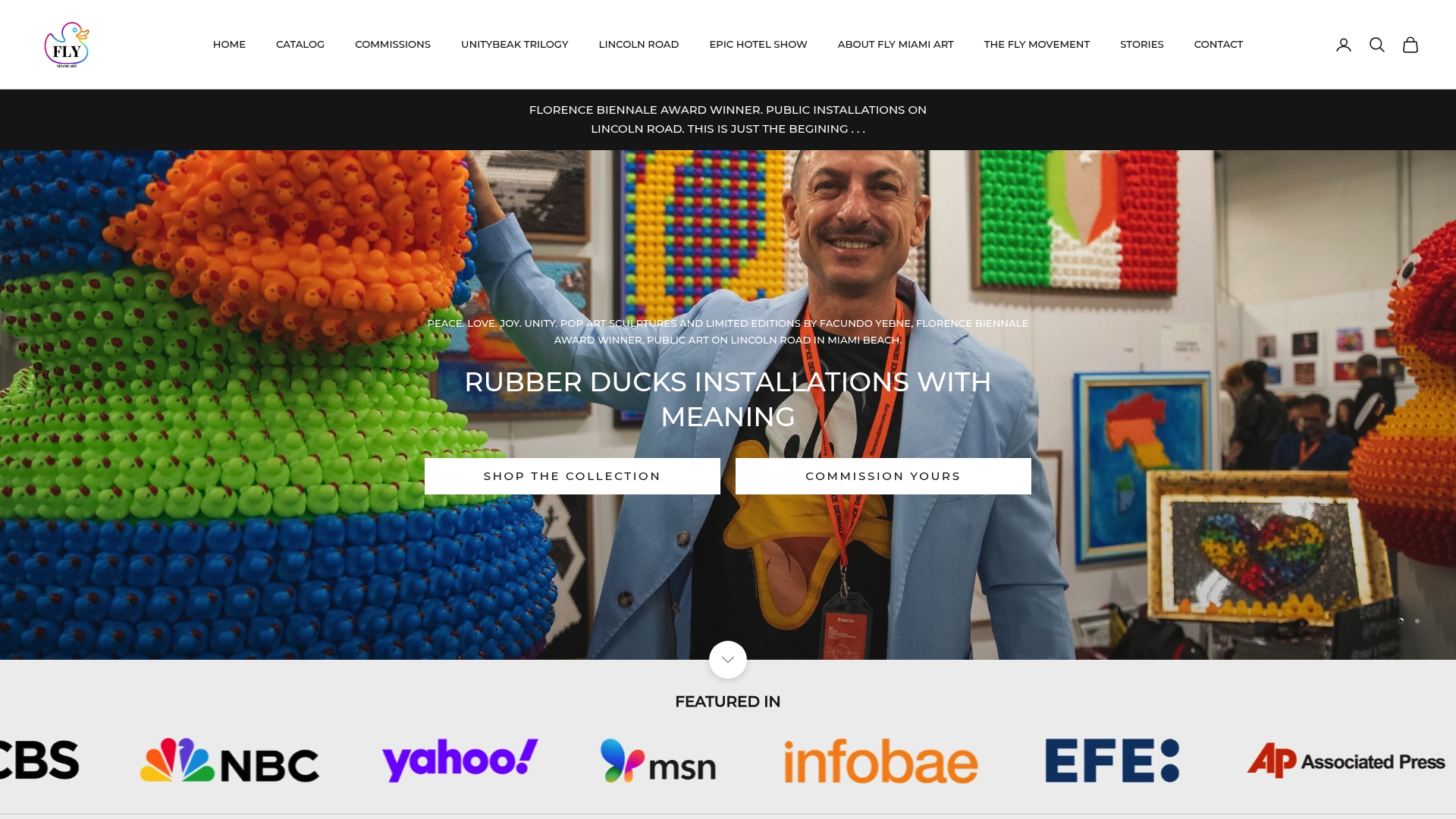
The wall art collection includes prints and mixed-media works sized for standard modular frames, making them straightforward to swap into existing display systems. The sculpture collection features pieces designed with balanced proportions that sit cleanly on rotating stands. For collectors who want something that changes with the light itself, Flymiami’s UV-reactive paintings reveal hidden patterns under blacklight, adding a dimension that no static display can offer. Each piece ships ready to display, with the kind of finish quality that holds up across years of rotation.
FAQ
What is the easiest way to rotate art displays at home?
Magnetic clip-in frames with fixed wall hardware are the easiest system. You swap the art inside the frame without removing any mounting hardware, cutting rotation time to under five minutes.
How often should you rotate pop art displays?
Quarterly rotations aligned with seasons work well for most homeowners. Collectors with larger collections or strong interest in current events often rotate monthly.
Do I need special frames to display pop art chronologically at home?
Standard modular frames work for chronological display. The key is consistent sizing or a flexible rail system that accommodates different print dimensions as your collection grows across eras.
How do I prevent wall damage from frequent art display changes?
Use permanent mounting hardware and only swap the artwork inside the frame. Modular framing systems paired with digital layout planning eliminate the repeated nail holes that cause wall damage over time.
What type of rotating stand works best for pop art sculptures?
A motorized stand with adjustable speed settings and a stable base sized to the sculpture’s footprint works best. Stands with USB or battery power and a 15cm diameter platform handle most medium-sized pop art pieces without wobble.