Why Pop Art Remains Culturally Relevant Today
Pop Art is defined as a movement that integrates commercial imagery, mass media, and consumer culture into fine art, creating a visual language that still shapes how we see the world. Andy Warhol’s silk-screened soup cans and Roy Lichtenstein’s comic-strip panels were not nostalgia pieces the moment they were made. They were diagnoses. Why pop art remains culturally relevant comes down to one core fact: the movement predicted the visual logic of the digital age before the internet existed. Its principles of repetition, branding, and accessibility now govern everything from Instagram aesthetics to meme culture, making Pop Art less a historical chapter and more a living framework.
Why pop art remains culturally relevant in the digital age
Pop Art established the visual language of the digital age by focusing on repetition, branding, and the democratization of low-brow imagery. That is not a metaphor. It is a structural match between what Warhol built in the 1960s and what social media platforms run on today.
Warhol’s silk-screen technique did something specific. It promoted art reproducibility, enabling wider collector participation and sustained cultural relevance through editions. The same logic drives every filtered selfie, every reposted meme, and every brand account that recycles a visual identity across platforms. Repetition is not laziness. It is strategy, and Warhol proved it first.
Lichtenstein took a different angle. He foregrounded mass production and media aesthetics by painting images that already existed, comic strips and advertisements, at monumental scale. The “image of an image” concept he and Warhol shared explains Pop Art’s enduring presence in daily life and decor. When you see a bold graphic print on a phone case or a celebrity’s face rendered in flat color on a concert poster, you are looking at Lichtenstein’s logic applied to 2026.
The connection to social media goes deeper than aesthetics. Curated personal identities, the use of filters to flatten and stylize images, and the deliberate construction of a “brand self” are all Warholian practices. Pop Art engages with celebrity culture and entertainment in ways that feel native to platforms built on image repetition and personal branding.
- Repetition as meaning: Warhol’s grid prints showed that repeating an image drains and rebuilds its meaning simultaneously. Social media feeds do the same.
- Branding as art: Pop Art treated commercial logos and packaging as legitimate subjects. Influencer culture treats personal identity the same way.
- Accessibility as intent: Pop Art rejected the idea that art required specialized knowledge. Social media content operates on the same principle.
- Flat color and bold line: Lichtenstein’s graphic style maps directly onto the visual grammar of digital illustration and motion graphics today.
Pro Tip: When you scroll your feed and notice a post that uses flat color, bold outlines, or a repeated image grid, you are looking at Pop Art’s DNA. Train your eye to spot it and you will see the movement everywhere.
Why pop art draws non-traditional audiences across generations
Pop Art democratized art by breaking barriers between high culture and everyday life, making it accessible to broader audiences including collectors at varied price points. That accessibility is not a side effect. It is the point.
The movement collapsed the hierarchy that kept fine art inside white-walled galleries and out of ordinary homes. A Warhol print of Marilyn Monroe or a Lichtenstein “Whaam!” reproduction does not require art history knowledge to engage with. The images are already familiar. That familiarity is the entry point, and it works on a teenager seeing a print for the first time just as well as it works on a seasoned collector.
Pop Art’s bold color palettes and graphic simplicity make it highly versatile and suitable as focal points in contemporary interior design. This practical quality drives its appeal beyond galleries into homes, hotels, and commercial spaces. Collectors value it not just as investment but as visual experience.
Factors driving Pop Art’s multi-generational relevance include:
- Visual immediacy: Bold graphics communicate before the viewer consciously processes them.
- Cultural familiarity: Pop Art uses subjects everyone already knows, celebrities, products, and media images.
- Price range diversity: Editions, prints, and emerging artists offer entry points at many budget levels.
- Interior design compatibility: Pop Art works in modern, vintage, and mixed-aesthetic spaces without friction.
- Emotional directness: The work does not hide its meaning behind abstraction. It states it clearly.
What makes pop art politically subversive beneath its bright surface
Pop Art reflects consumerism and celebrity culture critically while maintaining broad appeal, performing a double function: public readability and deep structural complexity. That duality is what makes it subversive. The work looks cheerful. The message is not always.

Warhol’s “Death and Disaster” series placed car crashes and electric chairs in the same visual register as soup cans and celebrities. The repetition was the point. Seeing a fatal car crash rendered in the same flat, commercial style as a Brillo box forces a confrontation with how media normalizes violence. Pop Art remains a mirror to contemporary obsessions, forcing viewers to confront consumer-driven societal shallowness while maintaining critical weight despite its popularity.
Lichtenstein’s work carries a similar tension. His paintings of crying women and fighter jets use the visual language of romance comics and war propaganda. By scaling them up and presenting them as fine art, he exposed the emotional manipulation embedded in mass media. The work is funny and unsettling at the same time. That combination is exactly what makes it politically effective.
Contemporary Pop Art carries this tradition forward. Works that render politicians, tech billionaires, or viral celebrities in Warhol’s silk-screen style use the same mechanism. The subject becomes a product. The viewer is asked to notice that. Viral moments in media operate on the same logic Pop Art critiqued decades ago, which is why the critique still lands.
Pro Tip: When a Pop Art work makes you smile, pause and ask what the artist chose to render in that cheerful style. The gap between the visual tone and the subject matter is usually where the political argument lives.
How contemporary artists keep pop art’s cultural significance alive
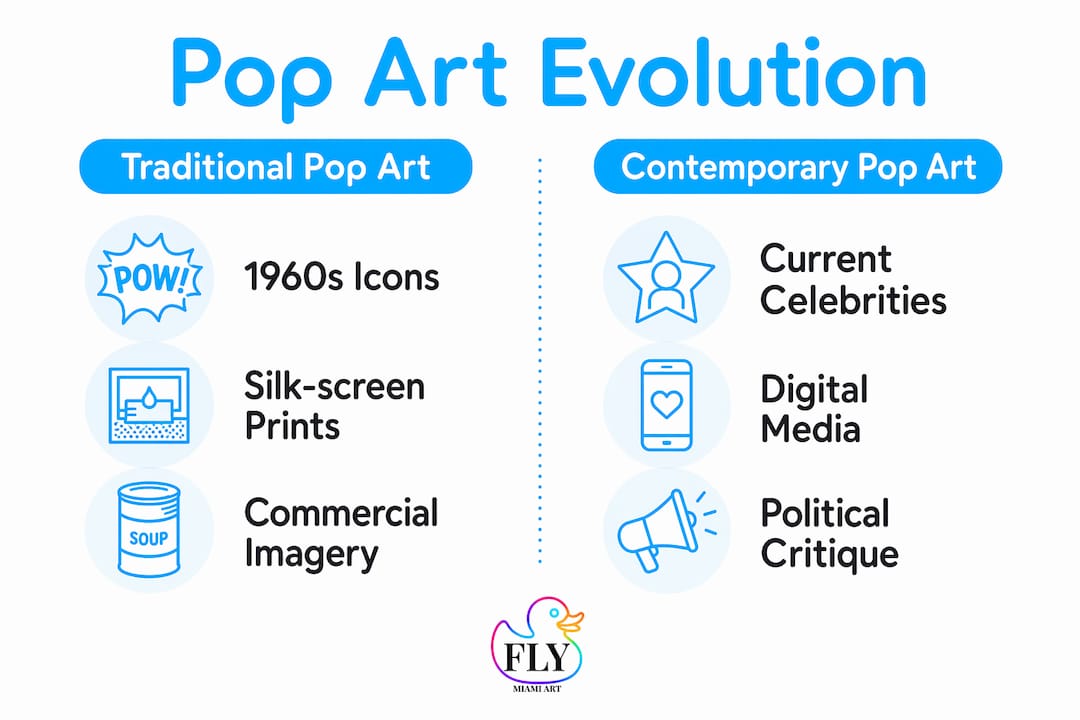
Contemporary artists sustain Pop Art’s relevance by replacing classic icons with current celebrities, proving it as a dynamic, evolving framework. The movement does not preserve itself in amber. It updates its cast of characters while keeping its visual logic intact.
The market confirms this vitality. Blue-chip Pop Art works by Roy Lichtenstein consistently exceed $30 million at auction. That price point signals institutional confidence in the movement’s long-term value, not just nostalgia. Collectors and institutions treat Pop Art as a category with ongoing relevance, not a closed chapter.
Exhibitions like “Guggenheim Pop: 1960 to Now” demonstrate Pop Art’s capacity to absorb diverse voices, highlighting its ongoing evolution beyond nostalgia. The show brought together artists from multiple generations and cultural backgrounds, all working within Pop Art’s framework but addressing current subjects. That range proves the movement is a method, not a moment.
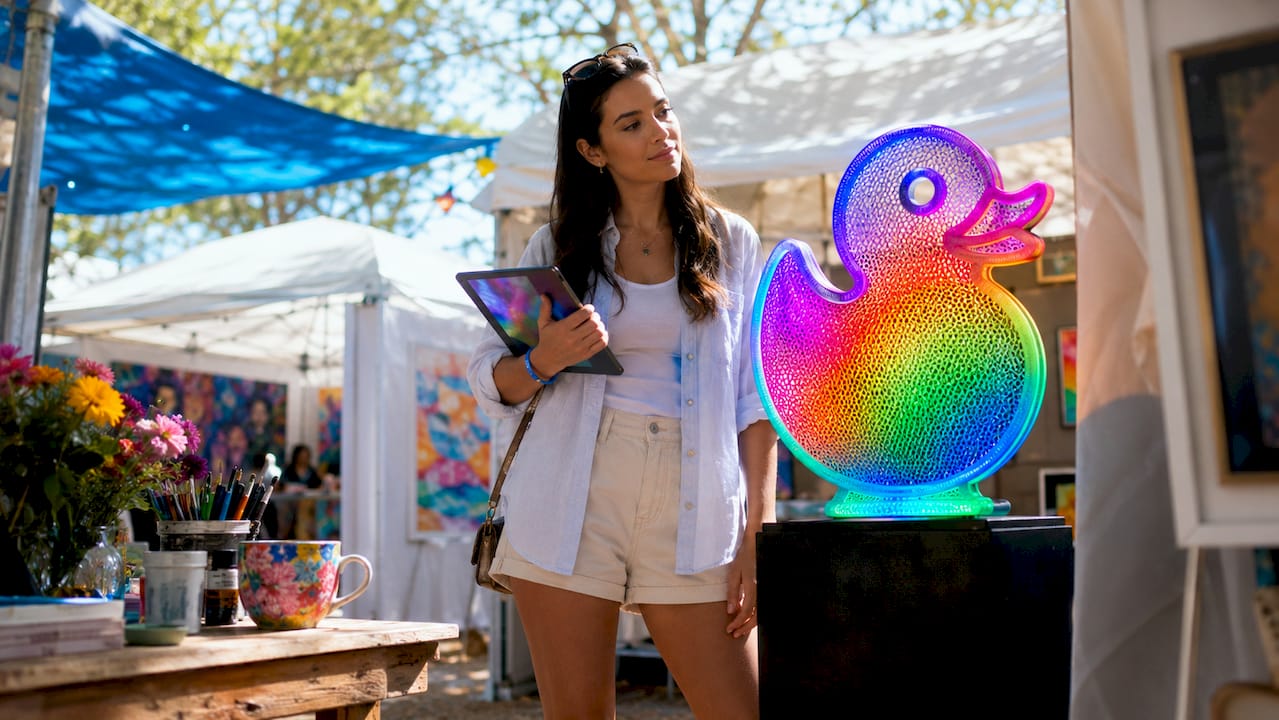
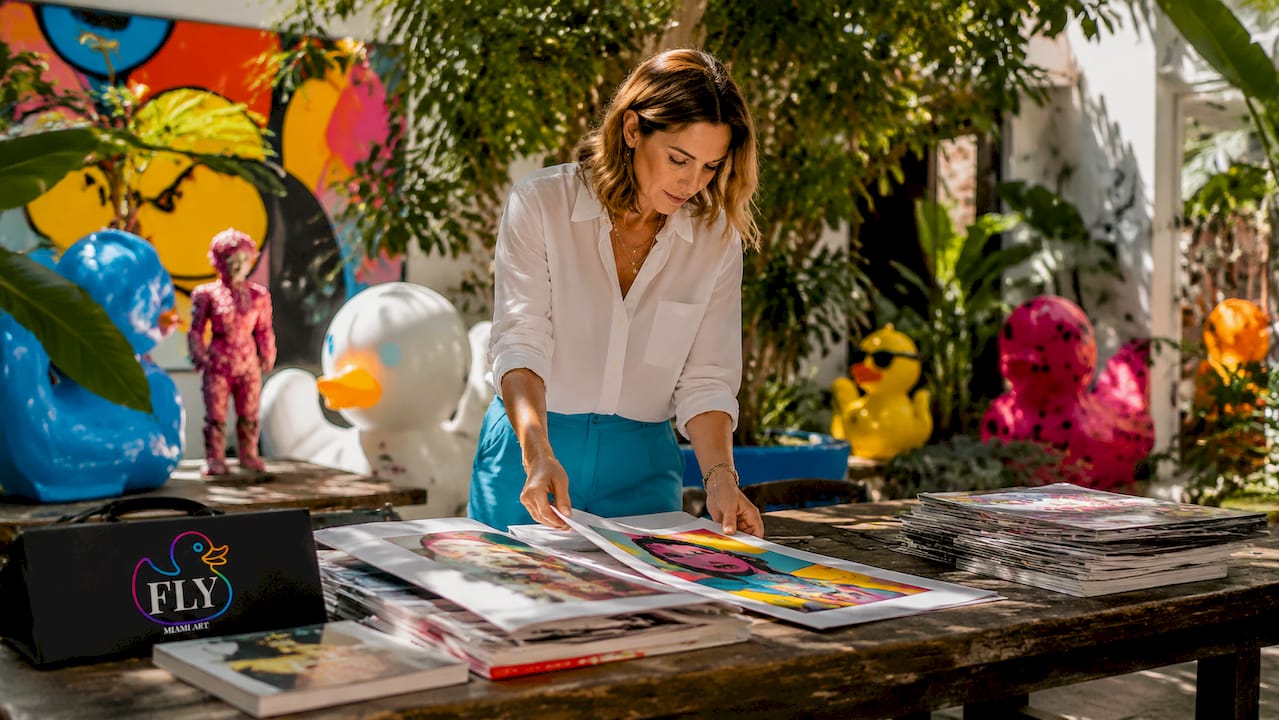
Flymiami, led by artist Facundo Yebne, represents exactly this kind of contemporary evolution. Flymiami’s pop culture art series reimagines icons through handcrafted sculptures that incorporate UV-reactive materials, adding an immersive dimension that traditional Pop Art never had. The work celebrates peace and unity while maintaining the bold visual language the movement established.
| Trait | Traditional Pop Art | Contemporary adaptations |
|---|---|---|
| Subject matter | 1960s celebrities, consumer products | Current musicians, athletes, viral figures |
| Medium | Silk-screen, canvas, lithography | Sculpture, UV-reactive materials, digital print |
| Distribution | Gallery and auction | Online, art fairs, direct collector sales |
| Cultural critique | Consumerism, Cold War media | Social media, celebrity worship, identity politics |
| Collector access | Primarily institutional | Broad, including emerging collectors |
Key Takeaways
Pop Art remains culturally relevant because its core logic, repetition, branding, accessibility, and critique of mass media, maps directly onto the visual and social structures that define contemporary life.
| Point | Details |
|---|---|
| Digital age foresight | Pop Art’s focus on repetition and branding predicted social media aesthetics by decades. |
| Broad audience appeal | Bold visuals and familiar subjects make Pop Art accessible to collectors at every level. |
| Political subversion | Cheerful surfaces carry structural critiques of consumerism, celebrity, and media manipulation. |
| Living framework | Contemporary artists replace 1960s icons with current figures, keeping the movement active. |
| Market strength | Lichtenstein works exceeding $30 million at auction confirm sustained institutional confidence. |
Pop Art never stopped being urgent
I have spent years working with Pop Art as both a medium and a philosophy, and the question I hear most often is whether the movement is “still relevant” or just well-preserved. My answer is that it was never preserved. It kept moving.
What strikes me most is the movement’s structural honesty. Pop Art does not pretend to be above the culture it depicts. It sits inside consumer culture and holds up a mirror from the inside. That position is more uncomfortable than standing outside and critiquing from a distance. It implicates the viewer. You recognize the soup can. You know the celebrity’s face. You are part of what the work is about.
The conceptual depth of Pop Art is consistently underestimated because the surface is so accessible. That is the trap the movement sets deliberately. The work looks easy to read. The implications are not. When I create pieces that use UV-reactive materials to reveal hidden layers under blacklight, I am working in that same tradition. What you see first is not the whole story.
Pop Art also taught me that collecting does not require distance or reverence. The best Pop Art works in a living room, a hotel lobby, and a museum with equal force. That versatility is not a compromise. It is the point. Art that only works in one context is art that has already limited its own reach.
— Facundo
Flymiami’s wall art collection for Pop Art enthusiasts
Pop Art’s visual power belongs in spaces where people actually live and work, not only in auction catalogs.
Flymiami’s wall art collection offers handcrafted works that carry Pop Art’s bold visual language into contemporary spaces. Each piece reflects the movement’s core principles, familiar imagery, graphic impact, and cultural commentary, while adding the immersive dimension of UV-reactive materials that reveal hidden patterns under blacklight. Whether you are building a first collection or adding a statement piece to an established one, Flymiami’s works connect directly to Pop Art’s ongoing cultural legacy. Facundo Yebne’s award-winning practice has been featured in prestigious exhibitions, and every piece is made to hold its meaning across contexts.
FAQ
What is Pop Art and why does it matter today?
Pop Art is a movement that integrates commercial imagery and mass media into fine art, using repetition, branding, and accessibility as core tools. It matters today because its visual logic directly shapes social media aesthetics, celebrity culture, and contemporary design.
Why does Pop Art appeal to non-traditional art collectors?
Pop Art collapses the barrier between high culture and everyday life by using subjects everyone already recognizes, making it accessible without requiring specialized knowledge. Its bold graphics and versatile color palettes also make it practical for interior design at varied price points.
What makes Pop Art politically subversive?
Pop Art performs a double function: it uses cheerful, accessible visuals to carry structural critiques of consumerism, celebrity worship, and media manipulation. The gap between the pleasant surface and the uncomfortable subject is where the political argument lives.
How do contemporary artists keep Pop Art relevant?
Contemporary artists replace 1960s icons with current celebrities, musicians, and viral figures while maintaining Pop Art’s visual framework of repetition, flat color, and graphic simplicity. Exhibitions like “Guggenheim Pop: 1960 to Now” confirm the movement absorbs new voices without losing its identity.
Is Pop Art a good investment for collectors?
Blue-chip Pop Art works by Roy Lichtenstein consistently exceed $30 million at auction, signaling strong institutional confidence in the movement’s long-term value. Emerging artists working in the Pop Art tradition offer accessible entry points for collectors who want exposure to the category without auction-level prices.