Why UV Art Works in Public Spaces: 2026 Guide
UV art in public spaces is defined as the use of ultraviolet light and photoluminescent materials to create installations that shift appearance between daylight and darkness, producing two distinct visual experiences from a single artwork. This medium succeeds where traditional public art often falls flat because it engages visitors at night, serves wayfinding functions, and builds the kind of emotional memory that static murals rarely achieve. The industry term for the underlying technology is photoluminescence, a process where pigments absorb light energy and re-emit it as a visible glow. Understanding why UV art works in public spaces requires looking at three converging forces: the physics of UV light, the psychology of environmental surprise, and the practical needs of urban planners building livelier communities. Flymiami, led by award-winning artist Facundo Yebne, has built its entire practice around this intersection.
Why UV art works in public spaces: the physics behind the glow
The science is direct. UV-reactive pigments absorb ultraviolet wavelengths and re-emit them as visible light, producing colors that appear to glow from within. Photoluminescent materials go one step further by storing absorbed light energy and releasing it slowly after the light source is removed, creating a genuine glow-in-the-dark effect without any power source.
The industry standard for safe UV operation in public exhibits is UVA in the 365–395 nm wavelength range. UVA produces vivid fluorescence without the skin and eye risks associated with UVB or UVC radiation. This distinction matters enormously for urban planners specifying public installations where thousands of visitors may pass through daily.
Power levels follow a clear standard as well. A recommended output of 5–10 watts of UVA per 5–8 square meters delivers vivid fluorescence indoors without creating uncomfortable intensity. That ratio gives planners a reliable baseline for budgeting fixture counts and electrical loads before a project breaks ground.
The difference between UVA, UVB, and UVC is not just technical. UVA is the only band that produces the rich, saturated color shifts audiences associate with blacklight art. UVB and UVC cause material degradation and biological harm at the exposure levels needed for visual effect, making them unsuitable for public use. Any specification document for a public UV installation should explicitly require UVA-only fixtures.
- UVA (365–395 nm): Safe for public use, produces vivid fluorescence, the correct choice for art installations
- UVB (280–315 nm): Causes skin damage and pigment degradation at art-relevant intensities
- UVC (100–280 nm): Germicidal, used in sterilization, never appropriate for public art
- Photoluminescent pigments: Absorb and store light energy, glow after the UV source is removed
- UV-reactive pigments: Glow only while the UV source is active, producing instant color shifts
Pro Tip: Specify aluminum-profile LED strip housings for all UV fixtures. Aluminum dissipates heat efficiently, extends LED lifespan, and protects pigment stability over years of continuous use.
Understanding UV-reactive pigment science at this level separates installations that last a decade from ones that fade within a season.
How does ambient light management affect UV art visibility?
Ambient light is the single biggest enemy of UV art in public spaces. Natural daylight and standard white artificial light both wash out fluorescent pigments, reducing a vivid glow to a barely visible tint. This is not a flaw in the art. It is a physics problem that requires a design solution.
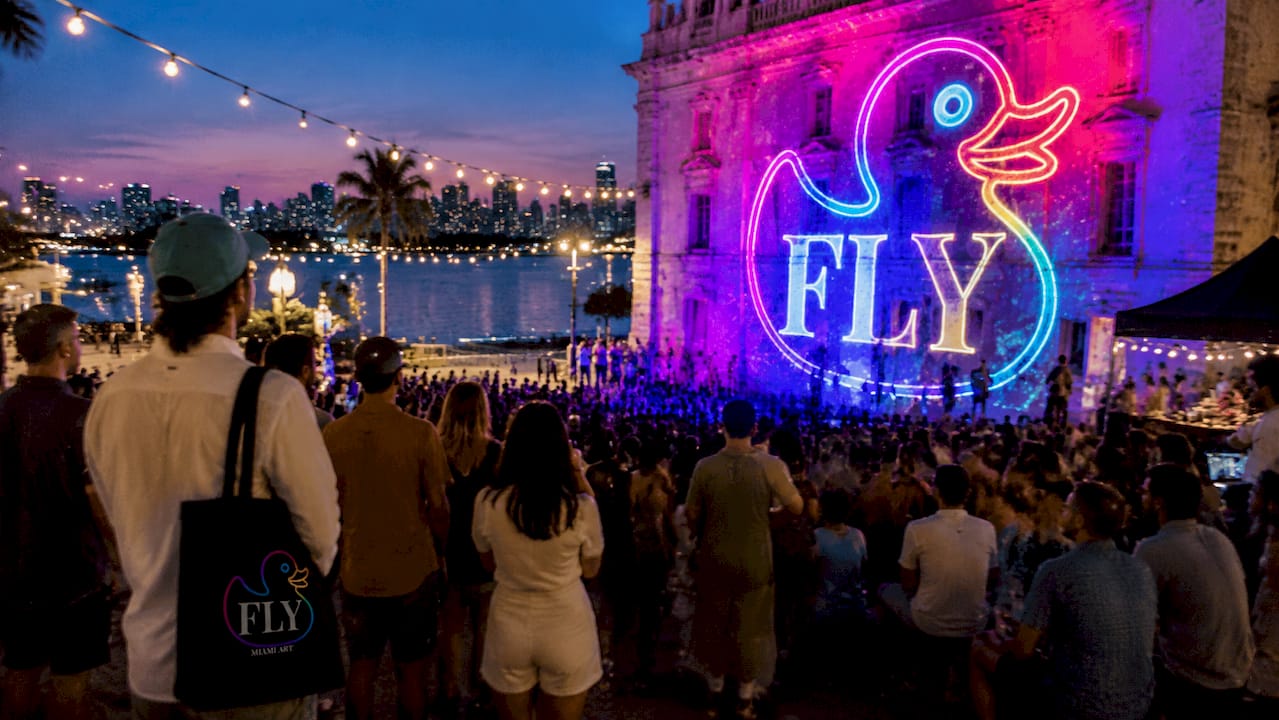
UKING experts document failures where UV installations lose their impact entirely because ambient light was not controlled. The lesson is clear: more light does not produce a better UV effect. Controlled darkness does. Planners who treat UV art like a standard mural and flood the space with general illumination will always be disappointed.
The practical toolkit for ambient light management includes window films that reduce daylight transmission, blackout shades for interior gallery spaces, and layered lighting schemes that switch between modes. Layered lighting schemes use high-CRI white light during the day for normal viewing and dim or switch off that white light at night to let UV sources reveal hidden layers and narratives. This approach preserves pigment, controls the viewer experience, and maximizes visual impact.
Timing matters as much as hardware. Outdoor UV installations work best in nightlife districts where darkness is guaranteed after a certain hour. Interior installations in lobbies or transit hubs benefit from programmable lighting controls that shift automatically at dusk. The “reveal” moment, when the space transitions from ordinary to glowing, is itself a form of audience engagement.
Pro Tip: For outdoor UV installations, position fixtures under canopies or overhangs that block ambient sky glow. Even partial shade dramatically improves fluorescence visibility during twilight hours.
How does UV art increase public engagement and revitalize communities?
UV art creates a category of experience that traditional public art cannot replicate: the environmental surprise. Visitors who walk into a space and watch it transform under blacklight become active participants rather than passive observers. That shift in behavior drives the economic and cultural benefits planners are looking for.
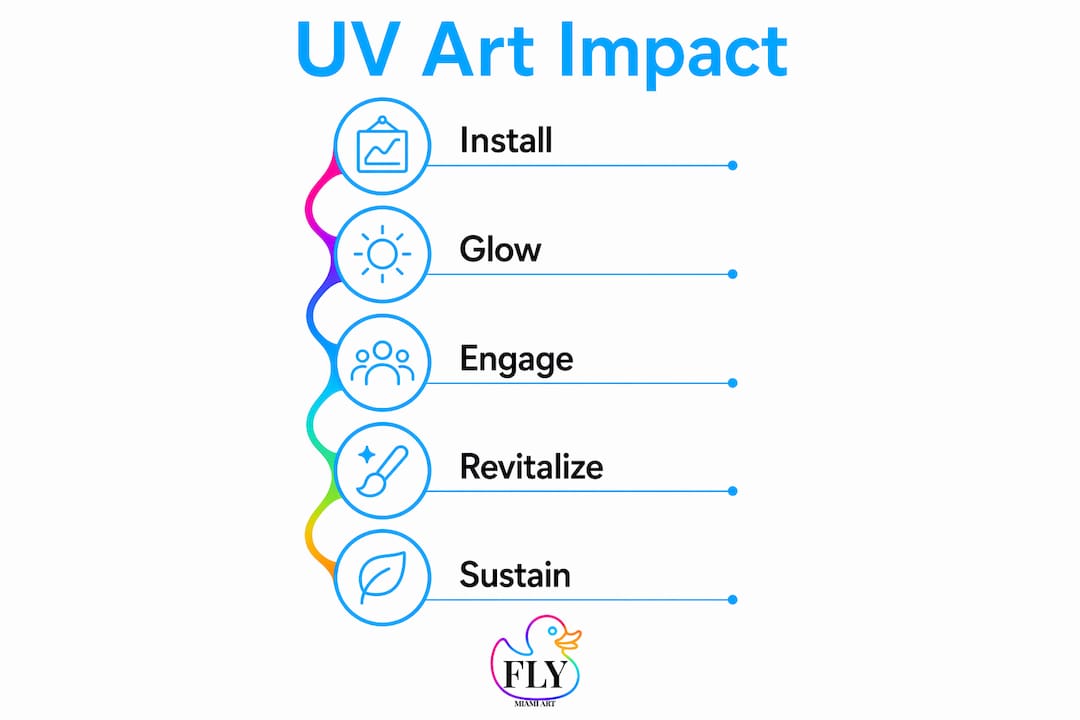
A 2026 Canberra exhibition demonstrated this directly. The UV makeover transformed venue atmosphere and visitor behavior, turning a quiet space into an active night-economy destination. The installation did not just decorate the space. It changed how long people stayed and how they interacted with each other.
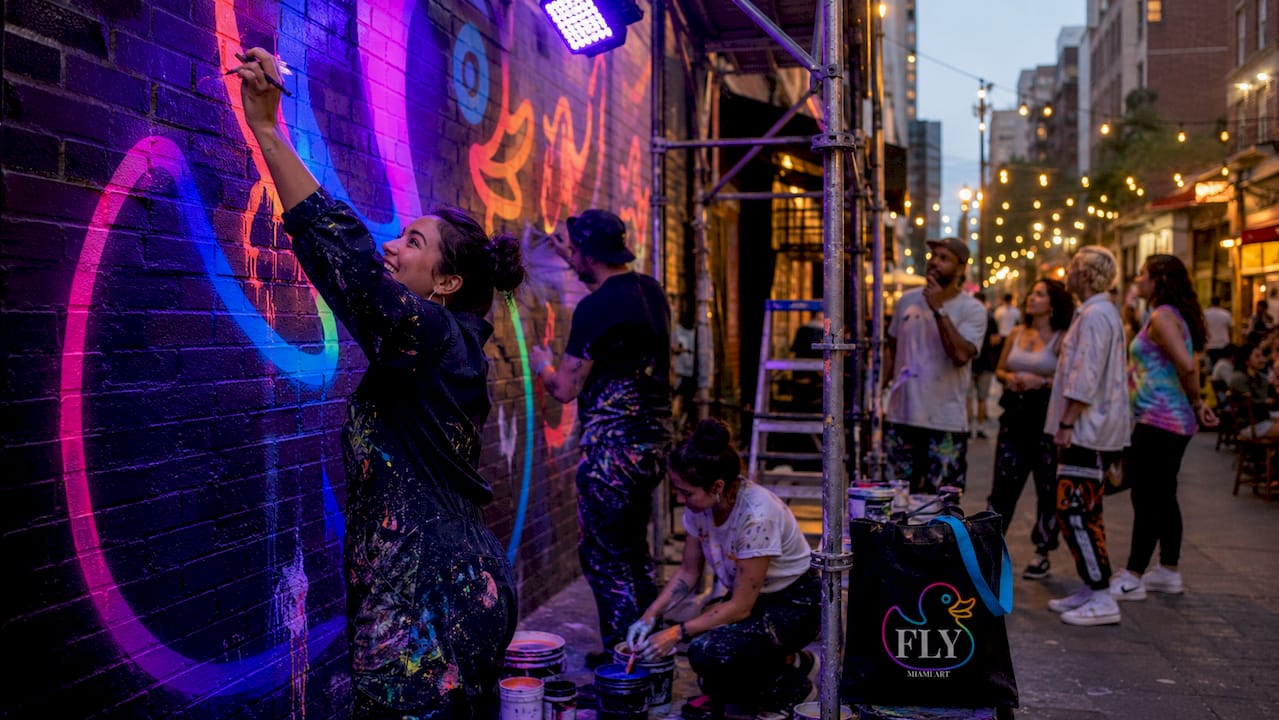
Photoluminescent and UV-reactive art serve as placemaking tools that build stronger associations between location and identity than static signage ever could. Art Pharmacy’s research confirms these installations become memorable urban landmarks. A glowing mural at a transit node or plaza corner gives a neighborhood a visual identity that residents and visitors remember and return to.
The community benefits extend beyond economics:
- Wayfinding: Photoluminescent elements remain visible at night without power, guiding pedestrians safely through parks, underpasses, and transit corridors
- Cultural storytelling: UV layers allow artists to embed hidden narratives that reward close attention, deepening community connection to the work
- Social inclusion: Interactive light environments attract diverse age groups and abilities, creating shared experiences across demographic lines
- Night economy activation: Lit installations extend the hours during which a public space draws foot traffic, supporting nearby businesses
- Place identity: Distinctive UV landmarks give neighborhoods a visual signature that strengthens local pride
Public art in social movements has always served as a vehicle for community voice. UV art adds a temporal dimension to that tradition, making the message visible in a new way after dark.
Practical considerations for installing UV art in public spaces
Installation quality determines whether a UV artwork thrives or deteriorates. The most common failure mode is not artistic. It is technical: wrong fixture placement, unmanaged exposure budgets, and inadequate housing materials.
Managing the exposure budget
Every UV installation operates on an exposure budget. Intensity multiplied by duration equals cumulative UV dose, and exceeding safe thresholds causes irreversible pigment degradation. Aluminum housing and controlled power extend LED lifespan and protect pigment stability. Planners should specify dimmable drivers so operators can reduce intensity during peak visitor hours and extend the life of both fixtures and artwork.
Fixture placement best practices
- Mount above head height. Position all UV fixtures above 7 feet to prevent direct eye exposure and eliminate glare at viewer level.
- Use multiple low-power sources. Multiple low-power UVA units placed at intervals create even, comfortable glow. A single high-intensity source creates hot spots and uneven illumination.
- Angle fixtures toward the artwork surface. Avoid pointing fixtures at viewer pathways. The art surface should be the target, not the audience.
- Use aluminum profiles. Aluminum dissipates heat, protects the LED strip, and gives the installation a professional finish that withstands outdoor conditions.
- Install programmable controls. Timers and dimmer systems let operators shift between daytime white light and nighttime UV modes automatically, protecting pigments and managing the viewer experience.
| Installation factor | Recommended standard | Risk if ignored |
|---|---|---|
| UV wavelength | UVA 365–395 nm only | Skin/eye damage, pigment degradation |
| Power output | 5–10 watts per 5–8 sq meters | Washed-out effect or overexposure |
| Fixture height | Above 7 feet | Direct eye exposure, glare complaints |
| Housing material | Aluminum profile | Heat damage, shortened LED lifespan |
| Lighting control | Dimmable, programmable drivers | Pigment degradation, poor viewer experience |
Australian councils including Blacktown City Council adopted photoluminescent public art technologies starting in 2024, establishing early precedent for municipal standards. Their experience confirms that the dual-life effect, visible by day and glowing by night, reduces energy costs and light pollution while maintaining 24-hour visual impact. That combination of function and aesthetics is exactly what urban planners need to justify the investment to stakeholders.
Balancing UV art with existing urban aesthetics requires one additional consideration: daytime appearance. UV-reactive pigments often appear as bold, saturated colors even without UV activation. Planners should review daytime renderings alongside nighttime simulations before approving a design. The best UV public art works as compelling visual art in full daylight and transforms into something extraordinary after dark.
Key Takeaways
UV art works in public spaces because it combines photoluminescent science, controlled ambient light, and human psychology to create experiences that static art cannot match.
| Point | Details |
|---|---|
| UVA is the only safe wavelength | Specify UVA 365–395 nm fixtures for all public installations to protect visitors and pigments. |
| Ambient light control is non-negotiable | Use window films, blackout shades, or programmable lighting to prevent daylight washout. |
| Multiple low-power fixtures beat one strong source | Distribute UVA units above head height for even glow and zero glare. |
| Photoluminescence creates a dual-life effect | Artwork remains functional by day and glows at night, reducing energy costs and light pollution. |
| UV art drives night economy and placemaking | Installations extend foot traffic hours and give neighborhoods a memorable visual identity. |
What I’ve learned from working with UV art in public environments
The conversation about UV art in public spaces still focuses too much on the spectacle and not enough on the strategy. Planners ask “will it glow?” when they should be asking “what does it do for this community at 11 PM on a Tuesday?” Those are very different questions, and the second one is the one that determines whether an installation succeeds long-term.
What I have found working with UV-reactive materials is that the most powerful installations are the ones that reward patience. A visitor who walks past a piece in daylight and sees bold, confident color will stop. The same visitor who returns at night and watches hidden imagery emerge from the surface becomes a storyteller. They photograph it, share it, and bring others back. That word-of-mouth effect is something no signage budget can buy.
The technology is also more durable than most planners expect, provided the installation follows proper exposure budgets and uses quality aluminum-profile housings. I have seen UV pieces maintain their vibrancy for years when the lighting setup is done correctly. The failures I have witnessed almost always trace back to a single high-intensity fixture pointed directly at the wall, creating hot spots and degrading pigment within months.
My strongest recommendation for community activists and urban planners is to commission UV art that carries a cultural narrative specific to the neighborhood. Generic glow patterns are impressive for a week. A UV piece that tells the story of a community’s history, values, or aspirations becomes a landmark. That is the difference between decoration and public art that actually matters.
The future of this medium points toward solar-charged photoluminescent installations that require zero grid power after dark. That sustainability angle will make UV art even more attractive to municipal budgets and environmental mandates in the years ahead. The communities that invest now will have a head start on a medium that is only going to grow.
— Facundo
Flymiami’s UV glow art for public and private spaces
Flymiami specializes in UV-reactive and blacklight-responsive sculptures and paintings designed to create exactly the kind of dual-life experience described throughout this article. Every piece is handcrafted by Facundo Yebne, built to perform in both gallery and public installation contexts.
Planners and collectors can browse the full UV glow art collection to find pieces suited for lobbies, plazas, hospitality venues, and community spaces. For larger public projects, the installations portfolio shows how Flymiami’s work translates across scales and environments. Custom commissions are available for projects that require site-specific cultural narratives, a specialty that sets Flymiami apart from standard art suppliers.
FAQ
What wavelength of UV light is safe for public art installations?
UVA in the 365–395 nm range is the industry standard for safe public UV art. This wavelength produces vivid fluorescence without the skin or eye risks associated with UVB or UVC radiation.
How does photoluminescent art differ from UV-reactive art?
Photoluminescent art absorbs and stores light energy, glowing after the light source is removed. UV-reactive art glows only while a UV light source is active, producing instant color shifts under blacklight.
Why does UV art work better in nightlife districts?
Guaranteed darkness after a set hour eliminates the ambient light washout problem that reduces fluorescence visibility. Nightlife districts also concentrate the foot traffic that UV art’s interactive, shareable qualities convert into lasting community engagement.
How do planners protect UV art from pigment degradation?
Managing the exposure budget by using dimmable drivers, aluminum-profile housings, and multiple low-power UVA fixtures rather than single high-intensity sources extends pigment life and maintains vibrancy over years of public use.
Can UV art serve a functional purpose beyond aesthetics?
Photoluminescent elements in public art provide wayfinding guidance at night without requiring grid power after dark, reducing energy costs and light pollution while maintaining 24-hour visual impact in pedestrian corridors and transit spaces.