


Protect Copyright: Art Licensing or Commission for U.S. Artists
License your art when you want recurring income from one piece used across many products or campaigns. Commission (or work-made-for-hire) suits a buyer who needs permanent, exclusive ownership, like a logo or brand mascot. The trade-off is simple: licensing keeps artist control and future upside but limits buyer exclusivity, while a commission hands the buyer full ownership at a higher upfront cost. Use the checklist below to match your project to the right structure.
TL;DR:
- Licensing allows artists to generate ongoing income from a design used across various products, territories, and media, depending on the license parameters.
- Commissions or work made for hire provide the buyer with full ownership but risk the artist losing future licensing royalties and portfolio rights.
- Licensing works best for repeatable, multi-product projects with ongoing sales, while permanent brand assets are better suited for buyouts or work-for-hire agreements.
- Contracts must clearly specify field of use, territory, term, exclusivity, and rights to avoid vague licenses that resemble buyouts at standard commission prices.
- Legal safeguards like registration, proper agreements, and careful rights tracking are essential to protect artists’ work from infringement and ensure proper control.
Table of Contents
- What art licensing is and how a licensing deal works
- What commissioned art is (assignment and work-made-for-hire explained)
- How to decide: a short framework for choosing
- Contracts and copyright: the legal essentials to check
- Pricing, royalties, and payment models: what to expect
- Pros, cons, and risks of licensing and commissioning
- Negotiation checklist and contract questions to ask
- Practitioner perspective: commissioning and licensing at FLY Miami
- Tax implications of licensing vs commissioned work
- How to protect your work legally beyond contracts
- Author perspective: when we recommend licensing vs commissioning
- How to commission a FLY Miami piece or ask about licensing
- FAQ
- Sources
What art licensing is and how a licensing deal works
A license is permission to use art for a specific purpose. It is not a sale. The artist keeps copyright and grants the licensee limited rights, which means the same artwork can generate income from multiple clients at once, as long as the uses do not conflict. This is the core mechanic that makes licensing scalable: one design, many revenue streams, according to Contractable’s breakdown of licensing agreements.
Every licensing deal turns on five parameters that determine its value:
- Field of use: what products or media the art can appear on (apparel, packaging, home decor).
- Territory: where the licensee can sell or display the work (one country, a region, worldwide).
- Term: how long the license lasts before it expires or renews.
- Exclusivity: whether the licensee is the only party allowed to use the art in that field and territory.
- Sublicensing: whether the licensee can pass rights to a third party.
Payment usually follows one of a few models: a flat upfront fee, a royalty on net sales, a guaranteed minimum annual royalty (GMAR) paid regardless of sales performance, or an advance against future royalties. Licensing works best for surface patterns, multi-product manufacturing runs, and repeat retail lines, where the artist’s upside grows with the licensee’s sales volume rather than being capped at a single payment.
What commissioned art is (assignment and work-made-for-hire explained)
A commission is a custom piece made for a specific client, but the legal outcome depends heavily on the paperwork. There are three distinct arrangements that get lumped together under “commission”:
- Simple commission: the artist is paid to create a piece but retains copyright unless the contract says otherwise.
- Assignment: the artist creates the work, then formally transfers copyright to the buyer afterward.
- Work made for hire: the buyer is treated as the legal author from the start, with no transfer needed.
Under U.S. copyright law, ownership initially vests in the individual author, not the person who paid for the work, according to the U.S. Copyright Office. A commissioned piece only becomes a legitimate “work made for hire” when it fits one of the statutory categories Congress listed (contributions to collective works, audiovisual pieces, and similar categories) and both parties sign a written instrument saying so, per U.S. Copyright Office Circular 30. Skip either requirement and the artist likely still owns the copyright, regardless of what the invoice calls the deal.
For the artist, full ownership transfer means losing future licensing revenue on that image and often losing the right to show it in a portfolio without permission. For the buyer, it is the only route to the kind of airtight control a logo, mascot, or core brand asset usually requires.

How to decide: a short framework for choosing
Match the project to the structure using these factors, in order:
- Budget: can you afford a buyout-level fee now, or would a lower upfront cost with ongoing royalties work better?
- Control needs: does the buyer need exclusivity in every market and category, or just one product line?
- Timeline: is this a one-time campaign or an ongoing product relationship?
- Desired future revenue: does the artist want to reuse or relicense the image later?
- Geographic scope: local, regional, or global use?
- Product scale: one item or a full catalog?
A small marketing campaign with a defined end date usually fits a license. A permanent brand identity, like a mascot or logo, usually justifies a buyout or work-for-hire agreement. Watch for red flags that should trigger legal review: a “perpetual, worldwide, all rights” license offered at a standard commission price, or vague language that never defines field of use or territory.
Pro Tip: If a contract uses the phrase “all rights” without defining field, territory, and term, treat it as a buyout and price it accordingly.
Contracts and copyright: the legal essentials to check
Two legal mechanics decide who controls the art long after the invoice is paid. The first is the work-made-for-hire test described above: category fit plus a signed written agreement, nothing less. The second is termination, or reversion, rights. Under 17 U.S.C. § 203, authors can terminate certain grants of rights 35 to 40 years after signing, which gives artists a way to reclaim control of licensed work later in life, according to the Copyright Office’s statutory text. These termination rights generally do not apply to true works made for hire, which is one more reason the category distinction matters so much.
Beyond ownership, a handful of clauses change the economic reality of any deal:
- All-rights language: often used loosely to mean “take whatever you want”; should be defined explicitly or struck.
- Sell-off or wind-down periods: let a licensee clear existing inventory after a license ends, usually negotiated on a case-by-case basis.
- Audit and reporting rights: let the artist verify sales figures behind royalty payments.
- Indemnities: protect each party if the other’s use of the art creates legal liability.
A commissioned work is a work made for hire only when it fits a statutory category and both parties sign a written agreement saying so.
When a deal involves global rights, a perpetual term, or six figures in value, bring in an intellectual property attorney before signing. Ask them to check the work-for-hire language against the statutory categories and confirm the termination clock starts correctly. For more on the specific provisions that separate a license from a buyout, see this guide to negotiating art commission agreements.
Pricing, royalties, and payment models: what to expect
Pricing generally follows four structures: a flat commission fee for one-off work, a royalty percentage on net sales for ongoing licensing, a GMAR that guarantees the artist a minimum payment regardless of sales, and a full buyout for permanent, exclusive ownership.
- Flat fee: simplest, best for one-time use with no ongoing revenue expectation.
- Royalty on net sales: ties artist income to product performance, common in licensing.
- GMAR: protects the artist from a slow-selling licensee by guaranteeing a floor payment.
- Buyout: a single payment that eliminates future royalty potential entirely.
Exclusivity, broader territory, and longer terms all push price upward, because they remove the artist’s ability to license the same work elsewhere. Industry advisors commonly recommend pricing perpetual or global rights at buyout-equivalent rates, typically significantly higher than the base creation fee, since a perpetual license functions economically like an assignment, according to Promise Legal’s analysis of work-for-hire versus licensing. Watch for deductions baked into “net sales” definitions, since licensees sometimes subtract costs before calculating royalties, which quietly shrinks the artist’s cut.
Pros, cons, and risks of licensing and commissioning
- Licensing: recurring revenue and scalability across products, but income depends on the licensee’s sales performance and honest royalty accounting.
- Commission or assignment: the buyer gets guaranteed, tailored work and full control, but the artist may permanently lose future licensing income from that piece.
- Shared risks: licensee insolvency can halt royalty payments, overly broad exclusivity can box the artist out of their own style, and ambiguous scope language invites disputes on both sides.
Negotiation checklist and contract questions to ask
Before signing anything, confirm the contract defines:
- Field of use and territory, spelled out explicitly, not implied.
- Term length and renewal conditions.
- Exclusivity level and what it costs the buyer.
- Sell-off period after the license ends.
- Audit rights so royalty statements can be verified.
- Payment schedule and required reporting frequency.
Negotiate premiums for exclusivity, insist on audit rights for any royalty-based deal, and ask for guaranteed minimums if the licensee’s sales projections seem optimistic. Artists should also retain portfolio and display rights even after a buyout, since showing past work is often how new clients get found. A buyout makes sense only when the price reflects what the artist would otherwise earn from years of ongoing royalties, not just a flat multiple of the hourly rate.
Pro Tip: Price a buyout by estimating three to five years of realistic royalty income first, then negotiate from that number instead of a single flat fee.
Practitioner perspective: commissioning and licensing at FLY Miami
Custom commissions typically move through a brief, a concept review, production milestones, and a final delivery stage, with timelines scaled to the complexity of the materials involved. Licensing conversations are framed differently from commissions from the first call: exclusivity level, field of use, and reuse rights are clarified before any pricing discussion begins. Readers planning a larger commission can review the commissioning process and timeline for a sense of what to expect.
Tax implications of licensing vs commissioned work
Licensing income is typically treated as ongoing royalty income for the artist, which usually counts as self-employment or business income depending on how the artist operates, and is reported as it’s received across however many years the license runs. Commission income is usually a single payment or milestone series tied to a specific project, reported in the tax year it is received rather than spread out. This timing difference matters for cash flow planning: a buyout concentrates tax liability in one year, while licensing royalties spread liability across multiple years.

For the buyer, a commissioned work purchased for business use is generally a deductible business expense, while licensing fees paid for ongoing use may be deducted over the term of the license depending on how the payment is structured. Sales tax treatment also differs by state and by whether the transaction is characterized as a sale of tangible property, a license of intangible rights, or a service. None of this is a substitute for a conversation with a tax professional familiar with creative income, since the correct treatment depends on the artist’s business structure, the client’s entity type, and the state where each party operates. Artists working across multiple states or licensing internationally should flag that cross-border royalty payments can trigger withholding obligations that a single-state commission never would.
How to protect your work legally beyond contracts
A contract only protects what it clearly states, so pairing it with formal legal protections closes the gaps a handshake deal leaves open. Registering work with the U.S. Copyright Office creates a public record of ownership and is a prerequisite for filing an infringement lawsuit in federal court, and registering before infringement occurs (or within a short window after publication) preserves access to statutory damages and attorney’s fees that are otherwise unavailable.
Beyond registration, a few practical habits matter:
- Keep dated project files and drafts that show the creation timeline, which helps establish authorship if a dispute arises.
- Use watermarks or metadata on digital files shared with potential licensees before a contract is signed.
- Monitor for unauthorized use periodically, especially for widely licensed patterns or designs.
- Send a cease-and-desist letter before escalating to litigation, since many infringements are resolved without a lawsuit.
Artists scaling production across multiple licensees should also build a simple tracking system for who holds which rights and for how long, since overlapping exclusive licenses in the same field create liability for the artist, not just the licensees. For creators managing growing production pipelines, this guide on keeping ownership while scaling production covers practical safeguards worth adapting to a licensing business.
Author perspective: when we recommend licensing vs commissioning
We lean toward licensing when a client wants to use art across a product line or campaign and toward a full commission when a client needs permanent, singular ownership, like a mascot or core brand mark. In practice, most clients asking about a one-off wall piece are better served by a straightforward commission, while brands and retailers exploring repeat use should start the licensing conversation early, before production costs get baked in.
— Facundo
How to commission a FLY Miami piece or ask about licensing
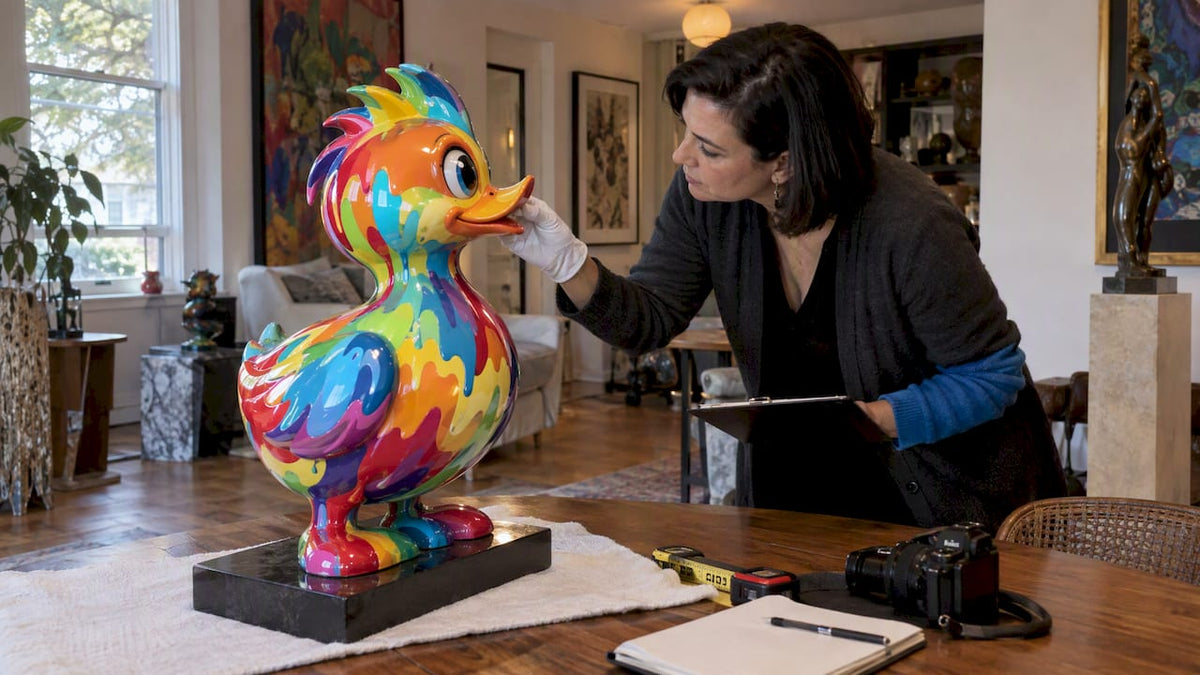
FLY Miami takes on custom commissions and can discuss licensing terms for clients who want a UV-reactive piece used across a campaign, a retail line, or a permanent installation. 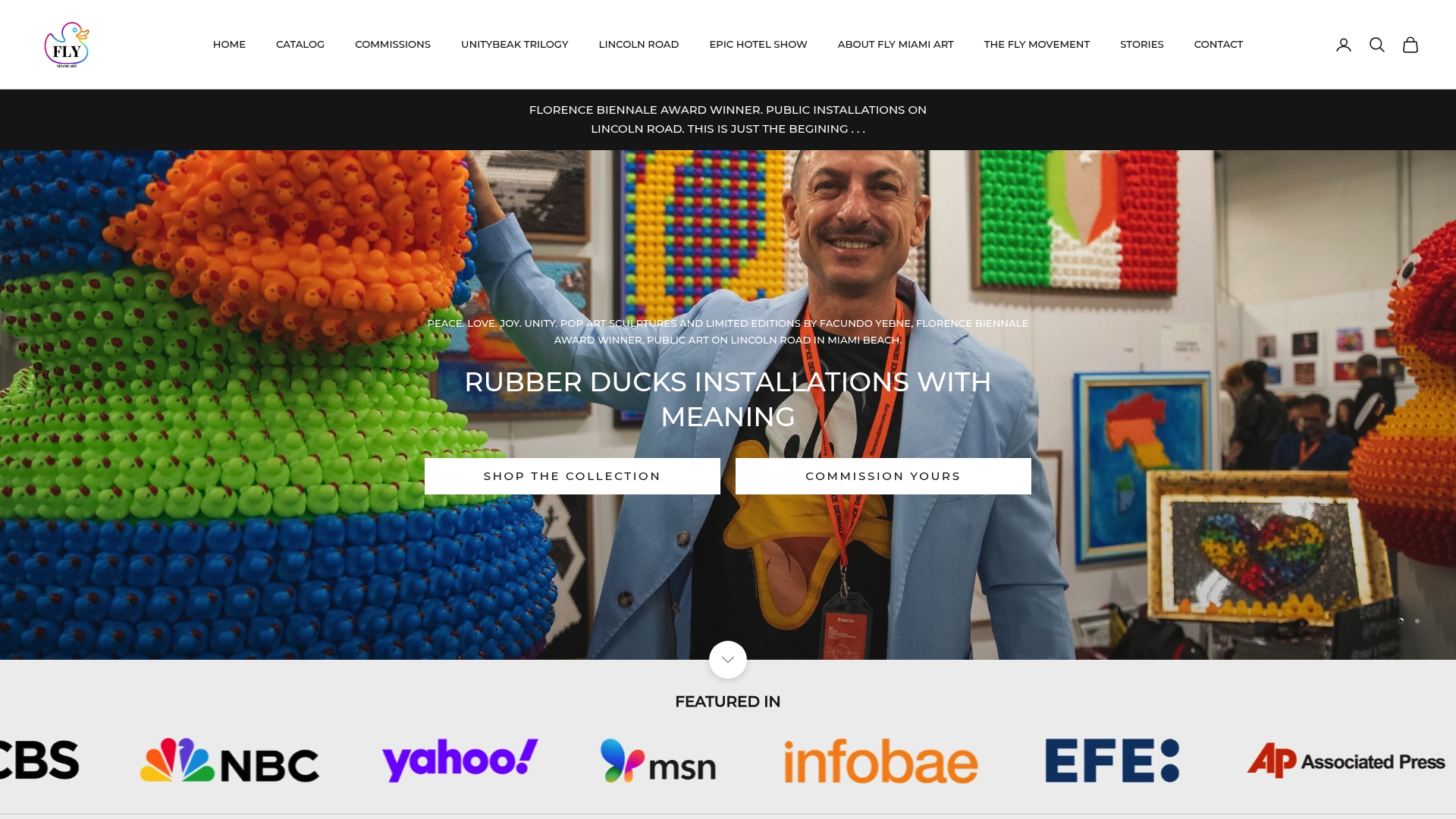 Each commission starts with a brief and a conversation about scope, whether that means a single sculpture for a private collector or a larger piece for a hotel lobby or public space. Explore available commission options or review the studio’s public art proposal guide if you are planning a larger installation, then reach out to start the brief.
This article is general information, not a substitute for advice from a qualified lawyer. Consult a qualified legal professional about your own circumstances before acting on anything here.
FAQ
Is art licensing worth it for artists?
Licensing is worth it when the same artwork can generate income across multiple products or markets without the artist losing control of the underlying copyright, since licensing preserves ownership while a buyout does not, according to Contractable’s guide to licensing agreements. It works less well for one-off pieces with no repeat-use potential, where a flat commission fee is simpler for both sides.
What is the 70/30 rule in art licensing?
The “70/30” shorthand refers to a common revenue split seen in some representation agreements, where an agent or agency retains around 30% and the artist keeps the remainder, based on Artists Rights Society’s published membership agreement. The exact split varies by agency and project type, so artists should confirm the specific percentage before signing any representation deal.
Why do some artists avoid taking commissions?
Many artists avoid commissions because a poorly structured agreement can transfer full copyright away, cutting off future licensing income and limiting portfolio use, especially when “work made for hire” language is signed without the statutory category requirement being met, per U.S. Copyright Office Circular 30. Commissions also demand client-specific revisions and approval cycles that can slow down an artist’s independent work.
What are the disadvantages of art licensing?
Licensing income depends on the licensee’s sales performance and honest royalty reporting, which means an artist can earn far less than expected if a product underperforms or if net-sales deductions are not clearly defined, according to Nolo’s guide to monitoring royalty payments. Licensing deals also require ongoing attention to audit rights, exclusivity scope, and territory limits, which adds administrative work compared to a single flat commission fee.
Sources
- U.S. Copyright Office — What is copyright?
- Artists Rights Society — 2025 membership agreement (example revenue-split language)
- Contractable — Art licensing agreement template and how-to

%20suits%20a%20buyer%20who%20needs%20permanent,%20exclusive%20ownership,%20l...)