Commissioners: 7-Stage Public Art Proposal Guide With UV Reactive Studio Tips
Decide your goals, set a realistic art budget, and choose RFQ or RFP before writing a single line of your call. From there, follow a seven-stage commissioning process: goal setting, consultant selection, brief writing, artist selection, contracting, fabrication, and installation. Give the whole project 6 to 12 months of lead time, and pay finalists a stipend once you narrow the field.
TL;DR:
- A public art commissioning process should always include clear goal setting, early lighting, and maintenance planning to avoid cost overruns and degraded work over time.
- Selection panels need a balanced composition, published scoring rubrics, and documented conflicts of interest to ensure a fair and defensible artist shortlist.
- Contracts must specify scope, milestones, insurance, and maintenance responsibilities upfront to prevent disputes and long-term liabilities.
- Allow six to twelve months for project lead time, with proposal stipends typically ranging from $1,000 to $5,000 depending on project size.
- Early coordination of lighting and detailed maintenance plans are critical for experiential and UV-reactive works, as these aspects often determine long-term success.
Table of Contents
- What Is a Public Art Commissioning Process?
- What Should a Call to Artists Include?
- How Do You Run a Fair Artist Selection Process?
- What Belongs in the Contract and Maintenance Plan?
- How Much Should You Budget and How Long Should It Take?
- Practitioner Tips for Commissioning Experiential and UV-Reactive Work
- An Honest Look at What Commissioning Guides Get Wrong
- Commissioning a FLY Miami Art Piece: What to Expect
- Sources
- FAQ
What Is a Public Art Commissioning Process?
A public art proposal guide, in the sense that matters to you as the commissioning party, is the operational playbook for running an RFQ or RFP, selecting an artist, and managing the contract through installation and beyond. In the field, this is usually called the “artist selection process” or “public art commissioning process,” and both terms describe the same thing: a structured procurement built around fairness, budget clarity, and legal protection for everyone involved, not a pitch document written by an artist.
Most commissioning bodies, whether a city arts office, a hotel developer, or a corporate campus manager, run through seven predictable stages. Miss one, and you tend to pay for it later in redesigns, budget overruns, or a jury process nobody trusts.
The seven-stage commissioning checklist
- Set goals and budget. Define the site’s purpose, the audience, and a firm dollar figure before contacting anyone. Deliverable: a one-page project brief with a locked budget range.
- Engage a consultant or producer. Bring in a public art consultant, architect, or engineer if the site has structural, electrical, or accessibility complexity. Selecting a consultant early reduces the risk of late redesigns once construction is underway.
- Write the artist brief. Draft your RFQ or RFP, including site plans, eligibility, and submission requirements. Deliverable: a published call.
- Run the selection process. Convene a jury, score submissions, and narrow to finalists. Deliverable: a shortlist of 3 to 5 artists.
- Contract and design development. Negotiate scope, payment schedule, and design approvals. Deliverable: a signed agreement with milestones.
- Fabrication. Monitor mockups, engineering sign-off, and material sourcing. Deliverable: approved production samples.
- Installation and commissioning. Install, inspect, and formally accept the work. Deliverable: a signed acceptance and maintenance handoff.
A seven-stage commissioning process works best when you initiate it 6 to 12 months before your target installation date, with design reviews spaced 1 to 2 months apart for larger institutional projects.
Pro Tip: Calendar your design review meetings before you publish the call. Artists and juries both move faster when the dates are already locked instead of chased down mid-process.
What Should a Call to Artists Include?
A Call to Artists (your RFQ or RFP) needs to answer every question an artist has before they invest hours in a response. Skimpy calls produce skimpy, incomparable submissions. Comprehensive ones produce apples-to-apples proposals a jury can actually score.
Start with an RFQ if you’re not sure who’s qualified for the site. Use it to shortlist artists by portfolio and experience alone, no design work required. Once you have a shortlist, move to a paid RFP phase rather than asking a wide open pool to submit free concept designs. Open calls that demand unpaid concept work drive away exactly the artists you want responding.
Your call document, according to the Artist Selection Process Resource Guide, needs these fields at minimum:
- Call summary and project name
- Owner or commissioning entity contact
- Project description and site goals
- Site plans, photos, and structural or lighting notes
- Total budget and what it covers
- Eligibility requirements
- Submission materials required (portfolio, statement, references)
- Timeline: deadline, jury dates, notification date
| Call Element | What to Specify |
|---|---|
| Call type | RFQ (qualifications only) or RFP (paid concept proposal) |
| Site documentation | Maps, photos, structural notes, lighting and electrical access |
| Eligibility | Geographic restrictions, experience minimums, media requirements |
| Stipend | Amount and what it covers (design time, travel, site visit) |
| Timeline | Open date, deadline, jury review window, notification date |
Publish the call for a minimum of 30 days when possible, and push it through municipal outreach channels, artist registries, and regional arts organizations. If you’re working with a city or county, contact the local public art office early. Many offer outreach support and site-approval guidance you’d otherwise have to build from scratch.
How Do You Run a Fair Artist Selection Process?
A defensible selection process rests on three things: a balanced panel, a written rubric, and a paper trail. Skip any one of them and you’re exposed to a challenge, whether from an unsuccessful artist, a city council member, or a community group that felt shut out.
Build your jury from a mix of roles:
- An artist or design professional who can judge technical feasibility and craft.
- A community or stakeholder representative who speaks for the people who’ll live with the piece daily.
- A site owner or facilities representative who understands maintenance and structural constraints.
- A curator or public art administrator who has run selection processes before and can keep the panel on schedule.
Score submissions against a weighted rubric. Adjust weights to your priorities, but publish them before scoring starts, not after.
Every juror should disclose prior relationships with any applicant, and any conflict should be documented in the minutes, not just mentioned verbally. Once you’re down to finalists, have each present in person or via video, and consider opening that final round to a brief public comment period, especially for civic or highly visible sites.
What Belongs in the Contract and Maintenance Plan?
Your contract is where good intentions turn into enforceable obligations. Get this wrong and the dispute usually surfaces years later, long after the goodwill from the unveiling has faded.
Cover these items at minimum:
- Scope and milestones, tied to specific design, fabrication, and installation dates.
- Payment schedule, typically split across design approval, fabrication start, and final installation.
- Change order process, spelling out how scope or budget shifts get approved mid-project.
- Termination and dispute resolution, including what happens to partial payments if the project stalls.
- Intellectual property and reproduction rights, clarifying who can photograph, license, or reproduce the work.
- Indemnity and liability, assigning responsibility during fabrication, transport, and installation.
Insurance needs to be matched to the risk at each phase: require the contractor or fabricator to carry general liability and installation coverage, while the owner typically carries the completed work under a property or fine-arts policy once it’s accepted. Don’t leave a gap between “fabricator’s coverage ends” and “owner’s coverage starts.”
Maintenance is where most contracts go quiet, and that silence is expensive. Failing to define maintenance responsibility upfront creates liabilities nobody budgeted for. Require a maintenance manual from the artist, a defined budget reserve, and, for complex or site-integrated works, a conservator review. Add a deaccession and relocation clause too, so if the site changes hands or the piece needs to move, you’re not negotiating from scratch.
Pro Tip: Ask for the maintenance manual before final payment, not after. Once the artist is paid in full, manuals have a way of arriving very slowly.
How Much Should You Budget and How Long Should It Take?
Give a typical public art project 6 to 12 months of lead time from goal-setting to installation, with 1 to 2 month gaps between major design review meetings on larger institutional projects. Rushing this timeline is the single most common cause of budget overruns.
Proposal-phase stipends commonly range from $1,000 to $2,000 for smaller commissions and $2,000 to $5,000 for larger projects, paid to each shortlisted finalist regardless of who ultimately wins.
Your budget should carry distinct lines for artist fee, fabrication materials, engineering review, installation labor, insurance, contingency, and a maintenance reserve. Developer-driven projects often need to align these categories with formal Conceptual, Preliminary, and Final Public Art Plans, since Final Plan approval is frequently required before a building permit is issued.
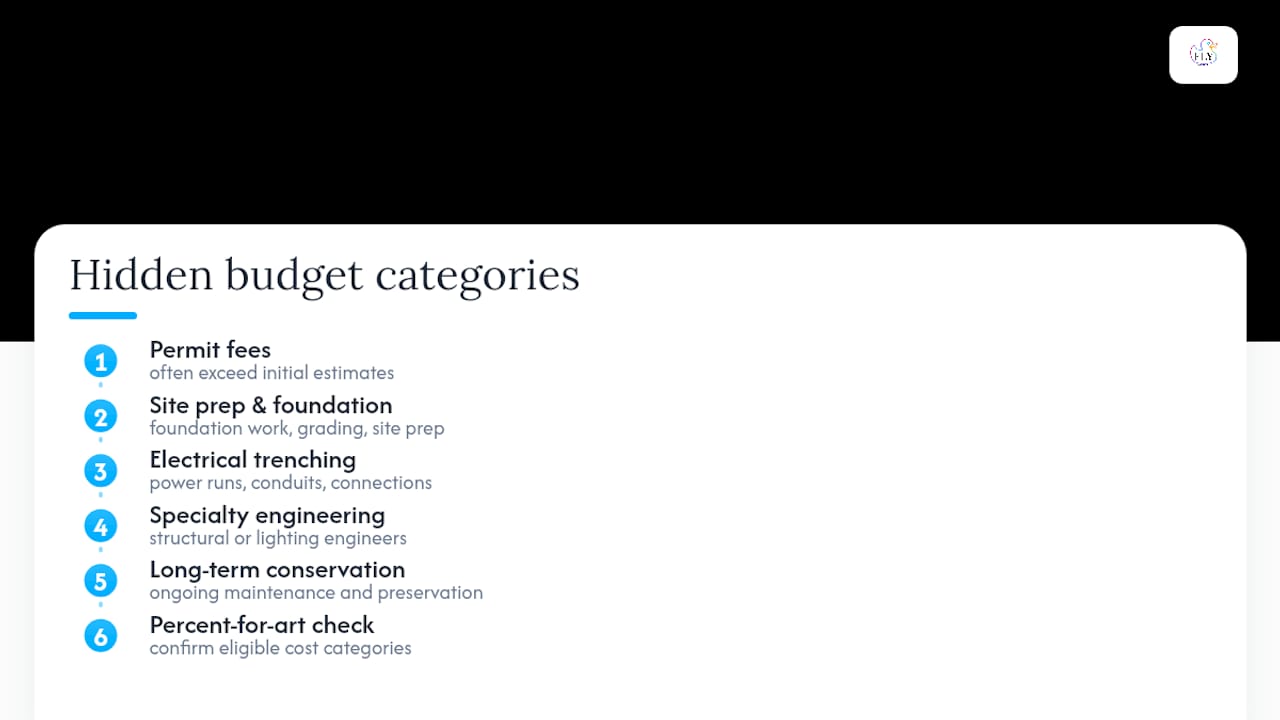
Watch for hidden costs that blow past initial estimates: permit fees, site preparation (foundation work, electrical trenching), specialty structural or lighting engineering, and long-term conservation. If percent-for-art requirements apply to your project, review the eligible cost categories before finalizing your budget, since some jurisdictions restrict what counts toward the mandated percentage.
Practitioner Tips for Commissioning Experiential and UV-Reactive Work
UV-reactive and blacklight installations carry a variable most commissioning briefs skip entirely: lighting. Bring your electrician or lighting consultant into the brief-writing stage, not after the artist is selected. Lighting and electrical specs need to be locked before fabrication, or you risk a piece that looks flat under the wrong bulb.
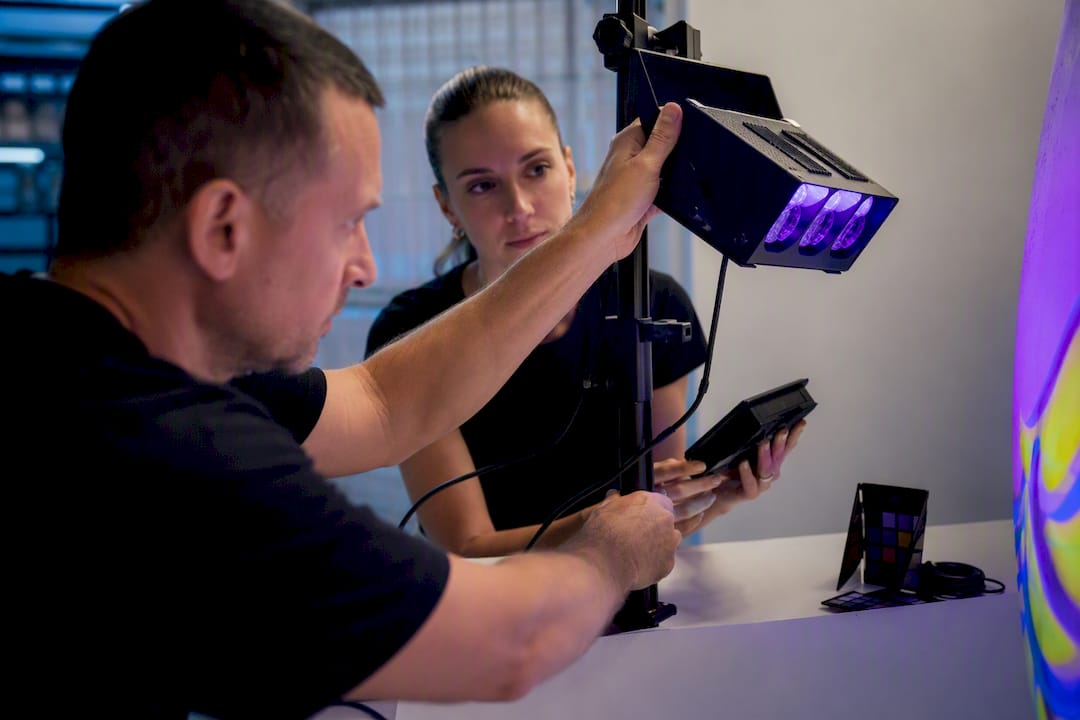
Require a physical mockup or engineering sign-off before full production starts on anything site-integrated or structural. Ask for the maintenance manual and a defined warranty period in writing, not as a verbal promise. And when community input runs against the artist’s creative direction, resolve it at the brief stage, through clear site goals and eligibility criteria, rather than asking the artist to compromise the work after contracts are signed.
An Honest Look at What Commissioning Guides Get Wrong
Most public art guidance treats the RFQ/RFP process as the hard part and everything after contracting as administrative cleanup. That’s backwards. The selection process is genuinely important, but it’s also the part institutions already do reasonably well, because it mirrors procurement processes they run for construction and services anyway.
Where commissions actually fail is maintenance and lighting coordination, the two items conventional guides mention in a single sentence and move past. A jury can pick a brilliant artist and a beautiful concept, and the piece can still degrade within two years because nobody wrote a maintenance reserve into the budget, or nobody looped in an electrician before fabrication started.
If you take one thing from this guide, prioritize the boring parts: lock the maintenance manual requirement into the contract, get lighting specs finalized before production, and pay your finalists for proposal work so you attract artists who can actually deliver. The glamorous part of commissioning takes care of itself. The unglamorous part is what determines whether the piece still looks right in five years.
— Facundo
Commissioning a FLY Miami Art Piece: What to Expect
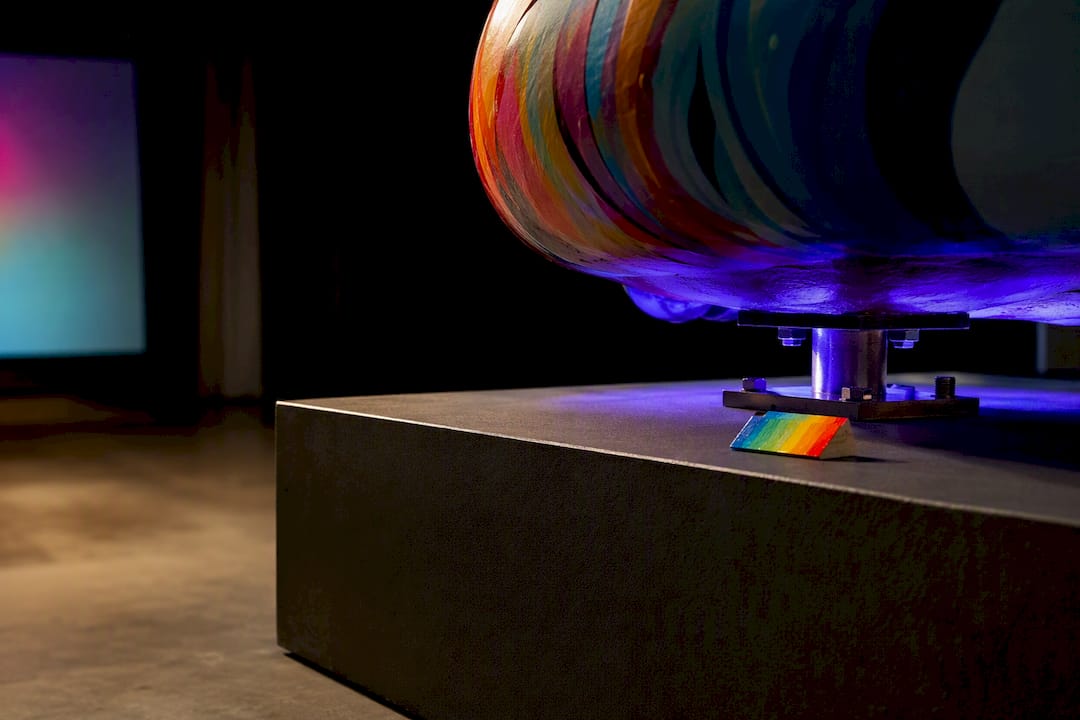
If your project calls for a piece that does something most static sculpture can’t—glow, shift, and reveal hidden pattern under blacklight—the studio works directly with commissioning clients on site-specific installations designed for immersive visual effects. The studio takes on custom commissions for developers, hotels, brands, and public institutions looking for an experiential centerpiece rather than a conventional sculpture.
The process generally follows the same structure outlined above: an initial consultation to define site and goals, a design and lighting review before fabrication, mockup approval, and a scheduled installation with a maintenance handoff. Because Flymiami’s work depends on UV-reactive materials, lighting coordination happens early, not as an afterthought added after the piece arrives.
Browse the studio’s sculpture collection or the UV glow art collection for a sense of scale and material approach, then reach out to start a commission conversation and get a timeline specific to your site.
Sources
- CAA Guidelines | Standards & Guidelines | CAA
- Artist Selection Process Resource Guide (Americans for the Arts)
- Boston
- Public art guidelines for private development — Berkeley
FAQ
Should I Use an RFQ or an RFP for My Project?
Use an RFQ when you need to shortlist artists by qualifications alone, then move to a paid RFP phase with 3 to 5 finalists once you know who can handle the site’s demands.
How Far in Advance Should I Start the Commissioning Process?
Start 6 to 12 months before your target installation date, allowing 1 to 2 months between major design review meetings for larger projects.
How Much Should I Pay Artists for Proposal Development?
Stipends commonly run $1,000 to $2,000 for smaller commissions and $2,000 to $5,000 for larger projects, paid to every shortlisted finalist.
Who Should Sit on a Public Art Selection Jury?
A balanced panel includes an artist or design professional, a community representative, a site owner or facilities representative, and a curator or public art administrator experienced in running selections.
Does Flymiami Accept Public Art Commissions?
Yes. Flymiami works with developers, hotels, brands, and public institutions on site-specific UV-reactive sculptures and installations, following a consultation, design review, and fabrication process similar to standard commissioning practice.
What Happens If Maintenance Isn’t Defined in the Contract?
Undefined maintenance responsibility routinely creates unbudgeted long-term costs and disputes, which is why a maintenance manual and reserve should be written into the contract before final payment.