Duck Art in Public Installations: What It Really Does
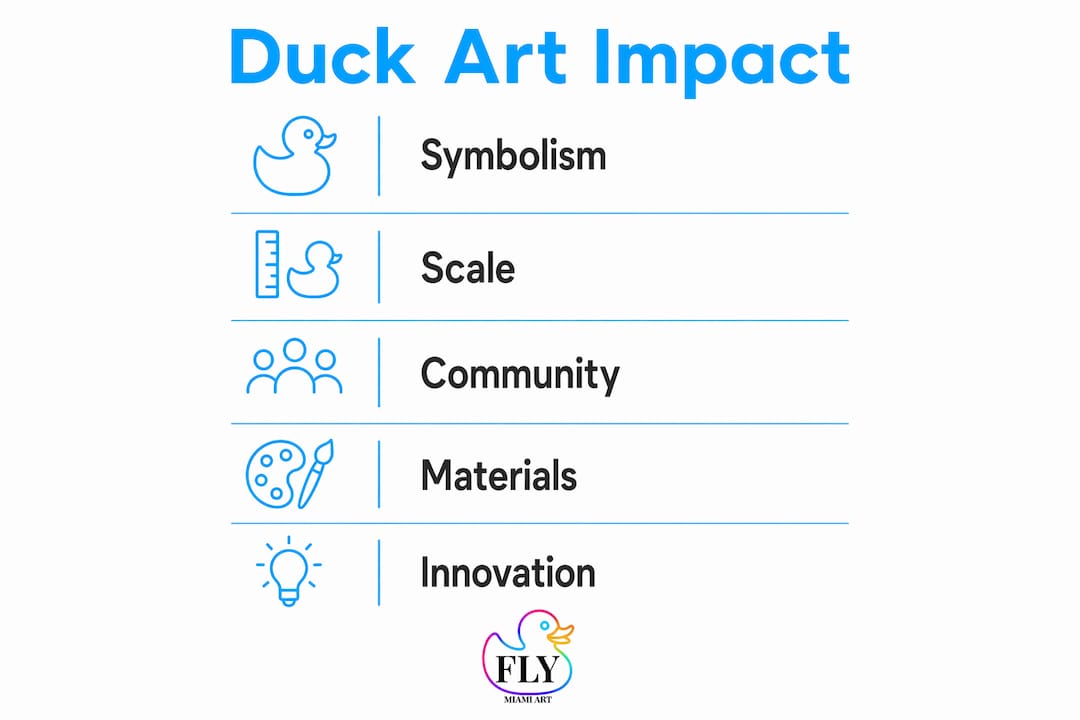
Duck art in public installations functions as one of the most effective tools urban planners and artists have for breaking down the invisible wall between people and art. The role of duck art in public installations goes far beyond decoration. It reframes how city dwellers relate to their own streets, waterfronts, and shared spaces, turning a familiar childhood object into a catalyst for collective joy and cultural conversation.
The core functions of duck art in public spaces come down to a few clear things:
- Disrupting routine: Large-scale duck art interrupts the daily flow of urban life, prompting people to stop, look up, and reconnect with a sense of play.
- Fostering equality: Florentijn Hofman’s installations are designed to eliminate distance between viewers and art, placing everyone on equal footing before something vast yet gentle.
- Carrying layered symbolism: The duck motif holds meanings ranging from innocence and nostalgia to social resistance, depending on who encounters it and where.
- Building community: Temporary, large-scale pieces create shared cultural moments that bring strangers together around a single, joyful focal point.
- Extending into digital space: Social media amplifies the physical presence of these works, creating what researcher Martin Zebracki calls “virtual relationality” — the ongoing negotiation of public art’s meaning online.
- Innovating the form: Flymiami, led by award-winning artist Facundo Yebne, pushes the duck motif further with UV-reactive sculptures that reveal hidden colors and patterns under blacklight.
Table of Contents
- What does duck symbolism actually mean in public art?
- How do large-scale duck installations reshape urban spaces?
- How Flymiami and Facundo Yebne are advancing duck art in the U.S.
- Why duck art builds genuine community, not just foot traffic
- What materials and techniques make duck art last?
- Flymiami brings the duck art tradition home for collectors
- Key Takeaways
What does duck symbolism actually mean in public art?
The duck’s power as a public art symbol starts with something almost embarrassingly simple: everyone already knows what it is. The yellow rubber duck is one of the most universally recognized objects in cultures touched by American media, from Sesame Street’s Ernie to Disney’s Donald Duck. That familiarity is exactly what gives it cultural weight.
The duck symbolizes innocence, youth, and new life, with its bright yellow color reinforcing those associations across cultures. But the symbol rarely stays that simple once it enters public space. In Belgrade in 2015, a giant duck installation was adopted by protesters as a symbol of political resistance, a meaning the artist never intended. That kind of reinterpretation is not a failure of the artwork. It is proof that the symbol is alive.
Hofman’s own mission statement captures the tension well. He describes the rubber duck as something that “knows no frontiers, doesn’t discriminate against people, and doesn’t have a political connotation.” The intent is neutrality and healing. What actually happens is more complex: local communities, activists, and online audiences constantly recontextualize the duck’s narrative for their own purposes, which is part of what makes it such a durable cultural object.
Pro Tip: When you encounter duck art in a public setting, pay attention to what the local community has layered onto it. The official artist statement is just the starting point. The graffiti, the protest signs, the social media hashtags around it tell you what the symbol actually means to that place.
How do large-scale duck installations reshape urban spaces?
Scale is the whole point. Florentijn Hofman has explained that his oversized sculptures flip the observer’s perspective: instead of the viewer looking at the art, the art looks back. That perceptual shift is what disrupts urban routines and makes people genuinely stop rather than scroll past.
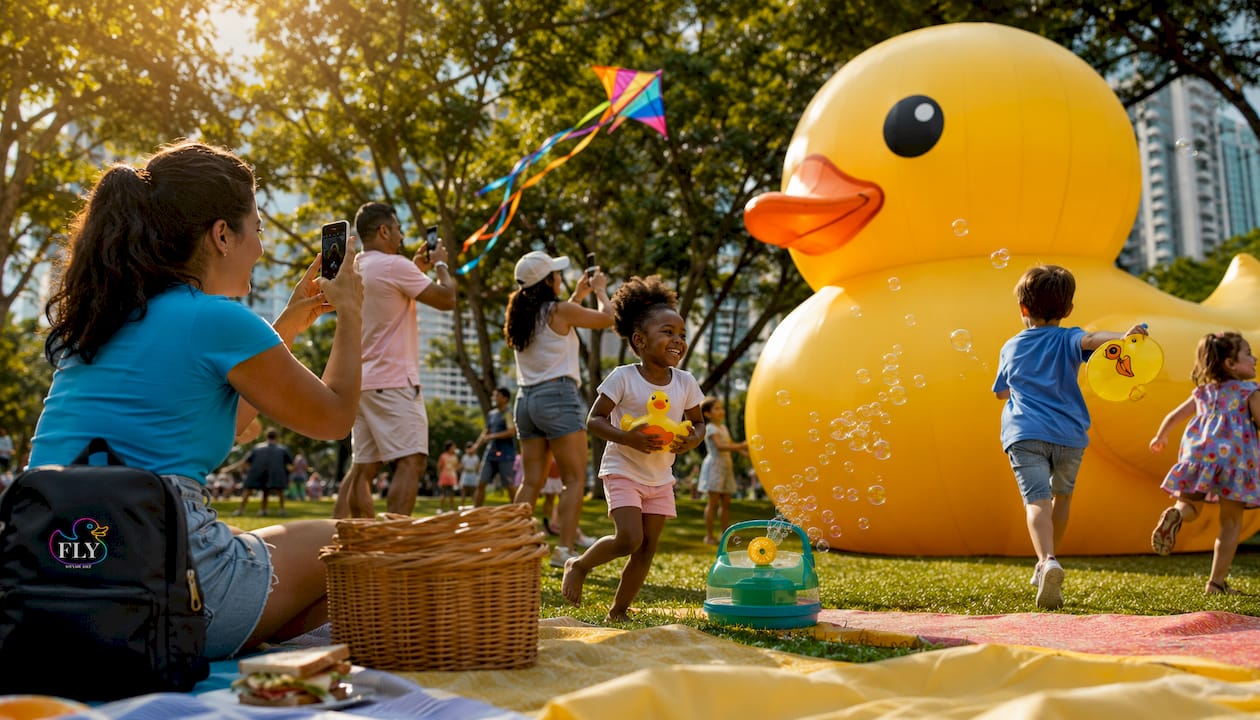
Giant duck installations typically reach heights up to 18 meters (approximately 59 feet), roughly the height of a six-story building. When Hofman’s Double Ducks appeared in Hong Kong’s Victoria Harbour in June 2023, the 18-meter inflatables drew crowds to the waterfront for an extended period. The Osaka installation in 2009 attracted approximately 1.9 million visitors over 52 days. In Seoul in 2022, 6.5 million visitors came to Seokchon Lake to see the installation.
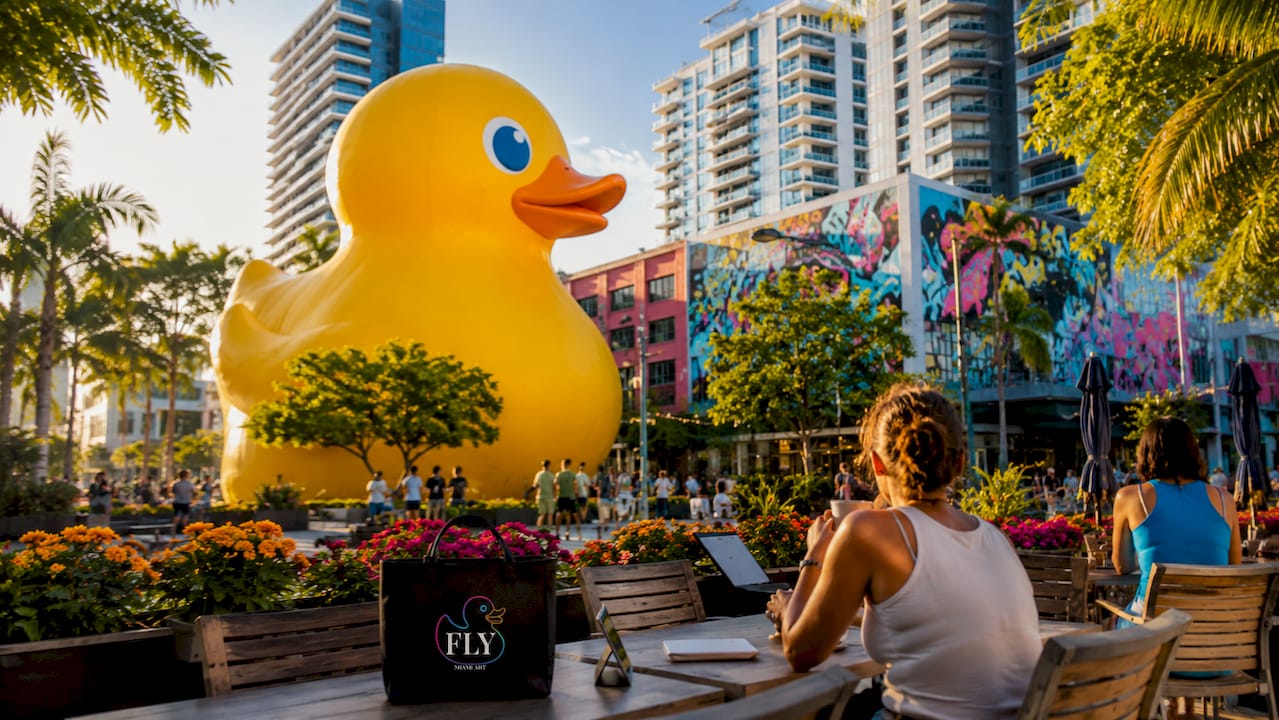
Deploying sculptures at that scale requires serious logistics. Teams manage inflation, aquatic positioning with tugboats), weather monitoring, and crowd control. Each duck is typically recreated locally rather than shipped, which keeps the installation temporary and the event feel urgent.
Key aspects of how duck art interacts with urban space:
- Spatial transformation: Waterfronts and plazas become destinations rather than throughways.
- Emotional engagement: The playful form lowers psychological barriers, making art accessible to people who would never enter a gallery.
- Social connectivity: Strangers gather, photograph, and talk, creating spontaneous community moments.
- Media amplification: Digital social media engagement extends the installation’s reach far beyond the physical site.
- Local commerce: Surrounding vendors, restaurants, and retailers see measurable foot traffic increases during major installations.
How Flymiami and Facundo Yebne are advancing duck art in the U.S.
Flymiami occupies a specific and genuinely interesting position in the duck art world. While Hofman’s installations are temporary, aquatic, and city-scale, Flymiami’s artist Facundo Yebne works at the intersection of pop art collecting and immersive experience, creating UV-reactive duck sculptures that glow and reveal hidden patterns under blacklight. That is a material innovation with no real precedent in the duck art tradition.
| Aspect | Flymiami / Facundo Yebne |
|---|---|
| Artist | Facundo Yebne, award-winning pop artist |
| Core innovation | UV-reactive paint revealing hidden colors under blacklight |
| Themes | Peace, love, joy, and unity through the duck motif |
| Format | Handcrafted, collectible sculptures and immersive installations |
| Exhibition presence | Prestigious exhibitions with significant media coverage |
| Audience | Art collectors and enthusiasts seeking one-of-a-kind pieces |
The UV-reactive approach does something that static sculptures cannot: it creates two entirely different visual experiences from a single object, one in daylight and one under blacklight. For collectors, that dual nature adds a layer of discovery that keeps the work engaging long after the initial purchase. Flymiami’s work builds on the cultural narrative that the rubber duck has accumulated over decades of public art history, while pushing it into territory that is distinctly contemporary.
Why duck art builds genuine community, not just foot traffic
The social impact of duck installations goes deeper than visitor counts. Duck art’s playful presence encourages intergenerational interaction in a way that most public sculpture does not. A grandmother and a five-year-old respond to a giant rubber duck with the same instinct: delight. That shared response across age, background, and language is rare in public art.
The temporary nature of large-scale installations is a feature, not a limitation. Knowing the duck will be gone in two weeks creates urgency. People make plans, bring friends, and treat the visit as an event rather than something they will get to eventually. That urgency is part of what drove over one million visitors) to see the duck during its Pittsburgh debut in 2013, the sculpture’s first U.S. appearance.
Ways duck art promotes urban cohesion:
- Social interaction: Strangers bond over a shared, lighthearted experience.
- Shared joy: The duck’s non-threatening form creates positive emotional associations with public space.
- Cultural diplomacy: Hofman’s Double Ducks in Hong Kong drew on Chinese symbolism for happiness and friendship, connecting global art to local meaning.
- Visual storytelling: Communities layer their own narratives onto the installation through public art and social movements.
- Public entertainment: The spectacle draws people who would not otherwise engage with contemporary art.
What materials and techniques make duck art last?
Large-scale inflatable duck sculptures are typically constructed from PVC or nylon fabrics, chosen for their resistance to UV degradation, moisture, and the mechanical stress of inflation and deflation cycles. The outer surface is coated or printed with UV-stabilized pigments to maintain color vibrancy through repeated outdoor exposure. Internal air pressure systems, often with redundant blowers, keep the form stable against wind and temperature changes.
For permanent or semi-permanent duck sculptures, artists use fiberglass, resin, or powder-coated steel, materials that handle outdoor conditions without significant maintenance. Resin casting, in particular, allows for fine surface detail and accepts specialty paints including the UV-reactive coatings that Flymiami uses. The studio process behind UV-reactive duck sculptures involves layering standard pigments with photoluminescent and UV-reactive compounds, so the piece reads differently under natural light versus blacklight. That layering requires precise application to avoid muddying the visible-light appearance while maximizing the blacklight reveal.
Flymiami brings the duck art tradition home for collectors
The public installations that draw millions to waterfronts worldwide have built a cultural appetite for duck art that extends well beyond temporary events. Flymiami channels that appetite into something you can actually own. Facundo Yebne’s UV-reactive rubber duck sculptures carry the same symbolic weight as the tradition they draw from, peace, unity, and joyful disruption, while adding the blacklight dimension that makes each piece a genuinely immersive object.
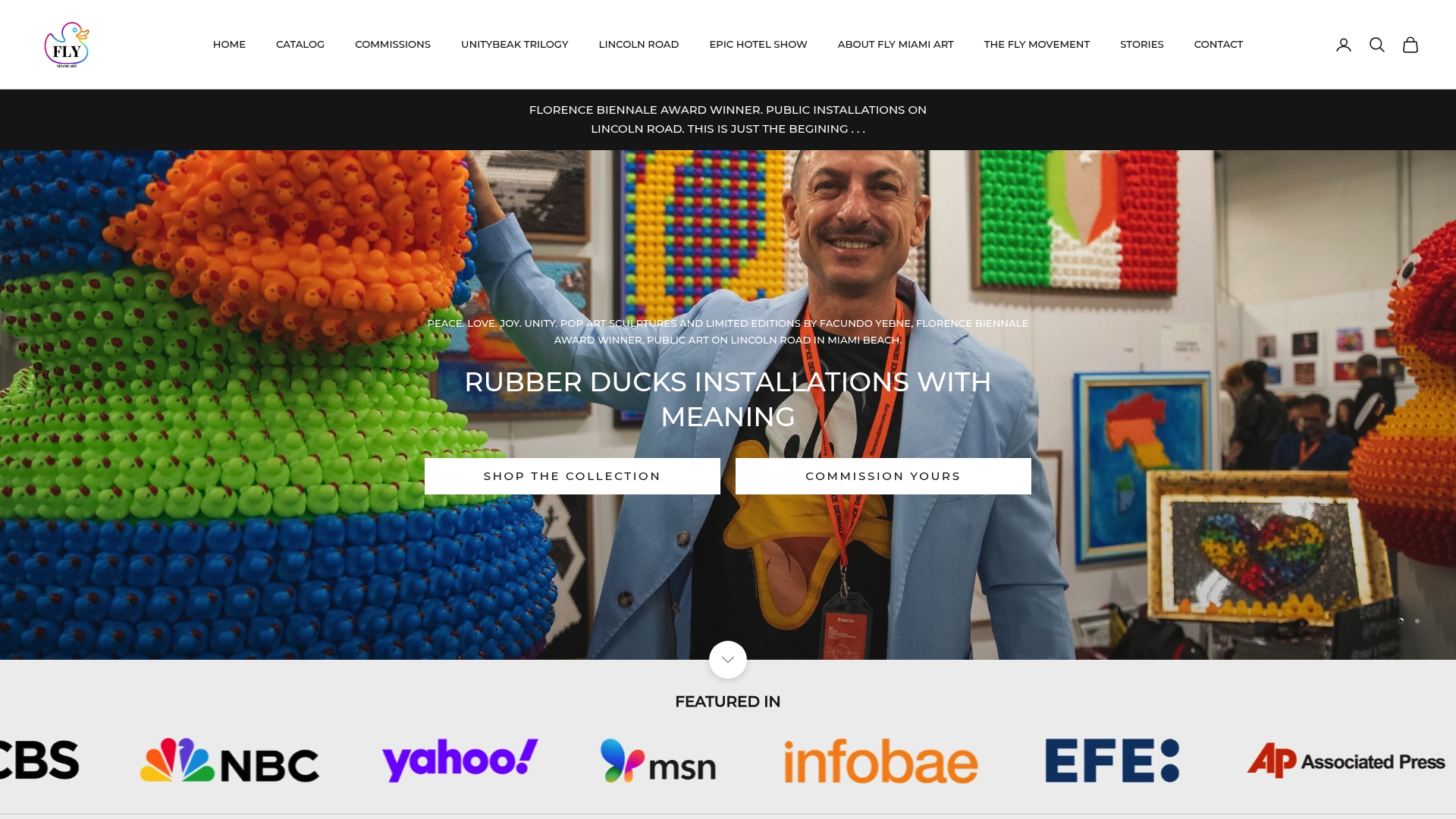
For collectors who want a piece that holds its own in daylight and transforms under blacklight, Flymiami’s sculpture collection and UV glow art are the direct path. Each work is handcrafted, one-of-a-kind, and backed by Facundo Yebne’s track record in prestigious exhibitions. Browse the collection and find the piece that fits your space.
Key Takeaways
Duck art in public installations works because it combines universal symbolism with physical scale and digital reach to create shared cultural moments that no other art form replicates as reliably.
| Point | Details |
|---|---|
| Scale drives impact | Installations reaching up to 18 meters flip the viewer’s perspective and draw millions to public spaces. |
| Symbolism is flexible | The duck motif carries innocence and joy by default, but communities actively reshape its meaning for local or political purposes. |
| Digital presence multiplies reach | Social media extends a physical installation’s cultural life far beyond its on-site duration through virtual relationality. |
| Temporary format creates urgency | Locally produced, short-run installations generate the event energy that drives over a million visitors to a single stop. |
| Flymiami advances the form | Facundo Yebne’s UV-reactive duck sculptures bring the tradition into collectible pop art, revealing hidden colors under blacklight. |