Why Sculptural Art Anchors Room Design in 2026
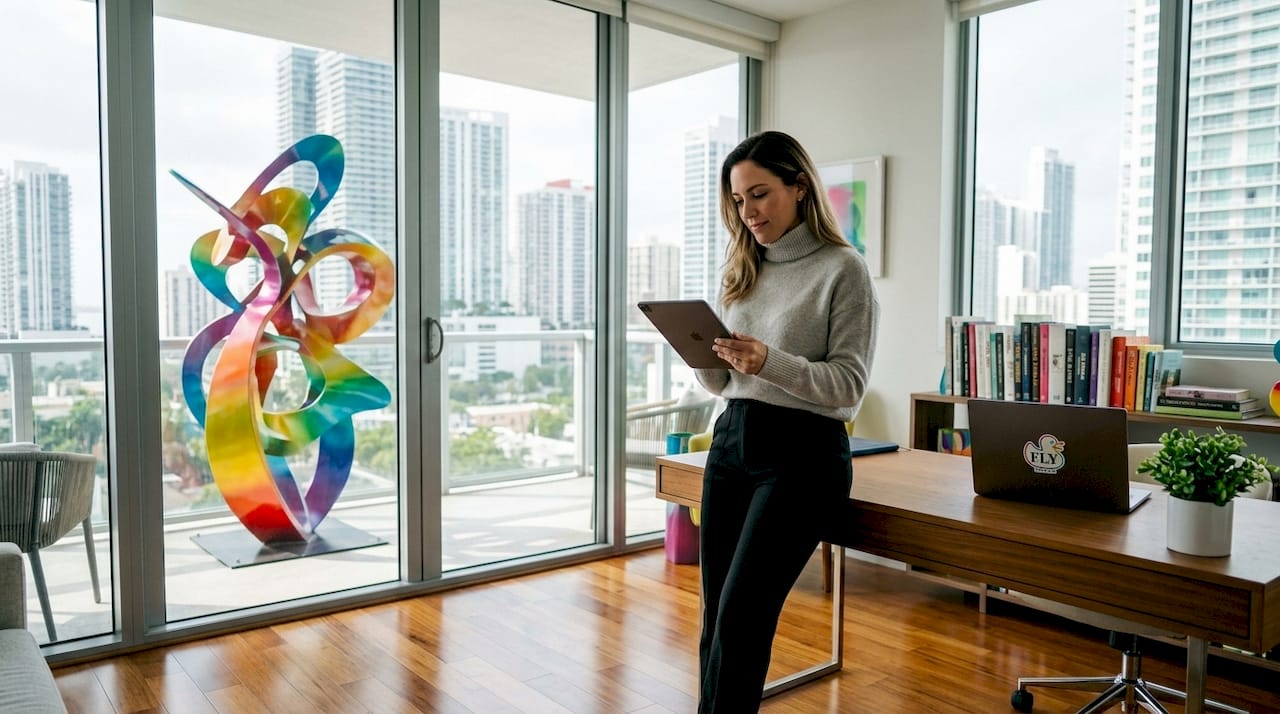
Sculptural art anchors room design because it physically occupies three-dimensional space, not just a surface. Unlike a painting, which functions as a window on a wall, a volumetric anchor displaces air, casts shadows, and commands a physical relationship with everything around it. That distinction changes how a room feels at a fundamental level.
Three things happen the moment a well-chosen sculpture enters a room:
- It creates an immediate focal point that organizes furniture, sightlines, and circulation around it
- It manipulates light and shadow throughout the day, producing visual interest that flat art simply cannot generate
- It grounds the overall layout, giving the room a clear compositional center rather than a collection of surfaces
The result is a space that reads as intentional rather than assembled. That is why sculptural focal points increasingly replace wall art as the primary design anchor in contemporary interiors.
How sculptural art transforms spatial dynamics and room composition
Sculpture shapes a room by creating visual hierarchy. In large, open spaces, an oversized piece grounds the room and replaces scattered decor with a single organizing element that prevents the space from feeling cavernous. Designers treat scale and placement as tools, not afterthoughts.
Traffic flow is another lever. Placing a sculpture at a key circulation point guides how people move through a room, turning passive passage into an immersive spatial experience. The piece becomes a reason to slow down, change direction, and engage with the space rather than move through it on autopilot.
Sculpture also functions as soft architecture. A large vertical form in an open-plan living area can visually separate a conversation zone from a dining area without a single wall. That spatial division carries a tactile, handcrafted quality that a partition never could.
Material choice layers the room further. Stone reads as weight and permanence. Ceramic brings softness. Metal introduces definition and edge. Each material shifts the room’s emotional register in a different direction, which is why decorative sculptures add richness and layering that flat decor alone cannot achieve.
- Sculptures create visual hierarchy by serving as the compositional center around which furniture and decor relate
- Placement at circulation points guides movement and creates immersive rather than passive room experiences
- Large vertical forms divide open-plan spaces without physical barriers
- Material choices (stone, metal, ceramic) each shift the room’s emotional tone
Pro Tip: Before placing a sculpture, stand at every entry point to the room and trace your natural sightline. The spot where your eye lands first is your anchor point. That is where the sculpture belongs.
Common mistakes and expert advice for using sculptural art effectively
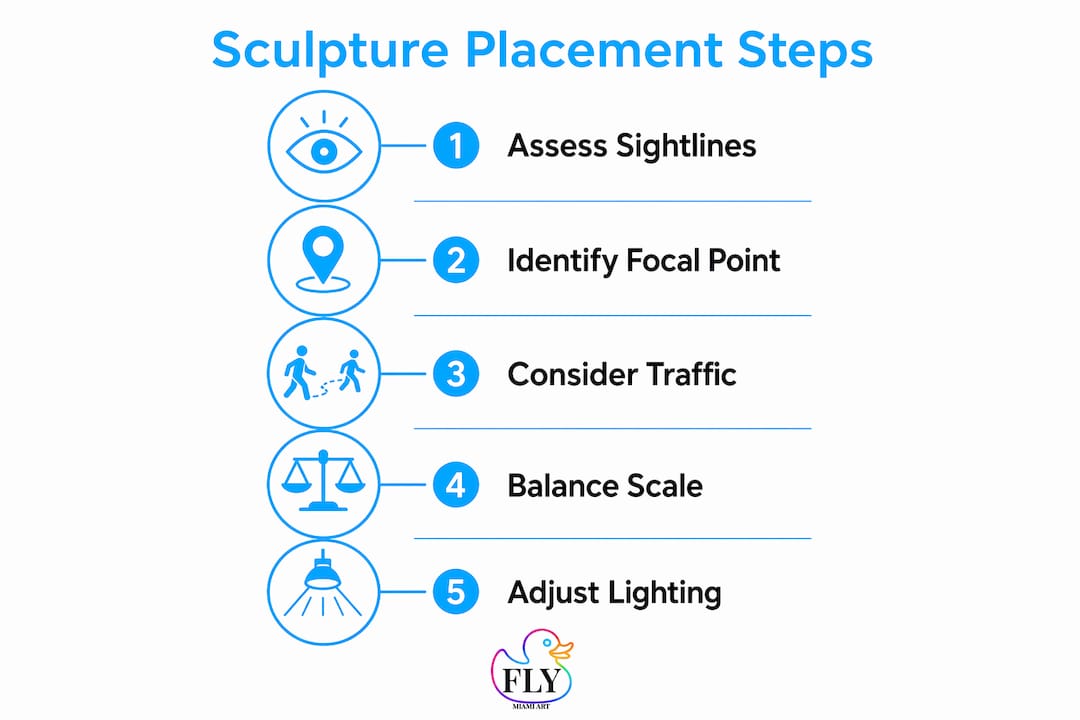
The most common error is crowding. Surrounding a sculpture with many small decor pieces dilutes its anchoring power and makes the space feel scattered. A strong piece needs room to breathe. Clearing competing objects from its immediate vicinity is often the single fastest way to improve a room’s composition.
Background matters as much as placement. A busy wall or a high-traffic zone behind a sculpture obscures its silhouette and weakens its presence. Designers advise placing sculptures where the background is clean and the piece is protected from being bumped, allowing its form to read clearly from across the room.
Scale is the trickiest variable. A small piece in a large open room disappears; an oversized piece in a compact space feels aggressive. The fix is not always buying a larger sculpture. A pedestal elevates a smaller piece into the viewer’s direct line of sight, giving it visual weight proportional to the space around it.
- Overcrowding with small objects reduces anchoring impact and creates visual noise
- Busy backgrounds and high-traffic placement obscure silhouette and diminish presence
- Scale must relate to the room proportionally, not just to the sculpture’s own dimensions
- Pedestals solve scale problems by lifting smaller pieces to appropriate visual weight
Pro Tip: Use a narrow-beam spotlight aimed at roughly 30 degrees from vertical. That angle casts shadows that reveal a sculpture’s depth and form. Without proper lighting, even a strong piece reads flat.
What makes sculptural art distinctive in 2026 interiors
The 2026 design moment is defined by a move toward sculpture as the room’s primary design decision rather than its finishing touch. The best modern interiors often select the sculpture before the furniture, letting the piece determine the color palette, material textures, and lighting plan. Everything else becomes the supporting frame.

Material diversity is driving that shift. Reclaimed wood, repurposed textiles, and industrial steel now appear alongside polished resin and ceramic alloys. These unconventional materials carry environmental messaging and personal identity in a way that conventional art objects rarely do. A sculpture made from reclaimed industrial waste says something about the homeowner that a framed print simply cannot.
Wall sculptures interact with light throughout the day, producing changing shadows that create fresh visual interest each time someone enters the room. UV-reactive materials push that dynamic further, revealing hidden patterns and colors under blacklight and turning a static object into an experience that shifts with the environment. For art enthusiasts exploring types of sculptural art for current projects, this experiential quality is increasingly the deciding factor.
Psychologically, sculpture adds richness that flat decor cannot replicate. The tactile presence of a three-dimensional object, the way it changes as you move around it, and the shadows it casts all contribute to a room that feels curated and deeply considered rather than simply furnished. That emotional depth is what separates a memorable interior from a comfortable one.
- 2026 trend: sculpture chosen before furniture, setting the room’s material and color direction
- Unconventional materials (reclaimed wood, industrial steel, UV-reactive elements) carry personal and environmental identity
- Changing light interaction produces dynamic visual interest unavailable from flat art
- Psychological richness comes from tactile presence, shifting perspectives, and shadow play
Why sculpture has always shaped the spaces we live in
Sculpture’s role in interior design is not a recent invention. Ancient Egyptian households placed carved figures in domestic spaces to invoke protection and divine presence. Greek and Roman interiors used sculptural busts and reliefs to signal status, education, and cultural allegiance. The objects were never purely decorative; they carried meaning that shaped how a room was understood by everyone who entered it.
That tradition carried through the Renaissance, when patrons commissioned sculptural objects specifically to anchor the rooms of private residences, not just public buildings. The placement of a bronze figure or a carved marble relief was a deliberate spatial and social act. It told visitors what the household valued and where their attention should go.
Contemporary design has absorbed that logic without the formality. Today’s sculptural pieces, whether abstract metal forms, organic ceramic vessels, or UV-reactive pop art objects, still perform the same cultural function. They communicate identity, anchor attention, and connect the room’s architecture to the people living in it. The social meaning embedded in a sculpture, the way it signals taste, values, and intention, is part of what gives it spatial authority that a painting on a wall rarely achieves. That connection between art and social meaning in shared spaces runs deeper than aesthetics alone.
Key Takeaways
Sculptural art anchors room design by occupying physical volume, organizing spatial hierarchy, and creating emotional depth that flat art cannot replicate.
| Point | Details |
|---|---|
| Volumetric presence | Sculpture displaces air and casts shadows, making it a spatial anchor rather than a surface decoration. |
| Focal point and flow | A well-placed sculpture organizes furniture, guides movement, and gives the room a clear compositional center. |
| Scale and lighting | Proper scale relative to the room and directional lighting are the two variables that determine whether a sculpture anchors or disappears. |
| Material and emotion | Stone, metal, ceramic, and UV-reactive materials each shift a room’s emotional register in distinct, deliberate ways. |
| Flymiami’s approach | Flymiami’s UV-reactive sculptures by Facundo Yebne add an experiential, immersive dimension that shifts with light conditions. |
Flymiami brings sculptural presence to your space
If you have been thinking about sculpture as a finishing touch, Flymiami reframes it as the starting point. Award-winning artist Facundo Yebne creates handcrafted pop art sculptures that incorporate UV-reactive materials, revealing hidden patterns and colors under blacklight. The pieces work in standard lighting and transform under blacklight, giving a room two distinct visual identities in one object.

Flymiami’s sculpture collection is built for collectors and homeowners who want a piece that does more than occupy a shelf. Each work is one-of-a-kind, carries a clear artistic identity rooted in themes of peace and unity, and has been featured in prestigious exhibitions. For anyone ready to anchor a room with something genuinely original, browse the full collection at flymiami.art and find the piece that sets the tone for everything around it.