What Is the Neo-Pop Art Movement? A Collector's Guide
Neo-Pop art is a postmodern evolution of 1950s and 1960s Pop Art that emerged in the 1980s as a direct reaction against the austerity of Minimalism and Conceptual Art. Where Minimalism stripped everything down, Neo-Pop piled it back on: glossy surfaces, commercial imagery, kitsch, irony, and spectacle. The term itself was coined in 1992 by Japanese critic Noi Sawaragi to describe a diverse wave of artists responding to consumer culture with both celebration and critique. Think of it less as a unified style and more as a flexible framework built around one core question: what does it mean to make art in a world saturated by advertising, celebrity, and mass media?
Key traits that define the movement from the start:
- Roots in Pop Art’s embrace of commercial imagery, but with sharper conceptual self-awareness
- Reaction against the pared-down aesthetics of 1970s Minimalism and Conceptual Art
- Adoption of large-scale sculpture, installation art, and new media as primary vehicles
- Central figures including Jeff Koons, Takashi Murakami, Keith Haring, and Kenny Scharf
- Deliberate use of kitsch, irony, and spectacle as critical tools rather than aesthetic accidents
Table of Contents
- Who are the key figures that shaped Neo-Pop art?
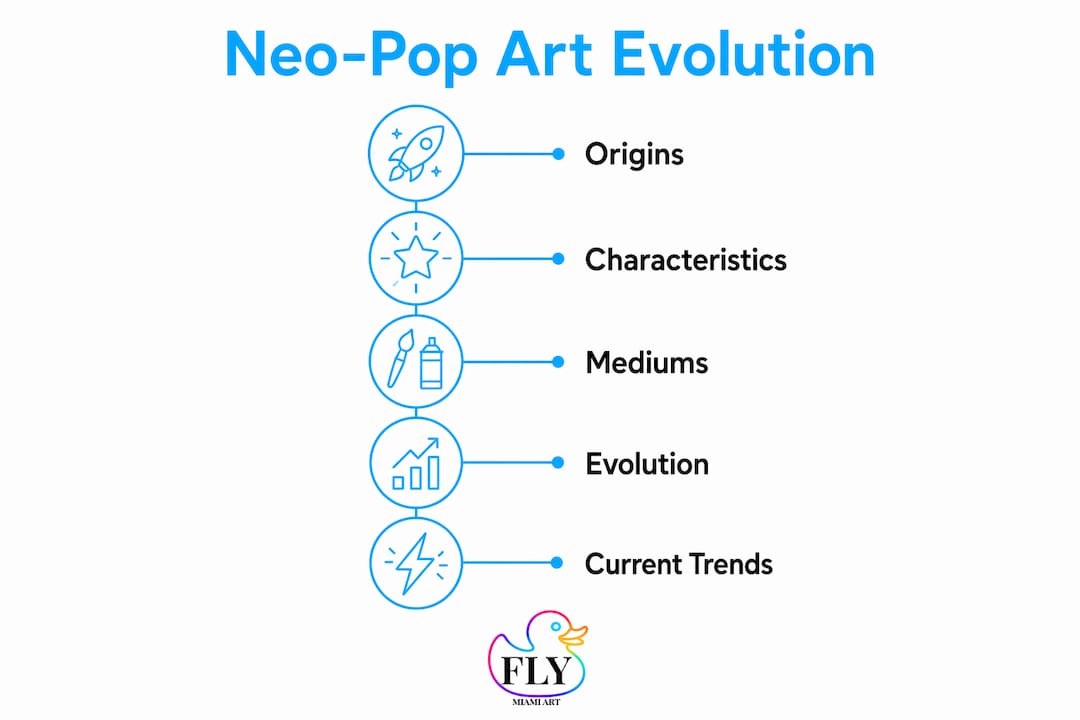
- What are the defining characteristics of Neo-Pop art?
- How has Neo-Pop evolved and why does it still matter?
- Why UV-reactive Neo-Pop sculptures are changing what collectors want
- Key Takeaways
Who are the key figures that shaped Neo-Pop art?
The artists most associated with Neo-Pop didn’t just share a style. They shared an attitude: treat the commercial world as raw material, then turn it back on itself.
- Jeff Koons is the movement’s most recognizable name. His stainless steel balloon sculptures and porcelain figurines of Michael Jackson mimic luxury goods so precisely that the line between critique and celebration becomes genuinely uncomfortable. That tension is the point.
- Takashi Murakami developed his own theory, “Superflat,” blending Japanese anime, consumer culture, and fine art into a visual language that operates simultaneously as pop culture commentary and high-end collectible. His Louis Vuitton collaborations made the brand-as-artwork dynamic impossible to ignore.
- Keith Haring brought Neo-Pop energy into public space. His bold, cartoon-like figures appeared on subway walls and gallery canvases alike, collapsing the distance between street art and fine art.
- Kenny Scharf pushed into psychedelic territory, layering cartoon characters with surrealist imagery to create works that feel simultaneously nostalgic and alien.
- Facundo Yebne and Flymiami represent the movement’s current edge. Working with UV-reactive materials, Yebne’s handcrafted sculptures reveal hidden patterns and colors under blacklight, turning the act of viewing into a full sensory event. Flymiami’s work has earned significant media recognition and exhibition presence, positioning it among the most distinctive contemporary pop art sculptures being made today.
What are the defining characteristics of Neo-Pop art?
Neo-Pop has a look you recognize immediately, but the visual surface is only half the story. The movement’s characteristics run deeper than bright colors and bold patterns.
- Synthetic, high-saturation color palettes drawn from advertising and product design, not nature
- Kitsch used deliberately to provoke questions about taste, value, and what we consider “serious” art
- Appropriation of commercial imagery: logos, celebrity likenesses, product packaging, cartoon characters
- Irony and self-awareness baked into the work itself, so the artist’s relationship to consumer culture is always part of the subject
- Spectacle as a medium: scale, surface finish, and installation design are chosen to overwhelm the senses
- Layered social commentary on consumerism, media saturation, celebrity worship, and the commodification of culture
What separates Neo-Pop from original Pop Art is self-awareness and irony. Andy Warhol celebrated the Campbell’s soup can. Neo-Pop artists celebrate it and interrogate why they’re celebrating it. That reflexive layer is what gives the movement its conceptual weight. Neo-Pop also draws from Minimalism, Photorealism, and Installation Art in ways the original movement never did, making it genuinely broader in scope. For collectors, understanding conceptual pop art helps decode what’s actually happening beneath the glossy surface.
How has Neo-Pop evolved and why does it still matter?
Neo-Pop didn’t close when the 1990s ended. The movement’s core logic, using the visual language of consumer culture to critique that same culture, only becomes more relevant as media saturation deepens.
- Digital and AI integration: contemporary Neo-Pop artists now use digital fabrication, AI-generated imagery, and augmented reality to extend the movement’s reach into new formats
- Global and local fusion: the movement has developed what the Art Gallery of New South Wales describes as a “glocal” visual language, blending universal commercial imagery with local cultural references
- Artists as brands: Neo-Pop figures operate as brand entities where creation and promotion are inseparable parts of the artwork itself
- Expanded venues: Neo-Pop has moved well beyond white-cube galleries into public installations, pop-up exhibitions, and immersive environments
- Critical reception shifts: major institutions now treat Neo-Pop’s spectacle and media critique as serious art historical territory, not novelty
| Era | Primary Medium | Core Critique | Audience Reach |
|---|---|---|---|
| 1980s Neo-Pop | Sculpture, painting | Consumerism, celebrity | Gallery-focused |
| 1990s Neo-Pop | Installation, photography | Media saturation, commodification | Institutional |
| — | Digital media, large-scale installation | Globalization, brand culture | Global, commercial |
| — | UV-reactive, immersive, AI-integrated | Spectacle, identity, technology | Collectors, public |
The movement continues to evolve with technology and global culture rather than calcifying into a historical footnote. For collectors, that ongoing evolution is exactly what makes Neo-Pop worth watching.
Why UV-reactive Neo-Pop sculptures are changing what collectors want
The most exciting development in Neo-Pop right now isn’t happening in a museum. It’s happening in studios where artists are pushing the physical properties of their materials as hard as they push their ideas.
UV-reactive sculptures extend Neo-Pop’s core logic in a genuinely new direction. Under standard lighting, a piece reads as a bold, colorful work in the Pop tradition. Switch to blacklight and the entire experience transforms: hidden patterns emerge, colors shift, and the viewer becomes an active participant rather than a passive observer. That interactivity directly amplifies Neo-Pop’s critique of media and consumer culture by making the viewer’s own perception part of the subject.
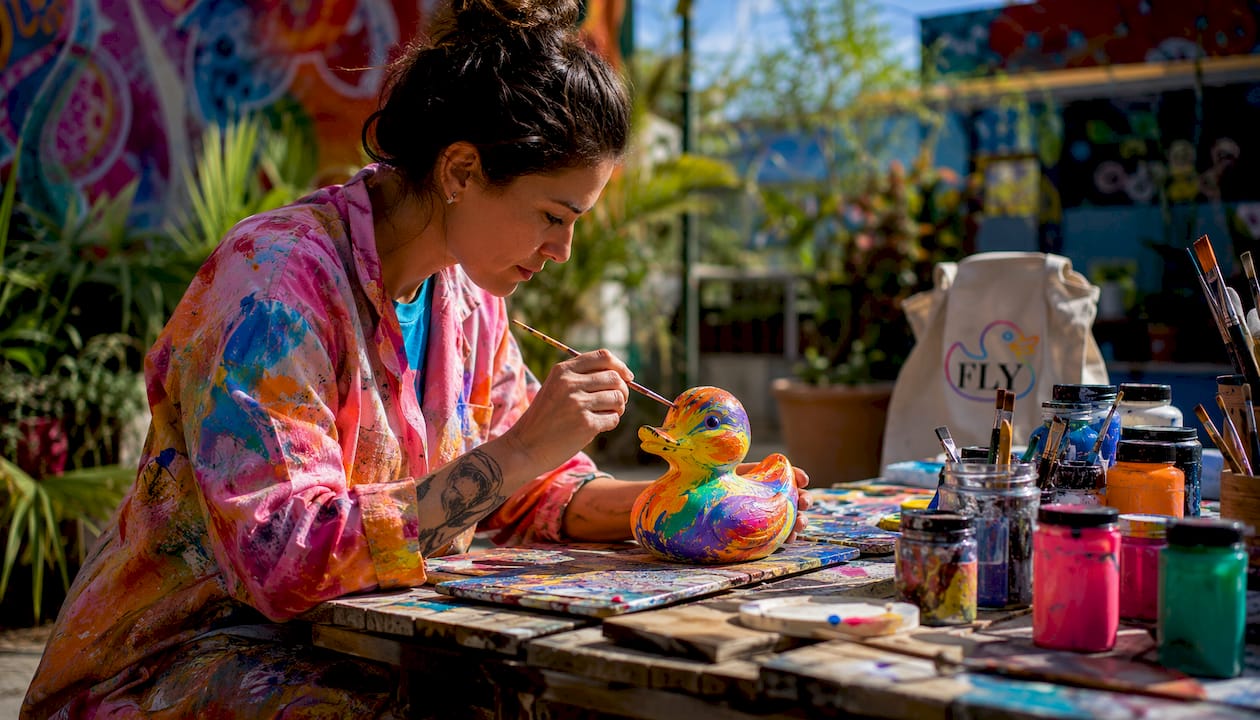
Flymiami’s Facundo Yebne has built his practice around exactly this dynamic. Each piece is handcrafted, incorporating UV-reactive pigments that reveal layered imagery invisible in daylight. The studio process treats kitsch and craftsmanship as equals rather than opposites, which is a distinctly Neo-Pop move. The rubber duck, one of the most recognizable kitsch objects in Western culture, becomes a vehicle for commentary on peace, unity, and the absurdity of consumer iconography when rendered at sculptural scale with UV-reactive surfaces.
What makes these works collectible beyond their visual impact:
- Each piece is one-of-a-kind and handcrafted, not mass-produced
- The UV-reactive layer adds a private viewing experience unavailable in reproduction
- The work has received media coverage and exhibition recognition that supports long-term value
- The themes of peace, unity, and cultural commentary give the work conceptual grounding beyond pure spectacle
Pro Tip: When viewing a UV-reactive Neo-Pop sculpture, spend time with it under both standard and blacklight conditions before forming an opinion. The two states often carry different meanings, and the relationship between them is where the artist’s real argument lives.
Collectors interested in UV glow art and immersive sculpture are engaging with Neo-Pop at its most current. The medium connects directly to the movement’s history of using new materials and technologies to keep consumer culture critique alive and visually arresting. Coverage in culture and media outlets has increasingly recognized UV-reactive work as a legitimate frontier for the movement.
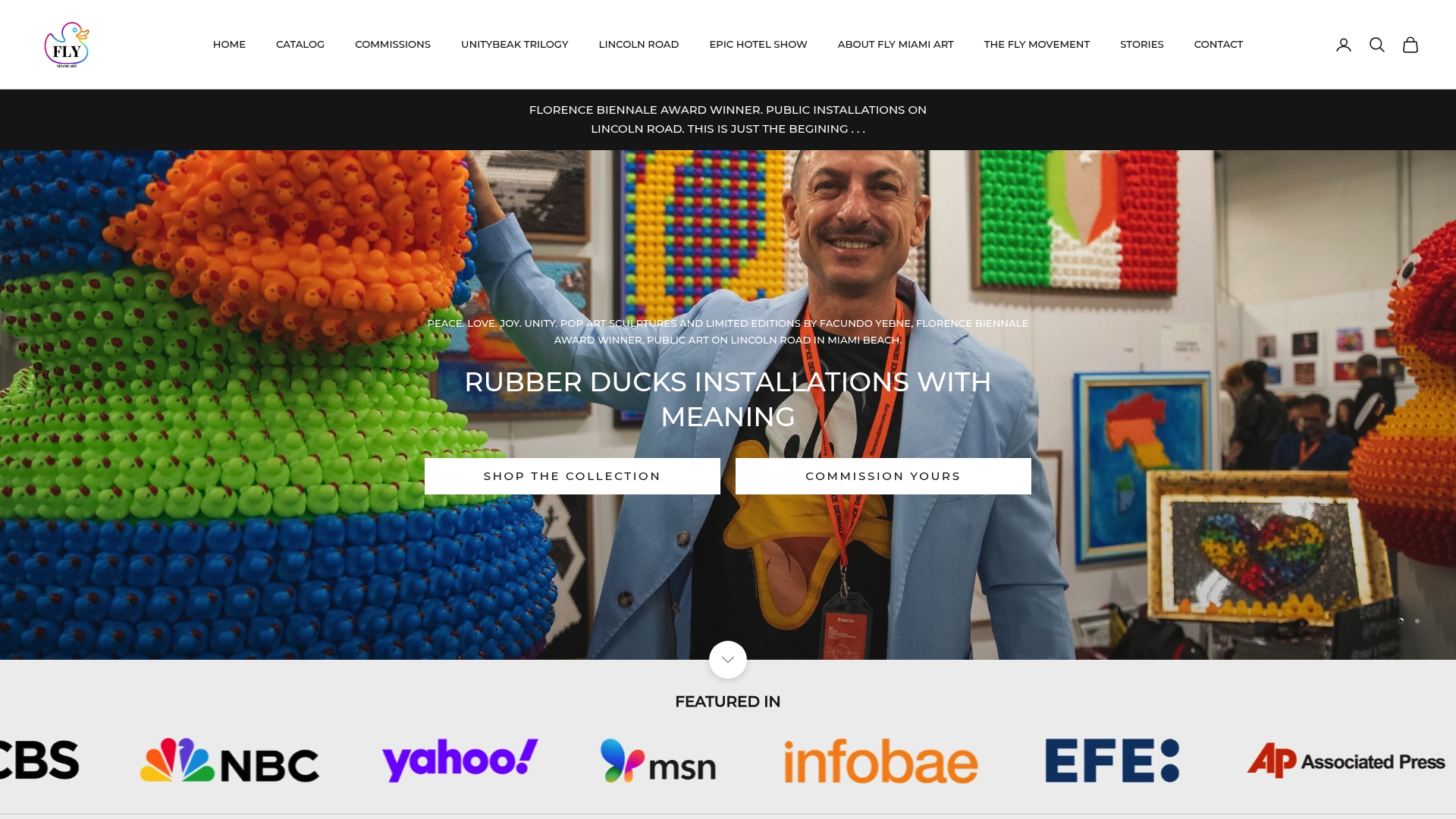
Flymiami’s collection of UV-reactive rubber duck sculptures by Facundo Yebne offers collectors direct access to this frontier. These are not decorative objects that happen to glow. They are fully realized Neo-Pop works that carry the movement’s history in their materials and its future in their light.
Key Takeaways
Neo-Pop art is best understood as a flexible, evolving critique of consumer culture that uses commercial aesthetics, irony, and spectacle as its primary tools, with UV-reactive sculpture representing its most immersive contemporary form.
| Point | Details |
|---|---|
| Neo-Pop’s origin | Coined by Noi Sawaragi in 1992, the movement emerged in the 1980s as a reaction against Minimalism and Conceptual Art. |
| Core characteristics | Bright synthetic color, kitsch, irony, appropriation, and layered commentary on consumerism and media saturation. |
| Key artists | Jeff Koons, Takashi Murakami, Keith Haring, Kenny Scharf, and contemporary innovators like Facundo Yebne. |
| Ongoing evolution | Neo-Pop integrates digital media, AI tools, and UV-reactive materials to stay current with technological and cultural shifts. |
| Collector relevance | UV-reactive, handcrafted Neo-Pop sculptures offer immersive experiences and conceptual depth that mass-produced art cannot replicate. |