Insist on 97–99% UV Protection Glazing for Framers and Collectors
The best conservation-grade glazing choices right now are museum glass with anti-reflective coating and conservation-grade acrylic like Optium, both of which block 97–99% of damaging UV. Pick glass when clarity and rigidity matter most for a wall-mounted piece that stays put. Pick acrylic when the work is oversized, high-value, or has to travel, since it weighs less and resists shattering. Below that conservation tier, standard UV glass and lower-cost acrylic still help, just not enough for irreplaceable pieces.
TL;DR:
- Conservation-grade glazing, blocking at least 97% of UV, is essential for irreplaceable artwork, while standard UV glass or acrylic offers only minimal protection.
- Museum glass provides the highest clarity and UV blocking but is heavy and shatters easily, making it ideal for wall-mounted, low-traffic displays.
- Large or shipping-required pieces benefit from conservation acrylic like Optium, which blocks up to 99% of UV, is lighter, and resists shattering.
- Anti-reflective coatings on conservation glazing reduce visible reflection to under 2%, enhancing visibility and preventing glare.
- Long-term durability favors in-substrate UV protection built into the material rather than surface coatings, which can degrade over time.
Table of Contents
- What Does UV Protection Glazing Actually Do?
- Museum Glass, Conservation Acrylic, and Where Each Wins
- How to Read a Glazing Spec Sheet Without Getting Fooled
- How Do You Choose Glazing for a Specific Artwork?
- Handling, Cleaning, and Shipping Framed Work Safely
- What Does Conservation Glazing Actually Cost?
- What Certifications Actually Guarantee Protection?
- Does UV Protection Glazing Lose Effectiveness Over Time?
- Matching Glazing to Different Artwork Materials
- What Else Damages Art Besides UV Light?
- Studio Perspective: Protecting UV-Reactive Work at Flymiami
- Sources
- FAQ
What Does UV Protection Glazing Actually Do?
Glazing is the transparent barrier over the artwork, whether glass or acrylic. That’s different from a UV-filtering film applied after the fact, and different again from UV inhibitors mixed directly into the substrate during manufacturing. The distinction matters because surface films degrade faster and can peel or bubble, while in-substrate protection stays consistent for the life of the material.
Ultraviolet light in the 300–380 nanometer band is what does the damage. It breaks down chemical bonds in pigments, paper fibers, and dyes, which shows up as fading, yellowing, or brittleness over months and years rather than days. Indoor UV exposure comes from more than windows. Fluorescent bulbs and some LED fixtures emit UV too, so a piece hung far from any window can still degrade under gallery lighting.
Conservation-grade glazing is defined by a specific threshold: it blocks at least 97% of UV in that damaging range, a benchmark referenced in PPFA framing guidance and echoed across the archival framing industry. Anything below that number is offering some help, not conservation.
- Standard clear glass or acrylic: little to no UV filtering
- Entry-level UV glazing: roughly 70% block
- Conservation-grade glazing: 97–99% block, the threshold worth insisting on for anything irreplaceable
Museum Glass, Conservation Acrylic, and Where Each Wins
Museum-grade glass, the kind Tru Vue sells under its Museum Glass line, pairs up to 99% UV blocking with an anti-reflective coating that drops visible reflection to near 1%. Stand in front of it and the glass practically disappears, which is why museums default to it for paintings and works on paper that hang under gallery lighting. It’s rigid, scratch-resistant, and doesn’t carry a static charge, but it’s heavy and it can shatter.
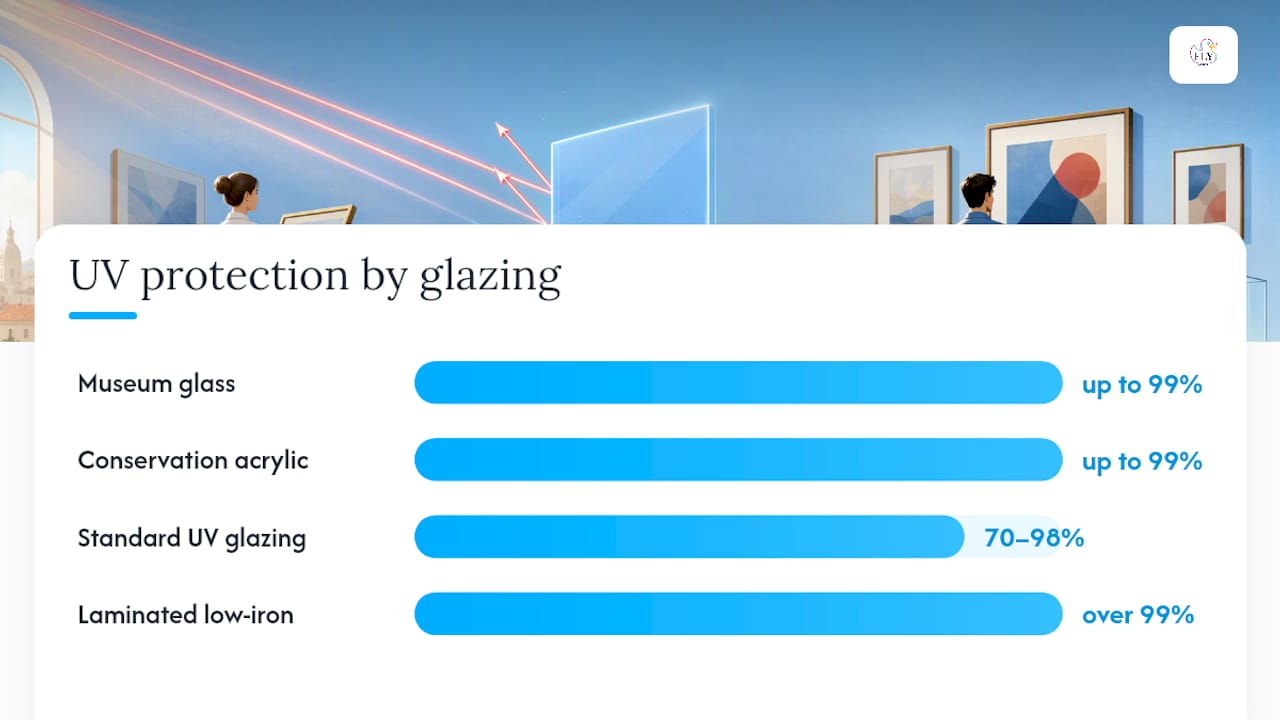
Optium Museum Acrylic (Tru Vue) solves the weight and shatter problem. It blocks up to 99% of UV, carries a double-sided anti-reflective coating with reflection under 1.6%, and comes in sheets as large as 72 by 120 inches. That size range matters for oversized commissions and installation pieces that would need multiple glass panes otherwise. ACRYLITE OP3 sits in a similar performance category as an anti-reflective, UV-filtering acrylic, often positioned as a comparable alternative for framers sourcing outside the Tru Vue line.
Standard UV-filtering products, whether glass or acrylic, typically land between 70% and 98% UV protection, a wide enough range that you have to check the actual spec sheet rather than trust the marketing language. For laminated options, Pilkington OptiView™ Ultra Protect combines a low-iron substrate with anti-reflective coatings on both outer surfaces, blocking over 99% of UV while keeping reflectance around 1%. Interlayers like Trosifol® UV Extra Protect get built into laminated glazing specifically to block incidental UV and resist long-term yellowing, which is why laminated low-iron glass shows up in high-security or public installation settings where safety glazing rules apply alongside conservation needs.
- Museum glass: best clarity, best for wall-mounted, low-traffic display
- Conservation acrylic (Optium, ACRYLITE OP3): best for large, high-value, or frequently moved pieces
- Standard UV glazing: acceptable for decor pieces, not for anything irreplaceable
- Laminated low-iron glass with UV interlayers: best where safety codes and conservation both apply
Pro Tip: If you’re framing something you’d never want to replace, don’t split the difference on UV percentage to save money. Spend on the glazing first, then economize on the frame molding if you need to.
How to Read a Glazing Spec Sheet Without Getting Fooled
Two numbers matter on any glazing spec sheet: the UV percentage and the reflection percentage. The UV figure tells you how much of the 300–380 nm band gets blocked before it reaches the artwork. Conservation-grade means that number sits at 97% or higher, a threshold recognized in PPFA guidance and treated as the working standard across the framing trade.
The reflection figure tells you something different: how much visible light bounces off the glazing surface instead of letting you see the art clearly. Standard glass reflects around 8%. Museum-grade anti-reflective coatings cut that to under 1–2%, which is the visual difference between glazing that looks like a mirror in bright light and glazing you forget is even there.
For standards to actually trust, look for products referencing ISO 18902 and ISO 18916, the conservation reference standards for photo-safe and archival framing materials, alongside PPFA guidelines for works on paper.
- UV% should be stated for the 300–380 nm range specifically, not a vague “UV protection” claim
- Reflection% under 2% signals genuine anti-reflective coating, not a marketing label
- In-substrate protection (built into the material) outlasts surface coatings, which can delaminate or wear off over years of handling
How Do You Choose Glazing for a Specific Artwork?
Start with four questions before you look at a single product: what’s the piece worth, what’s it made of, how big is it, and will it ever travel. A watercolor under $200 in a spare bedroom has different needs than a signed lithograph worth thousands hanging in a lobby with south-facing windows.
- Value and medium first. Works on paper, photographs, and anything with friable pigment (pastel, charcoal) need conservation-grade UV blocking at minimum, and glass or anti-static acrylic specifically, since ordinary acrylic can attract static that pulls loose pigment off the surface.
- Size and handling second. Anything larger than roughly 24 by 36 inches, or anything that will be shipped or moved between venues, favors conservation acrylic like Optium over glass, purely for weight and shatter-resistance.
- Exposure third. A piece near a window or under strong gallery lighting needs the full 97–99% tier. A piece in a dim hallway has more room to compromise, though it’s rarely worth the risk for anything with real value.
When you’re getting a quote, ask the supplier for the exact UV% in the 300–380 nm range, the reflection percentage, and whether the coating is applied to the surface or built into the substrate. Red flags include vague phrases like “UV protective” with no number attached, and any coating described without a permanence or delamination warranty.
Pro Tip: Ask specifically whether the UV block figure was tested at the material level or the assembled product level. Some suppliers quote the coating’s isolated performance, which can overstate what you get once it’s laminated into a finished sheet.
Handling, Cleaning, and Shipping Framed Work Safely
Glass and acrylic need different cleaning approaches, and using the wrong one is one of the most common ways framers damage glazing they paid a premium for. Standard glass cleaners work fine on glass. Acrylic needs a dedicated acrylic cleaner and a soft cloth, since ammonia-based glass cleaners can cloud or craze the surface over time.
- Never use paper towels on acrylic; they can create fine scratches invisible until light hits them at an angle
- For pastel, charcoal, or other friable media, choose anti-static acrylic or glass, since standard acrylic’s static charge can lift loose pigment right off the paper
- Leave spacers between the glazing and the artwork surface, especially in humid climates, to prevent condensation and mold
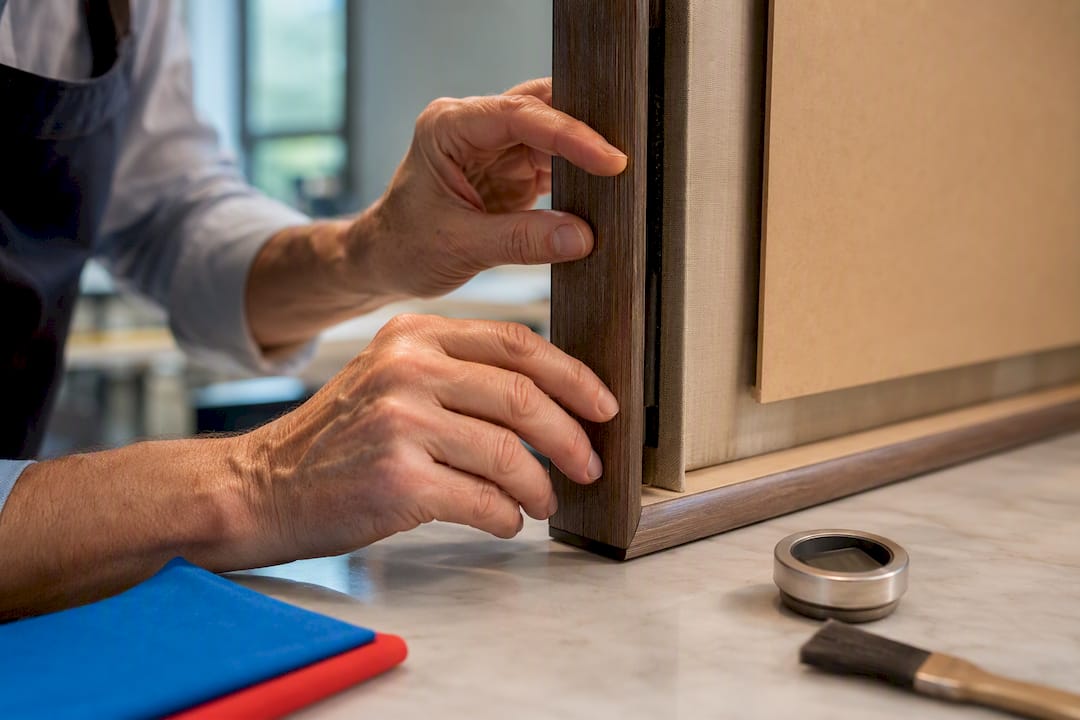
- For shipping, conservation acrylic is the safer choice for transit because it won’t shatter; large glass panels should travel flat, cushioned, and backed with rigid plywood
Sealed frames protect against dust and humidity swings but need a vapor barrier and matting that won’t trap moisture. Ventilated framing works better in consistently dry climates.
What Does Conservation Glazing Actually Cost?
Price scales with three things: material, size, and coating quality. Off-the-shelf UV glass in standard frame sizes runs cheapest, often just a modest premium over plain glass. Custom-cut UV acrylic costs more once you factor in the cutting and edge finishing that off-the-shelf sheets skip. Museum-grade anti-reflective glass or acrylic sits at the top of the range, and that premium buys the double-sided coating and the 97–99% UV tier together and not separately.
Two things push the price up fastest: anti-reflective coating (it’s a manufacturing step, not a spray-on afterthought) and custom sizing beyond standard frame dimensions.
- Off-the-shelf UV glass: lowest cost, fits standard frame sizes
- Custom-cut UV acrylic: mid-range, priced by square footage plus cutting
- Museum-grade anti-reflective glass or acrylic: highest cost, justified for valuable or exhibited work
For sourcing, conservation framing suppliers and custom framers who stock Tru Vue products are your best bet for genuine museum-grade material. When requesting a quote, specify the UV% range you need, the reflection percentage, and the exact dimensions, since undersized custom orders often cost more per square foot than a slightly larger standard size.
What Certifications Actually Guarantee Protection?
ISO 18902 and ISO 18916 cover archival storage and photographic material safety, but they’re not the only labels worth checking. Manufacturer lab testing for coating permanence matters just as much, since a UV block figure means little if the coating flakes off in five years.
Look for documentation showing accelerated aging tests, where manufacturers expose samples to intensified UV over weeks to simulate years of display and measure how much the UV-blocking performance degrades. Reputable suppliers publish this data or provide it on request; vague “lab-tested” claims with no numbers attached are worth treating skeptically.
Industry adoption is its own kind of proof. When major museums and conservation labs standardize on a specific product line for permanent collection framing, that’s a stronger signal than any single certification, since institutions doing that kind of due diligence have already vetted the manufacturer’s testing claims against their own conservation standards. It doesn’t replace checking the spec sheet yourself, but consistent adoption across galleries and museums over years tends to weed out products that don’t hold up.
There’s no single universal “UV glazing certification” the way there is for, say, fire ratings on building glass. What exists is a patchwork of ISO conservation references, PPFA framing guidelines, and manufacturer-specific testing data. Reading all three together gives a fuller picture than any one label alone.
Does UV Protection Glazing Lose Effectiveness Over Time?
In-substrate UV inhibitors, the kind built into acrylic during manufacturing, hold their blocking performance for the practical lifespan of the material because the protection isn’t sitting on the surface where it can wear away. Surface coatings behave differently. A sprayed-on UV film applied after manufacturing is more prone to gradual breakdown, and in some cases delamination, especially with repeated cleaning or years of handling.
Anti-reflective coatings face a similar durability question. Coatings baked into the glass or laminated between acrylic layers hold up far longer than aftermarket AR sprays, which can show wear patterns or cloudiness within a few years of regular cleaning.
Environmental stress accelerates any decline. Glazing installed in a humid climate, or cleaned frequently with the wrong solvent, will show coating wear sooner than the same product in a stable, climate-controlled gallery. That’s part of why conservation professionals favor products with permanent, in-substrate protection over anything relying on a surface treatment, even when the initial UV percentage looks identical on paper.
Ask suppliers directly how their coating is applied and what testing backs its long-term stability before assuming the spec sheet number holds indefinitely.
Matching Glazing to Different Artwork Materials
Not every medium needs the same glazing, and treating them identically wastes money in one direction and risks damage in the other.
Photographs are among the most UV-sensitive materials in framing, since photographic dyes fade faster than most pigments. Conservation-grade glazing at 97–99% is close to non-negotiable here, and anti-reflective coating matters more than usual since photo prints are often displayed at eye level where glare is most noticeable.
Oil paintings on canvas are comparatively more UV-resistant than paper-based media, but pigment fading still happens over decades. Museum glass or conservation acrylic protects the surface without the static risk that comes with standard acrylic on works with any raised or textured paint.
Pastels and charcoal need the anti-static consideration above almost everything else. Standard acrylic’s static charge can pull loose pigment particles right off the surface, so anti-static acrylic or glass is the safer default regardless of the piece’s value.
Textiles, tapestries, and fiber art face UV damage differently, through fiber weakening and dye fading rather than surface pigment loss. These pieces often sit behind glazing at a distance rather than tight against glass, and ventilation to prevent moisture buildup matters as much as the UV percentage itself.
What Else Damages Art Besides UV Light?
Glazing handles one threat. It doesn’t handle humidity swings, temperature fluctuation, visible light intensity, or airborne pollutants, all of which degrade artwork independently of ultraviolet exposure.
Humidity causes its own damage entirely separate from light: warping paper, loosening adhesives, and encouraging mold growth behind sealed glazing if moisture gets trapped. That’s why spacers and, in humid climates, slightly ventilated framing matter alongside whatever glazing you choose.
Skip any one of those and the others can’t fully compensate. A collector who invests in museum-grade glazing but hangs the piece in direct afternoon sun with no UV film on the window is still exposing the work to a level of visible-light fading and heat stress that glazing alone won’t solve.
Studio Perspective: Protecting UV-Reactive Work at Flymiami
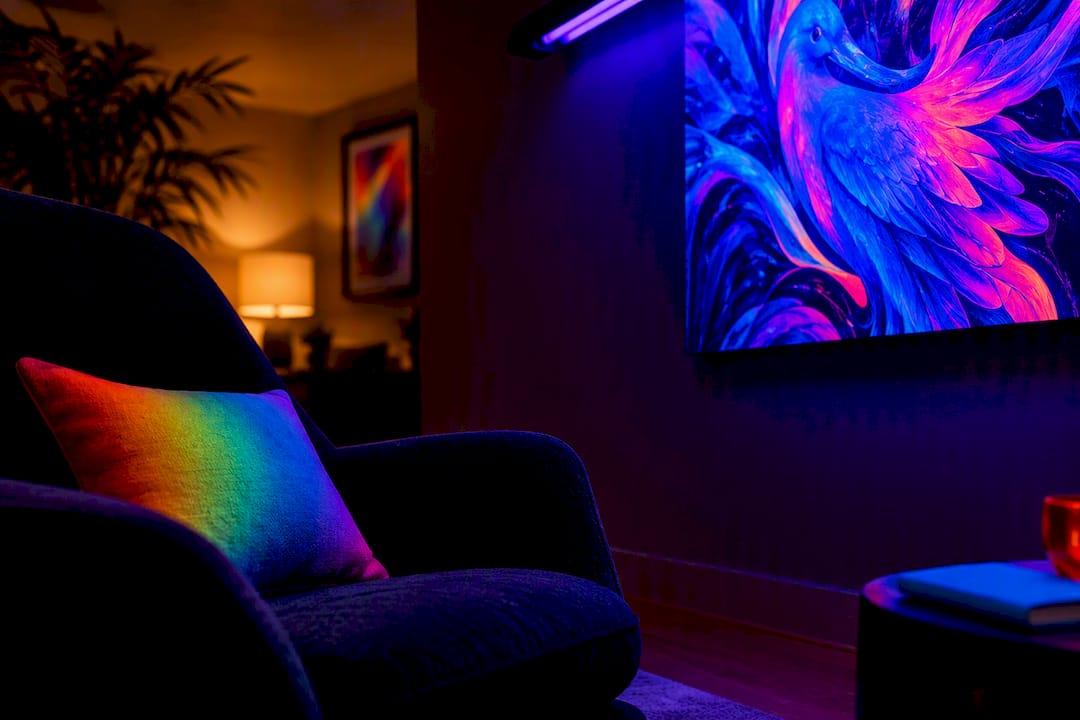
Glazing decisions split along the same lines outlined above, plus one extra layer specific to UV-reactive pigments: display lighting has to reveal the glow effect without over-exposing the piece to UV over time. For installations that stay in one place, museum glass is favored for clarity and anti-reflective finish. For items shipping to collectors, hotels, or public installations, conservation acrylic is preferred for weight and shatter resistance during transit.
Because our work uses UV-reactive pigments designed to glow under blacklight, we also think about controlled, limited exposure periods for display rather than constant blacklight bombardment, which protects the pigment’s long-term vibrancy the same way conservation glazing protects a painting from a sunny window. If you’re commissioning a custom glow piece or an installation for a public or commercial space, that’s a conversation worth having up front, before the piece leaves the studio.
— Facundo
Sources
- Optium Museum Acrylic® | Anti-Reflective Conservation Acrylic | Tru Vue
- Pilkington OptiView™ Protect
- UV-PROTECTIVE GLAZING – AN INTRODUCTION - Artglass
FAQ
Is UV Coating on Windows Worth It for Protecting Art?
Yes, for rooms with direct sunlight, since window film cuts overall UV exposure before it even reaches your framed pieces. It’s a supplement to conservation glazing, not a replacement, since indoor lighting sources also emit UV that window film doesn’t touch.
How Much Does UV-Protective Glass Cost?
Cost depends heavily on tier: entry-level UV glass adds a modest premium over standard glass, while museum-grade anti-reflective glass or acrylic like Optium costs considerably more because of the coating process and conservation-grade UV performance. Custom sizing and anti-reflective coatings are the two biggest cost drivers.
What’s the Best UV-Blocking Coating for Glass?
The strongest performance comes from products built with in-substrate or laminated protection rather than surface sprays, such as Optium Museum Acrylic and Pilkington OptiView™ Ultra Protect, both blocking over 99% of UV. Coatings baked into the material during manufacturing hold up longer than aftermarket surface films.
Is It Worth Getting UV Protection on Framed Art?
For anything valuable, irreplaceable, or displayed under regular light, yes, since UV exposure causes fading and material breakdown that can’t be reversed once it happens. For low-value decor pieces in dim rooms, standard glazing is a reasonable compromise.