Collectors: Art Storage vs Self Storage, Protect UV and Mixed Media
For a box of prints sitting for six weeks during a move, a climate-controlled self-storage unit is fine. For anything irreplaceable, valuable, or fragile that will sit for months or years, professional art storage is the right call, because only it pairs museum-grade environmental control with trained handling and documented chain of custody. The comparison below explains exactly where that line sits.
TL;DR:
- Self-storage is suitable only for short-term, low-value, and replaceable art pieces due to its lack of environmental control and documented handling.
- Fine art storage offers climate stability, restricted access, and detailed condition reports, essential for preserving fragile or high-value items long-term.
- Proper packing requires tailored techniques, especially for sculptures and mixed-media, to prevent damage during transit and storage.
- Environmental instability, such as fluctuating temperature and humidity, causes most damage, making true climate-controlled facilities a necessity for sensitive artwork.
- Before choosing a storage option, verify environmental monitoring, access logs, handling procedures, and insurance coverage to ensure proper protection of valuable art.
Table of Contents
- Art Storage vs Self Storage: The Trade-Offs at a Glance
- How Temperature, Humidity, and Light Damage Artwork
- Why Chain of Custody and Condition Reports Matter
- Packing and Crating Art the Right Way
- What Drives the Cost of Art Storage
- A Quick Decision Checklist for Choosing Storage
- What UV-Reactive and Mixed-Media Art Needs in Storage
- Balancing Convenience and Stewardship
- Considering a Piece Instead of Just Storing One
- Sources
- FAQ
Art Storage vs Self Storage: The Trade-Offs at a Glance
Self-storage wins on availability and price. You can rent a unit same-day almost anywhere, and monthly rates undercut fine art storage by a wide margin. The catch is that you’re doing the packing, the moving, and the risk assessment yourself, in a space built for furniture and holiday decorations, not canvases.
Fine art storage flips that equation. You pay more, and you can’t just swing by whenever you feel like it, but you’re getting a facility built specifically for art collections: trained handlers, restricted access, and paperwork that follows the piece from drop-off to pickup.
- Environment: self-storage varies unit to unit; fine art facilities hold tight temperature and humidity bands.
- Security: self-storage relies on gate codes; art facilities use restricted, logged access.
- Handling: you move your own pieces at self-storage; trained staff handle transport at art facilities.
- Access: self-storage is often 24/7; art facilities schedule retrieval by appointment.
- Cost: self-storage is cheaper per square foot; art storage bundles in labor and monitoring.
- Insurance: self-storage rarely satisfies fine art policy requirements; art facilities typically do.
How Temperature, Humidity, and Light Damage Artwork
Wood panels swell. Canvas stretches or slackens. Paper cockles. Pigments fade. Almost all of it traces back to the same culprit: instability, not just extremes. A space that swings between 55°F and 85°F does more harm over a year than one that sits at a flat 78°F, because the swelling and shrinking never stops.
Museum practice generally targets around 68 to 72°F with stable relative humidity, and that stability, not the exact number, is what protects mixed-media and multi-material pieces. A true climate-controlled system manages both temperature and humidity together, with monitoring and backup power if the primary system fails. Standard climate-controlled self-storage often only handles temperature, leaving humidity to drift with the season.
Before signing a lease, ask what the unit actually monitors. Does it log humidity, or just run an air conditioner? Is there a generator if the power goes out for two days during a storm? Is the space windowless, or will afternoon sun hit your unit’s door every day for a decade? Environmental instability is a documented driver of gradual deterioration in sensitive media, and it’s the one risk owners underestimate most.
Why Chain of Custody and Condition Reports Matter
General self-storage facilities hand you a key and a code, and that’s the extent of their involvement. Nobody inspects what goes in or comes out. Dedicated art facilities work differently: staff log intake condition, restrict floor access, and often keep round-the-clock monitoring rather than a single overnight guard.
That paperwork isn’t bureaucratic overkill. Condition reports and documented handling are what insurance adjusters and future buyers actually ask for when a claim or a sale comes up. Without a dated record of a piece’s state going in, proving damage happened at the facility, rather than before it arrived, gets nearly impossible.
Before committing, ask any facility three questions: Who has access to the storage floor, and is it logged? What does intake documentation look like, photos, written notes, both? What’s the emergency plan for fire, flood, or a power outage lasting more than a few hours?
Packing and Crating Art the Right Way
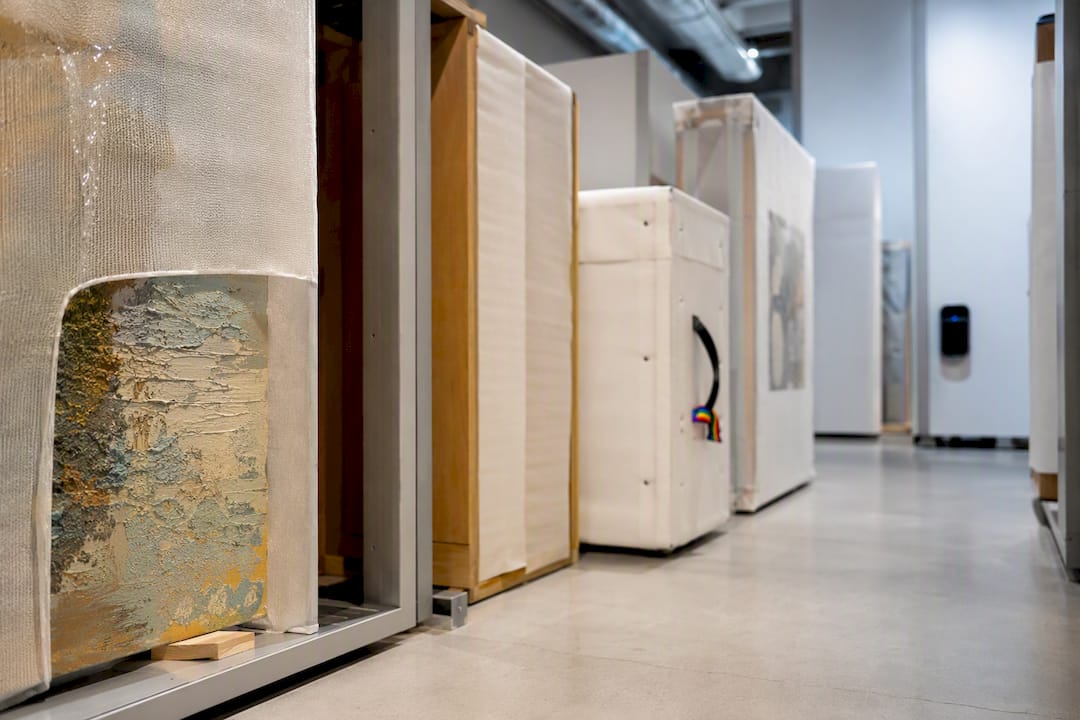
Not everything needs a custom crate. A framed print under glass, wrapped in glassine and cardboard corners, travels fine for a short move. A sculpture with delicate extremities, an unframed canvas, or anything going into long-term storage usually doesn’t get that luxury.
- Wrap paintings in acid-free glassine directly against the surface, then add a breathable outer layer. Never let plastic touch paint or unvarnished wood; trapped moisture causes mold.
- Frame or mat works on paper with acid-free backing before adding any rigid support.
- For sculptures, build in clearance so nothing touches unless it’s designed to. Cramped storage is a leading cause of chips and cracks in transit.
- Use felt or plastic barriers between a sculpture’s base and the floor or shelf, and order custom shelving for irregular shapes rather than forcing them onto standard racks.
- When a piece travels by truck, secure it so it can’t shift during braking; loose straps do more damage than no straps at all.
Pro Tip: If you’re shipping a piece over a few feet tall or a few hundred pounds, budget for a custom crate before you budget for the movers. Improvised padding is the single most common cause of transit damage on large sculptures.
What Drives the Cost of Art Storage
A storage quote is really five line items stacked together: raw space, environmental control level, handling and crating, intake documentation, and how often you plan to retrieve the piece. Self-storage charges mostly for the first item. Fine art facilities charge for all five.
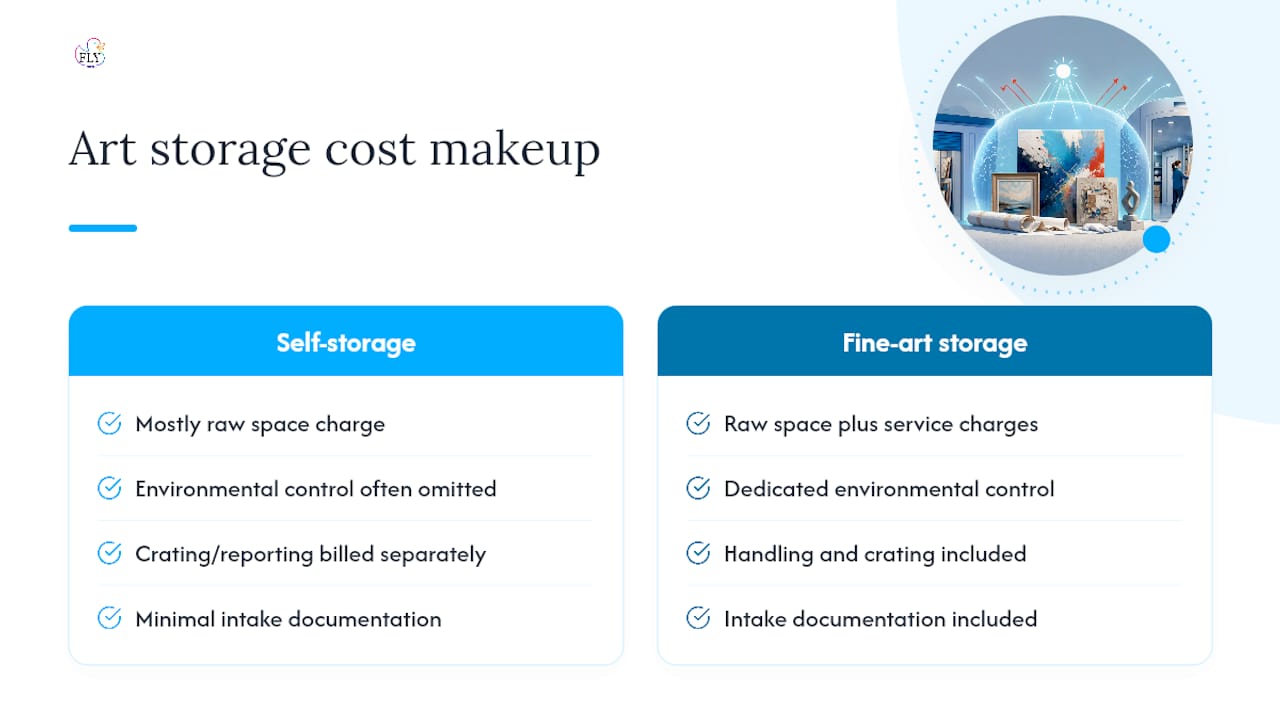
That’s why museum-grade storage costs more: you’re paying for labor and administrative rigor, not just square footage. When comparing quotes, check whether crating and condition reporting are included or billed separately, and ask how retrieval scheduling works. A quote that looks cheap on paper sometimes excludes the exact services that justify the higher-priced option next to it.
A Quick Decision Checklist for Choosing Storage
Run through this before signing anything:
- Value: Is the piece replaceable, or does it carry significant financial or sentimental weight?
- Fragility: Is it a mixed-media, paper, or sculptural piece sensitive to humidity and shock?
- Duration: Is this a one- to two-month gap, or an open-ended commitment?
- Access needs: Do you need to see or move it often, or can it sit untouched?
- Insurance and provenance: Does your policy require documented storage conditions?
If you answered “high value” or “long duration” to any of those, professional storage is worth the premium. A common hybrid: use a clean, climate-controlled self-storage unit for the first month while you vet and book a proper art facility, rather than defaulting to whichever option is closest.
Before committing anywhere, inspect the unit in person, request the facility’s written intake procedure, get a signed condition report on drop-off, and confirm your insurance actually covers the storage type you’ve chosen.
What UV-Reactive and Mixed-Media Art Needs in Storage
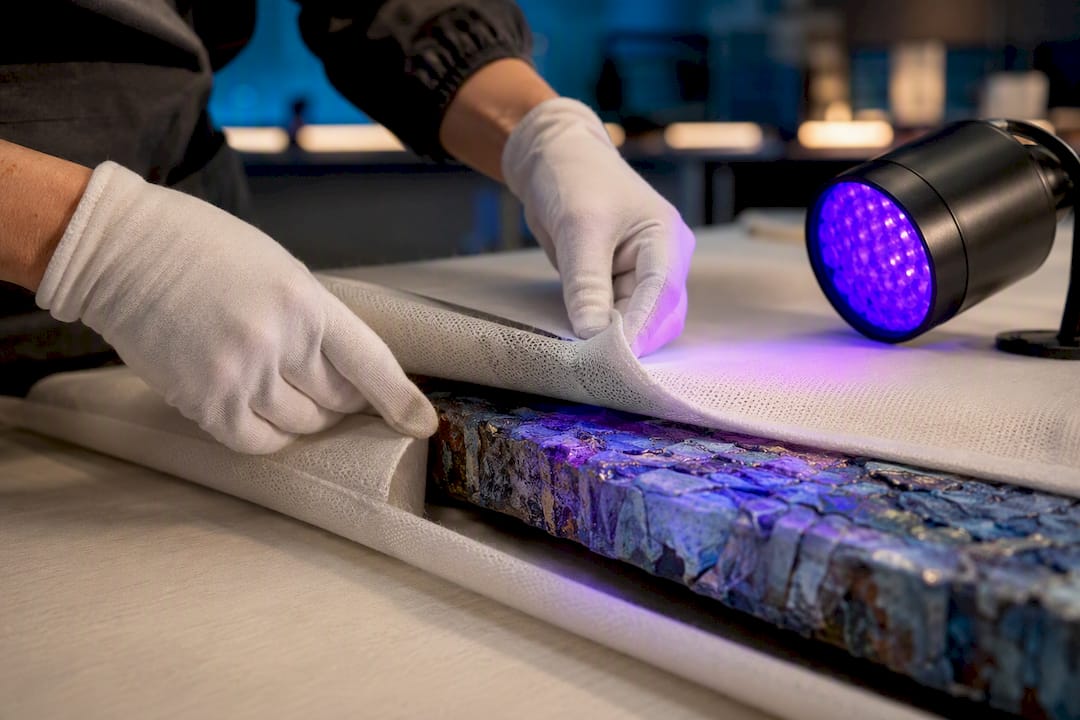
UV-reactive pigments and mixed-media assemblages carry storage demands that standard oil or acrylic work doesn’t. The phosphors that make a piece glow under blacklight can degrade faster under direct sunlight and certain solvent exposure, so light control matters as much as temperature here.
For limited-edition sculptural pieces, that means padded, ventilated wrapping rather than sealed plastic, and never stacking anything against a UV-treated surface. A condition report on these pieces should note not just scratches or cracks but whether the UV-reactive coating still glows evenly under blacklight at intake, so any fading shows up clearly at retrieval.
Balancing Convenience and Stewardship
Most collectors end up with a hybrid approach, and that’s reasonable. Use self-storage for the short gaps. Reserve professional storage for anything you’d be devastated to lose. Whatever you choose, get a condition report and confirm your insurance actually covers where the piece is sitting.
— Facundo
Considering a Piece Instead of Just Storing One
If you’re weighing the cost of long-term storage against a piece’s actual value to you, it’s worth asking whether that budget is better spent acquiring or commissioning work you’ll actually want to keep close. Some artists work directly with collectors on original and limited-edition pieces, including UV-reactive sculptures that reveal hidden detail under blacklight, rather than having them stored long-term in a vault.
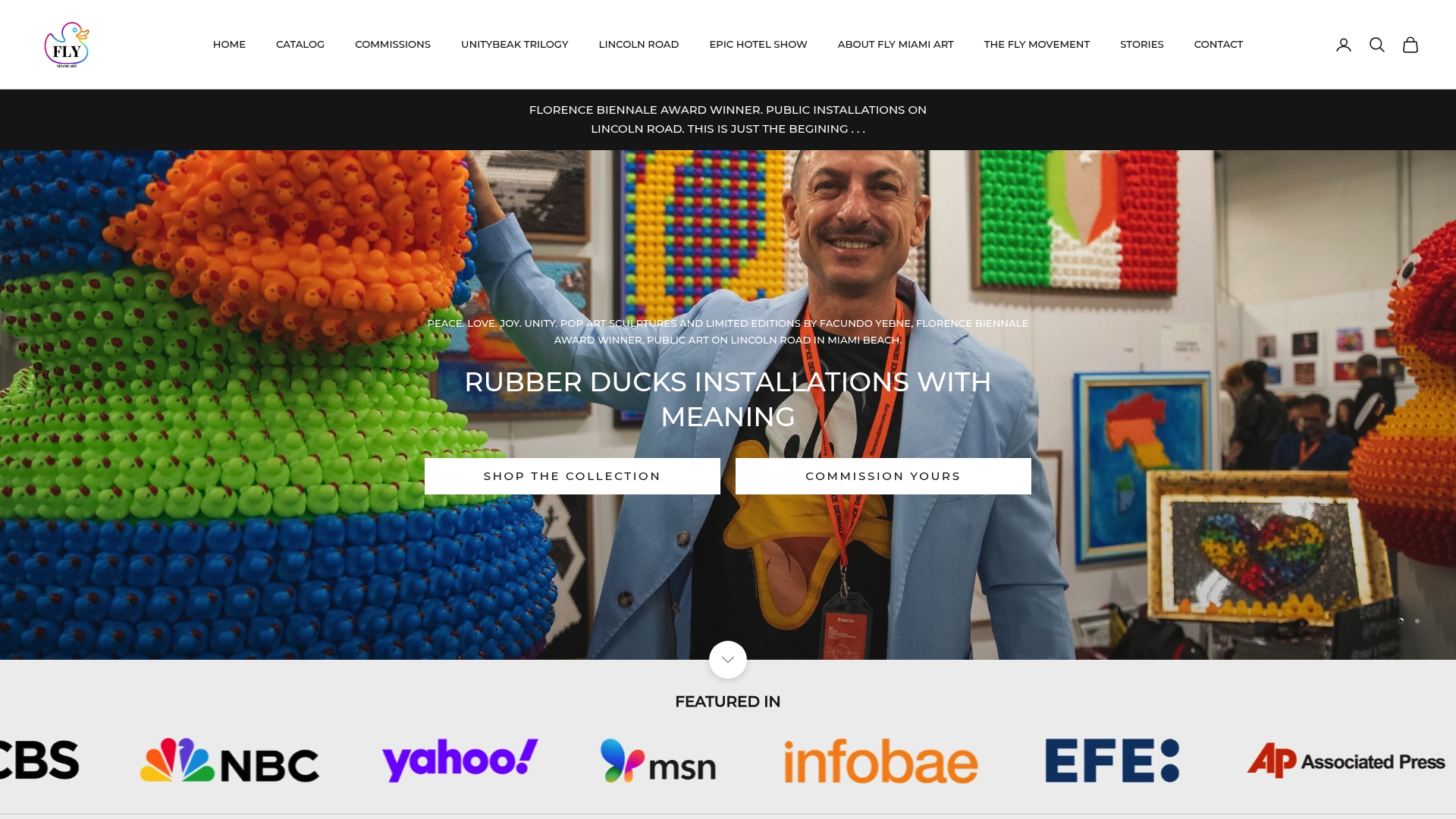
Flymiami isn’t a storage provider, and this isn’t a pitch to skip preservation planning. It’s a note for anyone weighing a large storage commitment against building a collection worth that commitment in the first place. Browse the sculpture collection or the UV glow art to see what a hand-finished, blacklight-reactive piece from artist Facundo Yebne actually looks like, and reach out about a custom commission if you have a space in mind for one.
Sources
The environmental and documentation standards referenced here come from Colorado Art Services’ storage guide, the Observer’s fine art storage overview, and Premium Spaces’ climate-control comparison. For collections with significant value, consult a conservator or a museum-standard facility directly before making a final decision.
- Storage for Art: A Collector’s Definitive Guide
- What collectors need to know about fine art storage facilities
- Climate-controlled vs. standard storage: Making the best choice
FAQ
What Is the Best Way to Store Art Long-Term?
For long-term preservation, use a purpose-built art storage facility with stable temperature and humidity control, restricted access, and documented intake, rather than general self-storage.
What Is the 70/30 Rule in Art?
Definitions vary by context, and no single authoritative version applies to storage specifically, so treat any precise numerical split you see applied to art preservation with caution rather than as an established standard.
What Cannot Be Stored in Self-Storage?
Highly valuable, fragile, or irreplaceable pieces, especially unframed paper, sensitive mixed-media, and large sculptures, generally shouldn’t sit in general self-storage long-term, since these units rarely offer the humidity control or documented handling that piece needs.
How Much Does Art Storage Cost?
Cost depends on space, environmental control level, handling and crating, and how often you retrieve the piece, and museum-grade storage costs more than basic self-storage because it bundles in labor and monitoring that self-storage doesn’t provide.
Is Self-Storage Ever Acceptable for Art?
Yes, for short gaps of a month or two involving lower-value or replaceable pieces, a clean, climate-controlled self-storage unit is a reasonable stopgap while you arrange something more permanent.