How to Evaluate Condition of Used Pop Art Pieces
A used Pop Art sculpture with UV-reactive materials is worth buying only when three checks pass: the armature holds, the UV finish still glows under blacklight, and at least one verifiable condition report exists. If any one of those fails, you either negotiate hard or walk away.
The three fastest checks:
- Structural integrity: Press gently on mounts and joints. Any flex, crack sound, or visible separation in the armature is a structural red flag that cosmetic fixes cannot solve.
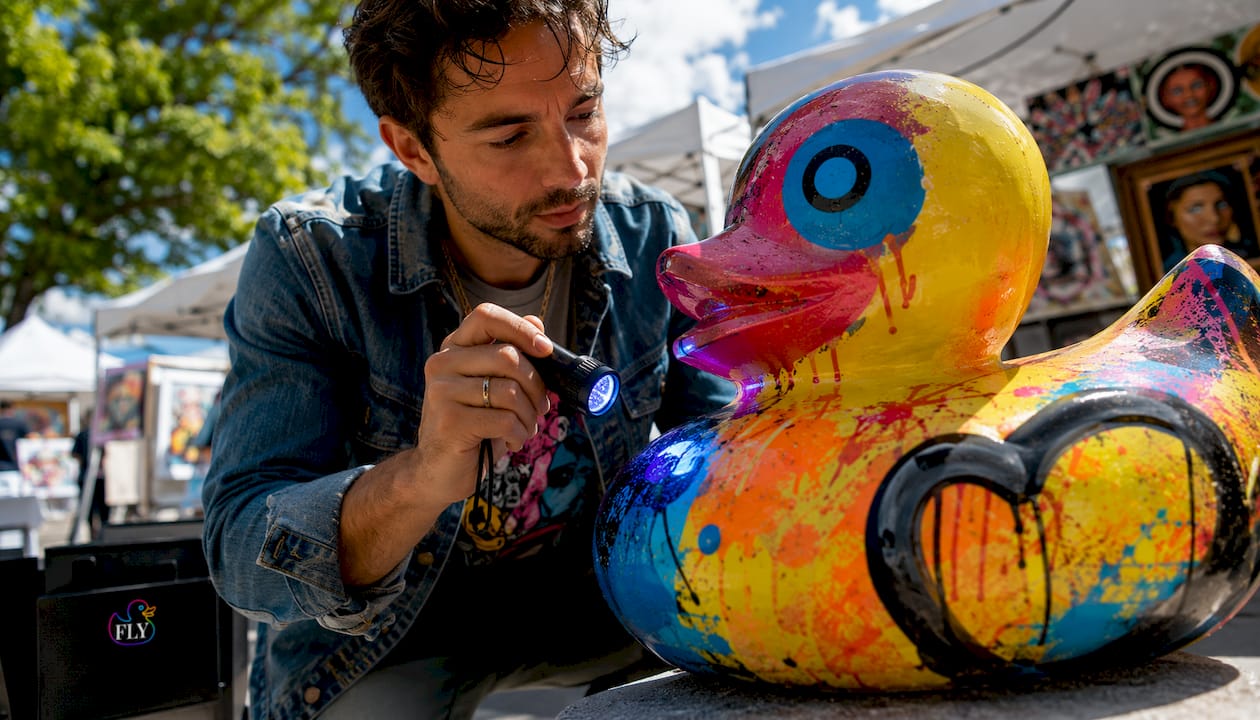
- UV-reactive finish response: Hold a 365nm blacklight 12–18 inches from the surface in a darkened room. Uniform, vivid fluorescence means the reactive coating is intact. Patchy or absent glow signals photochemical degradation.
- Provenance and condition record: Demand a dated condition report, a certificate of authenticity, and the original invoice or gallery receipt. No documentation, no deal on high-value works.
Pro Tip: For guaranteed condition and full UV-material documentation from day one, commissioning directly from a studio like Flymiami eliminates all three risks before you spend a dollar on inspection.
Table of Contents
- How do you quickly evaluate condition of used pop art pieces?
- How UV-reactive materials age differently from standard paints
- Step-by-step inspection workflow, including the blacklight test
- When should you restore a used Pop Art piece, and when should you leave it alone?
- How condition affects value and your negotiation position
- What documents should you demand before buying a used Pop Art piece?
- Shipping, storage, and display guidance for UV-reactive Pop Art
- Exact questions to send a seller before buying a used Pop Art sculpture
- How Flymiami assesses condition and what that means for buyers
- Common degradation patterns in Pop Art materials and sculptors
- How to spot counterfeit or altered Pop Art pieces from condition clues
- Key Takeaways
- What most buyers miss about used UV-reactive Pop Art
- Guaranteed condition: buy or commission UV-reactive work from Flymiami
- Useful sources and where to find conservators
How do you quickly evaluate condition of used pop art pieces?
Use this checklist during an in-person viewing or when reviewing seller-provided photos and video.
Surface condition:
- Check paint and coating layers for abrasion, scratches, or lifting edges.
- Look for color inconsistency that suggests spot repainting or overcoating.
- Inspect any screenprinted or mixed-media elements for ink cracking or substrate deterioration.
- Note any residue, staining, or adhesive marks on the surface or frame edges.
Structural checks:
- Test mounts, armature joints, and base attachments for stability.
- Look for hairline cracks at stress points (corners, joins, base-to-body transitions).
- Check for loose parts, rattling internal elements, or uneven weight distribution.
UV-response checks:
- Request a blacklight video sweep (365nm lamp, darkened room, slow 360° pass).
- Compare fluorescence uniformity across the entire surface.
- Flag any areas where the glow is absent, patchy, or a different color than the rest.
Photo requests to send the seller:
- Full front, full back, both sides, and three-quarter angle
- Close-up of every join, mount point, and armature base
- Macro shot of the signature, edition number, and any labels
- Back-of-work shot showing framing hardware, stamps, or residue
- Blacklight sweep video in a fully darkened room
Pro Tip: Structural red flags outrank aesthetic wear every time. A scratch is negotiable. A cracked armature or delaminating substrate is a restoration project that may cost more than the piece.
How UV-reactive materials age differently from standard paints
UV-reactive finishes can change dramatically without any obvious surface damage. That distinction catches most buyers off guard.
Standard acrylic or oil paints fade through pigment bleaching, which is visible in daylight. UV-reactive coatings fail through a different mechanism: the fluorescent dye molecules break down photochemically under both visible light and UV exposure, losing their ability to re-emit light even when the base color looks perfectly intact. The result is a piece that appears fine in a gallery but goes dark under blacklight.
Common aging patterns in UV-reactive works:
- Fluorescence loss without color change: The piece looks vibrant in daylight but shows little or no glow under blacklight. This is the most common failure mode in older UV works.
- Binder degradation: The polymer binder holding fluorescent pigments can embrittle over time, especially in pieces stored in fluctuating humidity, causing micro-cracking or powdery surface texture.
- Dye migration: In layered mixed-media pieces, fluorescent dyes can migrate into adjacent layers, blurring the intended UV pattern.
- Substrate instability: Pop Art’s use of unconventional substrates (thermal paper, printed ads, commercial board) creates additional aging risk, since these materials are inherently less stable than archival canvas or aluminum.
The critical distinction for buyers: a UV-reactive piece that glows uniformly and brightly under a 365nm blacklight has retained its core material integrity. One that shows patchy or absent fluorescence has undergone photochemical degradation that no surface cleaning will reverse. Restoration of UV response requires recoating by a conservator familiar with fluorescent binders, and even then the original artist’s specific pigment mix may not be replicable.
Flymiami’s studio selects UV-reactive pigments specifically for long-term fluorescence stability, pairing them with archival binders that resist the embrittlement common in lower-grade UV coatings.
Step-by-step inspection workflow, including the blacklight test
An ordered inspection catches problems in the right sequence: structural first, surface second, UV last.
- Overall photo review. Examine full-resolution front and back images in natural light. Look for tonal inconsistencies, shadow lines from repairs, or color banding that suggests overpainting.
- Structural probes. In person, apply light pressure to joins, mounts, and the base. Listen for creaks or clicks. Check that the piece sits level and that no component shifts independently.
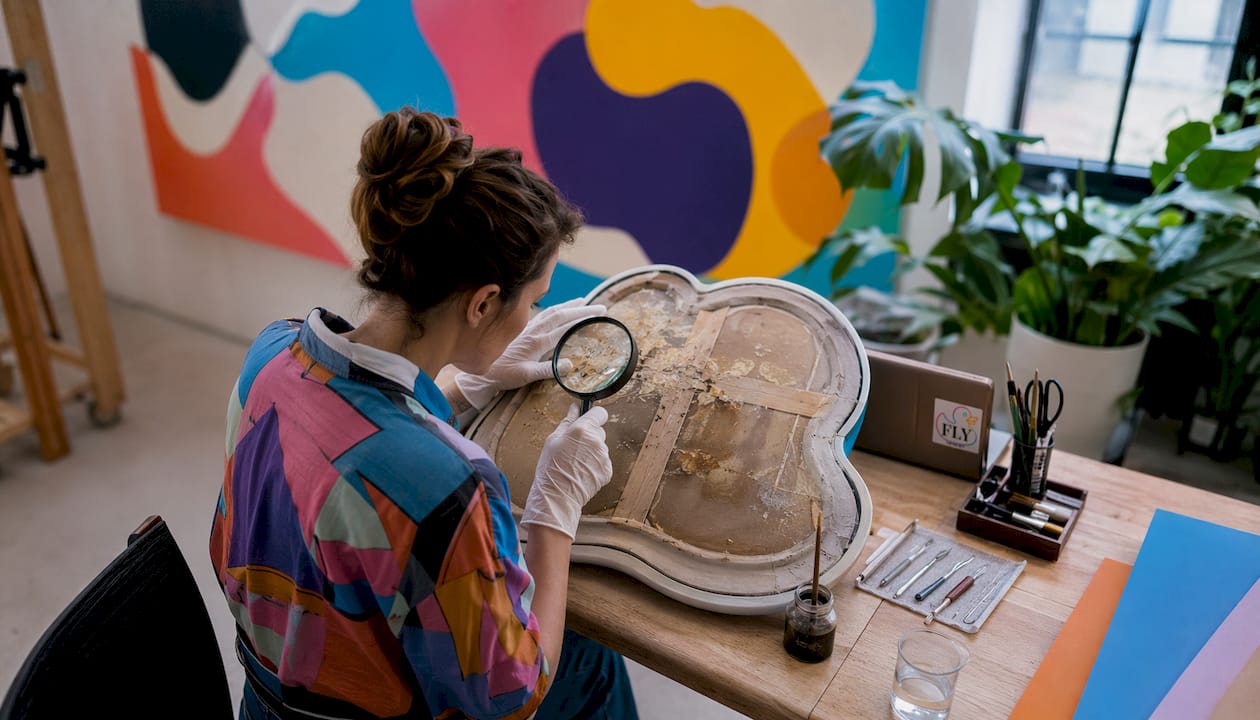
- Surface detail pass. Use a magnifying loupe or macro lens on your phone at joins, edges, and any textured areas. Look for mismatched repair textures, fill material, or inconsistent gloss levels.
- Blacklight test. Darken the room completely. Hold a 365nm UV lamp 12–18 inches from the surface and move it slowly across the entire piece. Note the color, intensity, and uniformity of fluorescence. Photograph the result.
- Back and hidden areas. Examine the verso for labels, stamps, adhesive residue, or structural changes. The back of a work frequently reveals improper framing, mounting residue, or hidden repairs invisible from the front.
- Signature and labels. Confirm the signature matches documented examples. Check edition numbers, studio stamps, and gallery labels for consistency with provenance records.
Red flags to stop the inspection:
- Powdery or chalky texture in UV-reactive areas (binder failure)
- Brittle flaking at edges or joins
- Mismatched UV response across areas that should be uniform
- Inconsistent repair textures visible under raking light
- Internal rattling or armature voids in sculptures
Statistic note: Image-only appraisal tools provide a useful starting value range but explicitly cannot confirm authenticity or hidden condition issues. In-person inspection is required for any UV-reactive work before finalizing a purchase.
When should you restore a used Pop Art piece, and when should you leave it alone?
Restore only when structural integrity, display safety, or irreversible material loss is present. Otherwise, preserve.
| Condition Issue | Restore | Preserve | Notes |
|---|---|---|---|
| Cracked or unstable armature | Yes | No | Safety and structural risk |
| Delaminating substrate | Yes | No | Irreversible if left untreated |
| Fluorescence loss (UV coating) | Conditional | Preferred | Recoating may alter appearance |
| Surface scratches or abrasion | No | Yes | Cosmetic; negotiate price instead |
| Intentional distress or wear | No | Yes | Part of the aesthetic |
| Faded screenprint ink | Conditional | Preferred | Depends on severity and rarity |
Who to contact:
- Conservator (paintings/mixed media): For surface consolidation, binder stabilization, and UV recoating assessments. The American Institute for Conservation (AIC) directory lists vetted professionals by specialty.
- Metalworker or fabricator: For armature repairs on sculptures with steel, aluminum, or resin internal structures.
- UV-coatings specialist: Rare but essential for fluorescent finish restoration. Ask your conservator for a referral; not all conservators work with reactive pigments.
Restoration timelines for UV-reactive works typically run 4–12 weeks depending on scope. Budget estimates vary widely by damage type; get a written quote before committing to purchase.
How condition affects value and your negotiation position
Condition downgrades translate directly into price adjustments. The math is straightforward: get a restoration estimate first, then subtract it from the asking price, plus a risk premium for uncertainty.
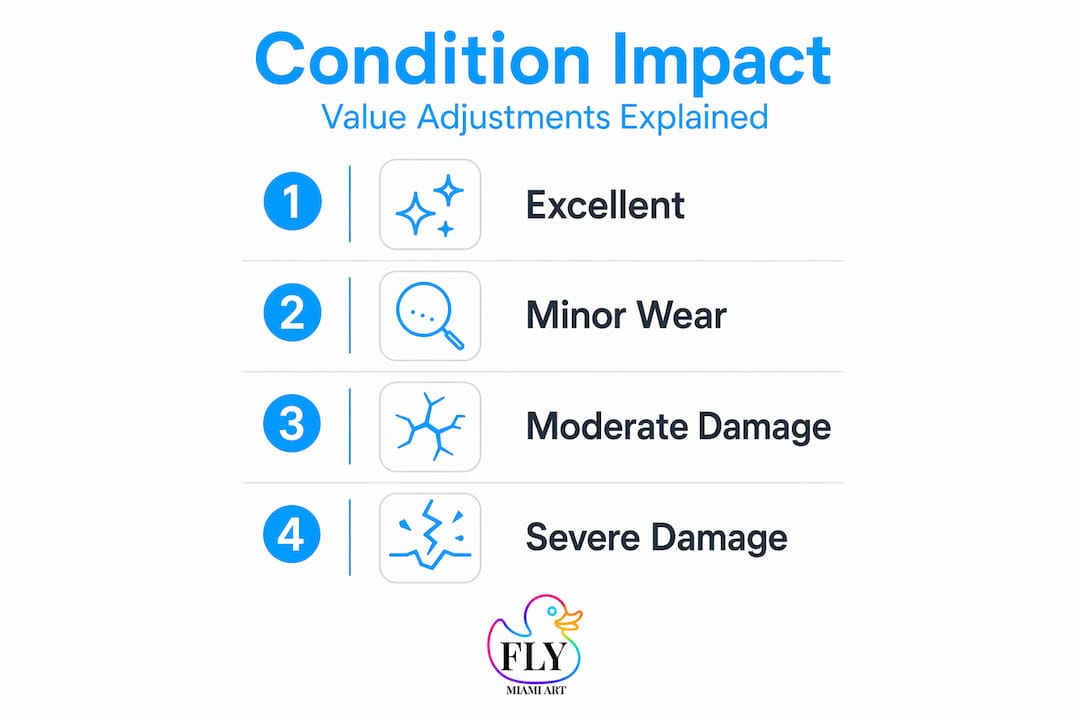
| Condition Level | Typical Adjustment | Basis |
|---|---|---|
| Excellent (no issues) | — | Full asking price justified |
| Cosmetic wear only | 5% reduction | Negotiation leverage |
| UV fluorescence loss | 20% reduction | Restoration cost + display impact |
| Structural compromise | 35% reduction | Repair cost + provenance risk |
| Undocumented repairs | Pass or deep discount | Authenticity uncertainty |
AI appraisal tools can establish a baseline range. For example, a comparable 24x24 mixed-media Pop Art piece received an estimated range of $1,500–$3,000 pending in-person verification. Use that range as a ceiling, then apply condition adjustments downward.
Negotiation language that works:
- “I’ve received a conservator’s estimate of $X for the UV recoating. I’d like to adjust the offer accordingly.”
- “The blacklight test shows patchy fluorescence in the lower third. Can you share the conservation history for that area?”
- “I’m happy to proceed at asking price with a written condition report from a qualified conservator included in the sale.”
What documents should you demand before buying a used Pop Art piece?
For any high-value work, buy only when provenance and at least one verifiable dated condition record exist.
Documents to demand:
- Certificate of authenticity (COA): Signed by the artist or issuing gallery, with edition number if applicable.
- Original invoice or bill of sale: Shows purchase price, date, and seller identity.
- Gallery or studio provenance: Chain of ownership from creation to present.
- Prior condition reports: At least one professional condition report created by a conservator, appraiser, or experienced gallery staff.
- Conservation history: Any record of past treatments, repairs, or recoating.
- Dated high-resolution photos: Front and back, taken at time of prior sale or exhibition.
| Document | Why It Matters |
|---|---|
| Certificate of authenticity | Confirms authorship and edition |
| Original invoice | Establishes ownership chain |
| Condition report | Documents state at a specific date |
| Conservation history | Reveals past interventions |
| Back-of-work photos | Shows hidden repairs or framing changes |
Back-of-work imagery is the most overlooked document in Pop Art transactions. Adhesive residue, old framing hardware, and structural modifications are almost always visible only from the verso.
Shipping, storage, and display guidance for UV-reactive Pop Art
Control light and humidity first, then mechanical protection.
Storage guidelines:
- Temperature: 65–70°F, stable. Avoid garages, attics, or exterior walls.
- Relative humidity: 45–55%. Fluctuations above 60% accelerate binder degradation in UV coatings.
- Light exposure: Store in darkness or under UV-filtering covers. Continuous ambient light degrades fluorescent dyes even without direct UV excitation.
- Wrap sculptures in acid-free tissue, then bubble wrap, then a rigid outer crate. Never let UV-reactive surfaces contact foam directly without a barrier layer.
Display tips that preserve UV response:
- Use blacklight only for intentional display sessions, not as permanent ambient lighting. Continuous UV excitation accelerates photochemical breakdown.
- Mount with hardware rated for the piece’s weight plus a 3x safety margin. Check anchor points every six months.
- Keep UV-reactive works away from south-facing windows and halogen spotlights, both of which emit UV wavelengths.
- For rotating display schedules, limit total blacklight exposure per week and document each session.
Exact questions to send a seller before buying a used Pop Art sculpture
Start with provenance and condition, then move to material specifics.
Priority questions:
- “Can you provide the original certificate of authenticity and invoice?”
- “Has this piece ever been restored, repaired, or recoated? If so, by whom and when?”
- “Do you have a professional condition report? If not, would you commission one before sale?”
- “Can you provide a blacklight video sweep in a fully darkened room using a 365nm lamp?”
- “How and where has this piece been stored since purchase?”
- “Has it been exhibited, loaned, or transported? Are there updated condition records from those events?”
Seller-response red flags:
- Vague answers about storage (“in my living room, I think”)
- Refusal to provide back-of-work photos
- No COA and no explanation of why one was not issued
- Blacklight video that shows the piece in a lit room or uses a low-power lamp
- “Minor repairs” mentioned without documentation
Follow-up script for evasive answers:
How Flymiami assesses condition and what that means for buyers
Every piece that leaves the Flymiami studio goes through a documented condition assessment before shipping. That means UV fluorescence is tested under a 365nm lamp at multiple angles, structural joins are load-tested, and the surface is photographed front and back at high resolution. Buyers receive that documentation as part of the purchase.
The studio’s standard: UV-reactive works should be tested under blacklight at the time of creation, at the time of sale, and after any transport. A piece with no blacklight test record has an undocumented condition history, regardless of how good it looks in daylight photos.
Award-winning artist Facundo Yebne developed this protocol specifically because UV-reactive materials behave differently from standard paints under inspection lighting. The studio process documentation shows the material selection, layering sequence, and UV testing steps used on every piece.
Practical checks buyers should request when commissioning from any studio:
- Written confirmation of UV pigment type and expected fluorescence lifespan
- Pre-shipment blacklight test photos or video
- Condition report issued at time of completion
- Packing method documentation for sculptures
Common degradation patterns in Pop Art materials and sculptors
Pop Art’s material choices were often deliberately anti-archival, creating predictable failure modes decades later as detailed in what is pop culture merchandise.
Screenprint works (Warhol-era and derivatives): Screenprint inks on paper or canvas tend to fade unevenly, with lighter colors (yellows, pinks) bleaching faster than blacks and dark blues. Substrate deterioration is common in works printed on newsprint or commercial paper stock, which acidifies over time.
Mixed-media collage (Hamilton, Rauschenberg tradition): Adhesive failure is the primary risk. Magazine clippings, thermal paper, and commercial printed materials are inherently unstable and age at different rates, causing delamination at collage edges. Pop Art’s unconventional substrates were never intended for archival longevity.
Resin and polymer sculptures: Yellowing of clear resin is nearly universal in pieces over 20 years old unless UV-stabilized resin was used. Check for amber tinting in any clear or translucent elements.
UV-reactive works specifically: Beyond fluorescence loss, watch for crazing (fine surface cracks in the reactive coating layer) and for areas where the UV pigment has migrated into an underlying layer, creating a halo effect under blacklight that was not part of the original design.
One useful point from Pop Art’s history: the movement intentionally embraced a mass-produced, short-lived aesthetic. Some surface wear is not damage. It is part of what the work is. The collector’s job is to distinguish intentional production artifacts from actual material failure, and a professional condition report should make that distinction explicit.
How to spot counterfeit or altered Pop Art pieces from condition clues
Condition inconsistencies are the most reliable counterfeit signal. Authentic aging is uniform; fakes and altered pieces almost always show mismatches.
Key tells:
- Inconsistent aging across the surface. An original piece ages uniformly. If the edges look decades old but the center looks fresh, something was replaced or overcoated.
- UV response mismatch. Under blacklight, authentic UV-reactive works show a consistent pattern. Repainted or altered areas often fluoresce differently, either brighter (new reactive paint) or darker (non-reactive filler).
- Signature anomalies. Compare the signature to documented examples from the artist’s catalog. Wrong placement, wrong medium (ballpoint on a work that should be signed in paint), or a signature that fluoresces differently from the surrounding surface are all red flags.
- Back-of-work inconsistencies. Labels, stamps, and framing hardware should be consistent with the claimed period. A 1970s work with modern staple gun hardware or a laser-printed gallery label is suspicious.
- Aging patterns inconsistent with production method. Pop Art’s mass-production techniques leave specific, consistent aging signatures. A screenprint that shows brushstroke texture, or a resin cast with tool marks inconsistent with the claimed process, suggests alteration or misattribution.
For UV-reactive works specifically, a conservator can test binder age through solvent exposure tests to determine whether the reactive coating is original or a later addition. That test is worth commissioning for any high-value piece where provenance is incomplete.
Key Takeaways
Buying a used UV-reactive Pop Art piece safely comes down to three non-negotiable checks: structural integrity, UV fluorescence response, and documented provenance.
| Point | Details |
|---|---|
| Three non-negotiable checks | Test structural integrity, UV fluorescence under a 365nm lamp, and demand at least one dated condition report. |
| UV aging is invisible in daylight | Fluorescence loss happens without visible surface damage; only a blacklight test reveals it. |
| Restore only when necessary | Restore for structural failure or irreversible material loss; preserve cosmetic wear and negotiate price instead. |
| Provenance protects value | Demand a COA, original invoice, conservation history, and dated back-of-work photos before any high-value purchase. |
| Flymiami as a condition-certain option | Commissioning or buying directly from Flymiami includes pre-shipment UV testing, condition documentation, and studio-certified materials. |
What most buyers miss about used UV-reactive Pop Art
The surprise that comes up most often in condition assessments is not dramatic damage. It is a piece that looks perfect in every photograph, passes a casual in-person look, and then goes almost completely dark under blacklight. The UV coating is gone, photochemically, and the seller often genuinely does not know. They stored it in a bright room for five years and never tested it under blacklight because it still looked vivid in daylight.
That gap between daylight appearance and blacklight performance is the single most underestimated condition risk in this category. A collector who buys on photos alone and skips the blacklight test is not buying a UV-reactive work. They are buying a standard piece at a UV-reactive price.
The practical fix is simple: make the blacklight video a non-negotiable condition of any offer, and treat a seller’s inability or unwillingness to provide one as the answer you needed.
Guaranteed condition: buy or commission UV-reactive work from Flymiami
If condition uncertainty is the problem, the cleanest solution is buying a piece where condition is documented from the moment of creation.

Flymiami’s UV-reactive sculptures and blacklight-reactive works ship with pre-shipment blacklight test documentation, high-resolution front and back photography, and a condition record created at completion. Every piece is handcrafted by Facundo Yebne using archival-grade UV pigments selected for long-term fluorescence stability. For collectors who want a custom piece built to their space and display conditions, commissions are open: provide your site dimensions, preferred size, display environment (ambient vs. dedicated blacklight), and budget, and the studio will design around those parameters. Browse available statement pieces or start a commission inquiry at flymiami.art.
Useful sources and where to find conservators
- MyArtBroker: Guide to Condition Reports: The clearest publicly available explanation of what a condition report should contain, when to commission one, and how to interpret findings. Essential reading before any significant purchase.
- TheArtStory: Pop Art Movement Overview: Covers material and production methods specific to Pop Art, useful for understanding why certain aging patterns are expected.
- Lempertz: Pop Art: Auction house perspective on condition expectations, intentional wear, and market context for vintage Pop Art.
- Appraiser.AI: Pop Art Appraisal: Useful for initial value-range screening from photos. Treat output as a starting point, not a final valuation, and always follow up with in-person inspection for UV-reactive works.
- American Institute for Conservation (AIC): The primary U.S. directory for finding vetted conservators by specialty. Search at culturalheritage.org/find-a-conservator. Filter by “paintings,” “objects,” or “paper” depending on the work’s primary substrate.
For collecting original Pop Art and understanding what drives sculpture value, the Flymiami blog covers both topics with collector-specific depth.