Commissioners: Cut Sculpture Installation Costs for UV Art
Most sculpture installations typically run in a common price range for straightforward indoor placements, according to national service-pricing data, but larger or outdoor commissions routinely climb into the thousands once engineering, rigging, and foundation work enter the picture. The single biggest swing factor is scale: a tabletop bronze and a ten-foot public sculpture are not the same budgeting problem. Before you sign anything, get a line-item quote after a site visit. That’s the only number that actually matters.
TL;DR:
- Large outdoor or complex sculptures often exceed $5,000 once foundation, permits, and equipment rentals are included, especially for public or freestanding pieces.
- The most significant cost drivers are size, mounting complexity, site access, and rigging, which can unpredictably inflate the final price.
- Itemized quotes separating labor, materials, and equipment are essential to identify true cost factors and facilitate effective negotiation.
- Costs can vary greatly based on location, with residential jobs being simpler and cheaper than commercial or outdoor installations that require additional permits and engineering.
- Coordinating site inspections, providing detailed access information upfront, and batching multiple pieces into single visits help reduce overall installation expenses.
Table of Contents
- How Much Does Sculpture Installation Cost by Pricing Model?
- What Factors Increase Sculpture Installation Cost?
- How Do You Estimate the Total Sculpture Installation Cost?
- Does Location Change Sculpture Installation Pricing?
- How Can You Lower Sculpture Installation Costs?
- How FLY Miami Art Coordinates Commissioning and Installation
- The Real Budgeting Problem Nobody Warns You About
- Ready to Commission or Install a Piece with FLY Miami Art?
- Sources
- FAQ
How Much Does Sculpture Installation Cost by Pricing Model?
Installers typically bill one of three ways, and knowing which model you’re looking at changes how you should read a quote.
Per-piece pricing is the most common for gallery walls, home collections, and single sculptures under a few hundred pounds. It bundles labor and basic hardware into one number, generally landing between $55 and $213 per piece depending on complexity, per Thumbtack’s national estimates.
Hourly pricing shows up more often on commercial jobs or anything with an unpredictable scope. Local installer guidance points to rates in a similarly wide band, and archival industry reporting has cited ranges as low as $40 to $85 per hour for straightforward hanging work, according to collector-focused budgeting resources. Hourly billing favors the installer when a job runs long, so ask for a not-to-exceed cap.
Flat or project pricing covers everything from a single monumental sculpture to a full gallery hang. This is the model you want for anything requiring cranes, engineering, or multiple trades, because it forces the installer to price the whole scope up front instead of accumulating hours.
- Per-piece: best for small, low-complexity indoor pieces
- Hourly: common for commercial jobs with variable scope
- Flat/project: standard for large, multi-trade, or outdoor installations
What Factors Increase Sculpture Installation Cost?
A quote that looks high in isolation often makes sense once you see what’s actually being priced. These are the variables that move the number the most.
- Size and weight. A 40-pound wall piece and a 400-pound floor sculpture require entirely different anchoring, and heavier work usually means a second installer on site.
- Mounting complexity. Custom brackets, cantilevered supports, or anything that has to defy gravity in an interesting way adds fabrication time before installation even starts.
- Site access and working height. Stairwells, freight elevator restrictions, and vaulted ceilings are frequent cost drivers because they change the equipment needed, not just the labor hours, per local installer guidance.
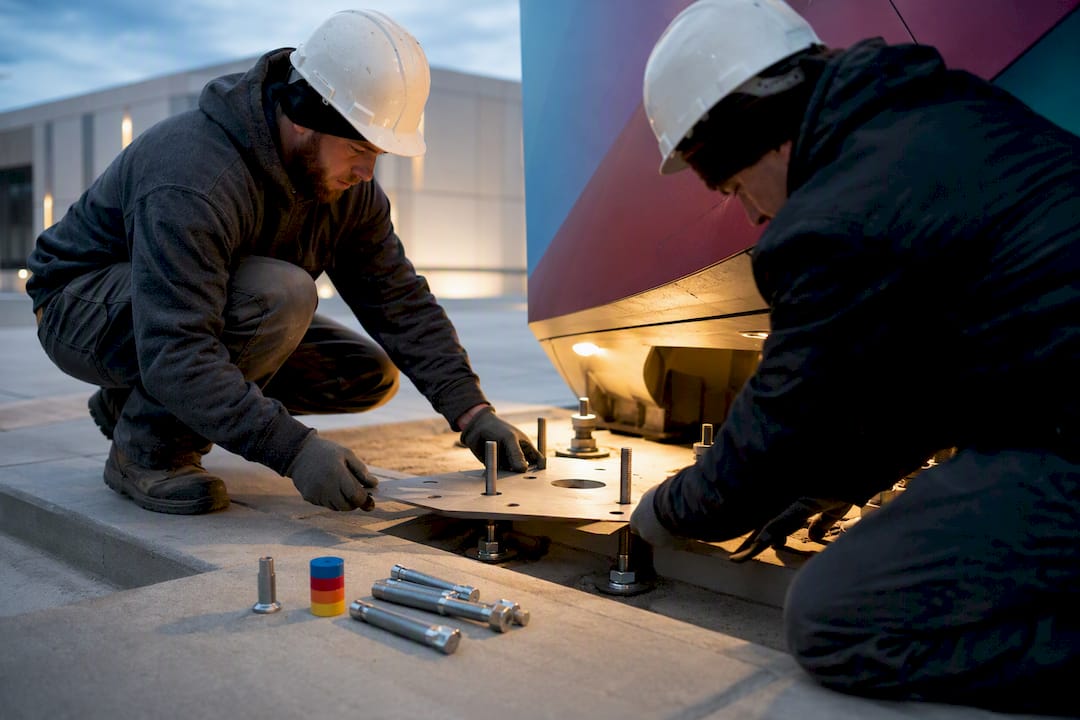
- Rigging, crane, and foundation needs. Anything too heavy to carry by hand triggers equipment rental and, for outdoor pieces, poured concrete footings.
- Permits and engineering review. Public and commercial sites often require stamped structural drawings before a permit is even issued.
- Transport, crating, and handling. Custom crating for an irregular shape or a fragile UV-reactive surface costs more than shrink-wrapping a standard frame.
- Finishes, lighting, and hardware. Integrated lighting rigs or specialty mounting hardware add both material and labor cost on top of the base install.
Pro Tip: Ask every installer to separate their quote into labor, materials, and equipment rental line items. A single lump sum hides which factor is actually driving the price, and you can’t negotiate what you can’t see.
How Do You Estimate the Total Sculpture Installation Cost?
Start with the installer’s quoted rate, whether it’s per-piece, hourly, or flat, and then build outward. Fabrication or hanging labor is rarely the whole story once a sculpture leaves the “hang it on a wall” category.
Add these on top of the base labor quote:
- Engineering review and stamped drawings, if the site or size requires them
- Foundation or footing costs for anything freestanding outdoors
- Permit fees, which vary by municipality and site type
- Crane or lift rental, billed separately from labor in most cases
- Shipping and crating, especially for cross-country delivery
- Contractor minimums and trip or service-call fees, which many installers charge regardless of job size, according to service-pricing data
Watch scheduling too. Foundation curing time, inspection windows, and permit turnaround can each add weeks, and a delayed inspection often means paying for a second site visit. A rough example: a mid-size outdoor bronze might run $2,000 to $4,000 in fabrication-adjacent labor, another $1,500 to $5,000 for foundation and engineering, plus crane rental and permit fees on top. The fabrication price is almost never the final price.
Does Location Change Sculpture Installation Pricing?
Where the piece lives, and who’s paying for it, changes almost every line item on the quote.
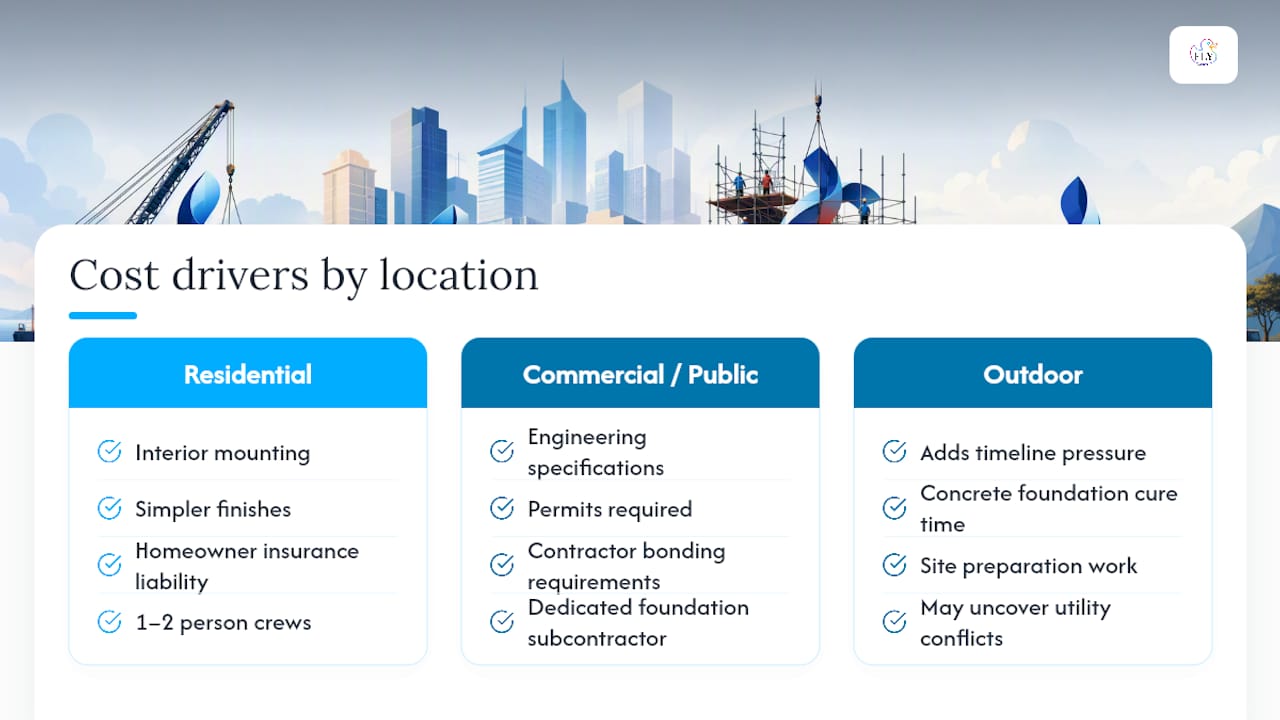
Residential installations tend to be smaller in scope: interior mounting, simpler finishes, and homeowner insurance covering liability. Crews are typically one or two people with hand tools rather than heavy equipment.
Commercial and public installations carry more overhead by default. Expect engineering specifications, permits, bonding requirements for contractors, and often a dedicated foundation subcontractor for anything freestanding.
Outdoor pieces add their own timeline pressure regardless of setting. Concrete foundations need cure time, site prep can uncover utility conflicts, and foundation work alone can push a project schedule out by weeks if it’s not planned for early.
How Can You Lower Sculpture Installation Costs?
The fastest way to save money is to make the installer’s job predictable before they ever quote it.
- Bundle multiple pieces into one visit. Consolidating a collection into a single installer trip spreads the service-call fee across more work.
- Give complete site information up front. Photos, dimensions, ceiling height, and floor type let installers quote accurately the first time instead of padding for unknowns.
- Request itemized quotes from every bidder. You can only compare bids fairly when labor, materials, and equipment are broken out separately.
- Hire local trade contractors for foundation or electrical work when your sculptor supplies engineering specs, rather than paying travel costs for out-of-state crews.
- Schedule crane and lift rentals during off-peak periods and consider temporary or modular mounting for pieces that might relocate later.
Pro Tip: Walk the site yourself and photograph every access point, doorway width, and step. Mark constraints on a simple floor plan before you request quotes. It’s the single fastest way to kill the “we didn’t account for that” change order.
How FLY Miami Art Coordinates Commissioning and Installation
Facundo Yebne, the award-winning artist behind FLY Miami Art, builds UV-reactive pop art sculptures that have to survive shipping, staging, and installation without losing the glow effect that makes them distinctive. That means installation planning starts at the fabrication stage, not after.
The studio offers guidance on protecting large sculptures over $5,000 during transit, including crating decisions that matter for anything with a UV-reactive or textured surface. For mounting, clients can choose between studio-built bases and UV staging setups designed around the piece itself, rather than generic hardware.
For smaller commissions, the studio typically handles mounting specs directly. For large-scale or public pieces, FLY Miami Art supplies engineering guidance while clients arrange local foundation and permit work, the same handoff structure most commissioned sculpture projects follow.
The Real Budgeting Problem Nobody Warns You About
Most cost guides treat sculpture installation like a single line item, and that’s the mistake I’d push back on hardest. The fabrication or hanging fee is often the smallest unpredictable part of a real project. Engineering review, foundation work, permits, and crane rental are where budgets actually blow up, because they depend on a site nobody has properly assessed yet.
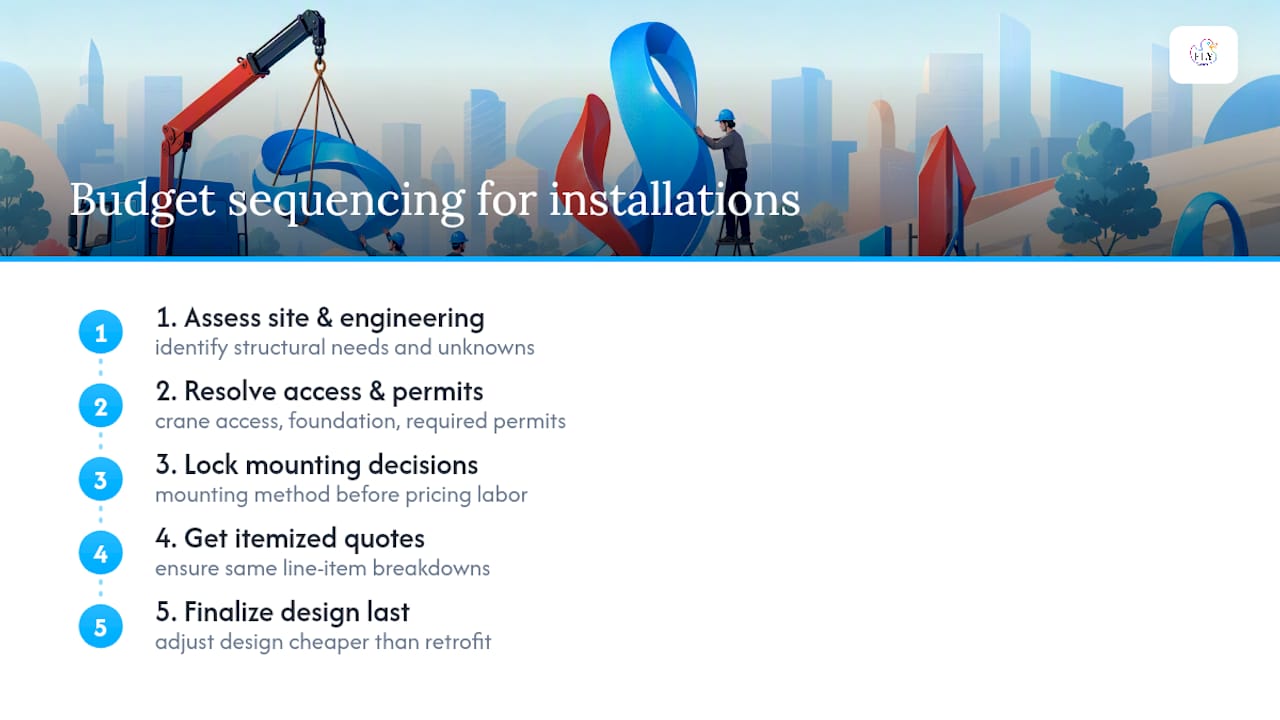
The conventional advice, get three quotes and compare them, only works if those quotes are itemized the same way. A per-piece number from one installer and a flat project bid from another aren’t comparable at all. What actually protects your budget is sequencing: lock in engineering and site access questions before you price labor, not after.
If you’re commissioning a custom piece, especially anything with staging or lighting requirements like UV-reactive work, prioritize a conversation about mounting and site conditions before you finalize the design. It’s cheaper to adjust a base design than to retrofit a finished sculpture to a site that wasn’t planned for it.
— Facundo
Ready to Commission or Install a Piece with FLY Miami Art?
Flymiami offers a commissioning approach where Facundo Yebne works on mounting, staging, and shipping decisions tailored to each piece, rather than a generic install checklist.
The studio handles custom UV-reactive commissions, original sculptures, and installation guidance built around each piece’s finish and display needs. To get an accurate quote, have a few things ready: site photos, exact dimensions and ceiling height, access notes (stairs, elevators, doorway widths), and whether the space will be lit for UV display. If you’re deciding between an existing piece and a custom commission, browse the Sculpture collection for scale and finish examples, or start a conversation directly through the commissions page to talk through your space and budget before anything is finalized.
Sources
- 2026 Average Art Installation Cost | Get Estimates
- Your 2026 Guide to Art Installation Cost
- Cost of Your Art Collection: Installation and Conservation
FAQ
What Is the Average Cost of a Sculpture?
Sculpture prices vary enormously by material, size, and artist, but installation itself typically adds $55 to $213 per piece for standard indoor placements, according to national pricing data. Large outdoor or engineered pieces cost significantly more once foundation, permits, and crane rental are added.
What Is the 70/30 Rule in Art?
The “70/30 rule” isn’t a standardized industry or financial framework tied to sculpture installation costs. If you’ve seen it referenced for pricing or commissioning, treat it as informal advice rather than a fixed rule, and confirm cost breakdowns directly with your installer or fabricator instead.
What Is the Difference Between an Installation and a Sculpture?
A sculpture is the physical artwork itself, whether freestanding, wall-mounted, or suspended. Installation is the service of placing, securing, and finishing that piece on-site, covering everything from anchoring hardware to lighting and structural mounting.
How Much Does It Cost to Put Up a Statue?
Costs depend heavily on size, material, and whether the statue needs a poured foundation. Small indoor pieces can fall within the standard $55 to $213 per-piece range cited by Thumbtack, while large outdoor statues requiring engineering and concrete footings often run into the thousands once permits and crane rental are included.
Does FLY Miami Art Handle Installation for Commissioned Pieces?
FLY Miami Art provides mounting guidance, UV staging setups, and shipping protection for commissioned sculptures, with Facundo Yebne involved in specifying mounting details for each piece. Pricing for commissions is not published and is quoted directly based on the project, so reach out through the commissions page for a specific estimate.