What Makes Public Sculpture Development-Ready
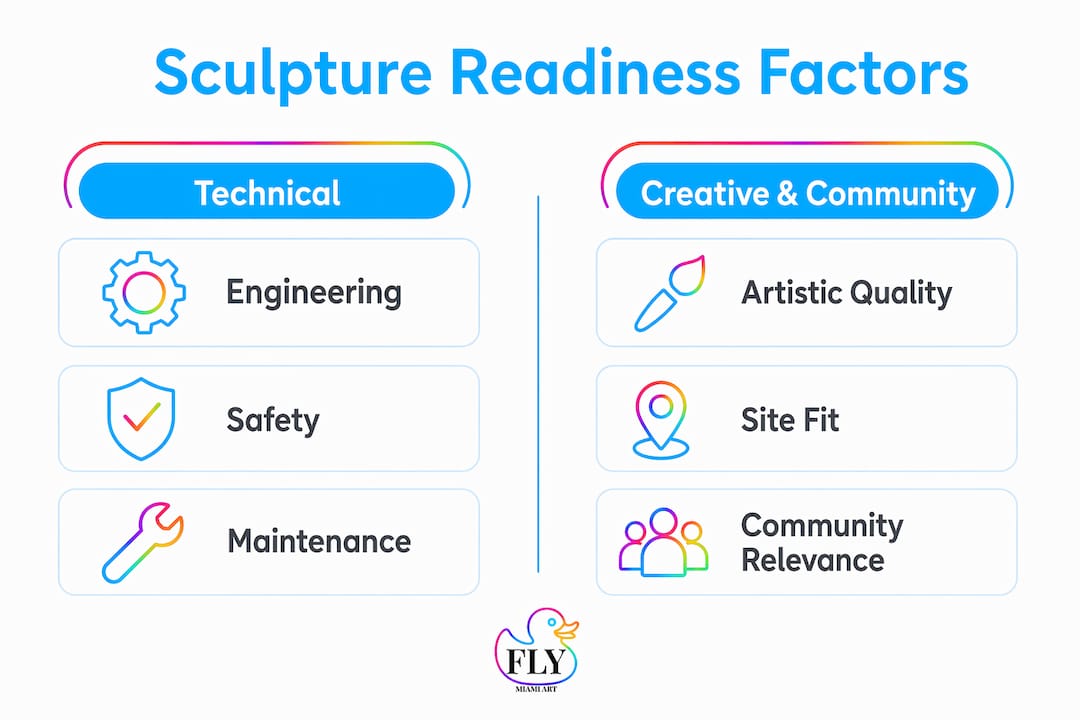
A development-ready public sculpture is defined by its ability to satisfy six core criteria: artistic quality, site fitness, community relevance, durability, safety, and budget viability. These are not optional checkboxes. Municipal evaluation panels treat each criterion as a gate. Fail one, and even a visually stunning proposal gets rejected. Urban planners, artists, and community developers who understand this framework from the start avoid the most common and costly mistakes in public art development.
What makes public sculpture development-ready from a technical standpoint?
Technical feasibility is the foundation of every approved public sculpture project. A proposal that cannot demonstrate structural integrity, material durability, and regulatory compliance will not survive municipal review, regardless of its artistic merit.
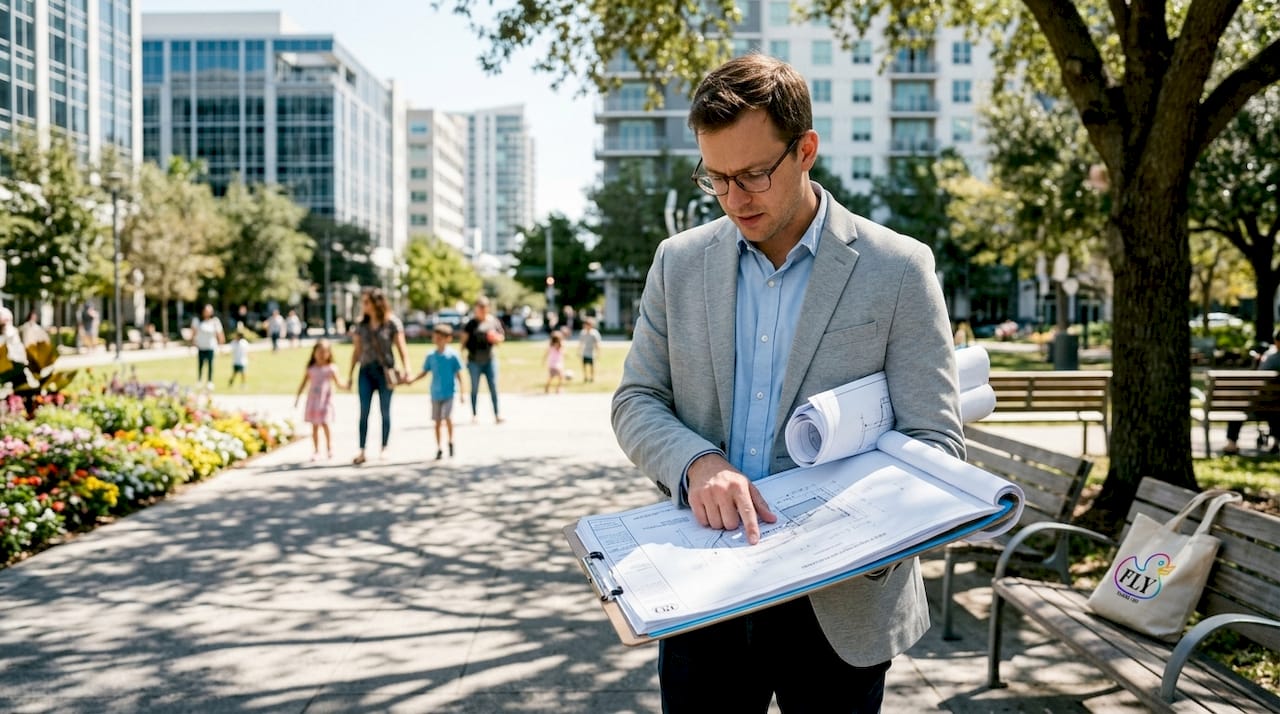
Municipal bodies require a specific set of documents before any installation moves forward. Comprehensive technical documentation including stamped engineering drawings, insurance certifications, and maintenance manuals is mandatory. Without these, even artistically strong proposals fail at the review stage. That requirement exists because municipalities carry liability for every structure placed in a public space.
The four non-negotiable technical requirements are:
- Material durability. The sculpture must withstand outdoor exposure, UV radiation, temperature swings, and vandalism. Materials must be specified with documented performance data.
- ADA and accessibility compliance. Safety features including ADA compliance, rounded edges, climb resistance, and secure anchoring are required for municipal approval. These protect both the public and the municipality from liability.
- Engineering documentation. Stamped drawings from a licensed structural engineer confirm the piece can withstand wind loads, seismic activity where applicable, and the physical stress of public interaction.
- Permitting and zoning clearance. Every installation site carries its own zoning rules. Artists and planners must confirm that the proposed sculpture type, height, and footprint comply with local ordinances before submitting a proposal.
Pro Tip: Submit a pre-application meeting request to the municipal arts office before finalizing your proposal. Many cities will flag documentation gaps early, saving weeks of revision time.
How does community and site relevance affect public sculpture viability?
A sculpture that ignores its surroundings fails publicly, even when it succeeds technically. Community and site relevance determine whether a work earns long-term acceptance or becomes a source of local controversy.
The evidence here is striking. Data-driven design strategies that anchor common community needs, layer differential needs, and apply dynamic iterative optimization produced public approval ratings of 91.2%–93.1%. Projects that skipped this alignment scored just 44.4% approval. That gap represents the difference between a sculpture that becomes a neighborhood landmark and one that gets petitioned for removal.
Key factors that determine site and community fit include:
- Site history and cultural identity. A sculpture placed in a historically significant district must reflect or respectfully engage with that history. Generic forms placed without context read as indifferent to the community.
- Aesthetic compatibility. Scale, color palette, and material finish must relate to the surrounding architecture and landscape. A polished stainless steel form in a red brick neighborhood creates visual friction that communities notice and resent.
- Community engagement during design. Artists who run public workshops, surveys, or open studio sessions before finalizing a concept produce work that communities feel ownership over. That sense of ownership directly increases long-term care and acceptance.
- Alignment with the Multi-Dimensional Sustainability Assessment Framework. Effective public art is evaluated across cultural, social, environmental, and economic sustainability domains. Aesthetic quality alone is not sufficient for lasting community value.
The practical implication is clear. Artists who treat community engagement as a design input, not a public relations step, produce work with measurably higher acceptance rates. Planners who build engagement phases into project timelines protect their investments.
Pro Tip: Commission a brief community survey before the design phase closes. Even 50 responses can reveal site-specific preferences that prevent costly redesigns after the proposal is submitted.
What roles do durability, safety, and maintenance planning play in sculpture readiness?
Durability and maintenance planning are where many proposals fall apart at the budget review stage. A sculpture that costs $80,000 to install but $15,000 per year to maintain will not survive a city council vote.
Bronze remains the preferred material for permanent outdoor installations because of its longevity, weather resistance, and ease of maintenance. Municipalities favor it precisely because its lifecycle costs are predictable. That predictability matters as much as the upfront fabrication cost when a city is committing public funds.
The table below compares material categories across the factors municipal reviewers weigh most heavily.
| Material category | Weather resistance | Maintenance demand | Typical lifespan |
|---|---|---|---|
| Cast bronze | Excellent | Low | 50+ years |
| Weathering steel (Cor-Ten) | Good | Low to moderate | 30–50 years |
| Stainless steel | Good | Moderate | 25–40 years |
| Painted mild steel | Poor without coating | High | 10–20 years |
| Reinforced concrete | Moderate | Moderate | 20–40 years |
Safety design is equally weighted in the review process. Structural considerations include load-bearing capacity for climbing children, resistance to tipping or shifting, and the absence of sharp protrusions at accessible heights. A sculpture that invites physical interaction must be engineered for that interaction from the start.
Maintenance planning requires a written schedule, not just a verbal commitment. Reviewers want to see annual inspection protocols, cleaning methods appropriate to the material, and a cost estimate for the first ten years of upkeep. Artists who provide this level of detail signal professional credibility.
Pro Tip: Include a maintenance cost estimate in your proposal budget, even if the municipality does not explicitly request one. It demonstrates lifecycle thinking and often differentiates your proposal from competitors who only address fabrication costs.
How do artist experience and operational readiness influence project approval?
Municipal review panels prioritize artists with proven public installation experience. Experienced artists reduce the risk of budget overruns and project delays through clear communication and realistic proposals. That preference is not about favoritism. It reflects the reality that public art projects involve multiple stakeholders, long timelines, and public accountability.
Operational readiness covers everything outside the creative work itself. Public art commissions operate within collaborative civic frameworks that demand operational competence as much as artistic skill. Artists who treat the administrative side as secondary to the creative side consistently underperform in municipal processes.
The operational factors that most influence approval decisions include:
- Realistic budget proposals. A proposal that underestimates fabrication, installation, or permitting costs signals inexperience. Reviewers have seen enough projects to recognize when numbers are optimistic rather than accurate.
- Fabrication knowledge. Early involvement of fabrication and structural experts helps identify costly materials and construction methods before they jeopardize budgets. Artists who bring a fabricator into the proposal phase produce more credible cost estimates.
- Stakeholder coordination. Public sculpture projects involve city engineers, parks departments, arts commissions, neighborhood associations, and sometimes historic preservation boards. Artists who demonstrate experience managing these relationships reduce perceived project risk.
- Administrative capacity. Managing permits, insurance, and contracts is a substantial part of the public sculpture process. Artists who underestimate this workload create delays that damage their professional reputation and the project timeline.
Understanding urban placemaking principles also strengthens an artist’s proposal. Planners and review panels respond positively to artists who can articulate how their work contributes to place identity, foot traffic, and community cohesion, not just visual interest.
Key Takeaways
A development-ready public sculpture succeeds when technical compliance, community relevance, material durability, and operational readiness are treated as equally weighted requirements, not ranked priorities.
| Point | Details |
|---|---|
| Technical documentation is mandatory | Stamped engineering drawings, insurance, and maintenance manuals are required for municipal approval. |
| Community alignment drives acceptance | Data-driven design strategies produce approval ratings above 91%, versus 44% for poorly aligned projects. |
| Material choice determines lifecycle cost | Bronze and weathering steel offer the lowest long-term maintenance burden for permanent installations. |
| Operational readiness equals artistic vision | Artists must manage permits, contracts, and stakeholder coordination with the same rigor as creative work. |
| Early expert involvement prevents budget failure | Bringing fabrication and structural engineers into the proposal phase prevents costly redesigns and overruns. |
What I’ve learned about the real weight of development readiness
The part of public sculpture development that surprises most artists is not the creative challenge. It is the administrative load. I have watched genuinely talented artists lose commissions not because their work was weak, but because their proposals lacked a maintenance schedule or their budget did not account for permitting fees. The review panel did not doubt their artistry. They doubted their readiness to execute.
The insight that changed how I approach public projects is this: creativity gets you to the table, but operational credibility gets you the commission. Sustainability in public art now spans cultural, social, environmental, and economic dimensions. A panel evaluating your proposal is thinking about all four simultaneously. Your job is to give them confidence across all four, not just the one you are most comfortable defending.
My practical advice is to build your team before you build your concept. Bring a fabricator and a structural engineer into the conversation early. Their input will shape a more realistic proposal, and their names on your documentation signal to reviewers that you understand how public projects actually get built. Community relationships work the same way. The artists who win repeat commissions are the ones who stay engaged with a neighborhood long after installation day.
— Facundo
Flymiami sculptures built for public spaces
Flymiami creates handcrafted sculptures designed with the material integrity, thematic depth, and visual impact that public and private spaces demand. Each piece by artist Facundo Yebne is built to hold up under real-world conditions while delivering the kind of cultural resonance that communities respond to.
For planners and developers sourcing works that meet durability and design standards, the Flymiami sculpture collection offers pieces that translate from gallery to public installation without compromise. The studio’s UV-reactive works also open possibilities for interior public spaces, event venues, and experiential environments where standard sculpture falls short. Explore the full range and connect with the studio directly to discuss site-specific requirements.
FAQ
What are the six core criteria for a development-ready public sculpture?
Municipal evaluation panels assess artistic quality, site fitness, community relevance, durability, safety, and budget viability. All six must be addressed for a proposal to advance through review.
Why do municipalities prefer bronze for permanent outdoor sculptures?
Bronze offers exceptional weather resistance, a lifespan exceeding 50 years, and low annual maintenance costs. Those factors make its lifecycle budget predictable, which matters significantly to public funders.
What documentation is required for public sculpture approval?
Most municipalities require stamped engineering drawings, proof of insurance, and a written maintenance manual. Missing any of these documents will stall or disqualify an otherwise strong proposal.
How much does community engagement affect public sculpture acceptance?
Projects aligned with data-driven community design strategies score 91.2%–93.1% public approval. Poorly aligned projects score as low as 44.4%, making community engagement one of the highest-leverage steps in the process.
What is the biggest operational mistake artists make in public sculpture projects?
Artists most commonly underestimate the administrative workload, specifically permit management, contract negotiation, and insurance coordination. Building time and budget for these tasks into the proposal phase is the most direct way to avoid project delays.