How to Curate an Immersive Pop Art Show That Engages
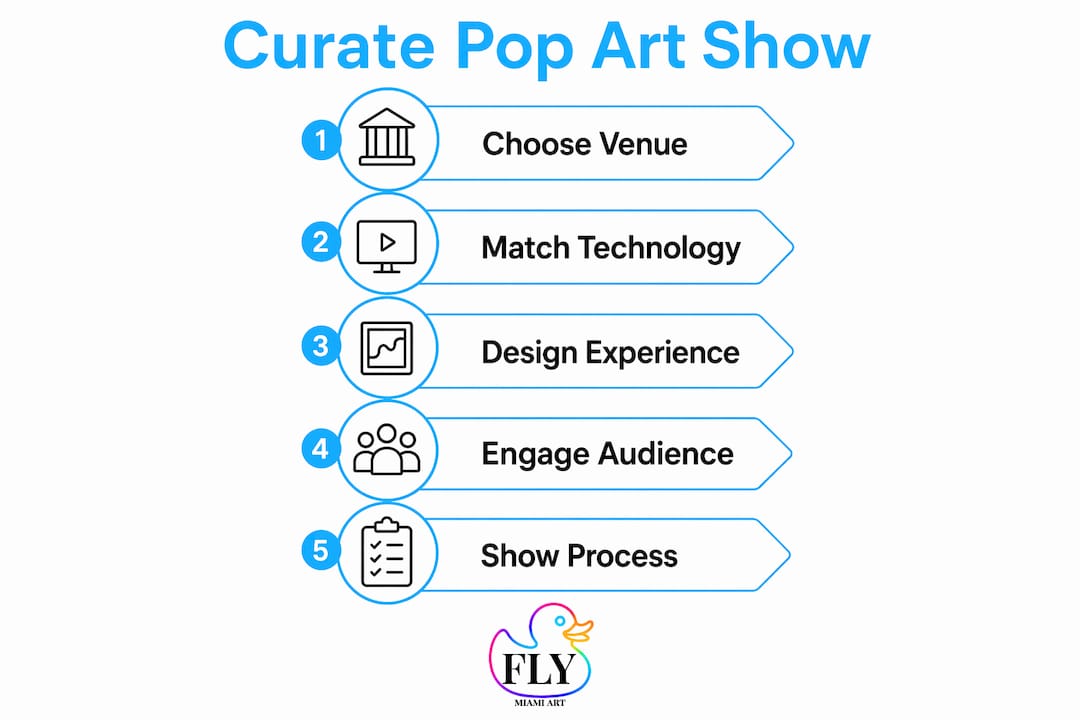
An immersive pop art show is defined as a curated environment where visitors physically enter the artwork rather than observe it from a distance. The standard industry term for this format is “experiential exhibition,” and it differs from traditional gallery display in one fundamental way: the audience becomes part of the composition. To curate an immersive pop art show successfully, you need to design interactive spaces, select the right venue, integrate technology, and expose the creative process. Major exhibitions like “Second Nature” and “The Beginning of Convenience” demonstrate the scale possible, featuring 8–9 major installations running for 6 to 12 months. That scale signals how seriously the art world now treats participatory design as a curatorial discipline.
How to curate an immersive pop art show: venue and tools
The venue is not a backdrop. It is an active curatorial decision that shapes every visitor interaction. Unconventional settings like botanical gardens, shopping malls, and luxury lifestyle centers increase accessibility by placing art where people already gather, rather than asking them to seek it out. Partnerships between design firms and commercial venues have successfully displayed 30 or more works in public settings with free or variable admission. That model removes the museum barrier and pulls in audiences who would never buy a gallery ticket.
Venue types and technology requirements
Different spaces demand different technical setups. Here is how the main venue categories compare:
| Venue type | Best for | Key technology needs |
|---|---|---|
| Museum or gallery | Controlled lighting, curated flow | Projection mapping, AR overlays |
| Botanical garden | Outdoor scale, natural context | Weatherproof LED, QR-code AR maps |
| Shopping mall or atrium | High foot traffic, free access | Naked-eye 3D displays, interactive sensors |
| Warehouse or industrial space | Large-scale installations | Full audiovisual rigs, AI-driven environments |
Choosing the right venue starts with your audience’s daily habits, not your artistic preferences. A botanical garden setting, for example, gamifies the visitor journey by spreading works across a landscape that rewards exploration. A mall atrium delivers volume but requires stronger visual anchors to compete with retail noise.
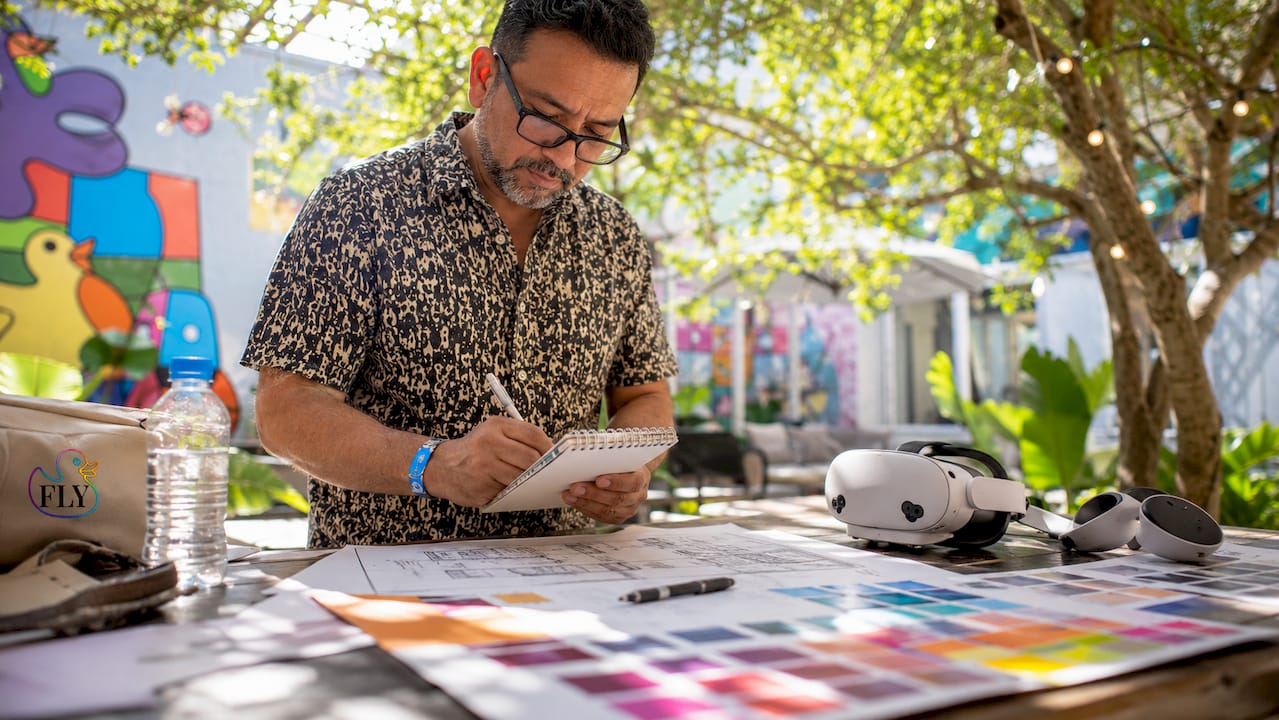
On the technology side, the core toolkit for a contemporary pop art installation includes QR-code enabled augmented reality maps, naked-eye 3D displays, and AI-driven audiovisual environments. Each tool serves a specific curatorial purpose. AR maps extend the experience beyond the physical object. Naked-eye 3D creates spectacle without requiring visitor equipment. AI-driven environments respond to visitor presence in real time, making every visit feel different. For interactive booth features that complement these setups, event planners have a growing range of modular options that integrate with existing exhibition infrastructure.
How do you design engaging immersive installations?
Designing an immersive pop art installation is a choreography problem as much as an art problem. You are directing movement, attention, and emotion across a physical space. The visitor journey must be intentional from the first step inside.
- Map the visitor flow first. Decide where people enter, where they slow down, and where they stop. Place your highest-impact work at natural pause points, not at the entrance where attention is still calibrating.
- Gamify the space deliberately. Use discovery mechanics: hidden works, path choices, and reward moments. Botanical garden exhibitions have used this technique to sustain engagement across large outdoor footprints.
- Build in collective moments. Pop art’s playfulness is a social tool. Bruce Asbestos’ exhibitions use humor and emotional range to widen audience accessibility and encourage visitors to interact with each other, not just the art. Design at least one space where groups naturally gather and respond together.
- Balance spectacle with meaning. A visually overwhelming room creates a great photo. A room that also asks a question or tells a story creates a memory. Andy Warhol’s “Silver Clouds” used everyday industrial materials to blend high-art context with physical playfulness. That balance is still the standard to aim for.
- Avoid the common mistake of front-loading. Curators often place their best work at the start. Spread your strongest pieces across the full journey so visitors who explore completely feel rewarded.
Pro Tip: Design one phone-free zone with interactive sensors or a physical activity. Visitors who put their phones down for even two minutes report deeper emotional connection to the work. That moment becomes the story they tell afterward, not the photo they post.
How does technology enhance audience participation?
Technology in an immersive art exhibition is not decoration. It is the mechanism that shifts visitors from passive observers to active participants in a living environment. The “Algorithmic Organisms 2.0” show in Kuala Lumpur demonstrated this directly: AI-generated imagery and sound evolved in real time based on visitor presence, making the audience co-authors of the visual experience.
The most effective technologies for interactive pop art shows include:
- QR-code AR maps: Visitors scan physical markers to unlock layered digital content, artist commentary, or animated extensions of static works.
- Naked-eye 3D displays: Large-format screens create depth and movement without headsets, keeping the experience accessible to all ages.
- AI-driven audiovisual environments: Sound and visuals shift in response to crowd density, movement, or time of day, producing a show that never repeats exactly.
- Live performance slots: Weekend artist talks and live creation sessions add a human layer that technology alone cannot replicate. These sessions supplement immersive experiences and give media a reason to return for follow-up coverage.
For event planners working with tighter budgets, interactive event experiences built around modular AR and photo-activation stations offer a lower-cost entry point that still delivers strong visitor engagement.
Pro Tip: Match technology to artistic intent before matching it to budget. A single well-executed AR layer tied directly to the artwork’s theme outperforms three disconnected tech features that feel like add-ons. Ask: does this technology make the art more meaningful, or just more expensive?
Why showing your creative process deepens audience connection
The most underused curatorial tool in any immersive art exhibition is transparency about how the work was made. Visitors who understand the labor behind a piece engage with it differently. They stop seeing a finished object and start seeing a decision.
Lucy Sparrow’s felt supermarket installation is the clearest example. The show included a recreated studio space and a making-of documentary running alongside 20,000 handcrafted felt components. That pairing did something a purely visual show cannot: it made the scale of human effort legible. Visitors left understanding what they had witnessed, not just what they had seen.
Curators can apply this principle through several specific design choices:
- Studio replica zones: A corner of the exhibition space set up as a working studio, with tools, materials, and works in progress, signals that real people made this.
- Process documentation walls: Large-format prints or video loops showing the creation sequence give context without requiring a guided tour.
- Interactive making stations: Visitors who try a simplified version of the artist’s technique, such as screen printing or hand-stitching, leave with physical memory of the process.
- Artist-narrated audio guides: A short recording in the artist’s own voice, describing a specific decision in the work, creates intimacy that wall text never achieves.
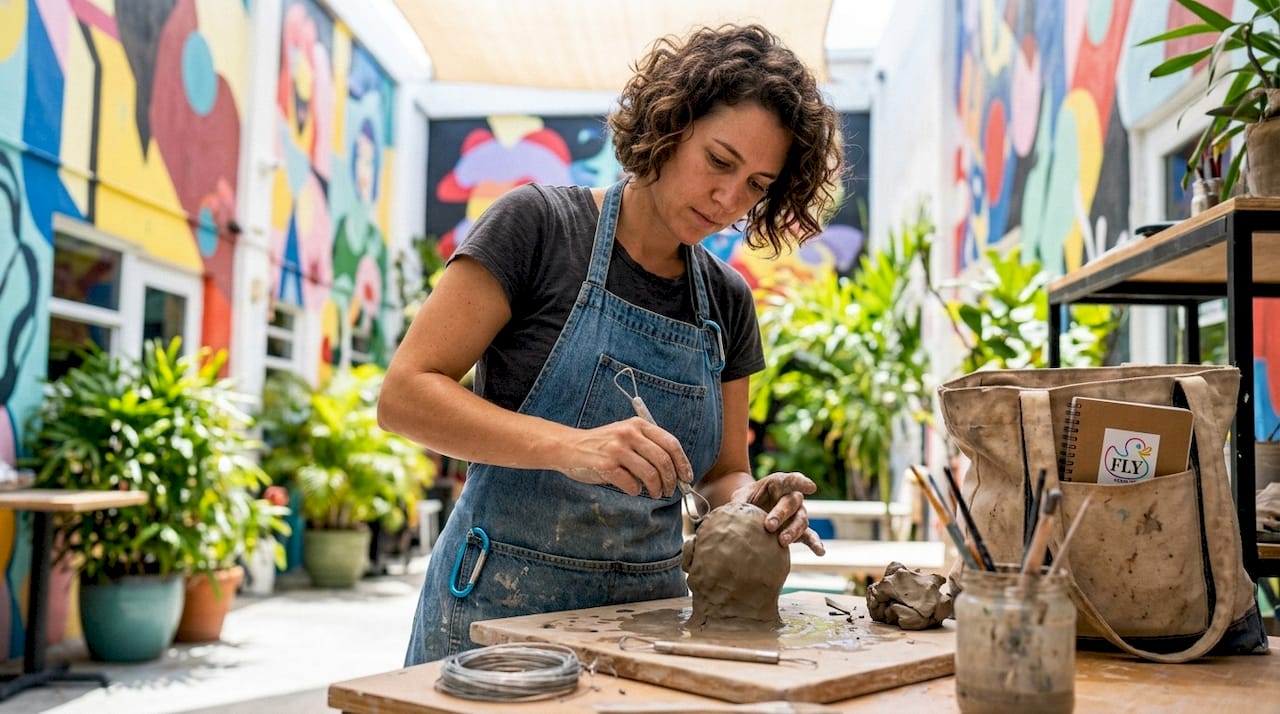
Flymiami’s studio walkthrough shows exactly how this transparency works in practice. Revealing the UV-reactive layering process behind each sculpture does not diminish the magic. It deepens it. Audiences who understand the craft become collectors. Collectors become advocates.
Revealing the artistic creation process bridges digital spectacle and human effort, and that bridge is what turns a one-time visitor into a long-term audience member. Design your exhibition to show the work behind the work, and you will build a community, not just a crowd.
Key Takeaways
Curating an immersive pop art show requires deliberate visitor journey design, technology matched to artistic intent, and transparent exposure of the creative process to convert audiences into lasting communities.
| Point | Details |
|---|---|
| Venue shapes the experience | Choose spaces where your audience already gathers, not just spaces that look impressive. |
| Technology must serve the art | Use AR, AI environments, and 3D displays only when they deepen the work’s meaning. |
| Gamify the visitor journey | Spread discovery moments across the full space to reward complete exploration. |
| Show the creative process | Studio replicas and making-of content turn one-time visitors into invested audiences. |
| Playfulness builds community | Humor and collective moments, as seen in Bruce Asbestos’ work, widen accessibility and social participation. |
What I’ve learned from curating immersive pop art
The conversation around immersive art often focuses on technology budgets and venue scale. That framing misses the point. The shows that stay with people are the ones that made them feel something they did not expect to feel in an art space.
Humor is the most underestimated tool in this format. Pop art has always used it, from Warhol’s soup cans to today’s large-scale rubber duck sculptures. But curators often treat playfulness as a concession to accessibility rather than a genuine artistic strategy. The truth is that laughter in a gallery lowers defenses. It makes people willing to stay longer, look closer, and talk to strangers. That social friction is where community actually forms.
The hardest balance I navigate is sustaining attention across a full exhibition run. Technology that feels fresh on opening night can feel routine by month three. The solution is not more technology. It is designing the human elements, live performances, artist appearances, and process transparency, to carry the experience when the novelty fades.
The most meaningful shift I have seen in immersive curation is the audience’s evolving role. Visitors no longer want to observe. They want to contribute. Designing for that expectation, giving people genuine agency within the work, is the difference between an exhibition people attend and one they remember. Pop art’s cultural staying power comes from exactly this quality: it has always invited the audience in.
— Facundo
Flymiami’s collection for immersive pop art shows
Flymiami creates handcrafted pop art sculptures and wall pieces built specifically for the kind of immersive, participatory environments this article describes. Each piece incorporates UV-reactive materials that reveal hidden patterns and colors under blacklight, adding a discovery layer that rewards visitors who look closely.
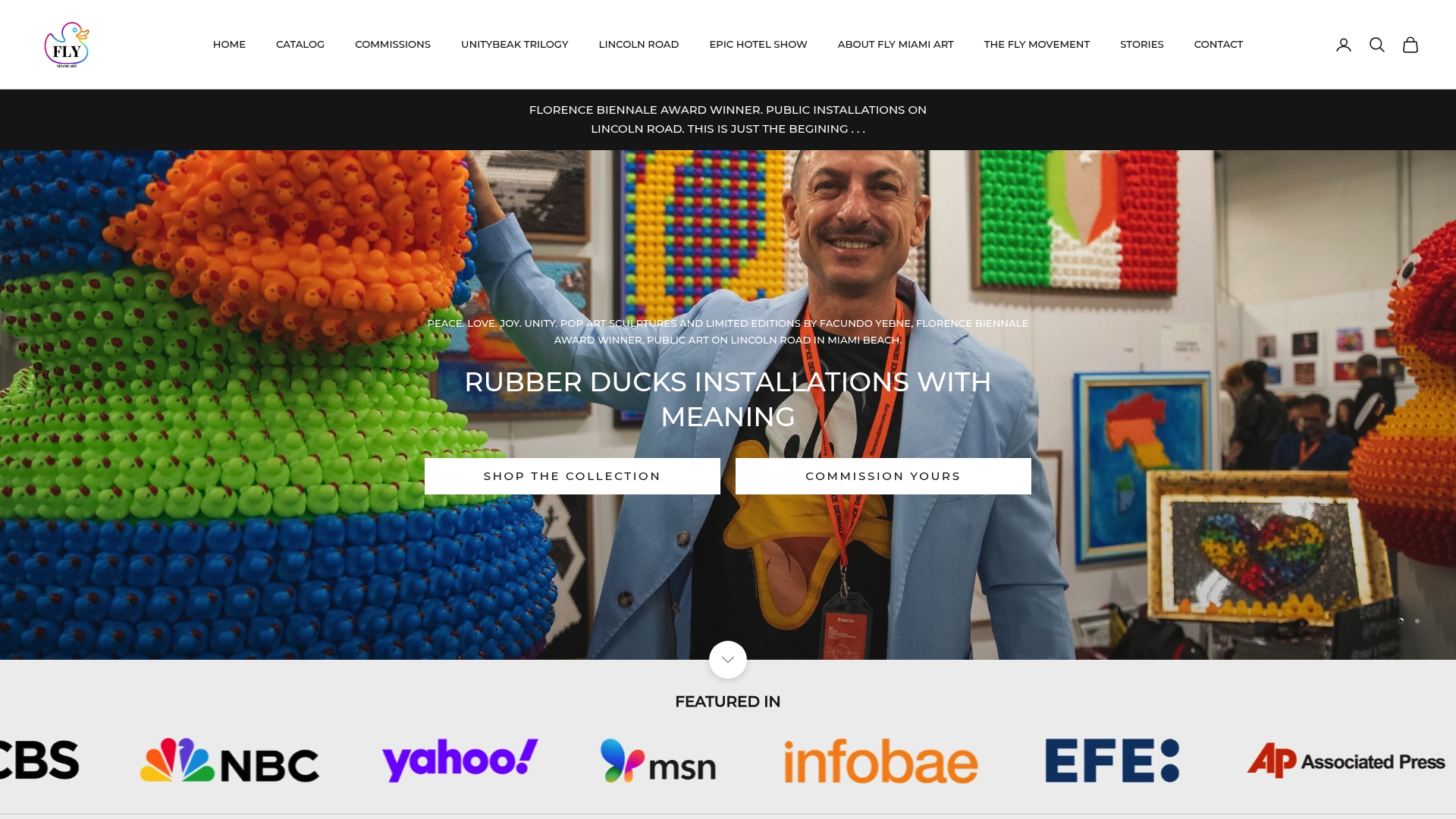
The UV glow art collection is particularly well-suited for exhibition environments where lighting shifts are part of the curatorial design. For event planners sourcing statement pieces, the sculpture collection offers large-format works that anchor immersive spaces without competing with the surrounding environment. Every piece is handcrafted by Facundo Yebne and ships ready for professional installation.
FAQ
What makes a pop art show “immersive”?
An immersive pop art show places visitors inside the artwork rather than in front of it. The defining features are participatory design, environmental scale, and technology that responds to audience presence.
How many installations does a typical immersive exhibition include?
Major immersive exhibitions typically feature 8–9 large-scale installations or thousands of individual components, with public runs lasting 3 to 12 months depending on venue and format.
What technology is most effective for interactive pop art?
QR-code AR maps, naked-eye 3D displays, and AI-driven audiovisual environments are the most widely used tools. Live artist performances on weekends add a human engagement layer that technology alone cannot provide.
How do you balance social media appeal with genuine engagement?
Design at least one phone-free zone with interactive sensors or physical activities. Curators use designed pathways and interactive catwalks to encourage visitor self-expression beyond photo capture.
Do immersive pop art shows need a large budget to succeed?
Scale matters less than intentionality. A single unconventional venue with a well-designed visitor journey and one strong technology integration outperforms a large-budget show with no clear curatorial logic.