Ambient Lighting Art Interaction Explained: A Collector's Guide
Ambient lighting art interaction is artwork that senses your presence and changes its light output in real time. FLY Miami Art’s UV-reactive sculptures use LEDs, fiber optics, and sensors such as infrared or lidar to shift between a sculptural daytime state and a full blacklight glow when you enter the room. Before you buy or commission one, two things matter most:
- Display impact: The glow effect only reaches its full depth when ambient light is controlled. A bright gallery wall washes out UV pigments the same way sunlight kills a projector image.
- Collector commitment: These pieces behave more like networked systems than static objects. Software updates, sensor recalibration, and LED maintenance are part of ownership.
Table of Contents
- What does ambient lighting art interaction actually mean?
- How do sensors, controllers, and light engines work together?
- What changes when UV-reactive materials glow?
- What design principles make interactive light art succeed in a collection?
- What do collectors need to know about installation, power, and safety?
- How do you commission or buy an interactive ambient-light piece?
- How does FLY Miami Art approach UV-reactive pop-art sculptures?
- Quick technical checklist for installers and collectors
- Should collectors add interactive ambient-light works to their collections?
- Legal and copyright considerations for ambient lighting art installations in the U.S.
- How does ambient lighting art interaction affect preservation and longevity?
- How do ambient lighting techniques compare across artistic styles and mediums?
- Key Takeaways
- Why interactive light is more than a visual trick
- Flymiami’s UV collection: commission or collect today
What does ambient lighting art interaction actually mean?
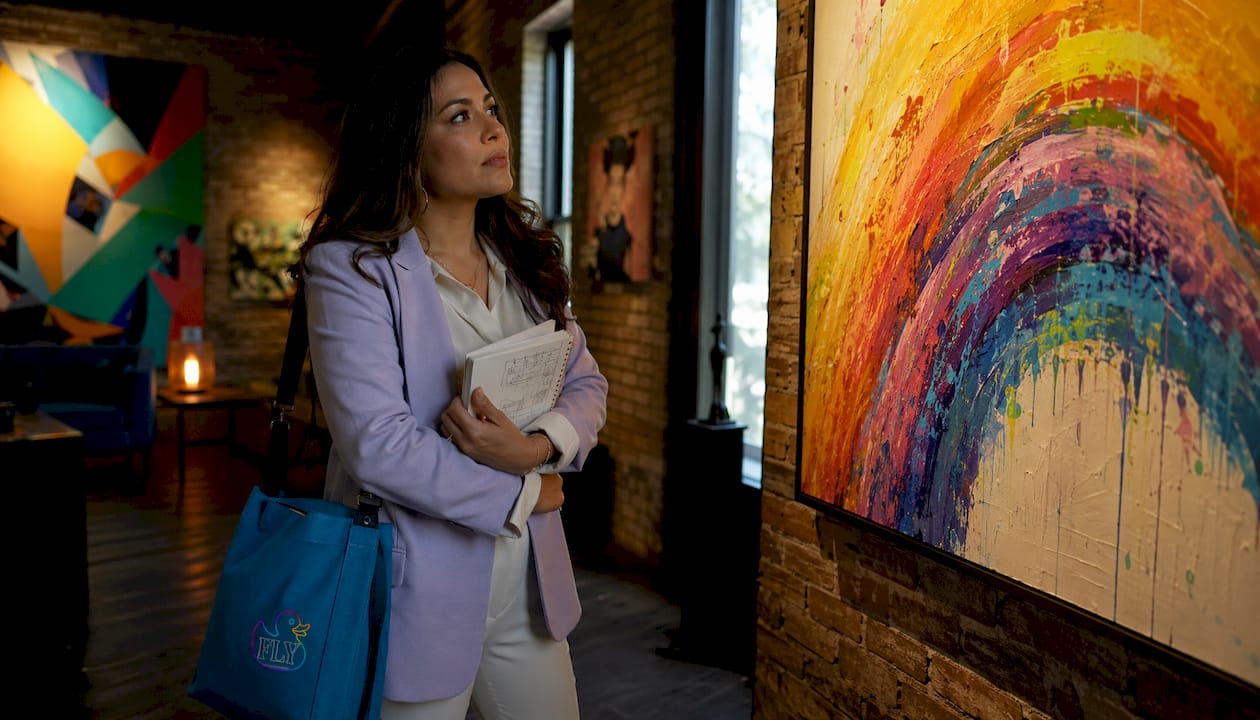
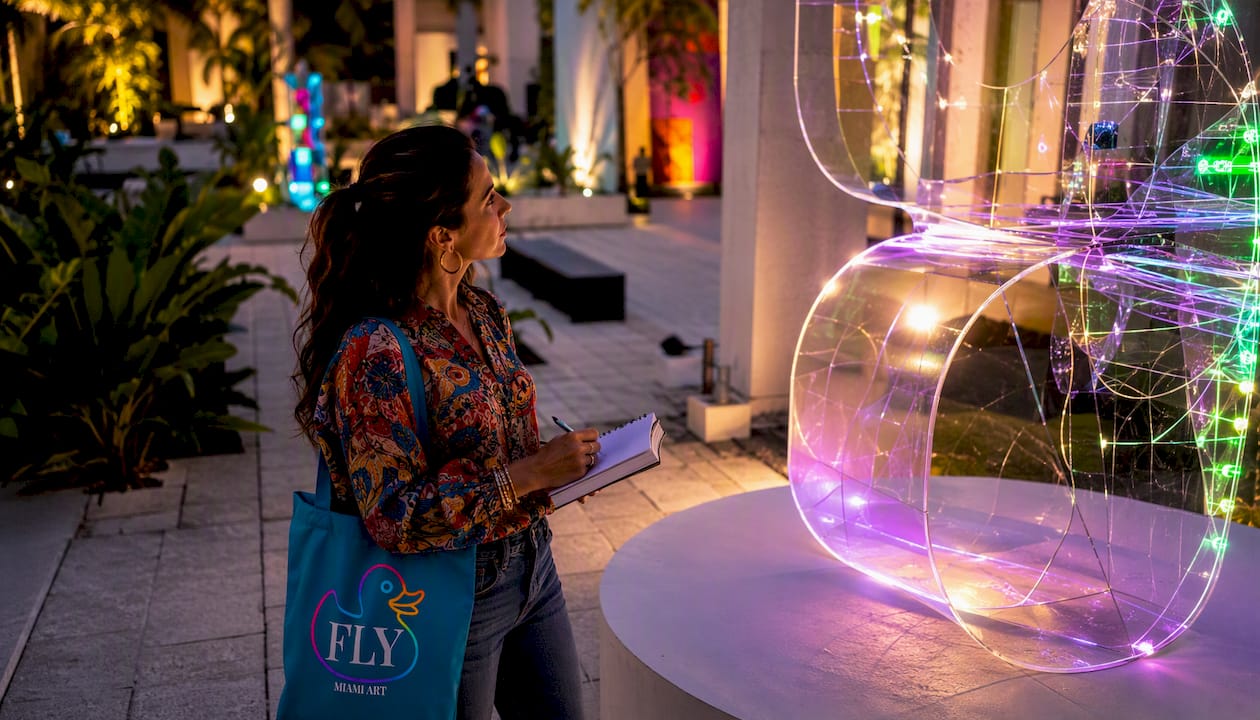
Interactive lightscapes treat light as a living material. You do not simply observe the piece; you enter a system that notices you and reacts. The room stops being a container and becomes a medium.
For UV-reactive pop art, that responsiveness has a specific character. Under normal light, a FLY Miami Art sculpture reads as a bold, color-saturated object. Switch to blacklight, or let a sensor trigger a UV state when you approach, and hidden layers of phosphorescent pigment ignite. Patterns that were invisible a moment ago become the dominant visual. The viewer is not passive; their presence is the switch.
This works in private collections, gallery installations, and commercial spaces like hotels or branded environments with event experience enhancements to boost atmosphere. Each context changes what “interaction” should feel like: a home collector might want a gentle, automatic glow triggered by entering a room, while a gallery wants a more dramatic, crowd-responsive shift.
How do sensors, controllers, and light engines work together?
The signal flow runs in one direction: sense, process, map, output.
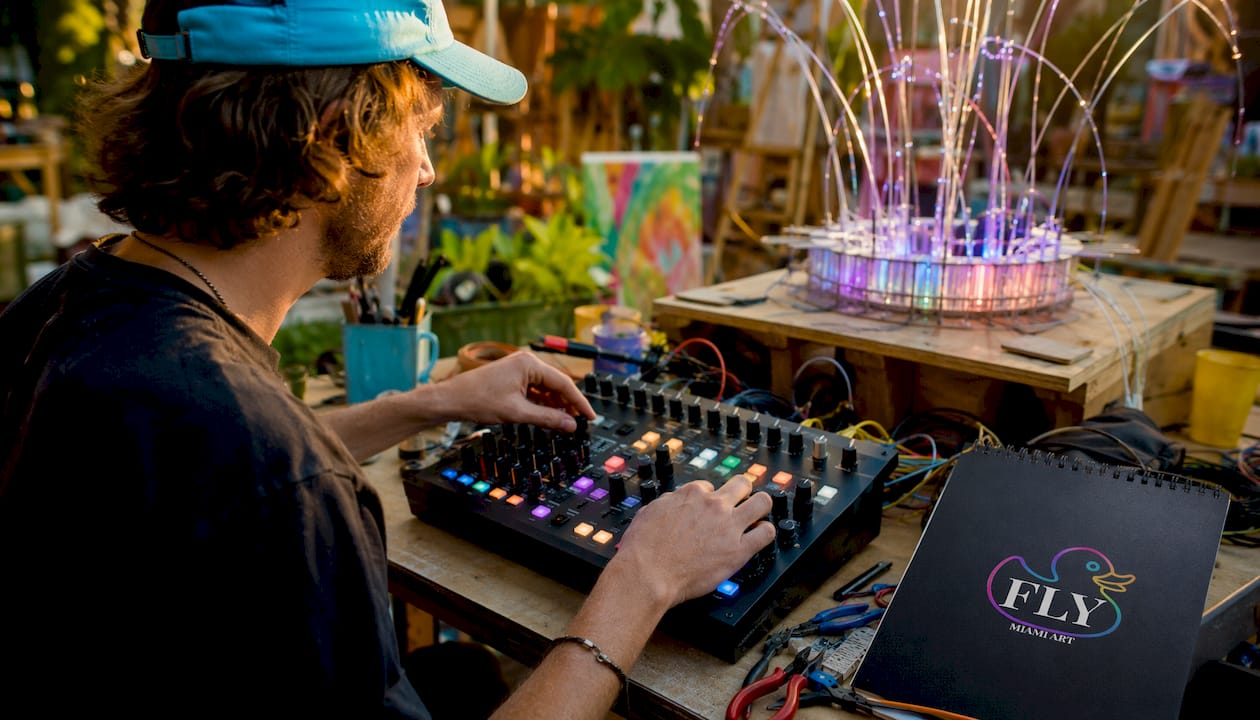
- Sensors detect presence or motion. Infrared (IR) sensors read body heat at close range. Lidar measures distance with precision across larger spaces. Motion cameras can track multiple viewers simultaneously. Large-scale interactive works commonly combine several of these to map human behavior into light patterns.
- Controllers translate sensor data into commands. Microcontrollers handle simple on/off or brightness triggers. DMX or ArtNet nodes manage complex multi-channel LED rigs used in gallery-grade installations.
- Light engines execute the output: LED strips, fiber optic bundles, UV blacklight tubes, or projectors. UV-reactive pigments in the artwork then respond to that output physically, fluorescing under ultraviolet wavelengths.
- Materials complete the loop. UV pigments absorb ultraviolet energy and re-emit it as visible color. Phosphorescent materials store light and release it gradually. Combined systems layer the physical glow of pigments with the generated light of LEDs for depth that a single source cannot achieve.
Artists like Lachlan Turczan have shown how lidar and vision cameras can modulate projected optics to produce illusions of physical material from pure light. The principle scales down to a single sculpture in a collector’s living room.
Pro Tip: Ask the artist for documented latency figures and request a live demo under your intended ambient lighting conditions before signing a commission contract. A system that responds in under 100ms feels instantaneous; anything slower reads as mechanical.
What changes when UV-reactive materials glow?
| Material type | Daylight appearance | Under blacklight |
|---|---|---|
| Standard visible pigment | Full color, opaque | No change |
| UV-reactive pigment | Muted or neutral tone | Vivid fluorescent color |
| Photoluminescent (glow-in-dark) | Near-invisible | Soft sustained glow after UV exposure |
Viewer presence can trigger changes in ultraviolet or visible lighting that reveal hidden patterns or intensify specific painted layers. Layering UV paint allows an artist to encode a second image inside the first. The daylight version and the blacklight version are genuinely different compositions.
Reflective surfaces amplify the effect. A glossy resin topcoat on a FLY Miami Art sculpture bounces UV light back through the pigment layer, intensifying perceived brightness. Matte surfaces scatter it, producing a softer, more diffuse glow. Understanding the science behind UV-reactive pigments helps collectors choose finishes that suit their display environment.
Conservation note: UV exposure from blacklight sources is cumulative. Standard 365nm blacklight LEDs used for art display emit far less UV than direct sunlight, but prolonged daily exposure can degrade organic binders in paint over years. Limiting active blacklight sessions to viewing periods rather than running them continuously is the simplest protective measure.
What design principles make interactive light art succeed in a collection?
The best interactive pieces feel effortless. That feeling is engineered. Hiding sensors creates the sense that the artwork itself responds, rather than a device attached to it. When the technology is invisible, the interaction reads as magical and sustains engagement far longer than a visible sensor array would.
“The environment is not a backdrop. It is an active partner. Shadows become actors. Color becomes a sculptor. Movement becomes the rule set that keeps the experience alive.” — Interactive Lightscapes
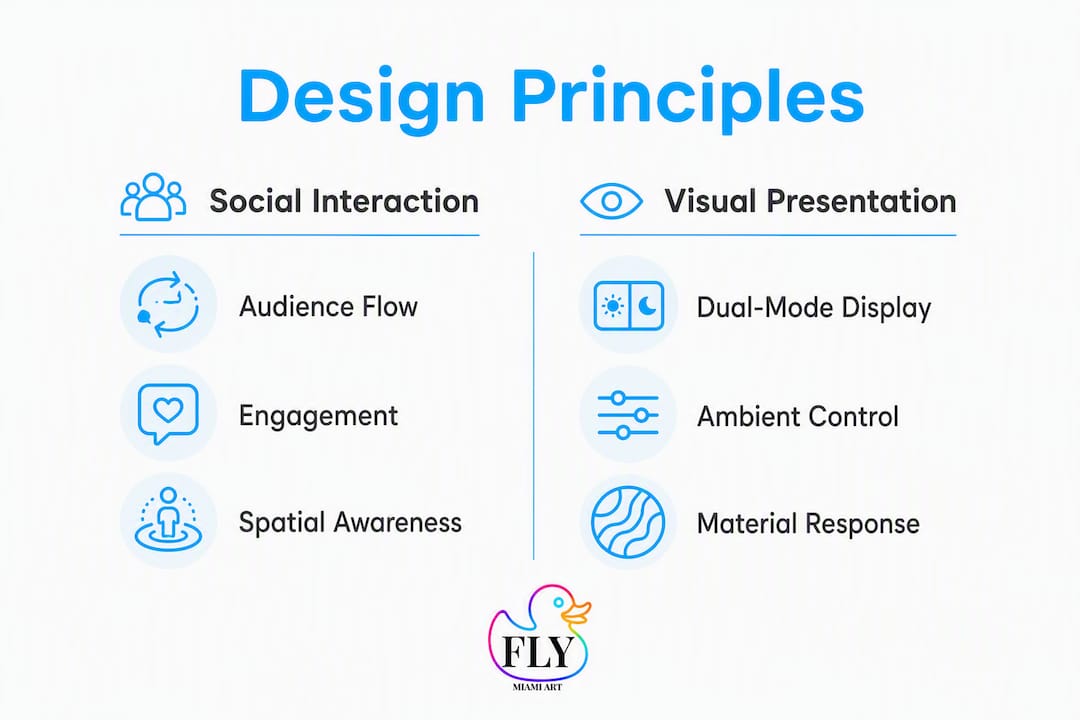
Design that accounts for social interaction patterns produces more resilient experiences across different venues. A piece calibrated only for a single viewer can feel broken or anticlimactic when a group arrives. Plan for both.
Dual-mode display is the curatorial standard worth insisting on: the piece should read as a strong sculpture in daylight and transform into an immersive glow experience at night, without physically moving anything. Sightlines, ambient light control, and visitor pathing all affect whether the transition lands. Document the piece’s intended behaviors in writing so future owners or installers can reproduce the experience accurately.
Pro Tip: When curating an immersive pop art show, position the primary viewing angle so the sensor’s detection zone aligns with natural foot traffic. Visitors should trigger the interaction without realizing they did.
What do collectors need to know about installation, power, and safety?
- Dedicated circuit: Interactive light sculptures with UV tubes and LED rigs can draw significant power. A dedicated 20-amp circuit prevents tripped breakers during demonstrations.
- Surge protection: Sensitive microcontrollers and LED drivers are vulnerable to voltage spikes. A quality surge protector or UPS (uninterruptible power supply) protects the electronics and keeps the piece running during brief outages.
- Wiring concealment: Plan conduit routing before installation, not after. Surface-mounted cables undercut the “magical” quality the piece is designed to create.
- Ambient light control: Blackout curtains or motorized shades are the most practical solution for residential collectors. UV art in public spaces requires more deliberate architectural planning.
- Maintenance cadence: Treat the piece like a networked system. Software updates, sensor recalibration, and LED replacement are recurring ownership costs, not one-time expenses.
UV safety guidelines for frequent viewers:
- Standard 365nm blacklight LEDs used in art display are low-risk for incidental exposure.
- Avoid staring directly into UV sources. Protective eyewear is advisable during installation or extended high-UV demonstrations.
- Limit continuous blacklight operation to viewing sessions rather than all-day ambient use.
How do you commission or buy an interactive ambient-light piece?
| Phase | What to confirm |
|---|---|
| Initial inquiry | Tech stack, sensor types, control software, and warranty terms |
| Site survey | Power availability, ambient light conditions, and mounting surfaces |
| Mockup/prototype | Interaction demo in your actual lighting conditions |
| Contract | Source code/algorithm documentation, accepted delivery conditions, and maintenance plan |
| Handover | Caretaker training, settings files, and post-install support contact |
Key questions to ask before signing:
- Who owns the source code and interaction algorithms after delivery?
- What is the LED engine’s rated lifespan, and what does replacement cost?
- Does the studio offer remote diagnostics or on-site service contracts?
- Can the interaction sensitivity be adjusted after installation?
Custom commissions typically carry longer lead times than limited editions. A site survey adds time but dramatically reduces installation surprises. Build acceptance testing of the full interaction into the contract, not just visual inspection of the object.
How does FLY Miami Art approach UV-reactive pop-art sculptures?
Artist Facundo Yebne founded FLY Miami Art around themes of peace, unity, and playful optimism, with the rubber duck as a recurring motif that carries those ideas across scales from small collectibles to large public installations. The studio’s work has appeared in prestigious exhibitions and received award recognition for its integration of UV-reactive materials with pop art sensibility.
The studio process moves from concept and material selection through prototype demos to final fabrication with quality-control checks at each stage. UV pigments are selected for both their daylight neutrality and their blacklight intensity. Substrates are chosen for compatibility with UV-reactive coatings and for structural longevity.
- Signature pieces span wall art, freestanding sculpture, and large-scale installations.
- The studio documents interaction behaviors and provides collectors with setup guides.
- Media coverage of Flymiami’s exhibitions is available through the studio for collectors conducting due diligence.
Quick technical checklist for installers and collectors
- Confirm voltage requirements and circuit capacity before delivery.
- Run a site survey in the actual lighting conditions the piece will live in.
- Install surge protection and, where appropriate, a UPS.
- Route and conceal all cabling before the piece arrives.
- Calibrate sensor sensitivity and latency in the final installed position.
- Run acceptance tests: trigger the full interaction cycle and confirm all light states.
- Document all settings and hand over source files to the collector.
Technical specs to request from the studio:
- Recommended voltage and circuit type (120V/20A standard in the U.S.)
- Cable types: shielded DMX cable for control runs, appropriate gauge power cable
- Network requirements: Ethernet or Wi-Fi for ArtNet/software-controlled rigs
- Environmental thresholds: maximum ambient light level before UV effects wash out
Should collectors add interactive ambient-light works to their collections?
Yes, with clear eyes about what ownership involves. These pieces deliver visual impact that static sculpture cannot match, and the dual-mode quality (sculpture by day, immersive glow by night) gives collectors two distinct experiences from one object. The tradeoff is real: you are maintaining a system, not just an object.
Immediate next steps: request a live demo in your space or a comparable environment, confirm your power and light control situation before committing, and get a written maintenance plan and warranty in the contract.
Legal and copyright considerations for ambient lighting art installations in the U.S.
Copyright in an interactive light installation belongs to the artist from the moment of creation under U.S. copyright law. Purchasing a physical piece does not transfer copyright. Collectors should clarify in writing what display rights they hold: private display is generally unrestricted, but public exhibition, reproduction in media, or use in commercial settings may require a separate license.
For installations in commercial spaces, hotels, or public venues, the Visual Artists Rights Act (VARA) may apply if the work qualifies as a work of visual art. VARA grants artists moral rights, including the right to prevent destruction of certain works. Collectors planning to modify or deinstall a qualifying piece should consult an art law attorney.
Source code and interaction algorithms embedded in a piece are separately copyrightable. Confirm in the purchase contract whether the collector receives a license to the software or only the right to operate it as delivered.
How does ambient lighting art interaction affect preservation and longevity?
Interactive light systems introduce preservation variables that static sculpture does not have. Electronics age. LED drivers have rated lifespans. Sensors drift out of calibration. Software dependencies can become obsolete as operating systems and hardware evolve.
The practical answer is documentation and parts planning. Studios that provide full technical documentation, including wiring diagrams, component part numbers, and software version records, give collectors a realistic path to long-term preservation. Institutions like The Aldrich Contemporary Art Museum have grappled with technology and art interaction preservation challenges across major exhibitions, and their approach consistently emphasizes documentation as the primary conservation tool.
UV-reactive pigments themselves are relatively stable when protected from prolonged direct UV exposure and physical abrasion. The light system is the more fragile component.
How do ambient lighting techniques compare across artistic styles and mediums?
Different art forms use interactive light in fundamentally different ways, and the collector experience varies accordingly.
Painting and wall art with UV-reactive pigments offer the simplest interaction: the light source changes, the image changes. No sensors required. The interaction is manual and immediate.
Sculpture with embedded LEDs or fiber optics adds a spatial dimension. Light emanates from within the object, creating depth that flat works cannot. FLY Miami Art’s pop-art sculptures operate in this register, combining bold surface imagery with internal glow.
Large-scale installations use sensor arrays and software to create fully responsive environments. The viewer’s behavior shapes the piece in real time. These works, exemplified by studios like teamLab, require significant infrastructure and are typically commissioned for specific spaces.
Projection-mapped works layer digital imagery onto physical surfaces. The physical object and the projected image interact, creating forms that neither could produce alone. Layering projection with reflective surfaces and textured materials creates depth that makes lightscapes feel sculptural rather than flat.
For most private collectors, UV-reactive sculpture with optional sensor-triggered lighting sits at the practical sweet spot: high visual impact, manageable technical complexity, and a form factor that fits residential and gallery spaces.
Key Takeaways
UV-reactive interactive light art delivers its full impact only when collectors commit to environment control, maintenance planning, and clear commissioning contracts.
| Point | Details |
|---|---|
| Control ambient light | UV effects wash out under strong room light; blackout capability is a prerequisite for full glow impact. |
| Maintain like a system | Expect software updates, sensor recalibration, and LED replacement as recurring ownership costs. |
| UV safety is manageable | Standard 365nm display LEDs are low-risk; limit continuous blacklight operation to active viewing sessions. |
| Ask the right questions | Confirm source code ownership, LED lifespan, and maintenance terms before signing any commission contract. |
| Flymiami for UV pop art | Flymiami’s UV-reactive sculptures by Facundo Yebne offer dual-mode display and custom commission options for collectors. |
Why interactive light is more than a visual trick
Most collectors who encounter interactive UV-reactive work for the first time focus on the glow. That is understandable. The transformation from a bold pop-art object to a luminous, pattern-revealing experience is genuinely arresting. But the more interesting thing, the thing that keeps collectors engaged over years, is the social dimension.
A piece that responds to presence changes how people move through a room. Guests slow down. They test the interaction. They show each other what they discovered. The artwork becomes a conversation rather than a backdrop. That is the real value proposition, and it is one that static work, however beautiful, cannot replicate.
The conventional wisdom treats interactive technology as a feature added to art. I think that gets it backwards. The interaction is the work. The UV pigments and LEDs are the medium. What Facundo Yebne builds at FLY Miami Art is not a sculpture with lights attached; it is a social and perceptual experience that happens to have a physical form you can own. Collectors who understand that distinction make better commissioning decisions and get far more from the pieces they acquire.
Flymiami’s UV collection: commission or collect today
Flymiami offers collectors a direct path to UV-reactive pop art that works as both a sculptural statement and an immersive glow experience. Limited editions are available now through the UV glow art collection, and custom commissions are open for collectors who want a piece designed for a specific space, scale, or theme.
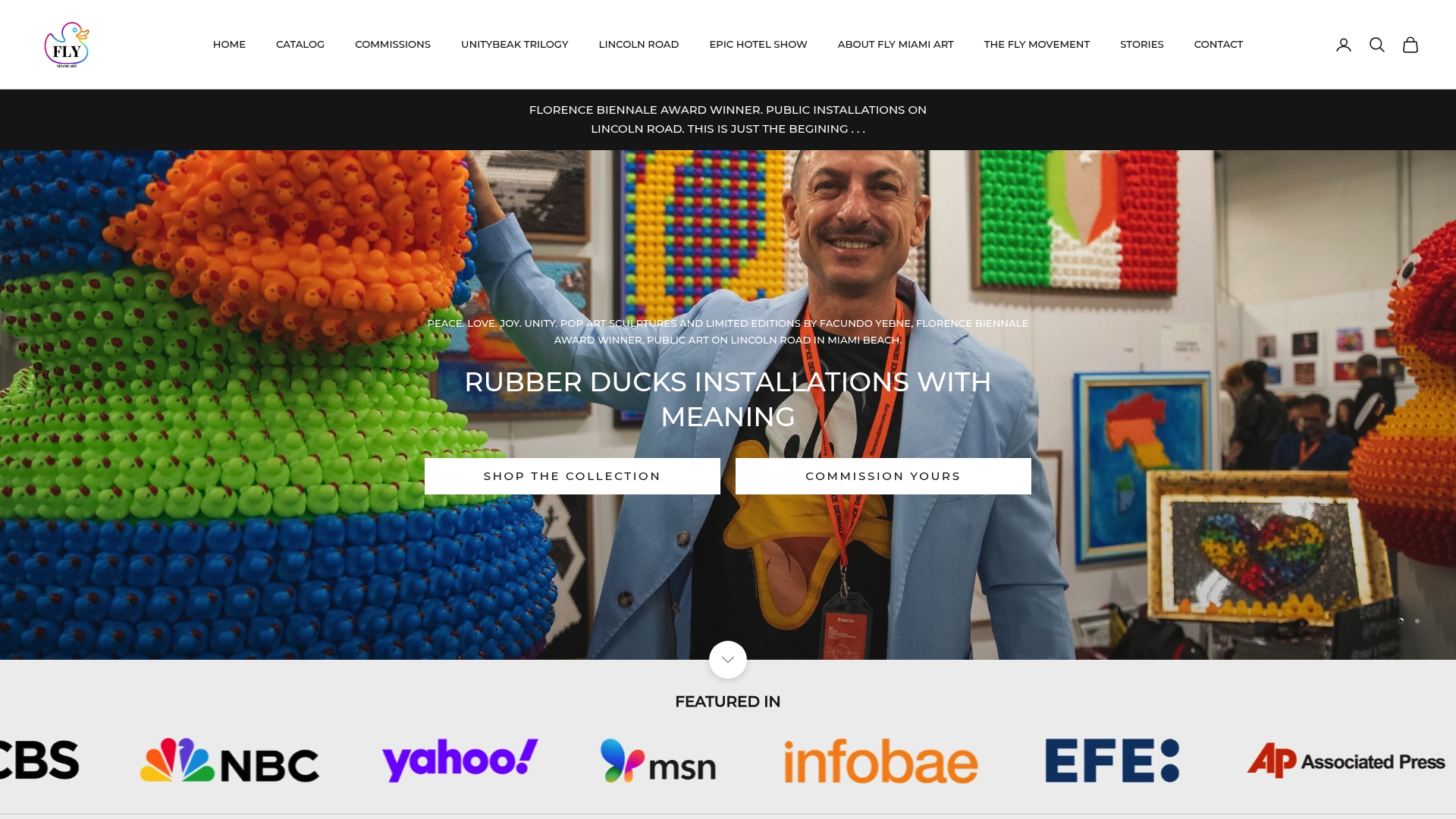
Every commission includes a site consultation, prototype demo, and full technical documentation at handover. Flymiami also offers sculpture and wall art for collectors at different scale and budget points. To request a quote or discuss a custom commission, contact the studio directly through the website. The conversation starts with your space and your vision.