Blacklight Art Care at Home Starts With 30–100 Lux
Yes, you can display and preserve blacklight-reactive art safely, as long as you control three things: the light source, the exposure time, and how you handle the piece. Choose a lower-energy UVA or visible-violet LED fixture, limit display hours, and use UV-filtering glazing where possible. Conservation guidance from the Library of Congress and safety communications from the FDA both back this approach, and it’s the same framework we follow in our own studio.
TL;DR:
- Conservators recommend 30 to 100 lux for sensitive works and UV below 75 microwatts per lumen; many institutions target 0 to 10.
- A 405 nanometer visible violet LED emits less photochemical energy than a traditional UVA tube, but limiting lit hours remains the main practical safeguard.
- Identify each piece’s pigments and supports first: paper and canvas fade faster, while heat can cloud resin and high intensity UV can crack plastics.
- Dust with a soft brush, and avoid water, solvents, and alcohol wipes on fluorescent paint; handheld UV wands may emit unsafe UVC.
- Store works in stable, cool conditions using inert polyester, polyethylene, or polypropylene enclosures; contact a conservator if paint flakes, feels tacky, or mold appears.
Table of Contents
- How to identify UV-reactive pigments and the materials they’re painted on
- Measurable lighting and display rules that protect your glow art
- Step-by-step cleaning and handling you can do at home
- Storing glow art: temperature, humidity, and rotation
- When a conservator needs to get involved
- Studio notes from FLY Miami Art
- The gap between glow art advice and how collectors actually live with it
- Own a piece built for careful display from day one
- FAQ
- Sources
How to identify UV-reactive pigments and the materials they’re painted on
Blacklight art glows through one of two effects. Fluorescence happens instantly: the pigment absorbs UV light and releases it as visible color the moment the light hits it, then stops the moment it’s off. Phosphorescence lingers, since the material stores energy and releases it slowly, which is why glow-in-the-dark pieces keep emitting light in a dark room. Most blacklight paintings rely on fluorescent inks, dayglo pigments, or UV-responsive acrylics, and some mixed pieces add phosphorescent powders for the afterglow effect.
The substrate matters as much as the pigment. Paper and canvas react differently to heat and humidity than resin, acrylic sheet, or coated plastics, and each has its own tolerance for light and solvents:
- Paper and unvarnished canvas absorb moisture quickly and fade faster under repeated UV exposure.
- Acrylic paints and resins hold up better to light but can soften or cloud near heat sources.
- Coated or laminated plastics resist humidity but may yellow or crack under high-intensity UV over time.
A brief, low-intensity UVA test in a dim room can confirm which areas fluoresce, but skip anything stronger. Keep a written record of pigments and substrates for every piece you own, especially mixed-media work, since a single painting might need different care for its canvas, its varnish, and its resin accents.
Measurable lighting and display rules that protect your glow art
Light damage is cumulative and permanent, which is why conservators measure it rather than guess at it. The Conservation Center for Art and Historic Artifacts recommends keeping illuminance between 30 and 100 lux for sensitive works, with stricter limits for anything fragile or heavily pigmented, and capping ultraviolet output at 75 µW/lm, though many institutions aim far lower, closer to 0 to 10 µW/lm.

For home or gallery display, a 405-nanometer visible-violet LED is a practical middle ground: it produces a strong, visible glow while running at far lower photochemical energy than a traditional UVA blacklight tube. Standard UVA fixtures still work, but they push more energy into the pigment and the surrounding varnish, so shorter display windows matter more when you use them.
A few habits keep exposure in check:
- Install motion sensors so lights only run when someone is in the room.
- Rotate pieces on a display and rest schedule instead of leaving them lit around the clock.
- Keep glow art out of direct daylight, which adds UV load the fixture alone doesn’t account for.
Think of light exposure like a bank account: every lit hour withdraws from the piece’s total lifespan, and rest periods are the only deposit.
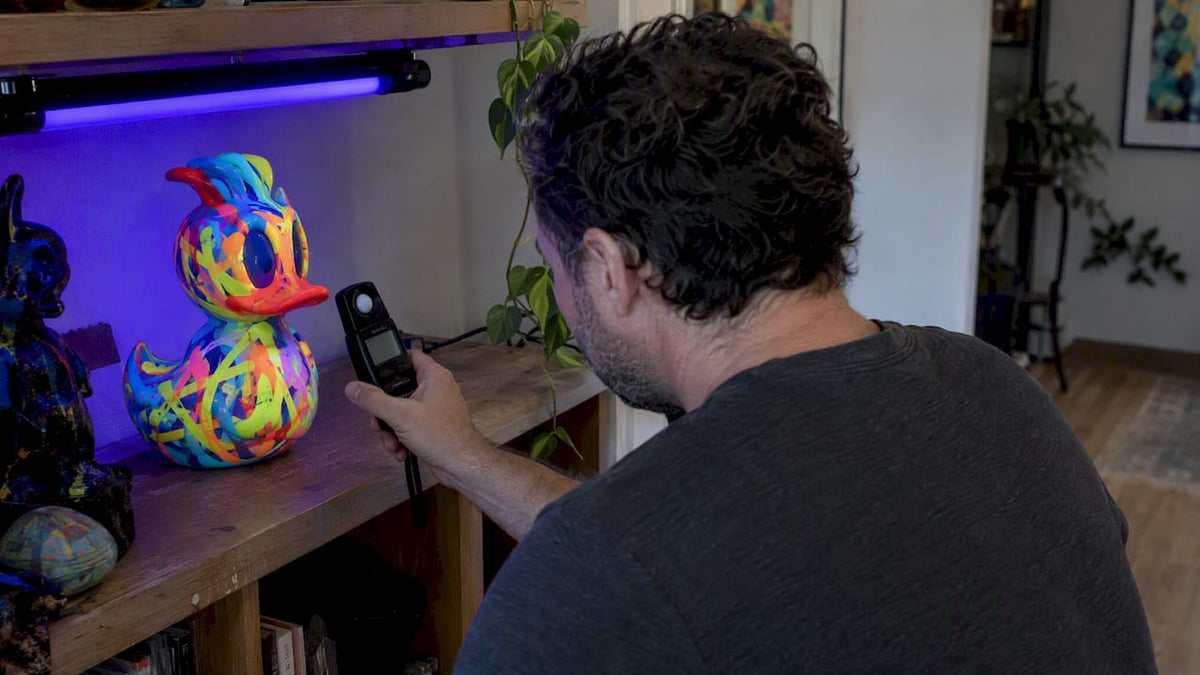
Pro Tip: A basic lux meter or UV meter app paired with an external sensor lets you check your setup in minutes, and a datalogger can track cumulative exposure over weeks if you want gallery-level records.
Museums go further with blue-wool testing and spectrophotometer readings, but that level of monitoring is built for institutional collections, not home display.
Step-by-step cleaning and handling you can do at home
Before touching any piece, confirm what it’s made of and test your cleaning method in an inconspicuous corner first; see this guide on how to care for original artworks at home for practical tips. Gather nitrile gloves, a soft natural-hair brush, a microfiber cloth, and a low-suction vacuum with a brush nozzle attachment.
- Put on gloves to keep skin oils off the surface.
- Support the piece flat or on a padded surface so it doesn’t flex while you work.
- Brush dust away in one direction with light, even strokes.
- Hold the vacuum nozzle slightly above the surface rather than letting it touch, and let suction lift loose particles.
- Wipe surrounding frame or glazing with a dry microfiber cloth, avoiding the painted surface itself.
Never reach for solvents, water, or alcohol wipes on fluorescent pigment without professional guidance, since many UV-reactive coatings react unpredictably to moisture and chemicals. Avoid handheld UV wands entirely: the FDA has warned that untested consumer UV devices can emit unsafe UVC radiation, and none are designed or tested for cleaning artwork.
Pro Tip: If dusting ever lifts pigment, leaves a sticky residue, or reveals staining underneath, stop immediately, photograph the area, and set the piece aside for a conservator rather than continuing to clean it.
Storing glow art: temperature, humidity, and rotation
Stable conditions matter more than perfect numbers. The Library of Congress recommends cool, consistent temperatures and controlled relative humidity for works on paper and photographic materials, since fluctuation, not just extremes, drives warping, cracking, and mold growth. Mixed-media glow pieces benefit from the same stability: a dedicated closet or storage room that doesn’t swing with the seasons beats a garage or attic every time.
For housing and enclosures:
- Use inert materials like polyester, polyethylene, or polypropylene sleeves and folders.
- Avoid plastics with surface coatings, which can off-gas or stick to pigment over time.
- Skip adhesives, tape, or metal fasteners directly on the artwork, since removing them later often causes more damage than the original storage problem.
Treat display time the same way museums do: log how many hours a piece has been lit, rotate it out for rest periods, and keep a simple condition record with photos taken every few months. A five-minute phone photo today saves a lot of guesswork later if you ever need to show a conservator how a piece has changed.
When a conservator needs to get involved
Some damage is beyond safe DIY fixing. Call a professional conservator if you notice:
- Flaking or lifting paint
- A tacky or soft binder layer
- Mold spots or a musty smell
- Noticeable color shift or fading
- Warping, cracking, or structural instability in the support
Conservators can stabilize and reverse certain damage, but prevention is almost always cheaper and more effective than treatment, which is why light control and stable storage do more for a piece’s lifespan than any repair. Before an assessment, take clear photos in normal light, note every material you know about the piece, gather any provenance or purchase documentation, and transport it flat and padded rather than rolled or leaned against other objects.
Studio notes from FLY Miami Art
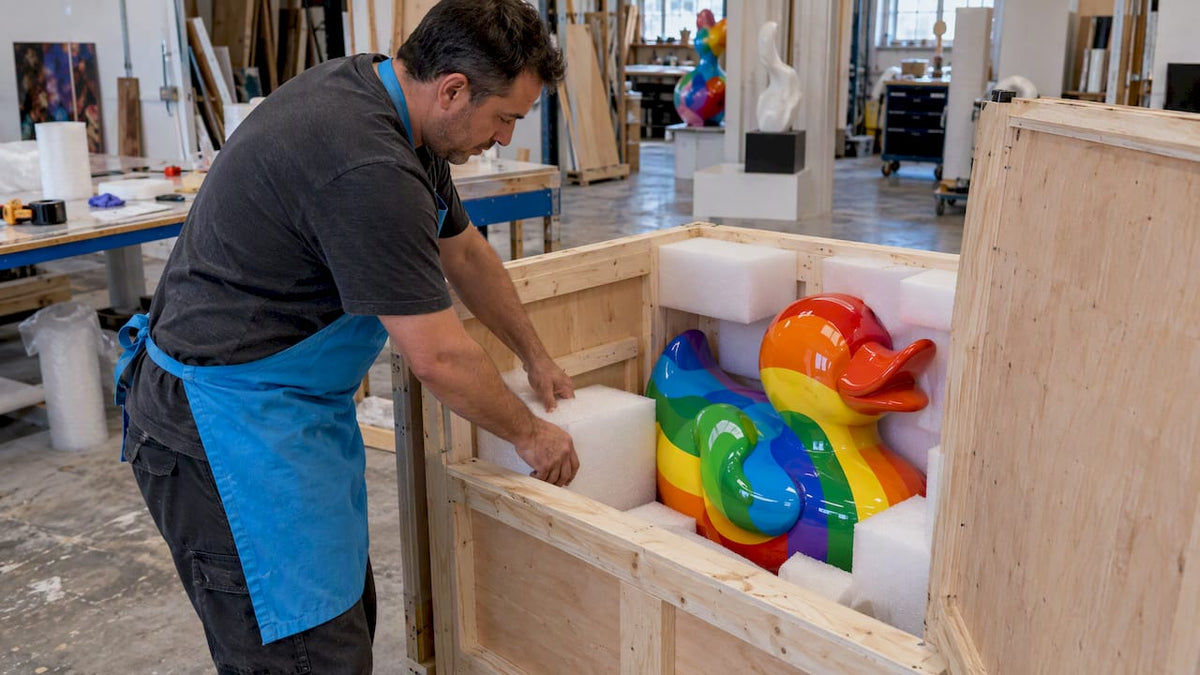
Every sculpture and wall piece we create comes with its materials disclosed at the time of commission or sale, including pigment type and substrate, so collectors and future conservators know exactly what they’re working with. Our artist builds each UV-reactive piece with display longevity in mind, recommending UV-filtering glazing for framed work and a steady display rhythm rather than constant illumination. For deeper guidance, our blog covers blacklight damage rules for collectors and how to set up a glow room.
The gap between glow art advice and how collectors actually live with it
Most blacklight care guidance is written for museums with climate-controlled rooms and staff who log every lux reading. That’s not how collectors live with these pieces. The real priority isn’t matching an institutional spec sheet, it’s building two or three habits that fit an ordinary home: a timer on the display light, a glazing choice made at purchase instead of after fading starts, and a phone photo taken every few months.

Conventional advice tends to overweight exact lux numbers and underweight the simplest lever, which is total hours lit. A piece displayed eight hours a day accumulates damage far faster than one lit for two, regardless of whether the fixture reads 60 or 80 lux. Owners who rotate pieces, dim or motion-trigger their lights, and ask about materials before buying will outperform owners chasing a perfect meter reading.
If you take one thing from any of this, let it be sequencing: ask about materials first, control hours second, worry about precise measurement last.
— Facundo
Own a piece built for careful display from day one
We design every UV-reactive sculpture and wall piece with display longevity built in from the start, not bolted on afterward. Every commission and original comes with its materials disclosed upfront, along with care guidance tailored to that specific piece, so you’re not guessing about glazing or display hours after the fact.

If you’re ready to add a glow piece to your collection, browse our UV/Glow Art collection for ready-made originals, or start a custom glow piece commission built around your space and display plans. We’re glad to talk through mounting, glazing, and display rhythm for your specific room before you buy.
- Explore Originals and Wall Art for ready-to-hang glow pieces.
- Commission a custom glow piece designed around your room and lighting setup.
- Visit our studio page to see current originals, sculpture, and collections.
FAQ
Is blacklight the same as UV light?
Blacklight is a specific type of ultraviolet light, namely UVA, which is the lowest-energy and least harmful form of UV radiation. It’s different from UVC, a much higher-energy form that the FDA warns can cause serious eye and skin injury, so blacklight fixtures made for art display are not the same as industrial or medical-grade UV devices.
Can I use my phone to check if art is UV-reactive?
A phone screen alone won’t produce blacklight, but some phone cameras paired with an external UVA flashlight attachment can help you spot fluorescence in dim rooms. For a reliable check, use a low-intensity UVA lamp designed for art viewing rather than relying on phone hardware alone.
What colors glow most under a blacklight?
Fluorescent pigments in orange, pink, green, and yellow tend to glow most intensely under UVA light, along with white fabrics and papers treated with optical brighteners. Darker colors and untreated natural materials typically show little to no visible reaction.
Who are some well-known Black artists working in contemporary art?
Artists such as Kehinde Wiley, Kara Walker, and Jean-Michel Basquiat are widely recognized in contemporary art for distinct styles spanning portraiture, installation, and street-influenced painting. Their work spans different mediums and eras, and none are specifically known for UV-reactive techniques.
How often should I clean a blacklight painting?
Light dusting every few months is usually enough for a piece kept indoors away from heavy dust or smoke. Skip deep cleaning or solvents entirely unless a conservator has confirmed the materials can tolerate it, since many UV-reactive coatings are sensitive to moisture and chemical cleaners.
Sources
- Ultraviolet (UV) Radiation | FDA
- Information Leaflet on the Care, Handling, and Storage of Photographs | Library of Congress
- Light exposure for artifacts on exhibition | CC AHA