Article: Sculpture Appraisals for Collectors: Foundry Marks, Editions, UV Art
Sculpture Appraisals for Collectors: Foundry Marks, Editions, UV Art
A sculpture appraisal is a professionally documented estimate of value for a stated purpose, whether insurance, donation, sale, or estate planning. Before you contact an appraiser, gather clear photos, provenance records, receipts, and condition notes. Having this material ready speeds up the process and often improves the accuracy of the final report.
TL;DR:
- Insurance appraisals use retail replacement value, while donations and estates use fair market value, so specify the intended use before research begins.
- A qualified appraisal is generally required for a donated sculpture valued above $5,000; donations of $20,000 or more generally require the full report with the tax return.
- For editioned bronzes or mixed media work, choose an appraiser with sculpture expertise and verify ISA, ASA, or AAA credentials and USPAP compliance.
- Donation appraisers cannot charge based on appraised value; get a written fee agreement that identifies travel, rush service, and extra research charges.
- An estimate based on photographs may arrive within days, but it suits quick insurance checks, not tax filings or complex claims.
Table of Contents
- What an appraisal is and why collectors need one
- Step-by-step appraisal process for sculptures
- Types of appraisal reports and when to use each
- Who performs sculpture appraisals and what credentials signal competence
- Primary factors that affect sculpture value
- Typical costs and fee structures for sculpture appraisals
- How to prepare your sculpture and paperwork before contacting an appraiser
- Timelines and deliverables: what to expect after you hire an appraiser
- How to find and choose an appraiser: checklist and interview questions
- Documenting contemporary pop and UV-reactive sculptures
- Why documented appraisals matter for long-term stewardship
- Preparing documentation with FLY Miami
- FAQ
- Sources
What an appraisal is and why collectors need one
An appraisal is a researched, written opinion of value prepared for a specific intended use. That phrase matters: an appraiser must state upfront whether the report serves insurance replacement, a charitable donation, an estate settlement, a sale, or a loss claim, because the value conclusion changes depending on the purpose. Fair market value, used for donations and estates, reflects what a willing buyer would pay a willing seller in the current market. Replacement value, used for insurance, reflects what it would cost to replace the piece with a comparable one at retail, which is typically higher.
Collectors commission appraisals for several recurring reasons:
- Securing or updating insurance coverage on a sculpture collection.
- Claiming a charitable donation tax deduction.
- Settling an estate or dividing assets among heirs.
- Pricing a piece before a private sale or auction consignment.
- Documenting value after theft, fire, or shipping damage for a loss claim.
Each purpose calls for a different value standard and sometimes a different report format, which is why defining intended use comes before any research begins.
Step-by-step appraisal process for sculptures
A sculpture appraisal follows a fairly consistent sequence, though the depth of research scales with the complexity and value of the piece.
- Intake and scope. The appraiser confirms the intended use, the intended user (you, your insurer, the IRS, a court), and the effective date of value.
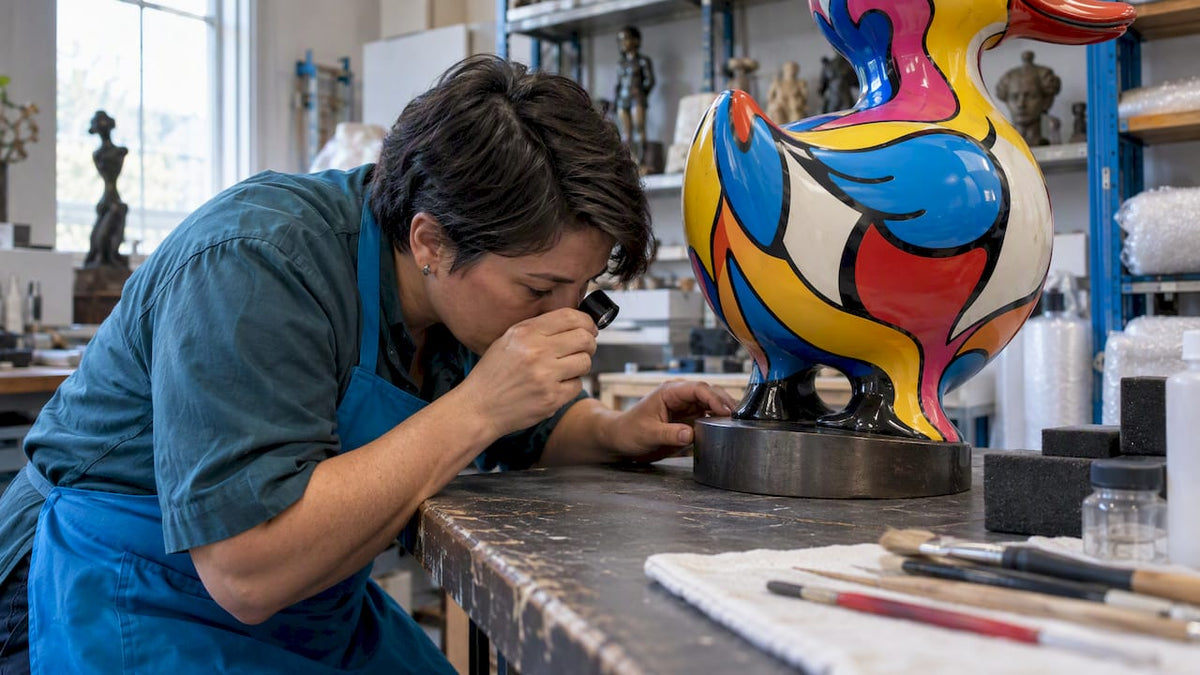
- Physical inspection. This includes recording signatures, foundry stamps, edition numbers, dimensions, weight, base materials, and any condition issues like chips, corrosion, or loose joints.
- Provenance and documentation review. The appraiser checks catalogue raisonnés where available, exhibition history, certificates of authenticity, and prior receipts.
- Market research. Comparable sales are selected and adjusted for date, condition, edition number, and venue.
- Report drafting and delivery. The appraiser compiles findings into a signed report with a value conclusion and a certification statement.
Pro Tip: Ask your appraiser upfront how they select comparables for sculpture, since editioned bronzes and one-off contemporary pieces require different comparable pools than paintings.
Types of appraisal reports and when to use each
Not every situation calls for the same document. A brief certificate of value may suffice for a quick insurance update on a lower-value piece, while a full narrative report is standard for estates, sales consignment, or complex insurance claims. For charitable donations, the Instructions for Form 8283 require a qualified appraisal whenever a donated sculpture or group of similar items is valued above $5,000, and donations of $20,000 or more generally require attaching the complete appraisal to the tax return.
Common formats include:
- Certificate or letter of value: a short statement, often used for lower-value insurance scheduling.
- Narrative report: a detailed document with photographs, comparables, and methodology, suited to estates, sales, and litigation.
- Qualified appraisal: meets IRS requirements for donation deductions, including appraiser credentials and a signed declaration.
- Desktop or benchmark valuation: a lighter-touch estimate based on photos and documentation, useful for quick insurance checks rather than tax filings.
Each format still needs clear photographs, a description of the object, a stated methodology, and the appraiser’s qualifications.
Who performs sculpture appraisals and what credentials signal competence
Generalist personal property appraisers handle a broad range of items, but sculpture, especially editioned bronzes or mixed-media contemporary work, often calls for someone with specific fine art training. Specialists understand foundry practices, casting editions, and material-specific condition issues that a generalist might miss.
Look for appraisers affiliated with recognized bodies:
- ISA (International Society of Appraisers): trains and certifies personal property appraisers across specialties.
- ASA (American Society of Appraisers): offers accreditation with a formal testing and ethics process.
- AAA (Appraisers Association of America): focuses specifically on fine and decorative art appraisal.
USPAP, maintained by the Appraisal Foundation, is the generally recognized set of ethical and performance standards for appraisal practice in the United States, and it underlies what “qualified appraiser” means in many tax and legal contexts. Membership or certification from ISA, ASA, or AAA typically requires ongoing USPAP compliance, which is worth confirming directly with any appraiser you are considering.
Primary factors that affect sculpture value
Several variables drive a sculpture’s appraised value, and a credible report addresses each one explicitly.
- Artist reputation and market standing: inclusion in a catalogue raisonné or a track record of gallery and auction placement strengthens a value conclusion.
- Authenticity and provenance: foundry stamps, edition numbers, and documentation distinguishing lifetime casts from posthumous casts materially affect value, since lifetime casts from recognized foundries often command premiums over unknown or later castings.
- Materials and technique: bronze, stone, resin, mixed media, and UV-reactive coatings each carry different replacement costs and market expectations, which shapes both insurance and fair market conclusions.
- Condition and restoration history: corrosion, structural repairs, or repainting can lower value, while documented professional conservation can support it.
- Comparable sales and exhibition history: recent, relevant sales combined with a documented exhibition record help an appraiser defend the final figure.
For bronze works specifically, checking the base for foundry stamps, edition numbers, and signatures before you even contact an appraiser gives them a head start, since the foundry and whether a piece was cast during the artist’s lifetime strongly influence market value. A collector’s guide to pop sculpture value walks through how these factors apply to contemporary pop pieces specifically.
Typical costs and fee structures for sculpture appraisals
Appraisers commonly charge by one of three models: a flat fee per item, an hourly rate, or a flat project fee that covers research and report writing, sometimes with a separate travel or inspection charge for on-site visits. One structure is explicitly off-limits for charitable donation appraisals: fees cannot be based on a percentage of the appraised value, since that creates an incentive to inflate the number.
Costs vary with the specialist’s experience, how much research the piece requires, and how long the final report needs to be. A single-item certificate for insurance purposes tends to cost less than a full narrative report supporting an estate or a six-figure donation, simply because the latter demands deeper comparable research and a longer, more defensible write-up.
What you are actually paying for breaks down into a few components:
- Time spent physically inspecting and photographing the piece.
- Research into comparables, provenance, and exhibition history.
- Specialist consultation for unusual materials or attribution questions.
- A signed report that meets professional and, where relevant, IRS standards.
Pro Tip: Ask for a written fee agreement before work begins, including whether travel, rush service, or additional research hours are billed separately.
How to prepare your sculpture and paperwork before contacting an appraiser
Good preparation shortens the appraisal timeline and gives the appraiser better raw material to work with.
- Photograph thoroughly. Capture full front, back, and side views, plus close-ups of the base, any signature, foundry stamp, and edition number, with a ruler or coin for scale. High-resolution JPEG or TIFF files work best.
- Gather documentation. Collect acquisition receipts, prior appraisals, certificates of authenticity, exhibition history, and any conservation records.
- Note condition and shipping details. Record any chips, cracks, or loose elements, and flag fragile or mixed-media components so the appraiser knows how the piece has been stored or handled.
A certificate of authenticity guide explains what that document should include if you are unsure whether yours is complete, and a related primer on provenance and authenticity covers why buyers and appraisers alike treat paper trails as central to a credible valuation.
Timelines and deliverables: what to expect after you hire an appraiser
A desktop or benchmark estimate based on photos and documentation can often be turned around in days, while a full narrative or qualified appraisal involving in-person inspection and deep comparable research typically takes longer, depending on the appraiser’s workload and the complexity of the piece.
The final report should include:
- A clear object description with measurements, materials, and condition notes.
- Comparable sales and the reasoning behind any adjustments.
- A stated value conclusion tied to the intended use.
- The appraiser’s signature, credentials, and a formal certification statement.
If you need the report faster, ask about expedited service when you first request a quote. Expect to answer follow-up questions or supply additional photos if the appraiser identifies gaps during research.
How to find and choose an appraiser: checklist and interview questions
Start with specialty fit: a generalist may be fine for a decorative object, but an editioned bronze or a contemporary mixed-media piece benefits from someone with sculpture-specific experience. Confirm active membership with ISA, ASA, or AAA, ask to see a sample report, and request references from past clients.
Useful interview questions include:
- Have you appraised similar sculptures, including comparable materials or foundries?
- How do you source and adjust comparables for editioned or one-off work?
- Are you familiar with Form 8283 requirements if this is for a donation?
- Can you confirm your USPAP compliance in writing?
Appraisers who work primarily with paintings may refer you to a sculpture specialist, or collaborate with a conservator, when a piece falls outside their core expertise, which is a reasonable response rather than a red flag. For high-value or disputed pieces, a second opinion or an independent conservator’s condition report can add confidence to the final number.
Pro Tip: If a quoted fee is tied to a percentage of expected value, treat that as a disqualifying red flag rather than a negotiating point.
Documenting contemporary pop and UV-reactive sculptures
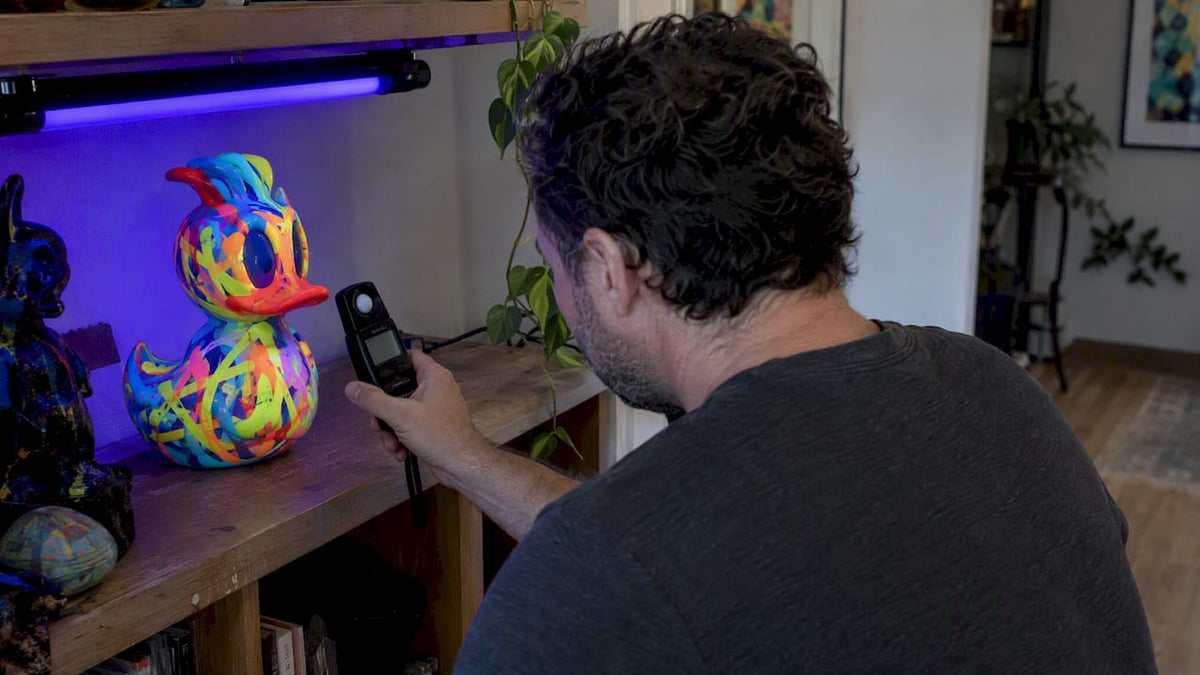
Contemporary pop pieces built with UV-reactive materials present documentation challenges that traditional bronze or stone work does not. We recommend photographing the piece under both standard white light and blacklight, since the glow effect is a defining feature that a daylight photo alone cannot capture. Record the specific pigments, coatings, and any mixed-media attachments used in fabrication, since these details affect both replacement cost and how an appraiser frames the materials section of a report.

Provenance still matters as much as it does for a bronze: exhibition history, installation notes from professional handlers, and original purchase documentation all strengthen the case for a contemporary piece’s value. A guide on evaluating condition in pop art pieces offers a useful framework for tracking wear and coating integrity over time.
Why documented appraisals matter for long-term stewardship
Careful documentation is not paperwork for its own sake. It is what lets a sculpture’s value survive a disputed estate, a denied insurance claim, or simply the passage of time between owners. I have come to see a consistent appraisal paired with good record-keeping as part of caring for a piece, not separate from it.
— Facundo
Preparing documentation with FLY Miami
Collectors who want to walk into an appraisal with strong documentation often need help beyond a smartphone camera, especially for UV-reactive work where blacklight photography matters. We provide photography and condition documentation services alongside UV-reactive pop art sculptures, which can help collectors prepare when a piece eventually needs a formal appraisal.

- Browse completed Originals and Sculpture pieces to see how glow materials and finishes are documented.
- Commission a custom glow piece built with the pigment and fabrication detail an appraiser will want on record.
- Visit our storefront to see current originals, wall art, and commission options.
If you are planning a purchase or a commission and want documentation that holds up for future insurance or resale appraisals, start a conversation with our team through the storefront linked above.
FAQ
How do you assess the value of a sculpture?
Value assessment combines authentication (confirming signatures, foundry marks, and edition numbers), provenance research, condition evaluation, and comparison against recent sales of similar work. A qualified appraiser weighs all of these against the stated purpose, whether that is fair market value or replacement value, to reach a defensible conclusion.
What is the 70/30 rule in art?
There is no single, universally recognized rule in professional appraisal standards corresponding to a fixed numerical split, and the phrase is used inconsistently across sources. If you have seen it referenced for a specific valuation method, ask the appraiser to explain how they apply it rather than assuming a standard definition.
What do you need to become an art appraiser?
Most appraisers build credibility through specialized training, exams, and ongoing education through organizations like ISA, ASA, or AAA, combined with demonstrated compliance with USPAP standards. There is no single government license for art appraisal in the United States, so professional designation and verifiable experience are the main trust signals.
What is the best definition of an appraisal?
An appraisal is a written, researched opinion of value for a specific object, prepared for a stated intended use, such as insurance, donation, estate, or sale. A credible appraisal ties its conclusion to documented comparables, condition, and provenance rather than a simple guess.
When is a qualified appraisal required for a donated sculpture?
A qualified appraisal is generally required when a donated sculpture or group of similar items is valued above $5,000, and a complete copy must typically be attached to the tax return for donations of $20,000 or more. Our guide to art donation tax rules covers the current thresholds in more detail.