8 Hospital Art Ideas That Meet Infection Control for Curators
The best hospital installations pair therapeutic intent, usually biophilic imagery or co-created patient work, with materials that pass infection control and a plan for real engagement from patients and staff. Three things matter most: choosing art backed by evidence of patient benefit, specifying finishes that survive hospital-grade cleaning, and building in a way for the people who see it daily to help shape it. Studios like FLY Miami Art offer one commissioning route for curators ready to move from concept to installed piece.
TL;DR:
- Evidence shows that nature-based imagery reduces stress and pain, making it the most effective subject matter for hospital-wide art installations.
- Materials and finishes must be non-porous, sealed, and resistant to hospital disinfectants, with acrylic glazing and hard-coat varnishes preferred for safety and longevity.
- Pilot projects in each zone before full installation help optimize design choices, and rotating or temporary artworks maintain engagement over time.
- Early coordination with infection control and facilities teams ensures installation and maintenance processes do not disrupt clinical operations or compromise safety.
- Successful programs rely on dedicated staffing, repeatable material approval processes, and patient involvement to sustain a meaningful, well-maintained art environment.
Table of Contents
- Installation ideas by hospital zone and patient group
- What materials and finishes pass infection control review
- Commissioning steps, timeline, and budget lines
- Getting the installation day and long-term upkeep right
- Precedents worth studying before you commission
- How FLY Miami Art brings immersive pop art to clinical settings
- What I wish more curators understood going in
- Ready to commission art for a healing space?
- Sources
- FAQ
Installation ideas by hospital zone and patient group
Different zones call for different art strategies. A lobby can carry scale and drama that a pediatric infusion room cannot, and a staff break room has different needs than a corridor patients pass through on a stretcher. Matching the idea to the zone is the first design decision, before materials or budget enter the conversation.
Nature imagery has the strongest track record. A synthesis of research on art and hospital environments found that nature-based imagery is particularly effective at reducing stress, anxiety, and pain, while other genres show more mixed results, which argues for picking subject matter deliberately rather than decoratively. That single finding should anchor most lobby, waiting room, and corridor commissions.
Consider these categories as a working menu rather than a fixed list:
- Biophilic murals and window films: large-scale forest, coastal, or garden scenes on sealed vinyl or acrylic panels bring daylight-adjacent color into windowless corridors and waiting areas, and nature-based artwork supports biophilic design goals without structural changes to the building.
- Photographic panoramas: floor-to-ceiling landscape photography in radiology or imaging waiting rooms gives anxious patients something to focus on besides the procedure ahead.
- Timed ambient light and projection: soft, slow-cycling color washes in lobbies or family lounges, or projection mapping confined to non-clinical atriums, create a sense of movement without noise or clutter.
- UV-reactive pop art in controlled, low-acuity spaces: blacklight-responsive pieces work well in staff lounges, donor recognition areas, or family respite rooms where lighting can be managed, but they are not suited to active treatment bays.
- Envirographics and wayfinding murals: large graphic panels that double as directional cues reduce the low-grade anxiety of getting lost while reinforcing a sense of place tied to the local community.
- Pediatric interactive and tactile walls: washable, low-relief sensory panels in play areas give children something to touch without creating a cleaning liability.
- Temporary pop-ups and room transforms: rotating themed installations in long-stay units keep the environment from going stale for patients admitted for weeks rather than days.
- Patient co-creation programs: bedside print rotations, pick-a-print carts, or workshop-to-gallery pipelines where patient-made work moves from a bedside table to a public wall.
Wayfinding deserves special attention because it does double duty. A mural that marks the entrance to oncology or a wall graphic that signals “you are near the exit” reduces cognitive load for someone already stressed, which is a different job than a purely decorative piece is asked to do. Co-created visual environments, where patients and staff help choose or design the art, are described as instrumental for belonging in ways that purely curated collections rarely achieve on their own.
Temporary and rotating formats solve a problem permanent installations cannot: a patient admitted for six weeks sees the same mural every day, and novelty fades fast. A quarterly rotation of framed prints, or a modular wall system that swaps panels on a schedule, keeps a corridor feeling current at a fraction of the cost of a new permanent commission. Pediatric units benefit especially from this approach, since interactive tactile elements need refreshing as trends and characters change.
Pro Tip: Pilot one idea per zone type before committing budget to a full floor, since a mural that reads well in a wide lobby can feel overpowering in a narrow exam corridor.
What materials and finishes pass infection control review
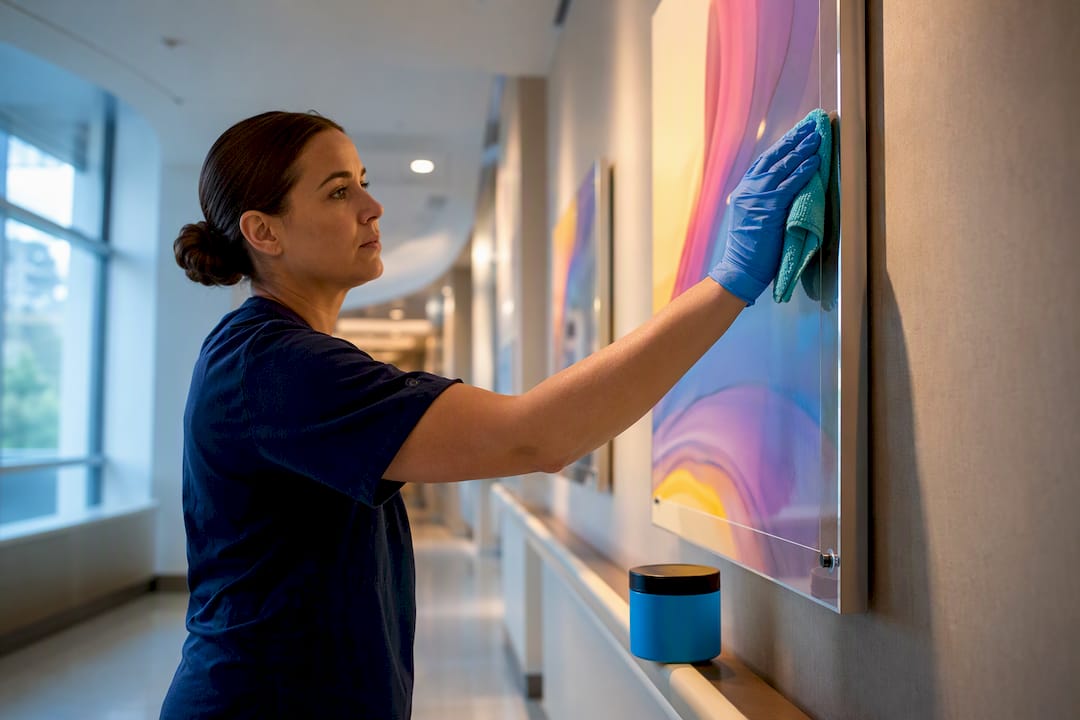
Material choice is where good ideas either survive contact with a hospital’s cleaning protocol or get pulled within a year. The baseline standard for U.S. clinical environments calls for artworks that are non-porous, sealed, and framed behind acrylic glazing rather than glass, since acrylic resists shattering and is easier to wipe down repeatedly. Textured, unsealed canvases are generally avoided in high-acuity areas because open weave and raw edges trap moisture and cleaning residue, and open-back frames create hard-to-reach dust pockets that infection control teams flag immediately.
Coatings matter as much as substrate. Guidance for healthcare-grade acrylic work recommends a non-removable hard-coat varnish tested for resistance to bleach and alcohol-based disinfectants, since standard artist varnishes tend to cloud or turn tacky after repeated sanitization cycles. Low-VOC paints and media are a related requirement, particularly in patient rooms with limited ventilation.
A few other specification points belong on every request for proposal:
- Glazing: acrylic with UV protection over glass in any patient-accessible area, both for safety and for color longevity.
- Hardware: tamper-resistant and, in behavioral health or pediatric units, ligature-resistant mounting systems with seismic or impact bracing.
- Coatings: hard-coat varnish rated for hospital disinfectants, documented in writing before fabrication begins.
- Signoff: infection prevention and control review and a documented cleaning validation step before the piece is accepted.
A scoping review of 68 studies covering 6,006 participants found that 72% reported improvements in patient well-being tied to visual art, and 52% reported that art functioned as a positive distraction that improved the overall healthcare experience. That benefit only holds if the piece stays on the wall, clean and intact, which is why material specification is not an afterthought.
Commissioning steps, timeline, and budget lines
A hospital art commission moves through more approval layers than a private gallery sale, and skipping one usually means redoing work later.
- Assemble stakeholders early: arts-in-health coordinator, facilities, infection prevention and control (IPAC), procurement, and at least one clinical lead from the unit where the piece will live.
- Issue an RFP or RFQ: specify zone, dimensions, subject matter constraints, and material requirements up front so proposals arrive comparable.
- Hold a design review: circulate concept sketches or renderings to clinical leads before fabrication starts.
- Build and approve a mockup: a small sample panel with the actual varnish and substrate goes to IPAC for signoff before full production.
- Fabricate: production timelines for large panels or sculptural pieces commonly run several weeks depending on scale and coating cure time.
- Install after hours: schedule with facilities to avoid patient traffic disruption.
- Validate and close out: final IPAC walk-through, cleaning protocol handoff, and photo documentation for the maintenance file.
Budget lines to plan for include artist or studio fees, fabrication and materials, protective coatings, mounting hardware, installation labor, and a maintenance reserve for touch-ups or recoating. Contracts should request a cleaning and finish warranty, a clear statement of ongoing maintenance obligations, and retained sample swatches so future cleaning staff can verify the correct products are being used.
Pro Tip: Ask the fabricator to hold back a small offcut of the finished panel, so facilities has a real sample to test cleaning agents against instead of guessing.

Getting the installation day and long-term upkeep right
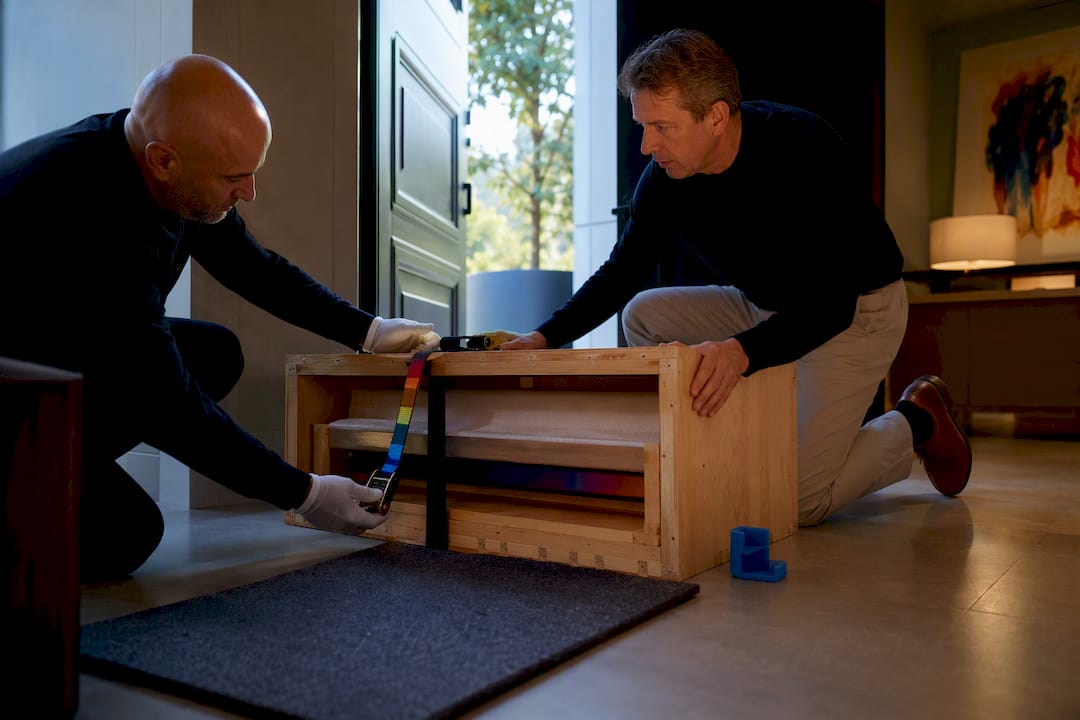
Installation logistics can derail an otherwise well-planned project if they are not coordinated with clinical operations in advance. Work should happen after hours or during scheduled low-traffic windows, with HEPA-filtered containment around any activity that generates dust or fumes, a requirement that applies even to something as simple as drilling into drywall near a patient corridor. Specification guidance for healthcare acrylic work is explicit that install logistics must include after-hours work windows and HEPA-filtered barriers for any dust-generating step, signed off in a documented cleaning protocol before the project closes.
Mounting needs a clear owner. Interactive or tactile elements, in particular, need a named contact for repairs so a loose panel does not sit broken for weeks waiting for someone to claim responsibility.
A simple maintenance plan keeps the investment intact:
- Quarterly inspections of mounting hardware, seals, and surface condition.
- An approved cleaning agent list posted near the piece or filed with environmental services.
- A touch-up kit with matched varnish and paint stored on site for minor scuffs.
- A logged repair contact so staff know who to call rather than working around a damaged piece.
Close the loop with a final facilities walk-through and a signed IPAC checklist confirming the cleaning protocol was tested against the actual finish, not a generic assumption.
Precedents worth studying before you commission
A handful of existing programs give curators a template rather than a blank page. RxART’s body of work shows what a sustained artist-hospital partnership looks like in practice: the organization has completed more than 60 site-specific installations using medically approved materials, a scale that only came from repeatable processes for material approval and artist vetting. The transferable lesson is procedural: build a repeatable review pipeline rather than treating each commission as a one-off negotiation.
UF Health’s Arts in Medicine program offers a different lesson in duration. Now marking 35 years of integrating art into patient care, the program shows that bedside and public-space art works best as an ongoing program with dedicated staffing, not a single capital project that gets unveiled and forgotten.
Patient-made work has its own precedent for scaling up. UCSF’s cancer center has shown patient artwork at major museums including SFMOMA, demonstrating a real pathway from bedside workshop to public exhibition that other systems can adapt at a smaller scale.
Three takeaways carry across all of these:
- Staffing sustains programs more reliably than a single large purchase does.
- Material approval processes, once built, make every subsequent commission faster.
- Patient-made work gains legitimacy when institutions treat it as exhibition-worthy, not just decorative filler.
How FLY Miami Art brings immersive pop art to clinical settings
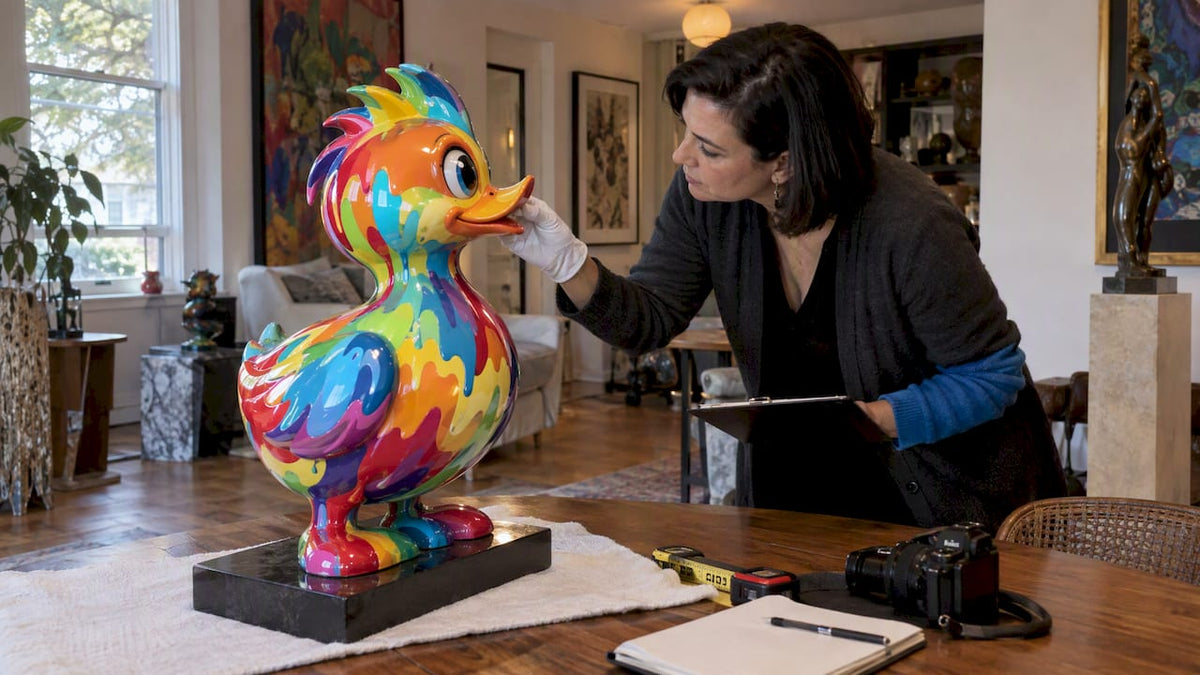
An artist studio specializes in pop art sculptures and wall pieces that use UV-reactive pigments to reveal hidden colors under blacklight, an approach built around handmade, one-of-a-kind pieces rather than mass production. That glow effect is striking in the right setting, and the studio’s experience with large-scale sculptural and wall installations translates directly to hospital procurement conversations around scale, mounting, and finish.
For clinical environments, that means specifying sealed, cleanable surfaces and coordinating fabrication timelines with IPAC and facilities review rather than treating the piece as a standalone art object. Three project types fit hospital settings particularly well:
- A custom glow piece for a staff lounge or donor recognition area where lighting is controlled.
- A themed wall-art series with sealed, hard-coat finishes for a lobby or long corridor.
- A rotating pop-up concept adapted from gallery-style room transforms for a long-stay unit corridor.
What I wish more curators understood going in
Start smaller than feels ambitious. A single pilot wall, measured honestly through patient and staff feedback, tells you more than a five-floor rollout planned entirely on instinct. Cleanability is not a constraint to work around at the end, it is a design input from day one, and pieces chosen with input from the people who will pass them daily tend to get noticed and cared for rather than ignored. Loop in infection control and facilities before the concept is finalized, not after fabrication, because the rework costs more than the extra week of conversation ever does.
— Facundo
Ready to commission art for a healing space?
If a pilot wall or a donor lounge piece is on your list, the studio works directly with clients on commissions, custom glow pieces, and finished wall art and sculpture suitable for low-acuity and public-facing hospital areas.
Before reaching out, gather a few things that speed up a proposal: site photos of the wall or space, any infection-control constraints from your facilities team, a rough timeline, and a budget range.
- Commissions and custom glow pieces built around UV-reactive pigments for controlled, low-acuity spaces.
- Wall art with sealed finishes suited to corridors and lobbies.
- Sculpture for atriums or lobby installations where scale matters.
Start the conversation at Flymiami, or look at the custom glow piece page and the Wall Art collection to see finish options before you request a quote.
Sources
- PLOS ONE scoping review on art in healthcare (2025)
- RxART — Completed hospital projects
- UF Health — Arts in Medicine: 35 Years of Healing Through Art
FAQ
Where do hospitals get their artwork?
Hospitals source art through arts-in-health programs, direct commissions with studios and artists, donated collections, and patient-created work gathered through workshop programs. Organizations like RxART work directly with hospitals on site-specific commissions, while independent studios such as FLY Miami Art take on custom commission requests for wall art and sculpture.
What are some creative ideas for art installations?
Strong options include biophilic murals, timed ambient lighting in lobbies, envirographic wayfinding walls, and patient co-creation programs where bedside artwork rotates into public display. Temporary pop-up room transforms also work well for units where patients stay for extended periods.
What are some creative ideas for hospitals in general design terms?
Beyond individual artworks, hospitals benefit from rotating exhibition schedules, sensory-friendly tactile walls in pediatric areas, and wayfinding graphics that double as calming visual landmarks. Co-created spaces, where patients and staff help choose the work, tend to build a stronger sense of belonging than purely curated collections.
How do hospitals make sure art meets safety standards?
Hospital art typically goes through infection prevention and control review to confirm surfaces are non-porous, sealed, and framed behind acrylic rather than glass. Coatings are also checked for resistance to bleach and alcohol-based disinfectants before a piece is approved for a patient-facing area.