Original UV-Reactive Pop Art for Children's Areas: A Buyer's Guide
Art for children’s areas, in this context, means original UV-reactive pop art and sculptural commissions, not mass-produced playroom decor. If you’re a designer, hotel, or institution weighing one, start by sending a one-page brief to the artist or studio and requesting concept samples before committing to anything. The rest comes down to timeline, materials, safety, budget, and licensing, all covered below.
TL;DR:
- A typical UV-reactive art commission takes about 20 weeks from signing the brief to installation, with each milestone requiring approval before proceeding.
- Material durability and finish selection at the design approval stage determine the piece’s appearance and integrity over several years in high-traffic areas.
- Structural safety, anchoring, and accessibility standards must be confirmed before installation to prevent liability and ensure safe interaction for children.
- Artist experience with UV-reactive materials and a portfolio of similar projects are essential factors to verify before hiring, along with testing samples early in the process.
- Age-appropriate imagery and sensory engagement should be tailored to the specific children’s demographic, involving educators early to align visuals with developmental needs.
Table of Contents
- What Makes UV-Reactive Pop Art Right for Children’s Spaces?
- How Long Does Commissioning UV Art Actually Take?
- What Materials and Finishes Hold Up Best Under Blacklight?
- Installation, Safety, and Accessibility: What Facility Teams Must Confirm
- What Does a Custom UV Art Commission Actually Cost?
- How Do You Vet an Artist or Studio for This Kind of Work?
- Choosing Age-Appropriate Themes and Imagery
- Engaging Children Through Interactive and Sensory Elements
- Cultural Inclusivity and Diversity in Children’s Art Commissions
- The Educational and Developmental Value of Art in Children’s Spaces
- Should You Involve Child Psychologists or Educators in the Design Process?
- Studio Perspective: How FLY Miami Art Executes Commissions for Children’s Areas
- Ready to Commission Original UV Art for Your Space?
- Sources
What Makes UV-Reactive Pop Art Right for Children’s Spaces?
A piece that looks one way under normal light and reveals hidden color, pattern, or narrative under blacklight gives a family lobby or play area something a framed print never will: two experiences in one object. Kids notice the transformation. Adults remember it. For hotels and public venues trying to create a moment worth photographing, that dual mode does real work.
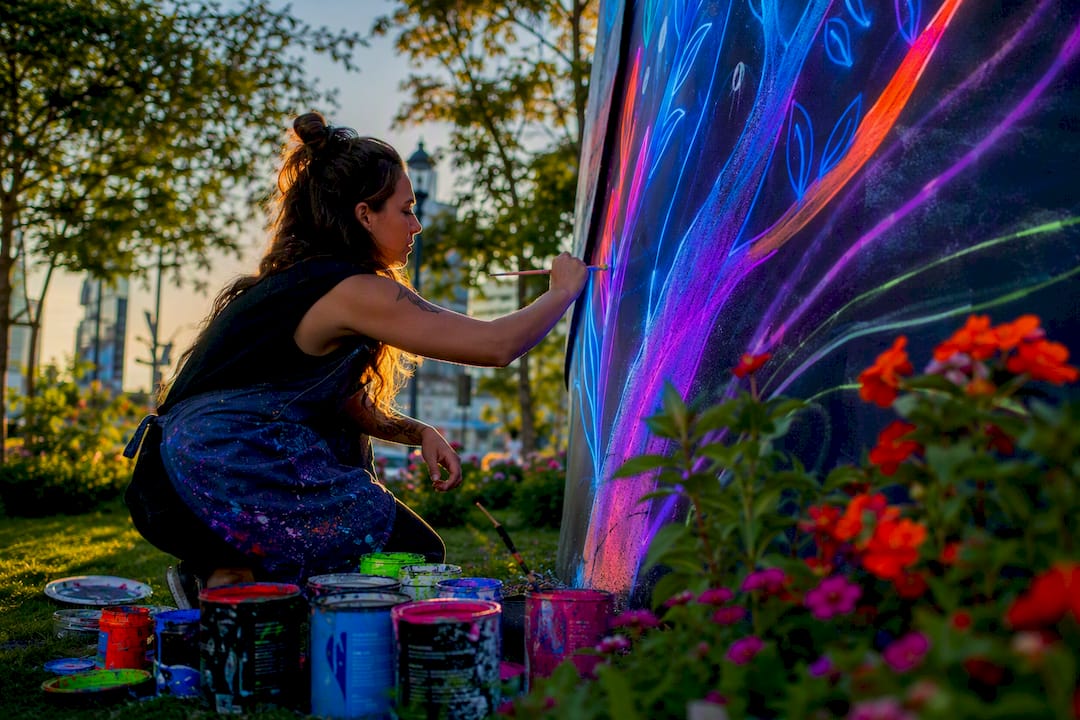
UV-reactive artworks appear conventional in daylight, then transform under UV to reveal layers invisible before. That’s not a lighting trick bolted onto a painting. It’s built into the medium, layer by layer, from the first coat of paint.
A few reasons this format keeps winning briefs for children’s and family-facing commissions:
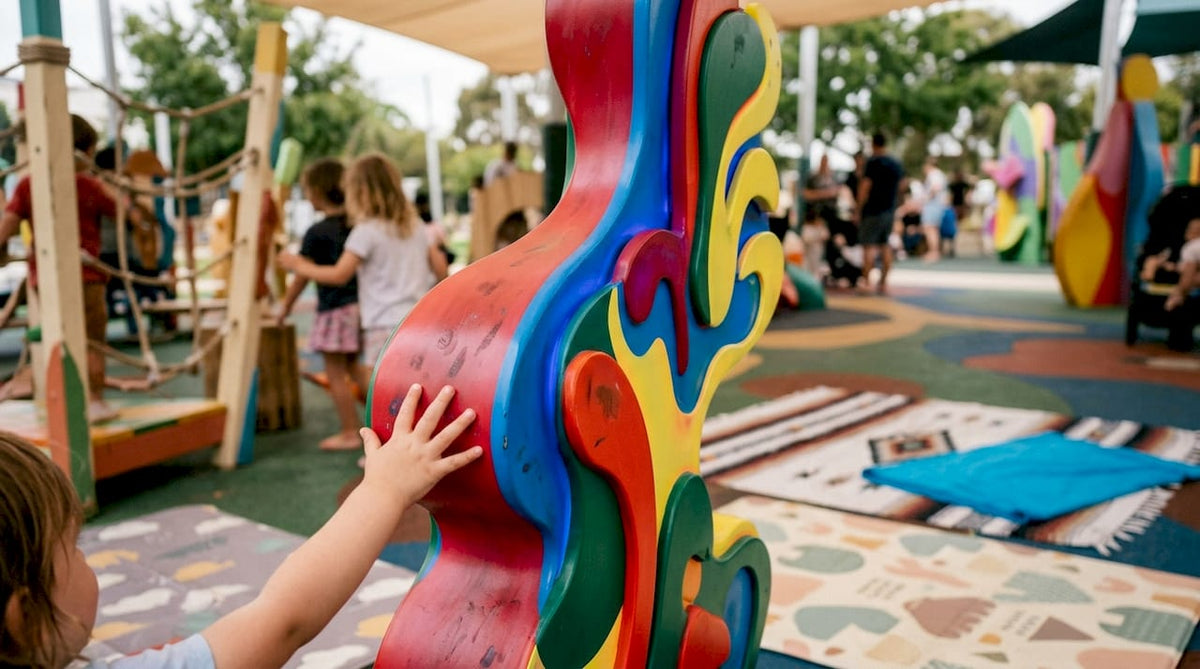
- Sealed, sculptural pieces hold up to touching, bumping, and constant foot traffic far better than flat printed decor, since sculptural work resists the wear that flattens two-dimensional prints.
- The reveal moment creates a natural photo opportunity, which extends dwell time in lobbies, atriums, and waiting areas.
- Pop art’s bold, legible imagery reads clearly to young viewers in ways abstract or muted work often doesn’t, a point explored further in how pop art teaches children about culture.
- Facundo Yebne, the artist behind FLY Miami Art’s UV work, builds each piece with hand-applied UV pigments and finish layers specifically calibrated for this dual reveal, rather than adapting a standard canvas after the fact.
How Long Does Commissioning UV Art Actually Take?
Anyone who’s managed a build-out knows vague timelines cause more problems than tight budgets. A realistic custom art commission follows a defined milestone schedule, and you should ask for one in writing before signing anything.
A standard commissioning schedule runs roughly 19 to 20 weeks from signed brief to handover:
- Week 0: Signed brief and deposit. This locks scope, budget range, and site details.
- Week 3 to 4: Concept presentation. The artist shows sketches, color studies, and a UV reveal preview.
- Week 5 to 6: Design and material approval. This is the gate where you sign off on substrate, UV pigment palette, and finish.
- Week 7 to 18: Production. The bulk of fabrication happens here, including any prototype testing.
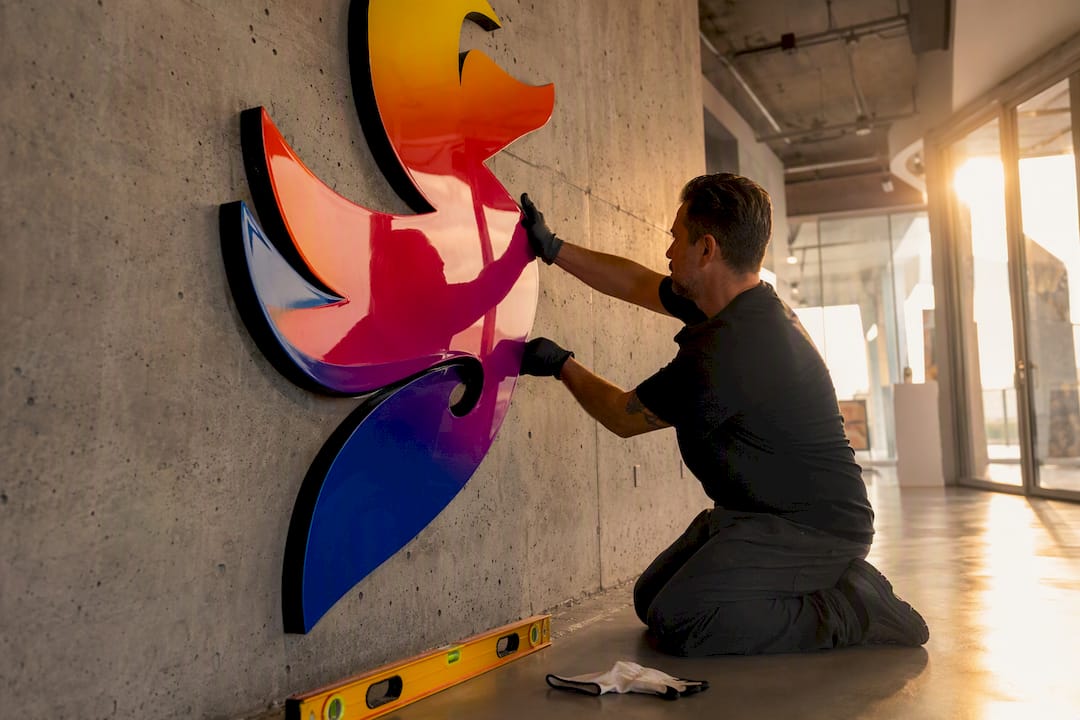
- Week 19: Installation on site.
- Week 20: Handover and rights registration.
Each gate should have a decision point attached to it, not just a status update. Sample approvals, physical mockups, and a site assessment (structural load, wall condition, lighting infrastructure) all belong before production starts, not after. Loop in the design lead, facilities manager, installer, and, for anything load-bearing or wall-mounted in a public space, a structural or fire-safety engineer.
Contracts should tie payments to these exact milestones, not to calendar dates, and should spell out acceptance criteria and what happens if production runs long.
Pro Tip: Ask for a mockup or physical color/material sample at the Week 5 to 6 approval gate, not just a digital rendering. UV pigment behavior under blacklight is genuinely hard to judge on a screen.
What Materials and Finishes Hold Up Best Under Blacklight?
The substrate and pigment choices you approve at Week 5 determine whether the piece looks sharp in year five or faded by year two. This is where procurement teams should slow down and ask specific questions rather than trusting a swatch.
UV-reactive media generally falls into three categories: UV-reactive acrylic paints, specialty UV pigments mixed into resin or coatings, and UV varnishes applied over conventional paint layers. Substrate choices matter just as much:
- Resin and composite panels resist moisture and impact well, making them a strong fit for high-traffic lobbies and family attractions.
- Sealed wood offers warmth and texture but needs a tougher topcoat in spaces with heavy handling.
- Metal substrates hold sharp edges and fine detail, useful for sculptural elements with intricate reveal patterns.
Finish selection affects both appearance and maintenance. A cleanable, abrasion-resistant topcoat matters more in a hotel lobby than in a private gallery, since staff will be wiping fingerprints off it weekly.
On lighting: blacklight lamps are inexpensive and simple to install, but placement determines whether the reveal actually reads. Lamp type, distance from the surface, and how much ambient light competes with the UV source all shift the effect dramatically. This is exactly why prototype testing matters. Early prototyping and material testing catches color-shift and durability problems before they get baked into a finished, installed piece, when fixing them costs far more.
Installation, Safety, and Accessibility: What Facility Teams Must Confirm
A gorgeous UV sculpture mounted wrong is a liability, not an asset. Before installation day, facility teams need answers on load, anchoring, and code compliance, not just aesthetics.
Structural checks come first: confirm the piece’s weight against wall or ceiling load capacity, and make sure the installer specifies anchor types rated for that weight in that substrate. This isn’t a step to skip because the artist “has done this before.” Every site’s walls are different.
For anything in a children’s area specifically, interaction safety needs its own checklist:
- Rounded or padded edges on any protruding sculptural elements.
- Tamper-proof fastenings that resist casual tugging or climbing.
- Impact-resistant surfaces, especially at heights kids can reach.
- Surface temperature checks if UV lighting fixtures run warm near the artwork.
Accessibility deserves equal attention. Review sightlines and reach ranges so the piece works for wheelchair users and shorter viewers alike, and consider tactile cues where relevant. Flymiami’s own guide to ADA accessibility standards for public sculptures walks through the specific clearances worth confirming with your installer.
Finally, agree in writing on who handles ongoing cleaning, UV lamp replacement, and periodic conservation checks. That responsibility rarely gets assigned by default.
What Does a Custom UV Art Commission Actually Cost?
Budgets for custom commissions break down into predictable line items, and knowing them upfront prevents the awkward mid-project surprise. Here’s what typically drives the number:
- Artist fee — covers concept development, design time, and the creative work itself.
- Materials — UV pigments, substrate, resin or varnish, and any specialty coatings.
- Fabrication labor — the hours spent building and finishing the physical piece.
- Transport and logistics — shipping a sculpture safely is not incidental.
- Insurance — coverage during transit and installation.
- Installation — mounting, anchoring, and on-site adjustment.
- Contingency — a buffer, typically around 10%, for unexpected site or material issues.
Payments should track the milestone schedule covered earlier, with each release tied to a specific deliverable and sign-off, not a date on a calendar.
One area that trips up buyers constantly: copyright. Artists and studios typically retain copyright by default, even on a fully paid commission. If your brand plans to photograph the piece for marketing or put it on merchandise, negotiate a non-exclusive reproduction license as part of the contract, not after the fact. A solid contract checklist covers scope and materials, delivery schedule, insurance responsibilities, the maintenance plan, and de-installation terms in case the piece ever needs to come down.
How Do You Vet an Artist or Studio for This Kind of Work?
Not every muralist or sculptor has real UV production experience, and that gap shows up fast once a piece is installed and the blacklight goes on. A short vendor interview saves you from finding out the hard way.
Ask to see:
- Portfolio evidence specifically from UV or blacklight-reactive projects, including installation photos taken under both lighting conditions.
- Physical material samples you can test yourself, not just photos of past work.
- References from prior commercial or institutional clients, with specific questions about post-installation support and warranty terms.
- A clear answer on fabrication partners, insurance coverage, and realistic sample turnaround time.
Prioritize studios that can show a repeatable production workflow over ones offering only a compelling concept sketch. Concepts are cheap. Durable, code-compliant fabrication is where the real expertise lives.
Pro Tip: Request one small UV test sample before signing the full commission. A studio that hesitates to produce one is telling you something about their production capacity.
Choosing Age-Appropriate Themes and Imagery
Imagery that works for a boutique hotel lobby doesn’t automatically work for a pediatric waiting room or a children’s museum. Age range matters more than most briefs account for upfront.
For toddlers and young children, bold shapes, high-contrast colors, and familiar, friendly figures read best. Anything with sharp edges, aggressive expressions, or complex narrative layers tends to confuse or unsettle younger viewers rather than delight them. For older kids and family-mixed audiences, more layered pop art imagery, hidden details, and playful cultural references land well, since the reveal moment rewards a bit of scrutiny.
Flymiami’s rubber duck motif is a useful case study in why simple, recognizable subjects work across age groups. A duck reads instantly to a three-year-old and still carries visual interest for a design-savvy adult, especially once the UV layer reveals a completely different mood or pattern underneath. That range is exactly what a good commission brief should specify: describe the audience age spread explicitly, not just “family-friendly,” since that phrase means different things to different studios.
Avoid imagery tied to fear, aggression, or anything a facilities team would need to explain to a parent. It sounds obvious until you see a “playful skeleton” concept land in a pediatric brief and require a full redo.
Engaging Children Through Interactive and Sensory Elements
The blacklight reveal itself is already interactive. It rewards a child for standing still, looking closely, and returning later to see the “hidden” version again. That’s a stronger engagement mechanic than most static wall art can offer, but it can go further with the right design choices.
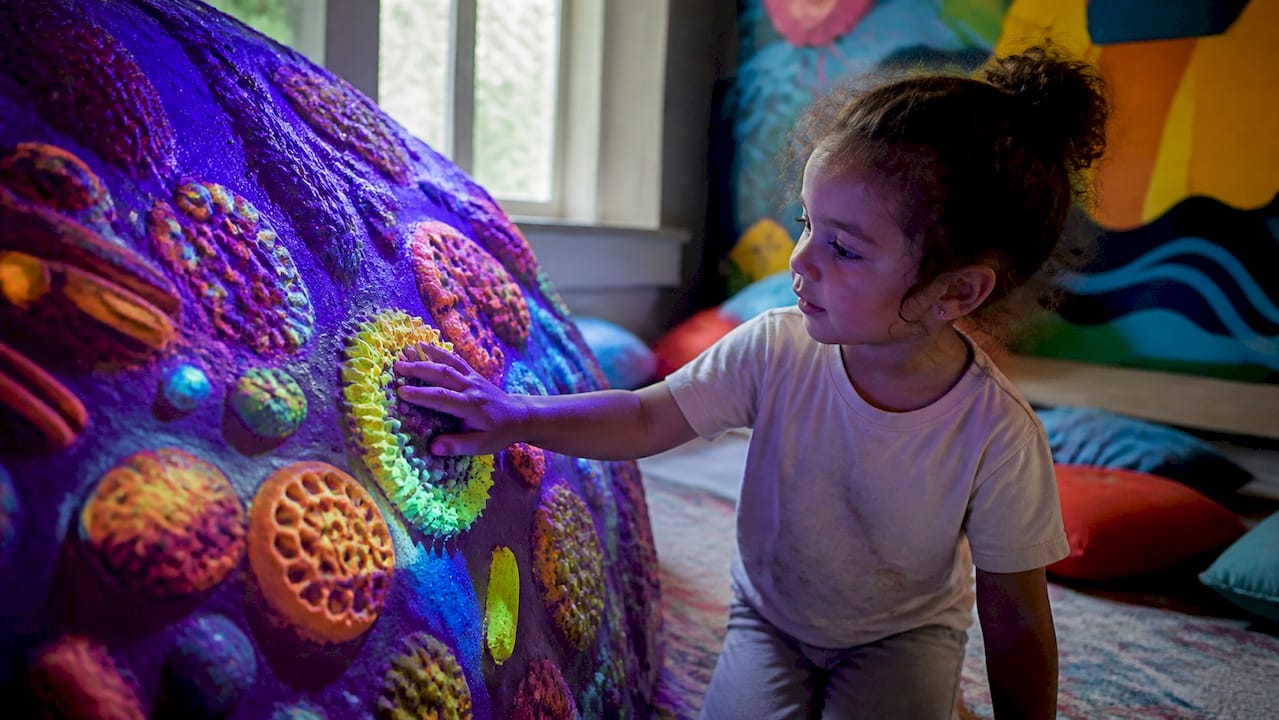
Sculptural elements that invite a safe, sanctioned touch (textured surfaces, raised patterns, a duck’s smooth curved back) give kids a sensory hook beyond looking. Participatory design approaches, where a piece changes slightly based on where a viewer stands or what lighting angle they catch, extend that engagement further, as explored in how participatory art functions in gallery settings.
Sound isn’t required, but proximity sensors that trigger a subtle lighting shift, or simply positioning a piece where natural foot traffic pauses (near an elevator bank, at a hallway turn) does more for engagement than most interactive tech add-ons. The best sensory design in a children’s area often costs nothing extra. It’s a matter of where the piece sits and how the light hits it as a child walks by, not a mechanical feature bolted onto the artwork afterward.
Cultural Inclusivity and Diversity in Children’s Art Commissions
A commission that only reflects one cultural frame of reference misses a huge share of the kids who will actually stand in front of it. This matters more in public-facing spaces like hotels, airports, and civic buildings than almost anywhere else in the art world.
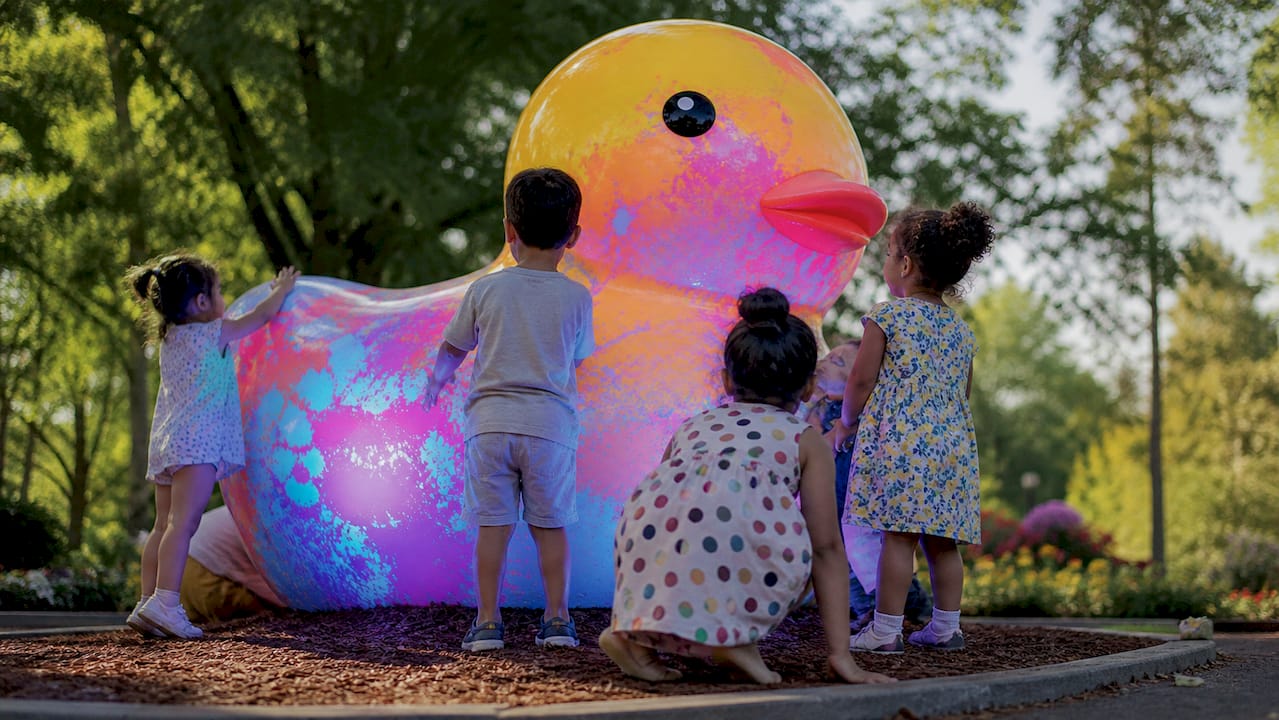
Practical steps make a real difference here. Brief the artist on the demographic makeup of the space’s actual visitors, not an assumed default audience. Ask whether figures, patterns, or color symbolism in the concept could read differently across cultural contexts, and flag anything that risks stereotype rather than genuine representation. Pop art’s graphic, symbol-driven style actually helps here: bold shapes and universal figures (like Flymiami’s duck motif) sidestep some of the representation pitfalls that more literal figurative work runs into, since the imagery reads as playful and abstract rather than tied to one specific identity.
For institutions and public art clients especially, it’s worth asking the artist directly how a concept was developed and whether any outside cultural review shaped the final imagery. That conversation costs nothing and heads off problems that are far more expensive to fix once a sculpture is bolted to a wall.
The Educational and Developmental Value of Art in Children’s Spaces
Original art in a space kids pass through daily does more than decorate. It gives them a recurring, low-stakes encounter with color theory, texture, and visual storytelling that’s genuinely different from a screen or a printed poster.
The UV reveal specifically teaches something subtle: that appearances change depending on how you look, literally and figuratively. That’s not a small idea to plant in a five-year-old’s head. Bold pop art imagery also supports early visual literacy, since strong color contrast and clear shapes are easier for developing eyes to parse and remember than muted, detailed compositions.
For institutions like children’s hospitals, museums, and libraries, a well-placed piece becomes a landmark kids use to orient themselves in a building, a genuinely useful function on top of the aesthetic one. It’s also a shared reference point for families and staff, something to point at and talk about, which matters more than it sounds like in a space where a child might otherwise feel anonymous or anxious. That’s a real, if hard-to-measure, developmental benefit worth weighing against the cost of a commission.
Should You Involve Child Psychologists or Educators in the Design Process?
For institutional clients especially, hospitals, schools, libraries, bringing an educator or child development specialist into the brief stage isn’t overkill. It’s a way to catch problems a purely aesthetic review would miss.
An educator can flag whether imagery matches developmental stages accurately, whether a concept risks overstimulation in a space where kids already arrive anxious (a pediatric clinic, for instance), or whether interactive elements are genuinely accessible to the age range using the space. This input works best early, at the concept stage, not as a final approval stamp after production has already started.
In practice, this collaboration doesn’t need to be formal or expensive. A single review session with a facility’s own child life specialist or education staff, reacting to concept sketches before the Week 5 to 6 material approval gate, catches most issues worth catching. It’s a cheap insurance policy against a commission that looks stunning in a portfolio but lands wrong with the kids actually using the space every day.
Studio Perspective: How FLY Miami Art Executes Commissions for Children’s Areas
Every commission Facundo Yebne takes on for a children’s or family-facing space follows the same arc: brief, concept, sample, production, install. The order matters more than people expect. Skipping the sample stage to save two weeks is the single most common way a project runs over budget.
The blacklight reveal itself does the heaviest lifting for engagement. A duck that looks calm in daylight and reveals an entirely different color story under UV gives visitors, kids especially, a reason to stop and look twice. That’s the whole point of designing in two layers instead of one. FLY Miami Art’s work has appeared in exhibitions that put this dual-mode approach in front of public audiences, proof that the format holds up outside a controlled gallery setting, in the noise and traffic of a real commercial space.
— Facundo
Ready to Commission Original UV Art for Your Space?
Most turnkey art advisors handle sourcing and installation logistics but hand you work from a general catalog. Flymiami gives you something different: an original, hand-built UV-reactive piece designed specifically for your site, your audience, and your lighting, with the artist directly involved from concept through install.
Commissioning starts with a short brief. Come with a rough budget range, a timeline, site photos, and a sense of who uses the space day to day, kids, families, hotel guests, museum visitors. From there, Facundo and the studio walk through concept sketches, material samples, and a proposed milestone schedule before any production begins, the same process detailed on the studio’s process page.
If you want a sense of scale and finish before committing to a full custom piece, browse the UV Glow Art collection or the sculpture collection for examples of what a finished blacklight reveal actually looks like. For hospitality and public-space projects specifically, the hotel and installation portfolio shows past commission work at scale.
Ready to move forward? Send your brief and site details to start a consultation and get a concept sample on the calendar.
Sources
- Corporate Art Commissions Guide 2025
- From Concept to Installation: How Custom Art Is Developed for Interior Design Projects