Art Commissioning for Designers: A 2026 Guide
Art commissioning for designers is the practice of hiring an artist to create original, project-specific artwork built around your exact creative and technical requirements. Unlike buying existing art, commissioning puts you in the driver’s seat from concept to delivery. The result is a piece that fits your project’s dimensions, palette, mood, and purpose. This guide covers what is art commissioning for designers, how the custom art commissioning process works, what belongs in your contract, and how to collaborate with artists so the final piece lands exactly where you need it.
What is art commissioning for designers?
Art commissioning, also called bespoke or custom artwork procurement, is a formal agreement between a designer and an artist to produce an original work. The artist creates something that does not yet exist, guided by a brief you write and a contract you both sign. This differs fundamentally from licensing a stock image or purchasing a gallery piece. With a commission, every decision, from scale and medium to color and concept, is made in dialogue with you.
The custom art commissioning process covers three core pillars: collaboration, documentation, and project management. Collaboration means the artist is a creative partner, not just a vendor executing instructions. Documentation means a written brief and a signed contract govern every decision. Project management means milestones, review points, and payment schedules keep the work on track. Designers who treat all three pillars equally produce the strongest outcomes.

Commissioning is especially relevant for designers working on hospitality interiors, brand environments, public installations, and editorial projects where off-the-shelf art simply does not fit. A hotel lobby, a corporate headquarters, or a pop-up event space each demands artwork that speaks to a specific context. Commissioned art delivers that specificity.
What steps are involved in the custom art commissioning process?
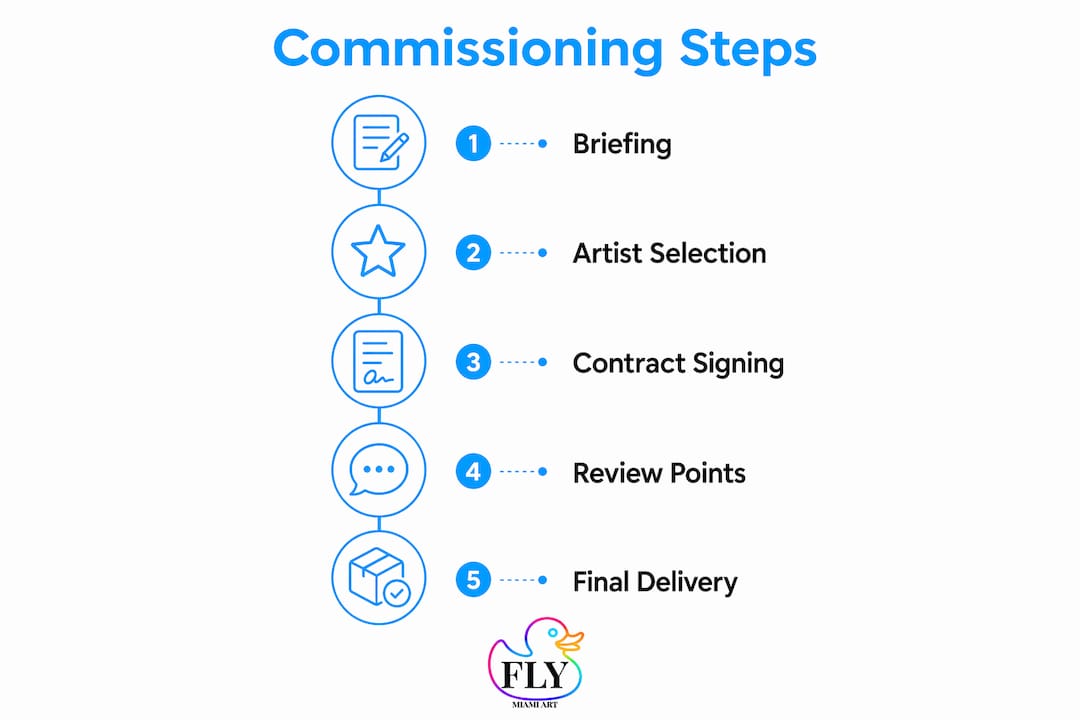
The commission process follows a clear sequence. Skipping steps is the fastest way to end up with a piece that misses the mark.
-
Define your project goals. Write down the purpose of the artwork, the space it will occupy, the audience who will see it, and the feeling it should create. Vague goals produce vague art.
-
Research and vet artists. Review portfolios for style consistency, medium experience, and scale capability. Ask for references from past commissioning clients, not just buyers of existing work.
-
Write a detailed commissioning brief. Professional commissioning briefs must be written and include project context, budget lines, milestones, and technical specifications. A brief that covers dimensions, materials, installation environment, and deadline leaves no room for misinterpretation.
-
Negotiate and sign a contract. Cover payment schedule, revision rounds, intellectual property, and delivery terms before any work begins. A signed agreement protects both parties.
-
Set milestone review points. Most successful commissions use 2–3 specific check-in points, such as sketch approval and a mid-production review, to reduce risk and rework costs. Build these into the contract timeline.
-
Review and approve final work. Conduct a final walkthrough against the brief before releasing the last payment. Confirm installation logistics, crating, and transport are covered.
-
Complete payment and take delivery. Release the final payment only after the piece meets agreed specifications. Confirm all digital files, certificates of authenticity, and care instructions are included.
Pro Tip: Send your brief to two or three candidate artists before choosing one. Their questions will reveal how well they understand your project and how easy they will be to work with.
What contractual and budgetary considerations matter most?
A contract is not a sign of distrust. Written contracts are a necessary professional tool for clarity and protection for both the designer and the artist.
Standard payment structure
Art commissions typically require a deposit of 30%–50% before production starts, with the balance due upon completion and prior to delivery. That deposit secures the artist’s time and covers initial material costs. Never begin a commission without a signed contract and a paid deposit.
Budget line items to plan for
- Artist fee: Industry norms place artist fees at roughly 20%–30% of total commission budgets for major institutional projects, though this varies by scale and artist profile.
- Materials and fabrication: Specialty materials, custom frames, and fabrication labor add up quickly. Get itemized quotes before signing.
- Installation: Site preparation, rigging, and mounting are often underestimated. Budget a separate line for this.
- Contingency: Reserve 10%–15% of the total budget for unexpected costs such as material substitutions or shipping delays.
- Transportation and insurance: Fine art shipping requires specialized crating and transit insurance. Factor this in from the start.
Key contract clauses
Contracts must address ownership, copyright, reproduction rights, scope, revisions, installation, maintenance, and resale conditions. Each clause prevents a specific type of dispute. Pay particular attention to the intellectual property clause. Ownership of the physical artwork does not transfer copyright without explicit contract language. A designer who plans to photograph and publish the commissioned piece for a client’s marketing campaign needs a reproduction license written into the agreement.
Pro Tip: Negotiate IP and usage rights in the first meeting, not after the piece is finished. Artists are far more flexible before work begins than after they have invested weeks in a project.
For event and entertainment design projects, clear written briefs with detailed budget breakdowns and milestones follow the same professional standard used across creative industries.
How to collaborate effectively with artists during a commission?
Treating the artist as a creative collaborator, not a production resource, produces better work. Artists bring ideas you have not considered. The best commissions happen when designers set clear constraints and then give artists room to solve the creative problem within those constraints.
Effective collaboration during the commission process looks like this:
- Share context generously. Tell the artist who will experience the space, what the brand or project stands for, and what emotional response you want. Context fuels better creative decisions.
- Communicate the physical environment early. Including detailed environmental conditions such as UV exposure, humidity, wall load limits, and lighting type upfront prevents material failures and extends the artwork’s lifespan.
- Respond to sketches quickly. Delayed feedback stalls production and can push delivery past your deadline. Commit to a 48-hour response window for all review submissions.
- Give specific feedback. “I don’t love it” is not useful. “The blue reads too cool for this warm-toned space” gives the artist something to act on.
- Respect the creative process. Constant changes to the brief mid-production are expensive and demoralizing. Lock the brief before production starts.
Early feedback prevents costly changes at final stages. A revision requested at the sketch stage costs hours. The same revision requested after the piece is painted costs days and money.
Pro Tip: Schedule a site visit with the artist before production begins. Seeing the actual space changes how an artist approaches scale, color, and material choices in ways no photograph can replicate.
What practical tips help with installation and post-commission care?
Delivery is not the finish line. Installation and long-term care are where many designers lose value from an otherwise successful commission.
- Confirm site readiness before delivery. Walls must be structurally capable of supporting the artwork’s weight. Electrical or lighting requirements for illuminated pieces must be in place before the piece arrives.
- Coordinate installation with the artist or studio. Many artists require or strongly prefer to supervise installation. Build this into the project timeline and budget.
- Understand moral rights. In the United States, the Visual Artists Rights Act (VARA) gives artists certain rights over works of recognized stature, including protection against destruction or alteration. Know how VARA applies to your project before making any modifications.
- Document the artwork on arrival. Photograph every surface and note any transit damage before signing the delivery receipt. This protects you in insurance and warranty claims.
- Get a maintenance protocol in writing. Ask the artist for specific cleaning instructions, material sensitivities, and recommended inspection intervals. For UV-reactive or mixed-media works, maintenance requirements differ from standard paintings.
- Plan for relocation. If the artwork may move to a different space, discuss this with the artist at the contract stage. Some works require artist involvement in deinstallation and reinstallation.
For large-scale works, reviewing guidance on displaying large-scale art installations before finalizing your installation plan can prevent costly errors on site.
Key Takeaways
Art commissioning for designers succeeds when collaboration, documentation, and project management work together from the first brief to the final installation.
| Point | Details |
|---|---|
| Write a detailed brief | Specify dimensions, materials, environment, and deadline before approaching any artist. |
| Secure a deposit and contract | Require a 30%–50% deposit and a signed contract covering IP, revisions, and delivery terms. |
| Set milestone review points | Use 2–3 scheduled check-ins to catch problems early and avoid expensive late-stage revisions. |
| Clarify IP rights upfront | Physical ownership does not transfer copyright; negotiate reproduction rights before work begins. |
| Plan for installation and care | Budget for transport, installation, and a written maintenance protocol from the start. |
Why commissioning is really about relationships
Designers often approach commissioning as a procurement task. I understand why. There are budgets to hit, deadlines to meet, and clients to satisfy. But the commissions I have seen go wrong almost always failed at the relationship level, not the technical one.
The brief was clear. The contract was signed. But the designer treated the artist like a printer: input in, output out. The artist felt constrained and disengaged. The work came back technically correct and emotionally flat. The designer was frustrated. The client was underwhelmed.
The commissions that produce genuinely memorable work happen when the designer brings the artist into the problem, not just the solution. Share the client’s story. Explain what the space needs to feel like at 10 PM with a crowd in it. Tell the artist what has been tried before and why it did not work. That context is creative fuel.
Flexibility matters too. A brief is a starting point, not a cage. When an artist proposes something unexpected that still serves the project’s goals, the right move is curiosity, not rejection. Some of the strongest pieces I have seen came from an artist pushing back on a constraint the designer had assumed was fixed.
The designers who commission the best work are the ones who show up prepared and then stay open. Preparation without openness produces competent but forgettable art. Openness without preparation produces chaos. The combination is where the work gets interesting.
— Facundo
Flymiami’s approach to commissioned artwork for designers
Designers looking for a commissioning partner who understands both the creative and technical demands of a project will find Flymiami’s work worth exploring. Flymiami, led by award-winning artist Facundo Yebne, specializes in handcrafted pop art sculptures and paintings that incorporate UV-reactive materials, revealing hidden patterns and colors under blacklight.
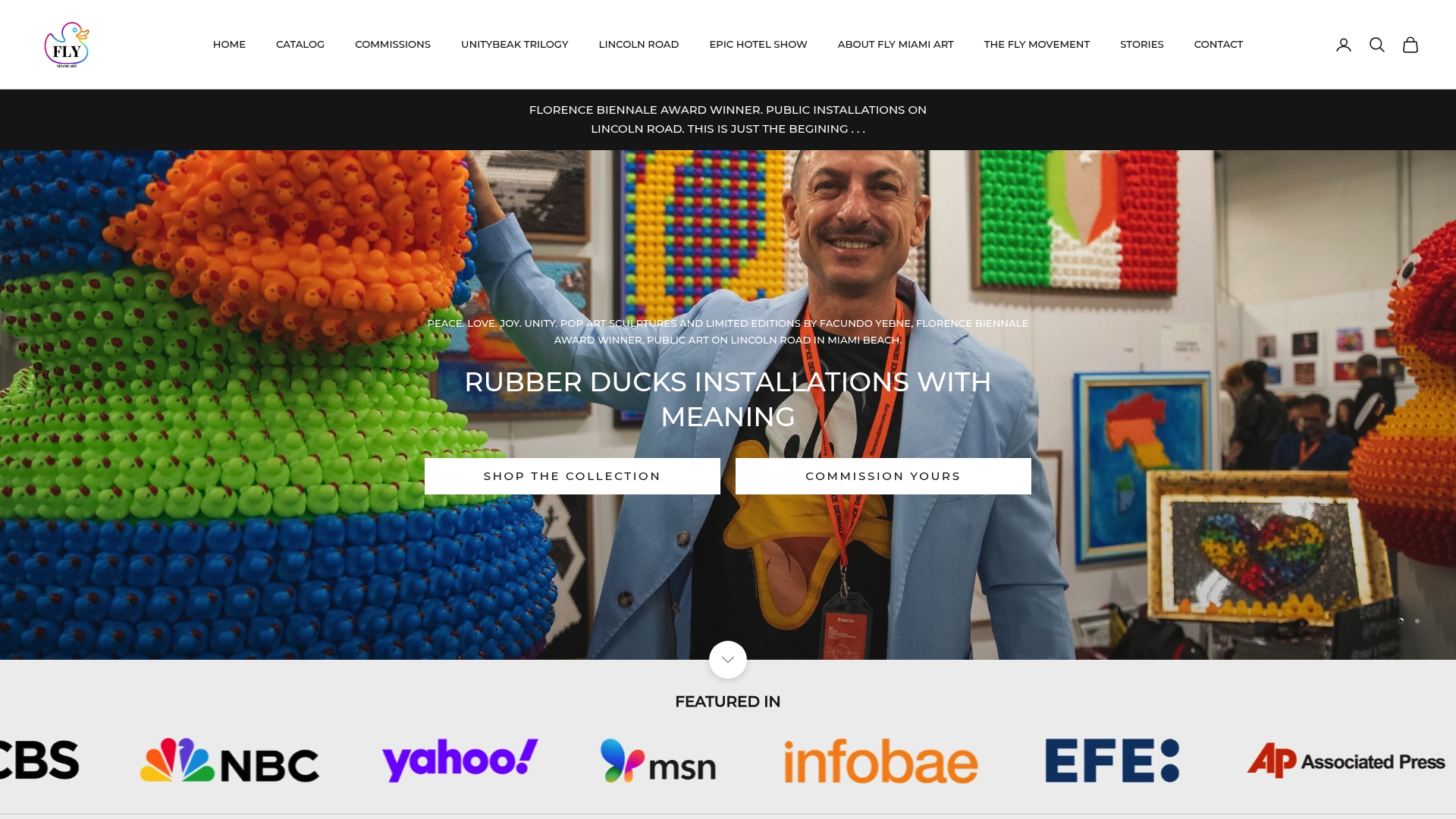
The studio works with designers on custom commissions for hospitality, commercial, and private environments. Flymiami’s wall art collection and sculpture offerings give designers a starting point for understanding scale, style, and material possibilities before entering a commission conversation. For designers interested in the full process, Flymiami’s commissioning process, timeline, and pricing page covers exactly what to expect from first contact to final delivery.
FAQ
What is art commissioning for designers?
Art commissioning for designers is the process of hiring an artist to create original artwork built around a specific project’s requirements, including dimensions, materials, environment, and creative brief. It differs from buying existing art because every element is created from scratch to fit the project.
How much deposit is standard for an art commission?
Deposits of 30%–50% are the industry standard before production begins, with the remaining balance due upon completion and prior to delivery.
Does buying commissioned art transfer copyright to the designer?
No. Physical ownership of a commissioned artwork does not transfer copyright. Reproduction and display rights must be explicitly negotiated and written into the contract.
How many review points should a commission include?
Most successful commissions include 2–3 scheduled review points, such as sketch approval and a mid-production check-in, to catch issues early and avoid expensive revisions at the final stage.
What should a commissioning brief include?
A commissioning brief must cover project context, intended audience, physical site conditions, dimensions, materials, budget, milestones, and delivery deadline. A vague brief is the leading cause of failed commissions.