
What Is Mixed Media Pop Sculpture? A Clear Guide
Mixed media pop sculpture is defined as three-dimensional artwork that combines consumer culture imagery with diverse unconventional materials and industrial finishes to blur the line between fine art and mass production. Emerging from the mid-1950s and gaining full momentum in the 1960s, this art form uses materials like fiberglass, resin, vinyl, fabric, and metal rather than traditional stone or bronze. The result is sculpture that feels simultaneously familiar and subversive. For art enthusiasts and students trying to understand this genre, the key insight is this: the materials are the message. Flymiami’s work with UV-reactive finishes and handcrafted pop forms sits squarely within this tradition.
What is mixed media pop sculpture, and how is it defined?
Mixed media pop sculpture combines consumer culture imagery with diverse materials and industrial finishes into three-dimensional artworks. The standard industry term for this practice is “assemblage sculpture” when it involves combining found or manufactured objects, though the broader category is simply “mixed media sculpture” with pop art as its conceptual framework. Both terms apply, and understanding pop sculpture means recognizing that neither the materials nor the imagery alone defines the work. The combination does.
What separates this genre from ordinary craft is intentionality. Mixed media art intentionally combines materials and techniques to create works where the combination produces effects beyond each component alone. A chrome-finished fiberglass hamburger is not just a hamburger. It is a comment on appetite, abundance, and the aesthetics of consumer culture. That layered meaning is what defines pop sculpture as a serious art form, not a novelty.
What materials and techniques define this art form?
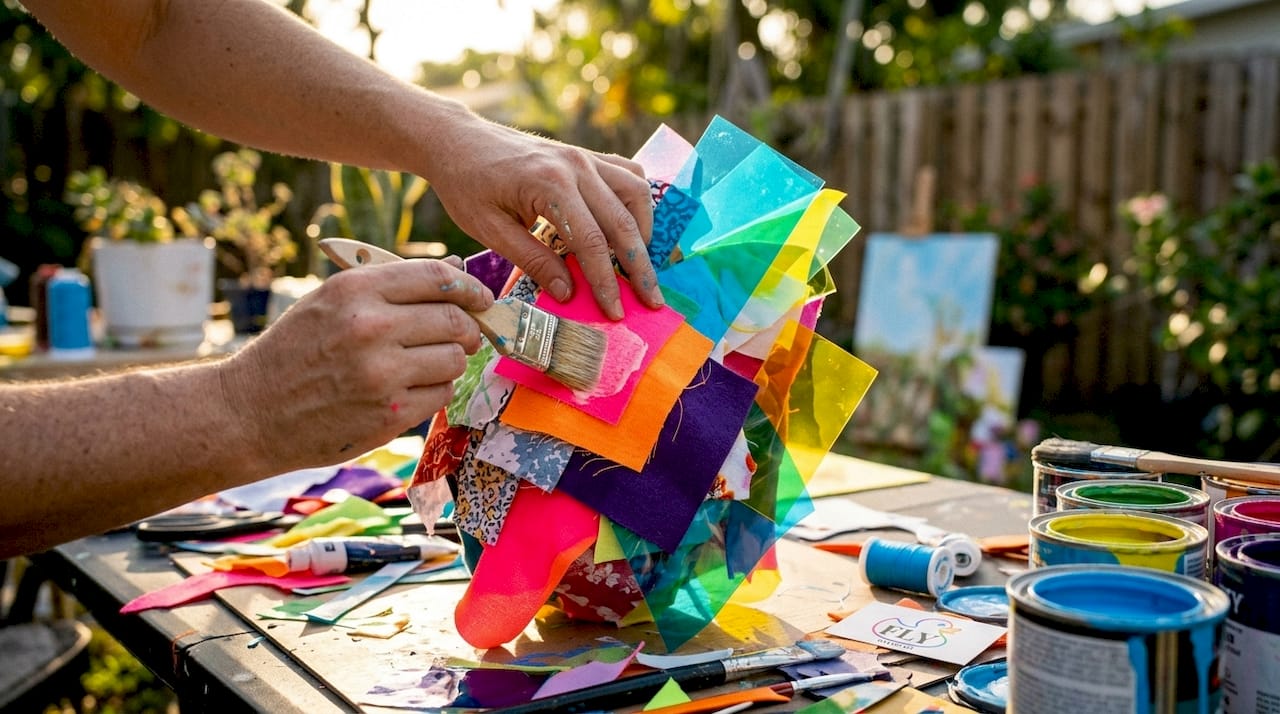
The material palette of mixed media pop sculpture is deliberately industrial. Artists reach for fiberglass, resin, vinyl, foam, metal sheeting, and fabric rather than marble or clay. These materials mimic the look and feel of manufactured consumer goods, which is exactly the point.
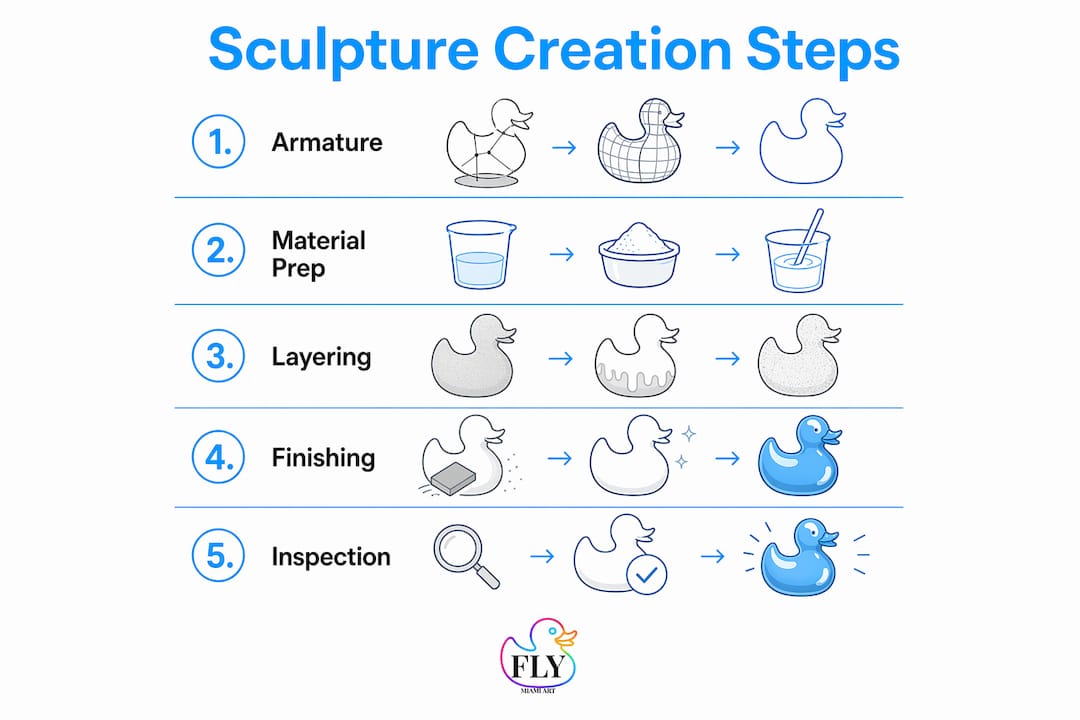
The construction process follows a clear sequence:
- Structural core first. Internal metal or wood armatures support the outer materials and prevent weight-related collapse. Combining heavy metal with lightweight foam requires a rigid skeleton underneath.
- Surface preparation second. Compatible primers and bonding agents are applied to each material before assembly. Skipping this step causes adhesion failure between metal, plastic, fabric, and paper surfaces.
- Decorative layers third. Fiberglass shells, vinyl skins, or resin coatings go over the armature to build the sculpture’s visible form.
- Industrial finishing last. Multi-layer automotive paint and UV-stable lacquer seal the surface, unify opposing textures, and protect the work from UV damage and moisture.
The finishing stage is where pop sculpture earns its visual identity. Automotive-grade clear coats merge textures into a single glossy surface that reads as manufactured rather than handmade. That deliberate emulation of consumer products is a core conceptual trademark of the genre.
Pro Tip: When learning how to create mixed media sculptures, always test your primer on a small section of each material before full application. Incompatible primers cause bubbling or peeling that ruins the final finish.
How did mixed media pop sculpture develop historically?
Pop sculpture did not appear from nowhere. It grew directly out of pop art’s rejection of Abstract Expressionism in the late 1950s. Abstract Expressionism celebrated individual emotion and gestural painting. Pop art pushed back by celebrating mass culture, advertising, and the imagery of everyday American life.
Three developments defined the genre’s early history:
-
Robert Rauschenberg’s Combines (1954–1964). Rauschenberg attached real objects, including tires, radios, and stuffed animals, directly to painted canvases. These works dissolved the boundary between painting and sculpture and established the principle that any material could carry artistic meaning.
-
Claes Oldenburg’s soft sculptures (1960s). Oldenburg used vinyl, foam, and plaster to transform everyday objects into monumental soft sculptures. A giant vinyl typewriter eraser or a drooping light switch created humor and cultural critique simultaneously. His work proved that scale manipulation was a powerful conceptual tool.
-
Oldenburg’s public installations. Scaling ordinary objects into monumental forms altered the viewer’s perception of value and meaning. A clothespin the size of a building is no longer a clothespin. It becomes a monument to the mundane, and that shift in perception is the entire argument.
The broader cultural shift mattered too. Pop sculpture challenged traditional high art elitism by validating the imagery of daily life and rejecting precious materials. Marble and bronze carried centuries of cultural authority. Vinyl and foam carried none. That was the point. The rejection of precious materials was itself a political act, one that broadened who could relate to fine art and what subjects deserved artistic attention.
You can trace a direct line from Rauschenberg’s Combines to today’s contemporary pop art sculptures, which continue to use industrial materials and consumer iconography as their primary vocabulary.
What are the defining visual and conceptual characteristics?
Mixed media pop sculpture has a recognizable visual signature. Glossy, high-contrast surfaces dominate. Scale is deliberately distorted. Everyday objects appear in unexpected sizes, colors, or contexts. The overall effect is playful but pointed.
The conceptual characteristics run deeper than the surface. Pop sculpture serves as cultural critique by elevating everyday consumer imagery into fine art, opposing the traditional elitism associated with classical sculpture materials. When you see a giant rubber duck finished in automotive lacquer displayed in a gallery, you are looking at a question: why does a marble bust deserve reverence but a rubber duck does not?
Texture contrast is a deliberate tool, not an accident. Contrasting textures and repeated colors or shapes create visual energy and unity simultaneously. A sculpture might combine rough raw metal with a mirror-smooth resin surface. The friction between those textures generates tension that keeps the viewer’s eye moving.
Pro Tip: When analyzing examples of pop art sculpture, look for the unifying element. Every successful piece has one repeated color, shape, or finish that ties the contrasting materials together. If you cannot find it, the work risks feeling chaotic rather than dynamic.
The industrial finish distinguishes pop sculpture from ordinary craft by emulating consumer products through automotive or commercial manufacturing techniques. That finish signals intent. It tells the viewer that the artist is not trying to hide the influence of mass production. The work celebrates it, questions it, and reframes it all at once. Understanding why pop art remains culturally relevant today starts with recognizing that this tension between fine art and commercial aesthetics has never been fully resolved.
How does mixed media pop sculpture engage audiences and shape public spaces?
Mixed media pop sculpture works in two distinct contexts: intimate gallery settings and large-scale public installations. Each context demands different material and scale decisions, but the core strategy is the same. Make the familiar strange enough to stop people in their tracks.
In gallery settings, the sculptures reward close inspection. The layered materials, the seams between textures, and the industrial finishes reveal themselves slowly. Collectors value this intimacy. What makes pop sculpture valuable is partly this dual experience: striking from a distance, detailed up close.
In public spaces, scale becomes the primary tool. Monumental pop sculptures function as landmarks. They give neighborhoods a visual identity and create gathering points that purely functional architecture cannot. Sculpture’s role in urban placemaking is well established, and mixed media pop works are particularly effective because their consumer imagery is immediately legible to a broad audience.
Several qualities make these sculptures effective in public contexts:
- Immediate legibility. Consumer iconography is universally recognized. A giant ice cream cone or a chrome balloon dog needs no art history education to register.
- Material durability. UV-stable lacquers and fiberglass shells withstand outdoor exposure far better than traditional sculpture materials.
- Emotional accessibility. Humor and scale distortion invite engagement rather than reverence. People photograph themselves next to pop sculptures in ways they rarely do with classical works.
- Cultural commentary. The works carry meaning beyond decoration, giving communities something to discuss and debate over time.
Flymiami’s approach extends this tradition by incorporating UV-reactive materials that reveal hidden patterns under blacklight. That added dimension transforms the viewing experience entirely, turning a static object into something that changes with its environment.
Key Takeaways
Mixed media pop sculpture is the most culturally accessible form of contemporary fine art because it uses materials and imagery that audiences already know, then reframes them through scale, finish, and deliberate contrast.
| Point | Details |
|---|---|
| Core definition | Mixed media pop sculpture combines consumer imagery with industrial materials and finishes into three-dimensional artworks. |
| Material sequence | Build armature first, apply bonding agents second, add decorative layers third, and seal with automotive-grade finish last. |
| Historical roots | The genre emerged from pop art’s rejection of Abstract Expressionism in the late 1950s, led by Rauschenberg and Oldenburg. |
| Visual strategy | Contrasting textures create energy, but a repeating color or finish must unify the work or it reads as chaotic. |
| Cultural function | Pop sculpture challenges fine art elitism by treating consumer objects as worthy subjects for serious artistic attention. |
Why material choices define the entire argument
The question I get most often is whether mixed media pop sculpture is “real” fine art or just decoration with a clever concept attached. After years of working with these materials and techniques, my answer is firm: the material choice is the argument. You cannot separate the two.
When I work with UV-reactive resins alongside traditional fiberglass and automotive lacquer, I am not adding a gimmick. I am extending the pop art tradition of using materials that carry cultural weight. UV light is everywhere in entertainment spaces, nightclubs, and experiential venues. Bringing that material into fine art sculpture asks the same question Oldenburg asked with vinyl: why does this material belong here, and what does it mean that it does?
The artists I respect most in this space treat every material decision as a conceptual decision. The mistake I see most often from emerging artists is choosing materials for visual effect alone, without asking what the material means. A chrome finish on a consumer object says something specific about desire and mass production. A raw, unfinished surface says something different about authenticity and labor. Both are valid. Neither is neutral.
The future of this art form lies in materials that respond to their environment, not just materials that look good under gallery lighting. UV-reactive surfaces, thermochromic pigments, and light-interactive finishes are the next chapter in the conversation that Rauschenberg started in 1954. The question is always the same: what does this material mean, and what happens when you put it somewhere it does not belong?
— Facundo
Flymiami’s collection of mixed media pop sculptures
Flymiami creates handcrafted pop sculptures that carry the full weight of this tradition forward. Each piece in the sculpture collection uses the same industrial finishing techniques described throughout this article, including UV-stable lacquers, fiberglass construction, and deliberate texture contrasts, combined with UV-reactive materials that reveal hidden imagery under blacklight.
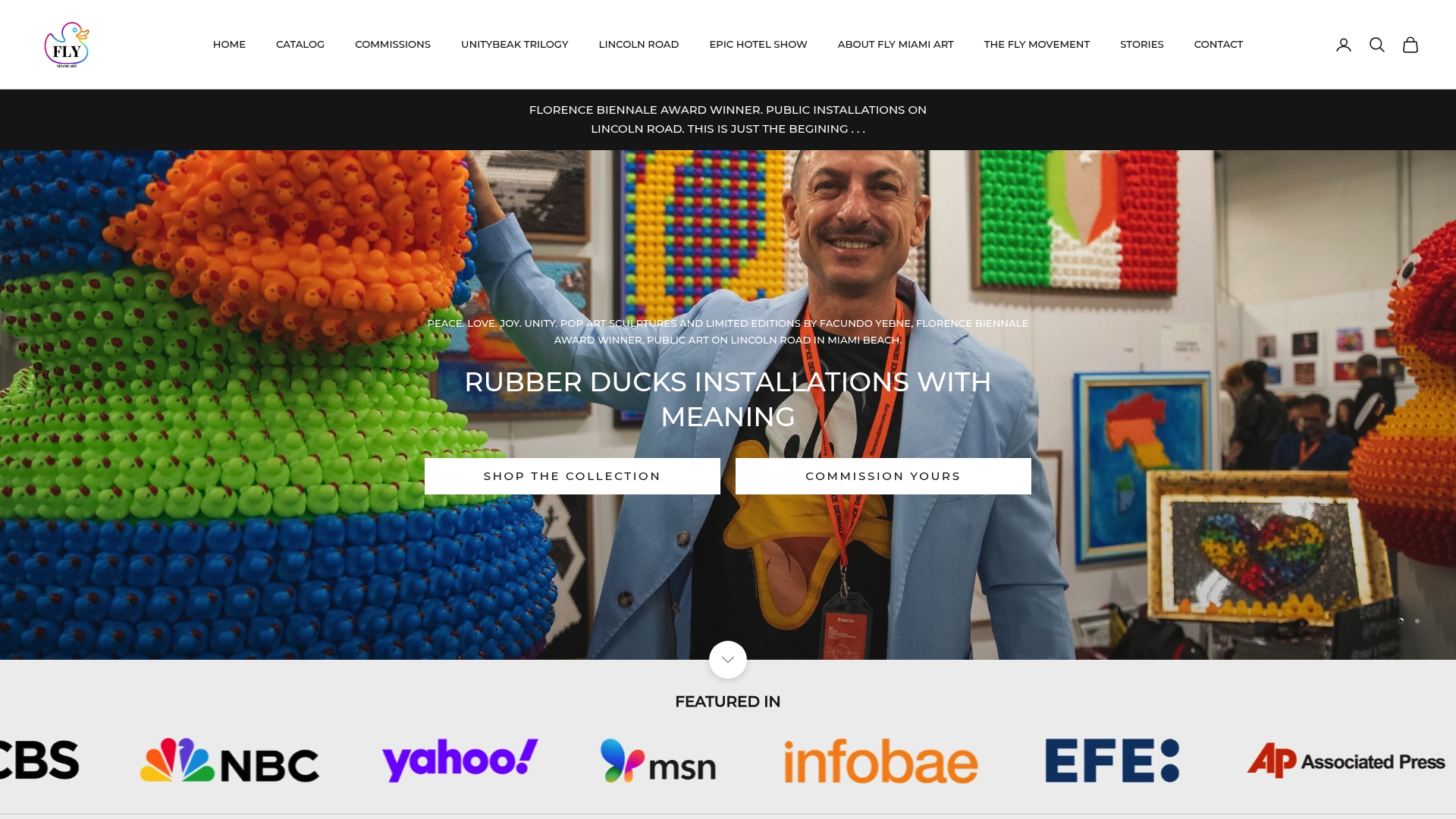
Award-winning artist Facundo Yebne leads every piece from concept through fabrication, applying the same material intentionality that defines the genre’s best work. The pop culture series draws directly on consumer iconography and transforms it through scale, finish, and UV-reactive layering into works that function in both intimate collector spaces and larger public settings. If you are building a collection or looking for a statement piece that rewards repeated viewing, the full range is available at Flymiami.
FAQ
What is mixed media pop sculpture in simple terms?
Mixed media pop sculpture is three-dimensional artwork that combines consumer culture imagery with materials like fiberglass, resin, vinyl, and metal, finished with industrial coatings to mimic the look of manufactured products. The combination of materials and imagery is what gives the work its meaning.
What defines pop sculpture as different from traditional sculpture?
Pop sculpture rejects precious materials like marble and bronze in favor of industrial and commercial materials, and it draws subject matter from everyday consumer culture rather than classical or religious themes. This rejection of traditional materials is itself a conceptual statement about art and accessibility.
Who are the key pioneers of mixed media pop sculpture?
Claes Oldenburg and Robert Rauschenberg are the central pioneers. Oldenburg created monumental soft sculptures from vinyl and foam, while Rauschenberg’s Combines attached real objects to painted canvases, dissolving the boundary between painting and sculpture.
How do artists create mixed media sculptures that hold together visually?
Artists build a structural armature first, apply compatible primers to each material, layer decorative elements, and seal the entire surface with automotive-grade lacquer. The unifying finish is what prevents the combination of materials from looking chaotic.
What makes mixed media pop sculpture valuable to collectors?
Its value comes from the dual experience it offers: visually striking from a distance and materially detailed up close. The cultural commentary embedded in consumer imagery also gives these works lasting relevance beyond their immediate visual appeal.