Venue Buyers: Studio Commissioning Checklist for Glow Art at Events
For event buyers and venue decision-makers, there are two reliable paths to professional glow art for events: to commission a UV-reactive artist for site-specific impact, or acquire limited-edition UV pieces when your lead time is short. Commissioning suits permanent installations and spaces with unusual dimensions. Ready pieces suit galas, product launches, and pop-ups on a fixed date. Either way, your lighting plan needs to be locked before the art arrives, not after.
TL;DR:
- Commissioning UV-glow art is ideal for permanent or semi-permanent installations in spaces with unusual dimensions and a timeline of at least 12 to 20 weeks.
- Ready-made UV pieces are better suited for short-notice events with fixed dates, predictable budgets, and when previewing completed work is important.
- Detailed site specifications, lighting control needs, material durability, and procurement details are essential in briefing artists to prevent project delays and overspending.
- Budget planning should include artist fees, materials, transport, installation, insurance, and a contingency of 10 to 15 percent, with early permits if required.
- Effective fixture placement for reliable glow involves 8 to 15 UV lights spaced about 6 feet apart, using dimming and timed schedules to optimize exposure while minimizing energy use.
Table of Contents
- Buyer Overview: When to Commission and When to Buy Stock UV Pieces
- How to Brief a UV Glow Art Commission: A Practical Checklist
- Project Timeline and Budget Benchmarks for Glow Art Commissions
- Lighting, Fixture Selection, and Installation Best Practices for Reliable Blacklight Displays
- Maintenance, Contracts, and Handover: What to Require in Writing
- Audience Engagement Strategies With Glow Art at Events
- A Studio Perspective on Building Glow Art That Actually Works in a Room
- Bring Glow Art Into Your Venue Through FLY Miami Art
- Sources
- FAQ
Buyer Overview: When to Commission and When to Buy Stock UV Pieces
The choice usually comes down to four factors: how much time you have, how specific your space is, your budget ceiling, and how long you want the piece to stay up. A hotel lobby getting a permanent centerpiece has different needs than a corporate gala running one night in a rented ballroom.
Commissioning makes sense when:
- The installation is permanent or semi-permanent (lobbies, restaurants, gallery walls)
- Your space has unusual dimensions, mounting constraints, or a specific brand story to tell
- You have at least 12 to 20 weeks before the reveal date
- You want a piece nobody else can hang in their space
Buying a limited-edition or ready UV piece makes sense when your event date is fixed and close, your budget needs to be predictable upfront, or you want proven work you can preview in full before committing. Direct appointment, meaning you invite a specific artist rather than running an open call, tends to work better for UV-reactive commissions specifically. It matches the project to someone who already understands how fluorescent pigments and blacklight interact, which shortens the learning curve and cuts down on revision rounds.
How to Brief a UV Glow Art Commission: A Practical Checklist
A vague brief is the single biggest reason commissions run over budget or miss the mark. Institutional commissioning guides consistently point to written briefs with site constraints, timeline, and budget spelled out as the difference between a smooth project and a stalled one. The artist needs boundaries to work inside, not a blank page.
Before you send an RFP, gather these four categories of information:
- Site specs. Exact dimensions, mounting points, ceiling load capacity, foot traffic patterns, fire code restrictions, and ADA clearance requirements.
- Lighting and control. Blackout capability in the space, how intense you want the glow effect, whether you need DMX or timer controls, and how the piece integrates with existing venue lighting.
- Materials and durability. Whether the piece lives indoors or outdoors, how it gets cleaned, and what UV exposure limits the materials can tolerate over time.
- Procurement details. Your budget range, who signs off at each milestone, whether the artist needs a site visit during production, and what insurance coverage the project requires.
Pro Tip: Specify your physical constraints in detail, but leave the creative direction open. Artists who commission successfully report that briefs which lock down the room while giving latitude on composition produce far stronger proposals than briefs that try to art-direct the piece itself.
Project Timeline and Budget Benchmarks for Glow Art Commissions
A professional commission typically runs about 20 weeks from first conversation to final installation. That sounds long until you break it down: concept presentation lands around weeks 3 to 4, design approval around weeks 5 to 6, production spans weeks 7 through 18, and installation with handover closes out weeks 19 and 20.
Your budget should account for more than the artist’s fee. Build line items for:
- Artist fee and design development
- Fabrication materials, including UV-reactive pigments and substrates
- Transport and crating
- Installation labor and any rigging equipment
- Insurance during transit and display
- A contingency line, typically 10 to 15 percent of total budget
Larger institutional projects sometimes add a finalist stipend during the proposal stage, a paid site survey, or a structural engineer’s sign-off before installation. Budget for permits early if the piece involves ceiling mounts or outdoor exposure. These approvals can add weeks if they’re not requested up front.
Lighting, Fixture Selection, and Installation Best Practices for Reliable Blacklight Displays
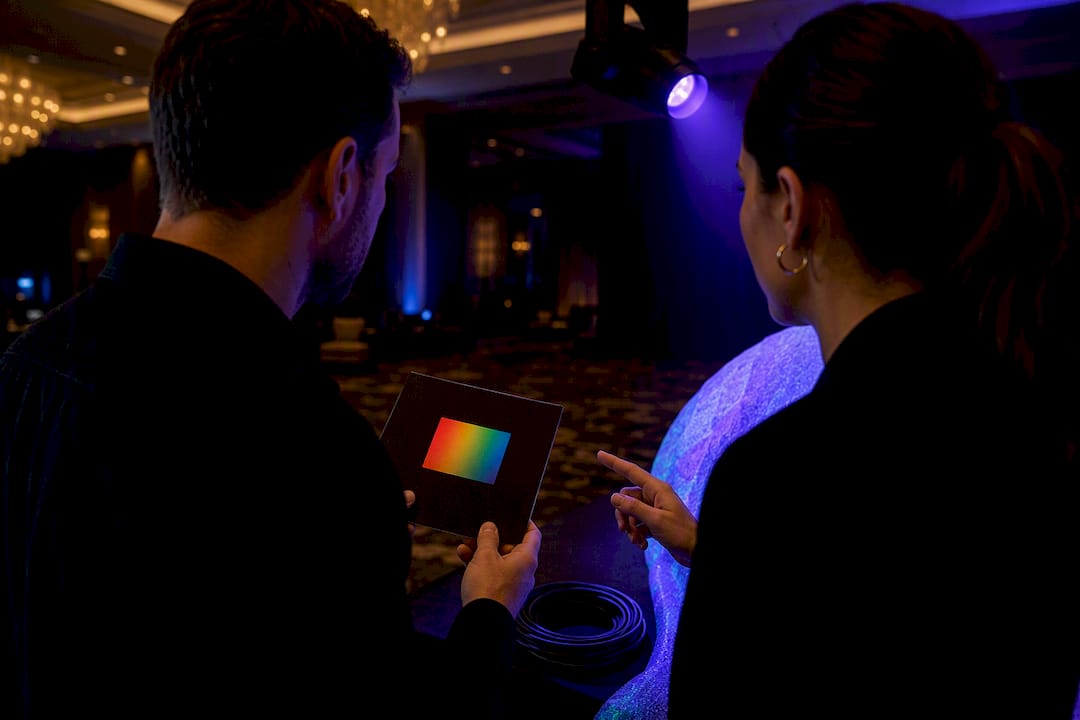
Getting the glow right depends almost entirely on fixture choice and placement. UVA lighting, not UVC or UVB, is what activates fluorescent pigments safely, and wavelength selection matters as much as fixture count. Commercial LED blacklights run cooler than older fluorescent tubes and hold up better over long event runs, which is why most venues have switched to them.
For fixture density, a mid-size room generally needs roughly 8 to 15 standard UV fixtures spaced about 6 feet apart for even coverage. Large halls need premium fixtures with corner placement to avoid dead zones where the glow fades unevenly.
Treat UV exposure like a budget you’re spending down, not an unlimited resource:
- Use dimming and timed schedules rather than running fixtures at full output continuously
- Install motion sensors in lower-traffic areas to cut cumulative exposure
- Test pigment response periodically rather than assuming performance stays constant
- Layer UV blacklights with warm white or colored LEDs so curators can reveal or hide fluorescent elements on cue
Coordinate power and DMX control needs with venue technical staff early. Blackout capability, or the lack of it, changes what glow intensity is even achievable in a given room.
Maintenance, Contracts, and Handover: What to Require in Writing
The contract is where most commissioning disputes get avoided or created. Before production starts, get the following in writing:
- Ownership and licensing scope. Who owns the physical piece, and what rights does the artist retain over reproduction and image use.
- Display and reproduction rights. Where the piece can be shown, for how long, and whether the commissioner can relocate it.
- Maintenance responsibilities. Who handles cleaning, pigment testing, and fixture replacement over the piece’s life.
- De-installation protocol. Who pays for removal, storage, or return shipping if the display ends.
- Insurance and payment schedule. Coverage during fabrication, transit, and display, tied to payment milestones.
Contracts that skip these clauses invite disputes later, particularly around who pays for de-installation or unexpected maintenance years down the line.
For ongoing care, schedule an annual check on pigment condition and fixture output, and consider UV dataloggers for high-value or sensitive pieces to track cumulative exposure over time.
Pro Tip: Ask the artist for documentation, meaning production photos, material specs, and care instructions, as part of the handover package. It protects you if the piece needs repair years later and the original studio isn’t reachable.
Audience Engagement Strategies With Glow Art at Events
A glow piece works hardest when guests interact with it, not just photograph it from across the room. Position pieces near natural gathering points, bar areas, entryways, photo backdrops, so the glow effect becomes part of how people move through the space rather than a static display they walk past.
Timed reveals create some of the strongest engagement. Running the piece under ambient light for part of the evening, then dropping to black out with UV activation at a scheduled moment, turns a wall piece into a live event. This works especially well for product launches and galas where you want a controlled “wow” moment rather than a piece that’s fully visible the second doors open.
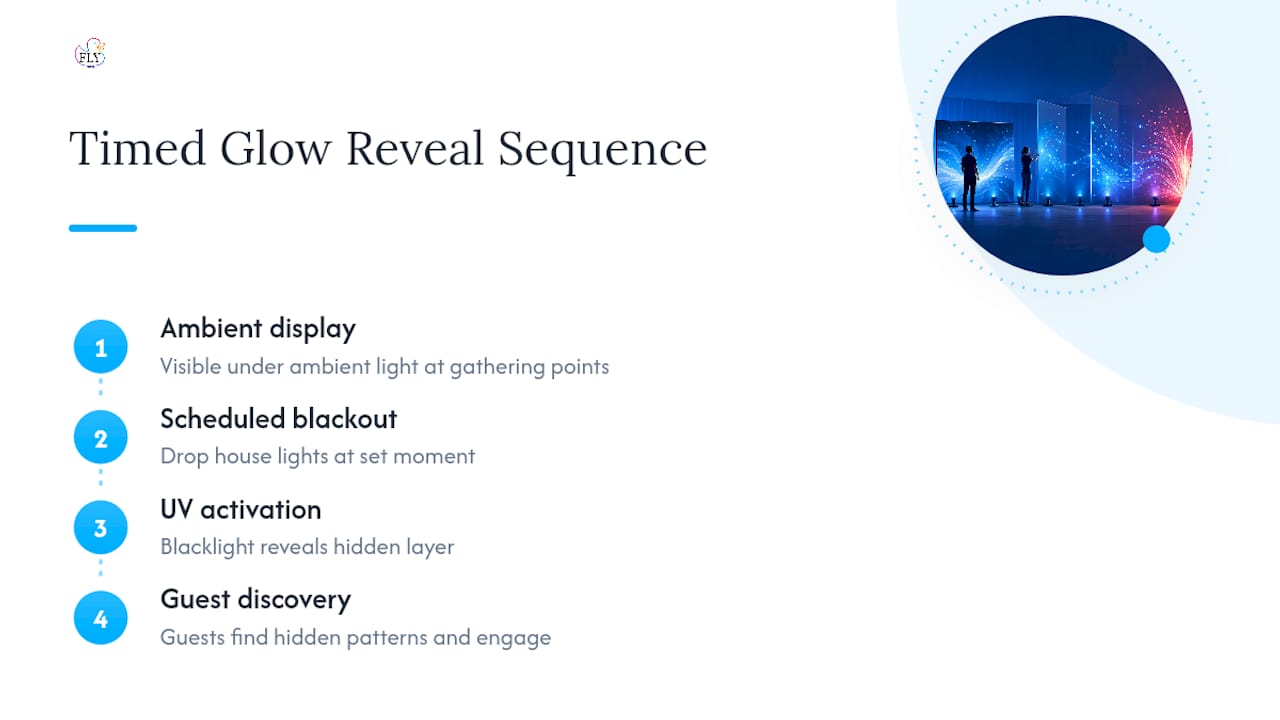
Interactive glow art, meaning pieces that respond to proximity or include hidden patterns only visible under blacklight, tends to generate more organic social sharing than static installations. Guests actively hunt for the hidden layer, which extends the time they spend engaging with the work. Interactive experience design in attraction settings follows a similar principle: the discovery moment is what people remember and talk about afterward.
Consider pairing the glow reveal with a brief artist statement or short video about the piece’s meaning, displayed nearby or shared digitally. Guests who understand the story behind a rubber duck pop-art sculpture or a hidden pattern engage longer than those who see it purely as decoration.
A Studio Perspective on Building Glow Art That Actually Works in a Room
Most commissioning problems trace back to skipping technical scoping in favor of jumping straight to concept sketches. Early conversations about ceiling height, blackout capability, and mounting constraints shape what the piece can actually be, and skipping that step forces revisions later that compromise the original idea.
UV-reactive sculpture also demands different choices than standard media. Finish, substrate, and sightlines all change once you’re designing for a piece that reads one way under ambient light and another entirely under blacklight. That’s part of what shapes the studio’s production process, from material testing through final install.
— Facundo
Bring Glow Art Into Your Venue Through FLY Miami Art
If your event needs impact fast, FLY Miami Art’s UV glow art collection gives you finished, ready-to-ship pieces you can preview in full before you commit, no waiting through a 20-week production cycle. If your space calls for something built to its exact walls and lighting, a direct commission with a UV-reactive artist can get you a piece designed around your room instead of a piece you’re designing your room around.
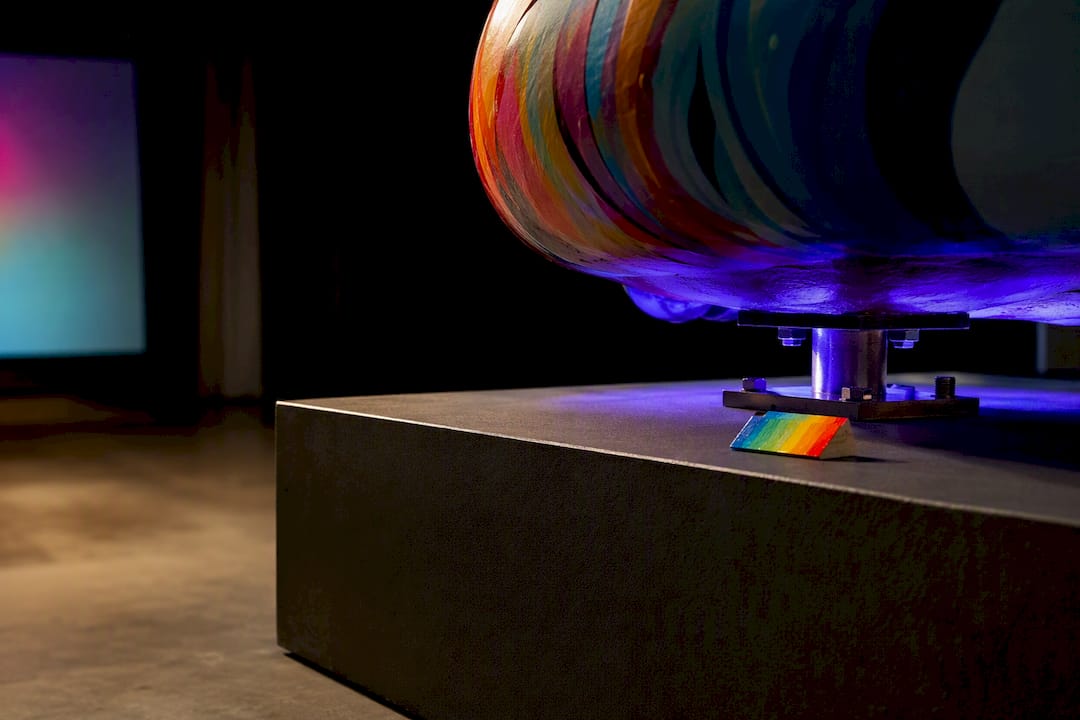
Buyers looking for permanent lobby or gallery statements often start with the sculpture collection or browse wall art for pieces sized to specific walls. The rubber duck pop-art series, including Nocturnal Ascension and Glowing with Pride, shows how hidden UV patterns transform a single piece into two distinct visual experiences depending on the lighting cue.
To start a commission conversation, submit your site details and timeline through the studio, or request a walkthrough of the production process before your first proposal call.
Sources
For deeper technical grounding, see the corporate art commissioning guide on milestone planning and the UV lighting best-practices resource on exposure management.
- Corporate Art Commissions Guide 2025
- Artworld
- Ultraviolet fluorescent light: best practices for implementing in lighting design - PacLights
FAQ
How Long Does a UV Glow Art Commission Take?
A typical commission runs about 20 weeks from initial brief to final installation, with production alone taking roughly 12 weeks.
Is Commissioning or Buying Ready UV Art Better for a One-Night Event?
Buying a limited-edition piece, such as those in FLY Miami Art’s UV glow collection, is better for a fixed event date since you can preview the finished work before committing.
What Lighting Do I Need for a Blacklight Art Installation?
You need UVA fixtures matched to the piece’s pigments, with commercial LED blacklights preferred for long event runs due to lower heat output and DMX compatibility.
What Should Be in a UV Art Commission Contract?
The contract should cover ownership, display and reproduction rights, maintenance responsibilities, de-installation protocol, insurance, and a milestone-based payment schedule.
How Many UV Fixtures Do I Need for a Mid-Size Room?
Roughly 8 to 15 standard UV fixtures spaced about 6 feet apart typically provide even glow coverage in a mid-size room, with large spaces requiring premium fixtures and corner placement.