

Event Planners: Pride Sculpture Ideas That Glow for $5,000–$50,000
The best Pride sculpture idea depends on scale and interaction level first, symbolism second. Pick your footprint (tabletop, parade prop, or public installation), decide whether it stays static or invites touch, then choose materials that fit your timeline and budget. Below are concrete concepts across every scale, with build notes and display guidance you can act on right away.
TL;DR:
- Large public sculptures like In Plain Sight weigh over 250 pounds and use color blocking from multiple Pride flags to maximize civic and educational impact.
- Material choices vary from plywood for stage pieces to fiberglass for outdoor installations, with each suited for specific durability, budget, and fabrication time considerations.
- Incorporating multiple flags and reclaimed symbols with explanatory signage enhances the sculpture’s inclusivity and historical significance.
- Urban-sized pieces over four feet tall require proper anchoring and permits, while smaller sculptures can focus more on detail and accessibility.
- UV-reactive finishes create dual-day/night experiences, revealing hidden color layers under blacklight, especially effective when combined with community consultation.
Table of Contents
- Pride Sculpture Ideas by Scale and Purpose
- Materials and Fabrication Methods That Fit Your Timeline
- Choosing Flags, Colors, and Symbols With Care
- Size, Safety, Permits, and Accessibility Basics
- Interactive Sculpture Concepts That Build Community Engagement
- Commissioning Steps and Realistic Budget Ranges
- How FLY Miami Art Approaches UV-Reactive Pride Sculptures
- Why Community Consultation Should Come Before the Sketch
- Ready to Commission a Pride Sculpture That Glows After Dark
- Sources
Pride Sculpture Ideas by Scale and Purpose
Every strong Pride sculpture idea starts with a purpose question: is this decorating a table, anchoring a stage, or standing in a public plaza for a month? Scale dictates material, and material dictates budget. Here’s a working catalog organized the way event planners actually think about it.
Tabletop and shelf pieces work for gala centerpieces, retail window displays, or gifts. A resin rainbow arch about 12 to 18 inches tall, cast in layered acrylic, catches light beautifully on a mantel or reception desk. A small UV-reactive duck or figurine, the kind FLY Miami Art builds for collectors, doubles as a conversation piece by day and a glowing feature under blacklight at night.
Parade and float props need to survive movement, wind, and hours outdoors. Kinetic flag mobiles, made from lightweight aluminum rod and ripstop nylon panels in progress flag colors, spin and catch breeze without weighing down a float. Inflatable rainbow columns, the same tech used in car dealership balloons, pack flat for transport and inflate on site in minutes.
Stage and event centerpieces get more design latitude since they’re usually installed for a single night. A modular slice sculpture, built from stacked acrylic or plywood discs cut at angles, casts rainbow shadows across a dance floor when lit from below. Photo-op frames shaped like a lambda symbol or oversized progress flag, built from PVC pipe and vinyl backing, generate social content all night and pack into a car trunk afterward.
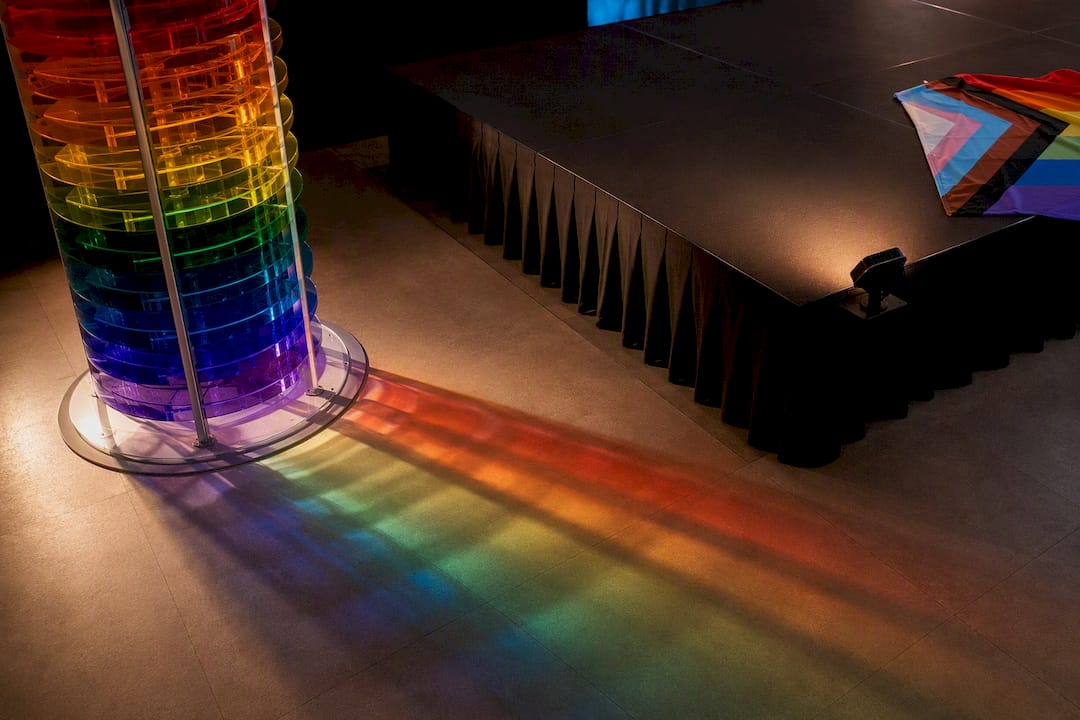
Temporary public installations bridge art and civic statement. Consider a community-mosaic wall assembled from painted tiles contributed by local residents, mounted on a plywood or metal frame that can travel between venues. An illuminated totem, a vertical column of stacked translucent panels lit internally with RGB LEDs, reads as a beacon from blocks away and works well flanking a stage entrance or park pathway.
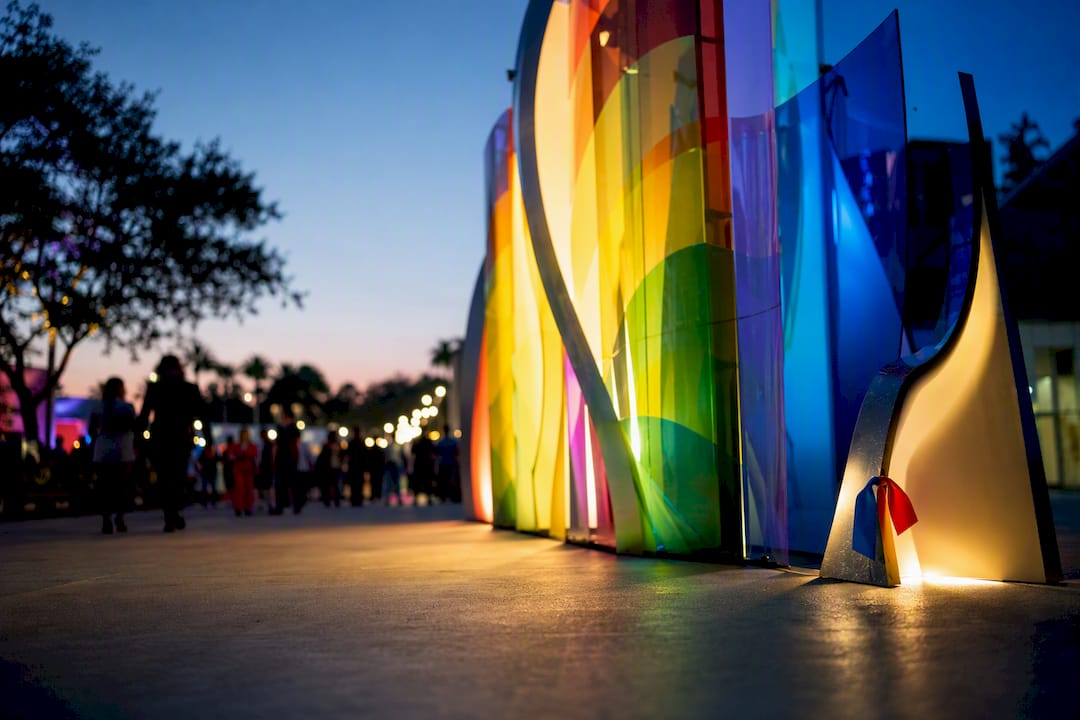
Permanent monuments demand the most planning but carry the longest civic impact. Philadelphia’s In Plain Sight sculpture at Cherry Street Pier stands 10 feet tall and weighs more than 250 pounds, using color blocking pulled from multiple Pride flags rather than a single rainbow gradient. That single design choice, drawing colors from transgender, intersex, asexual, and progress flags together, is worth studying before you sketch anything permanent.
A few more concepts worth adding to your shortlist:
- Floating water sculptures: buoyant foam-core rainbow shapes anchored in a fountain or pond, ideal for waterfront festivals.
- Flag-inspired cutout panels: laser-cut steel or acrylic silhouettes (raised fists, hearts, animal motifs) backlit for nighttime visibility.
- Figurative or animal motifs: duck, phoenix, or human-form pieces that soften a purely geometric Pride display and appeal to family audiences.
- Scratch-off monolith: a black-coated column that reveals rainbow layers as visitors interact with it (more on this build below).
Pro Tip: Match your sculpture’s “reveal distance” to its venue. A tabletop piece needs detail visible from three feet; a public monument needs a silhouette readable from thirty yards away. Design the outline first, then add detail second.
Materials and Fabrication Methods That Fit Your Timeline
Material choice usually comes down to three questions: how long does this need to last, how far does it need to travel, and who’s building it? Plywood and dimensional lumber are the cheapest route for parade props and stage pieces, running roughly $50 to $300 in materials depending on size, but they need weatherproofing for anything outdoors longer than a weekend.
Metal fabrication (steel or aluminum) costs more upfront, usually requiring a local welder or sign shop, but it’s the only realistic choice for a permanent public piece that has to survive wind load and vandalism. CNC-cut acrylic gives you clean, bright color panels and works well for illuminated or backlit pieces, though it scratches easily and can craze in direct sun over multiple seasons.
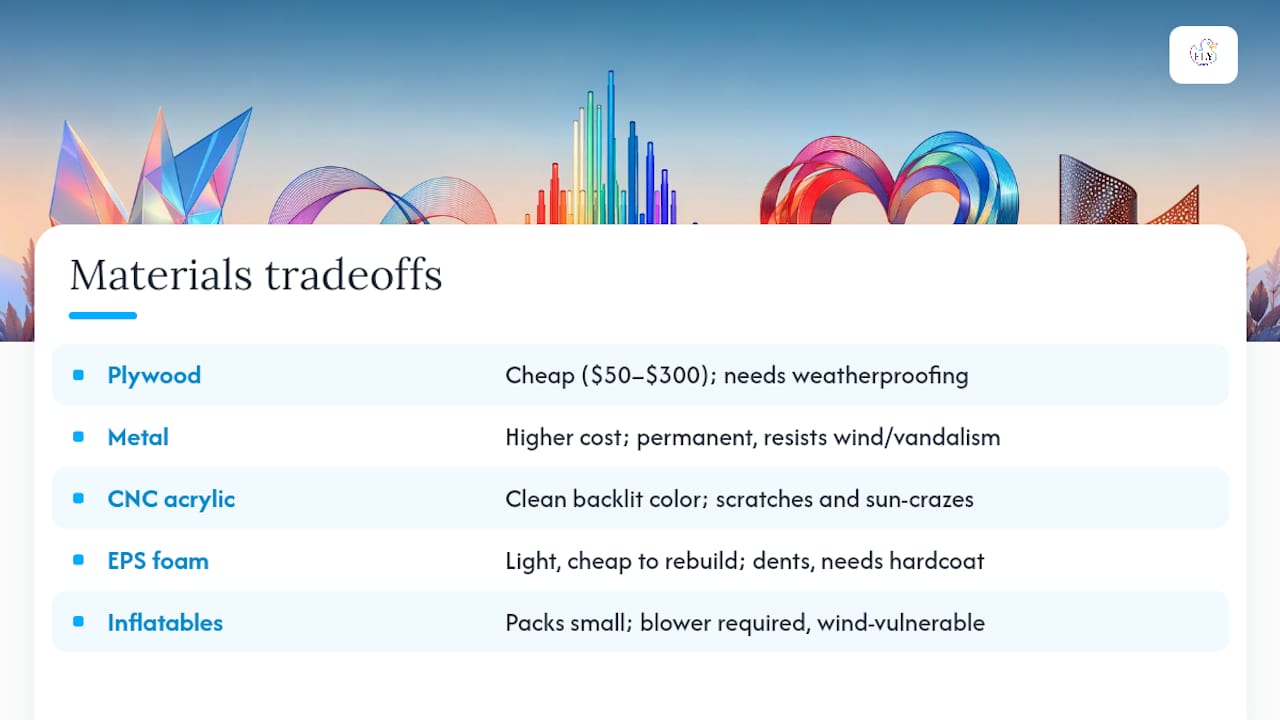
EPS foam with a hardcoat shell is the go-to for large parade floats and photo-op props: light enough for two people to carry, cheap enough to rebuild yearly, but it dents easily and needs a fiberglass or elastomeric coating to survive rain. Fiberglass (GRP) costs more and takes longer to fabricate, but it’s the standard for museum-grade or multi-year outdoor pieces. Papier-mâché remains the budget champion for one-off community builds and workshops, though it has zero weather resistance without heavy sealing.
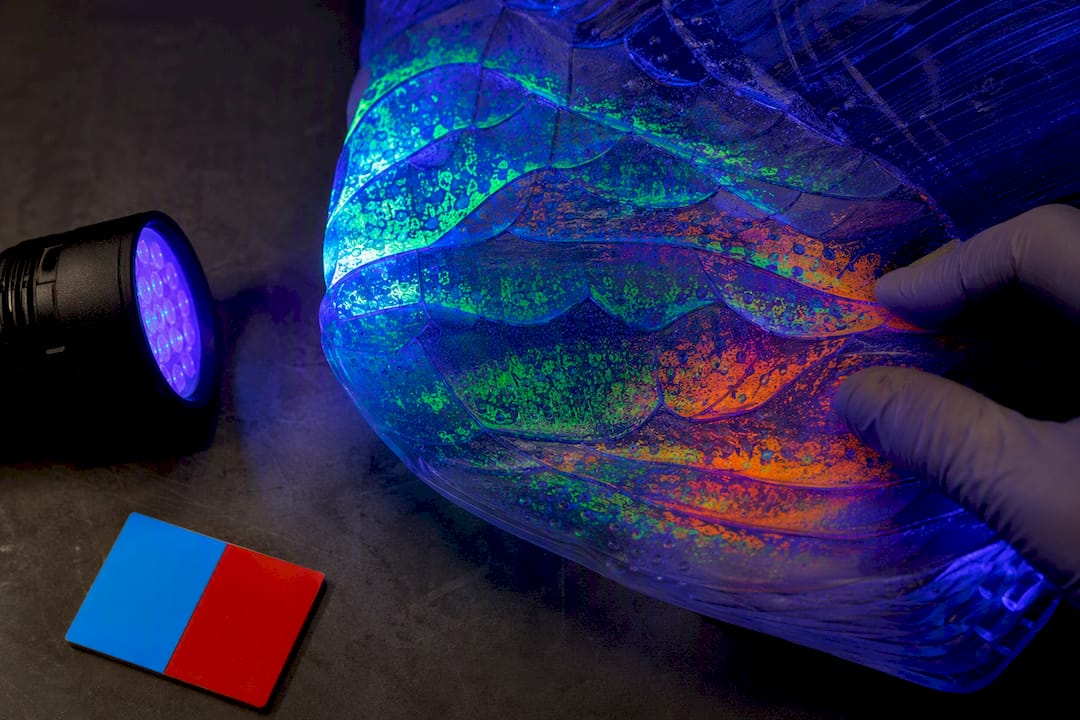
Inflatables solve the transport problem entirely, packing into a duffel bag and requiring only a blower fan on site, but they’re wind-vulnerable and need constant power. LED and UV-reactive finishes work as an add-on layer to almost any of the above, and they change a piece’s entire personality between daylight and blacklight.
For sourcing, local sign shops and makerspaces are usually faster and cheaper than a full-service exhibit fabricator for anything under 8 feet tall. Event rental companies often already stock inflatable arches and lighting rigs you can pair with a custom sculpture rather than building lighting from scratch.
Choosing Flags, Colors, and Symbols With Care
Color choice is the fastest way to make a Pride sculpture feel either generic or genuinely inclusive. The traditional six-stripe rainbow reads instantly to most viewers, but pairing it with the progress flag’s chevron (black, brown, light blue, pink, white), the transgender flag’s pale blue and pink, or the intersex flag’s purple and yellow signals a broader, more specific commitment. High-visibility installations increasingly combine multiple flags’ colors deliberately rather than defaulting to rainbow-only palettes, which leaves some identities invisible in the final piece.
Historical symbols carry weight but need context. The pink triangle and the lambda both originated in reclamation, not celebration, and using either without a short explanatory plaque risks confusing viewers who don’t know the history. Palm Springs’ LGBTQ+ Monument deliberately combines the triangle, lambda, and rainbow specifically to function as a teaching tool alongside its role as a gathering space, not just decoration.
A few working guidelines:
- Layer colors deliberately rather than defaulting to a single rainbow gradient.
- Pair reclaimed symbols (triangle, lambda) with a small sign explaining their history.
- Learn more color logic in this breakdown of color symbolism in Pride art before finalizing a palette.
Size, Safety, Permits, and Accessibility Basics
Visibility scales with distance, not just height. A tabletop piece needs detail readable from a few feet away; a plaza centerpiece needs a strong silhouette readable from across the street. The 10-foot, 250-pound scale of In Plain Sight works precisely because its bold color blocks read from a distance while its carved grooves reward closer inspection.
Before anything goes up in a public or semi-public space, run through this checklist:
- Anchoring and wind load — any piece over 4 feet tall outdoors needs a ballasted base or ground anchor rated for local wind conditions.
- Flame-retardant finishes — required for most indoor event venues and many outdoor festival permits.
- Trip and sightline hazards — keep guy-wires, bases, and cords out of walkways and wheelchair paths.
- Permits and insurance — contact the site owner or city permitting office before installing anything in a park, plaza, or street; temporary and permanent pieces usually fall under different rules.
- Accessibility review — add tactile elements at a reachable height and keep sightlines clear for seated viewers; this accessibility standards guide for public sculpture covers ADA specifics worth checking before fabrication starts.
Pro Tip: Not every impactful piece needs monumental scale. George Segal’s Gay Liberation sculpture at Christopher Park uses roughly human-height figures, and it’s remained a pilgrimage site for decades precisely because its intimacy matches its subject.
Interactive Sculpture Concepts That Build Community Engagement
Static sculptures inform; interactive ones create memory. A scratch-off reveal layer, a black sacrificial topcoat over bright undercoats, lets visitors physically uncover rainbow color as they touch the piece. This technique, used in a European emancipation monument, turned an act once treated as vandalism into a deliberate, evolving design strategy.
Other participatory formats worth building:
- Community-painted panels: blank sections filled in by attendees during the event itself.
- Modular rearrangeable pieces: interlocking blocks visitors can reposition, changing the sculpture’s shape over a weekend.
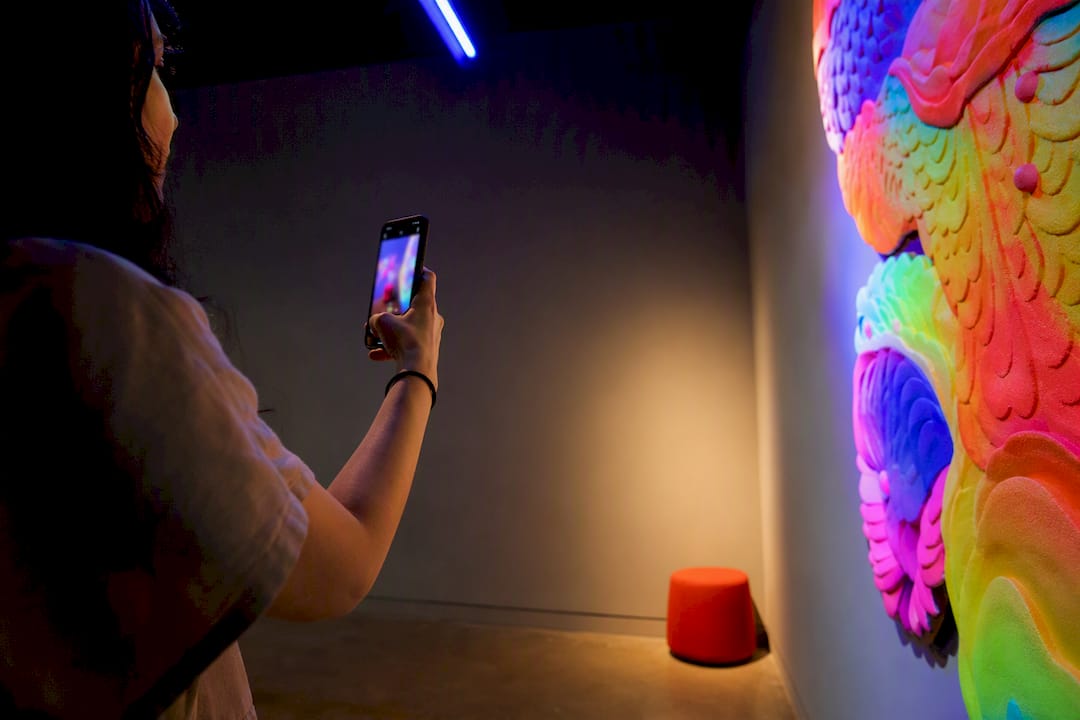
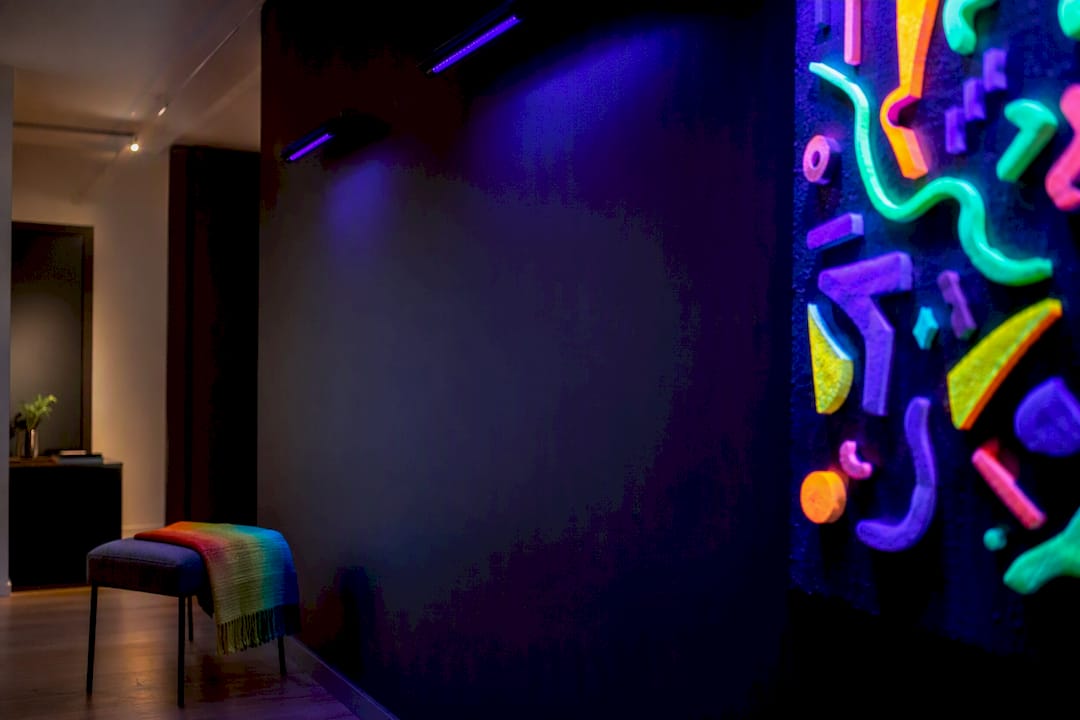
- Blacklight-activated elements: UV paint hidden under normal light, revealed only after dusk.
If you’re building a scratch-off monolith, use a breathable matte black topcoat over fully cured color layers, and test a sample outdoors first to confirm it weathers before scaling up to the full piece.
Commissioning Steps and Realistic Budget Ranges
Whether you’re hiring an artist or building in-house, the process follows the same rough sequence: define scope and message, survey the site (power access, ground type, foot traffic), lock a timeline, confirm permits, plan transport and rigging, install, and assign someone for ongoing maintenance if it’s staying up longer than a weekend.
- Scope and brief — write a one-page description of size, message, materials, and where it will live.
- Site survey — check ground conditions, power access, and sightlines before finalizing design.
- Timeline and permits — file for any needed permits at least six to eight weeks ahead of a public installation.
- Fabrication and transport — confirm how the piece breaks down for moving; oversized pieces need a truck and possibly a permit of their own.
- Install and maintenance — assign a contact for the display’s full run, especially for interactive or outdoor pieces.
Budgets vary widely by scale: tabletop pieces typically run under $200 in materials, parade and stage props land between $500 and $5,000 depending on finish, and large temporary public installations range from $5,000 to $50,000 or more once fabrication, insurance, and installation labor are included. Whether you commission a studio, hire a local fabricator, or run a community build, the large-scale installation logistics guide is worth a read before you sign anything.
How FLY Miami Art Approaches UV-Reactive Pride Sculptures
Some artists build pieces around a simple idea: a sculpture should tell two different stories in daylight and under blacklight.
A piece that looks like a bright pop art figure by day can reveal an entirely hidden layer of pattern and color once the lights go down, turning a single sculpture into two distinct visitor experiences.
The workflow moves from concept sketch to material selection (exterior-rated UV pigments and media), then installation with securely mounted, weather-protected blacklight fixtures. Pro Tip: Always follow the manufacturer’s safety data sheet when applying UV-reactive coatings, and test activation zones before a full event to confirm fixtures survive outdoor conditions.
Why Community Consultation Should Come Before the Sketch
The strongest Pride sculptures I’ve studied all share one habit: the artist asked the community what the piece should say before deciding what it should look like. Skipping that step produces technically impressive work that still feels imposed rather than shared.
Design intent matters, but so does an accessibility pass and honest signage around reclaimed symbols like the triangle or lambda. A partner perspective on public art in civic spaces makes a similar point: pieces installed with community input tend to outlast ones dropped into a plaza without it. Build in that consultation early, and the sculpture earns its place rather than just occupying space.
— Facundo
Ready to Commission a Pride Sculpture That Glows After Dark
If you want a piece that does more than sit quietly in daylight, a UV-reactive commission solves a problem most sculptures never address: what happens after sunset. Some artists build original and limited edition pieces where blacklight reveals hidden patterns and color layers invisible under normal light, giving event organizers a sculpture that performs twice, once for the daytime crowd and once for the evening one.
Browse the Pride Collection for finished examples, or explore the UV Glow Art collection to see how blacklight-reactive finishes work across different pieces. For a custom commission built around your event’s scale and timeline, start with the sculpture collection and commission inquiries page and describe your site, size, and display window. That first message is the fastest way to get a realistic quote and timeline back.
Sources
- In Plain Sight — Visit Philadelphia
- ‘In Plain Sight’ Pride Month sculpture celebrates members of the LGBTQ+ community at Cherry Street Pier — WHYY
- Monument to the emancipation movement – MARTIN BINDER
,%20decide%20whether%20it%20stays%20static%20o...)