
Inclusive Art Gifting Checklist for Every Art Lover
Here’s a short, printable inclusive art gifting checklist you can use right now to pick art gifts that put the recipient’s comfort, interests, and abilities first. Perkins School for the Blind recommends tactile and auditory features for gift recipients who are blind or have low vision, and platforms like Artwork Archive show how collectors track pieces once they’re gifted, which matters when you’re choosing something meant to last.
Before you buy, run through this:
- Check for sensory needs (light sensitivity, texture preferences, sound tolerance).
- Choose adaptive supplies over standard ones when fine-motor control is a factor.
- Consider a commission or shared experience instead of a fixed object.
- Confirm the gift includes clear care and setup instructions.
- Ask about scent, packaging materials, and easy-open design.
- Screenshot or print this list before you start shopping.
Key Takeaways
An inclusive art gift works when it matches the recipient’s sensory needs, physical abilities, and interests rather than assumptions about them.
| Point | Details |
|---|---|
| Lead with sensory check | Ask about light, texture, and sound preferences before choosing a gift type. |
| Choose adaptive tools | Favor thicker grips and digital options over standard fine-motor-dependent supplies. |
| Plan commission timelines | Build in a deposit, revision policy, and shipping buffer for custom art. |
| Confirm experience accessibility | Ask venues about physical access and sensory environment before booking. |
| Package with care | Use easy-open, scent-free wrapping and clear, simple instructions. |
| Consider tactile publisher pieces | Flymiami’s UV-reactive wall art and sculptures offer sensory-rich, adaptable gift options. |
Table of Contents
- Why an Inclusive Art Gifting Checklist Actually Matters
- What Should Be on Your Category-by-Category Checklist?
- How Do You Pick Art Supplies That Work for Every Ability?
- When Is a Commissioned Piece the Right Gift?
- What Should You Ask Before Booking an Art Experience?
- Which Adaptive Tools Make the Biggest Difference?
- How Should You Package an Inclusive Art Gift?
- What Budget Should You Plan for an Inclusive Art Gift?
- How Do You Ask About Accessibility Needs Without Making It Awkward?
- How I Think About Choosing an Inclusive Art Gift
- A Publisher-Sold Option Built for Inclusive Gifting
- Frequently Asked Questions
- Sources
Why an Inclusive Art Gifting Checklist Actually Matters
Inclusivity in gift-giving means matching the object to the person, not to an assumption about their age, diagnosis, or ability. That single shift changes which pen you buy, which gallery you book, and how you wrap the box.
Choose items that celebrate the recipient’s interests and sensory profile rather than relying on stereotypes — that’s the difference between a gift that gets used and one that gets put in a drawer.
Standard art supplies quietly assume a lot: full fine-motor control, unimpaired vision, and steady hands. A thin paintbrush handle or a tiny gel pen cap can shut someone out entirely. Perkins School for the Blind points to tactile and auditory engagement as central to gifts that actually work for blind or low-vision recipients, which is a good baseline for thinking about every other gift on your list too.
What Should Be on Your Category-by-Category Checklist?
Best for hands-on makers: pick adaptive grips and chunky-barreled tools before anything delicate.
Art supplies. Look for thicker handles, non-toxic materials, and tools that don’t require a pinch grip. Check whether the packaging itself is easy to open one-handed.
- Adaptive grips or foam sleeves for pens, markers, and brushes
- Weighted or triangular-barrel tools that reduce hand fatigue
- Non-rolling, easy-grip containers for paint or ink
Original art and commissions. These work best when personalization matters more than convenience. A curated print roundup, like TODAY’s annual gift guide, shows how popular original artwork and prints are as gift categories, though most of these lists skip accessibility entirely, so that check falls to you.
- Confirm framing and hanging hardware are simple to install
- Ask if a tactile or high-texture finish is available for low-vision recipients
- Check shipping protection for fragile original pieces
Experiences and classes. Often more inclusive than objects, because a good host can adapt in real time.
- Confirm physical access to the venue
- Ask about sensory environment (lighting, noise, crowd size)
- Check refund or transfer policy in case plans change
Subscriptions and gift cards. Flexible by design, letting the recipient choose their own fit.
- Verify the retailer stocks adaptive product lines
- Check if the card works for both physical and digital tools
Presentation add-ons. Small details, big impact on first impression and usability.
- Scent-free wrapping options
- Large-type or audio-accessible gift notes
How Do You Pick Art Supplies That Work for Every Ability?
Choose tools that reduce the need for precise fine-motor control and add tactile, visual, or digital feedback instead. That’s the entire logic behind adaptive art supplies, and it applies whether you’re buying for a child, a senior, or an experienced artist managing a tremor.
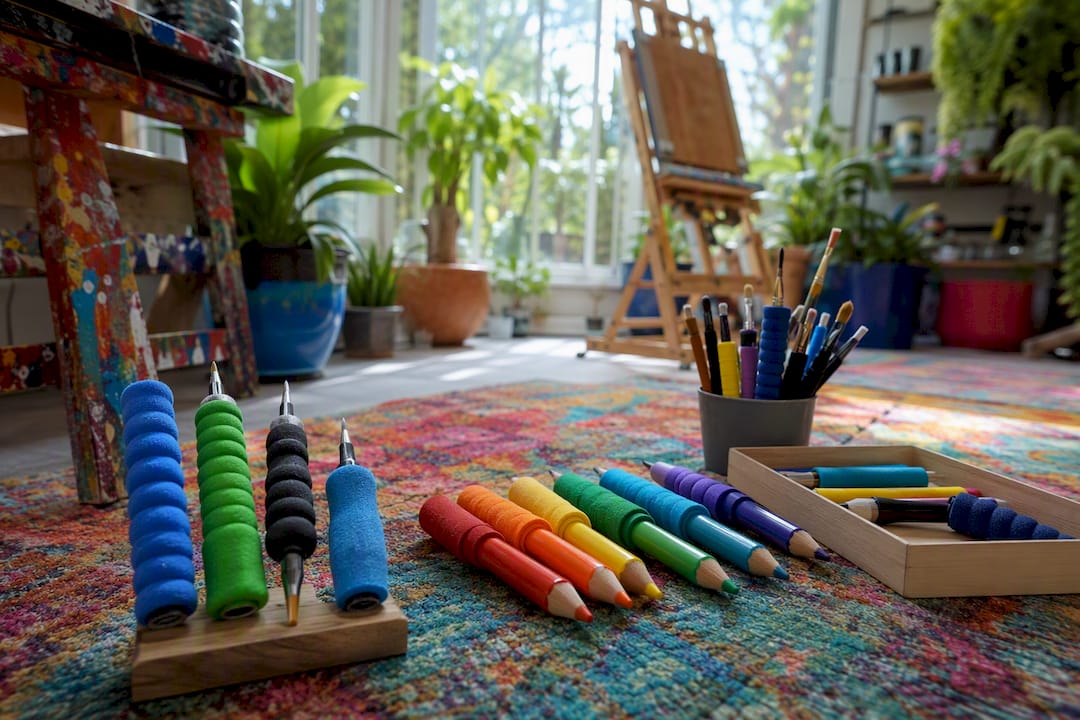
Thicker-barreled markers and colored pencils, the kind found in product families like Prismacolor and Copic, are worth considering specifically for their grip width and pigment richness, which reduces the number of strokes (and hand movements) needed to get color down. Disability Horizons lists adaptive grips, foam tubing, triangular crayons, and weighted brush handles among the most commonly recommended tools for people with limited hand control or tremors.
Accessible surfaces matter as much as the tools themselves. Table easels that tilt and lock, suction-cup paper holders, and slant boards all reduce the physical strain of reaching or holding a flat page steady. Digital tools add another layer of access entirely: undo buttons forgive shaky lines, zoom features help with detail work, and pressure-sensitive styluses mimic traditional media without requiring a firm grip, according to EZUD’s accessibility guide.
| Challenge | Adaptive Solution | Where to Check |
|---|---|---|
| Limited hand strength | Foam-grip or triangular-barrel tools | Product description for barrel width |
| Precision required for detail | Digital tablet with zoom and undo | App accessibility settings |
| Difficulty holding paper steady | Table easel or slant board | Weight and non-slip base |
| Fatigue during long sessions | Weighted or ergonomic handles | Grip material and length |
Local craft stores carry some of this, but specialist adaptive suppliers and inclusive online marketplaces usually list grip diameter, weight, and material directly on the product page. That’s the detail to check before you buy.
When Is a Commissioned Piece the Right Gift?
Commissions shine when the story behind the piece matters more than speed. If the recipient has a specific memory, place, or theme they’d want reflected in a piece, a commission beats anything off a shelf, but it requires planning lead time and a revision buffer into your timeline.
Pricing generally falls into three rough tiers: small prints and reproductions at the accessible end, limited-edition runs in the middle, and original sculptures or large-scale commissioned pieces at the top. Each tier trades off differently between exclusivity and turnaround time.
Before commissioning, confirm:
- A clear creative brief (theme, colors, size, occasion)
- The artist’s portfolio and past commission examples
- Rights, framing, and care instructions in writing
- Deposit amount and revision policy
- A timeline buffer for shipping and unexpected delays
- Delivery and installation accessibility if the piece is large
Giftshop recommends deciding the story you want the piece to tell before you even contact an artist, then checking portfolios and locking in a deposit and revision policy up front.
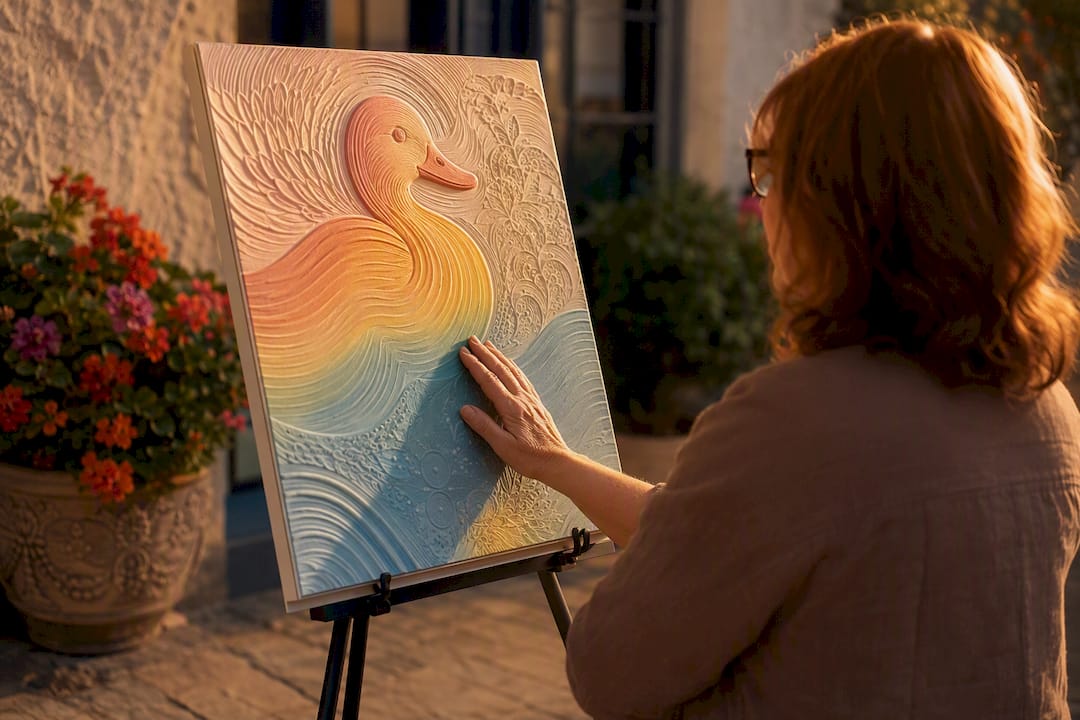
Pro Tip: For low-vision recipients, ask about texture-forward or tactile-laminated finishes. A piece with raised texture gives them a way to experience the art with their hands, not just their eyes.
What Should You Ask Before Booking an Art Experience?
Experience gifts can outperform physical objects when the organizer plans for access ahead of time, but that only works if you confirm accessibility before you book, not after.
Ask providers these five questions:
- Is the venue physically accessible (steps, doorways, seating)?
- What’s the sensory environment like (lighting, noise level, crowd size)?
- Are materials provided, and can they be adapted on request?
- What’s the class size, and is one-on-one attention available?
- What’s the refund or transfer policy if plans change?
Strong options include a private studio session, an adaptive art class, an audio-described gallery tour, or a museum membership with built-in accessibility services. Factor in transport time and whether a companion or assistant ticket is available. Some venues offer these free of charge but only if you ask in advance.
Which Adaptive Tools Make the Biggest Difference?
A handful of specific tools change who can physically make art: adaptive grips, weighted handles, spring-loaded scissors, glue dots instead of liquid glue, slant boards, and mouth- or head-held styluses for people without hand use. These aren’t niche products anymore. Most are sold through mainstream craft retailers and specialist adaptive shops alike.
Combining physical adaptive tools with digital tools, like tablet apps with pressure sensitivity, tends to offer the broadest access of all, because it covers both motor and sensory limitations at once.
| Challenge | Tool or Adaptation | Why It Works |
|---|---|---|
| Tremors or limited grip strength | Weighted brush handles | Adds stability without requiring tight grip |
| Low vision | Texture-rich supplies, braille labels | Engages touch alongside or instead of sight |
| Sensory sensitivity | Low-odor, low-noise tools | Reduces overstimulation during creative work |
| No hand use | Mouth- or head-held styluses | Enables mark-making without hand dexterity |
Perkins School for the Blind and product roundups like Disability Horizons both point to the same principle: test before you commit, and let the recipient choose which adaptation fits them, rather than guessing on their behalf.
Pro Tip: If you’re unsure which grip or tool works best, buy the smallest available version first. A $6 foam sleeve is a cheap way to test fit before committing to a full adaptive set.
How Should You Package an Inclusive Art Gift?
Clear labels, easy-open packaging, and simple instructions remove friction before the recipient even touches the art itself. A beautiful gift that’s hard to unwrap or unclear to use loses its impact fast.
- Label materials and note any allergens (latex, certain paints)
- Include a short care and use note in plain language
- Offer scent-free wrapping as a default, not an upgrade
- Add a large-type or audio-note card option
Pro Tip: Skip tiny ribbons, stickers, or loose small parts that are hard to remove with limited dexterity. A simple pull-tab box beats an elaborate bow every time.
What Budget Should You Plan for an Inclusive Art Gift?
Inclusive art gifts exist at every price point. The real task is matching the tier to the occasion and choosing genuine fit over brand recognition.
- Under $50: adaptive supply sets, small prints, gift cards to craft or art suppliers
- $50 to $250: limited-edition prints, a single studio class, small original pieces
- $250 and up: commissioned originals, sculpture pieces, museum memberships
Before you check out anywhere, confirm the seller’s return policy, commission lead times, and whether the product page lists accessibility details like grip size or texture. Local makers, adaptive-supply shops, museum stores, and curated collections are all worth checking, and a five-factor approach (personal relevance, use value, occasion fit, craft appeal, and delivery confidence) from Themakers is a useful gut check before you commit.
How Do You Ask About Accessibility Needs Without Making It Awkward?
The simplest approach is to ask directly, briefly, and without making the question a big deal. Something like “Is there anything I should know about how you like to work with your hands, or what feels comfortable for you?” opens the door without putting the recipient on the spot to explain a diagnosis or disability.
Avoid framing questions around limitation (“What can’t you do?”). Frame them around preference instead (“What do you enjoy working with?” or “Do you have a favorite texture or material?”). That reframe keeps the conversation about creative interest, not deficit, and it usually gets you better information anyway.
If you’re buying for someone you don’t know well, ask a mutual friend or family member rather than pressing the recipient for personal details before a surprise gift. When in doubt, buy something with flexible use, like a gift card to an adaptive-supplies shop, so the recipient can self-select what actually fits.
One more thing worth remembering: people’s needs and preferences change over time. A tool that worked for someone two years ago might not fit anymore, so it’s fine to ask again rather than assume last year’s gift note still applies. Person-first language matters here too. Say “a person who is blind” rather than “a blind person” if you’re ever writing a note or card, since it keeps the focus on the individual first.
How I Think About Choosing an Inclusive Art Gift
One gift that stuck with me was a texture-laminated print made for a collector with low vision. It wasn’t about the image alone. It was about giving her hands something to read, the same way her eyes would have. That’s the whole philosophy behind the FLY movement: art should invite touch, not just observation.
A Publisher-Sold Option Built for Inclusive Gifting
If you want a gift that already leans into sensory engagement, our UV-reactive pieces do double duty: vibrant color under normal light, then a completely different pattern revealed under blacklight. That built-in element of discovery works well for recipients who respond strongly to visual or tactile surprise, and several pieces in our wall art collection ship with simple hanging hardware that doesn’t require tools or steady hands to install.

Ordering is straightforward. Browse the sculpture collection or statement pieces for larger commissions, or choose a ready-to-ship piece for faster delivery. Our studio process page walks through what to expect on lead times, and we can talk through personalization, framing, or on-site installation help if the piece is going into a shared or public space. If a themed gift fits better, the UV-reactive rubber duck series offers a lower-commitment starting point. Reach out through the site to start a commission or ask about accessible installation for a specific piece.
Frequently Asked Questions
What makes an art gift “inclusive”? An inclusive art gift accounts for the recipient’s sensory needs, physical abilities, and personal interests rather than defaulting to a standard, one-size-fits-all product.
What’s the easiest way to make a gift more accessible without asking awkward questions? Choose flexible options like gift cards to adaptive-supply shops, or ask preference-based questions (“What do you like to work with?”) instead of limitation-based ones.
Are commissioned art pieces a good inclusive gift option? Yes, especially when personalization or a specific story matters more than speed. Just build in extra lead time for revisions and shipping.
Do adaptive art supplies cost significantly more than standard ones? Not necessarily. Many adaptive tools, like foam grips or triangular-barrel pencils, cost about the same as standard versions and are available at mainstream craft retailers.
Sources
- Gift ideas for people who are blind | Perkins School for the Blind
- 20 accessible products to help you enjoy arts and crafts if you have a disability | Disability Horizons
- Inclusive Art and Craft Supplies | EZUD