

Award-Winning Public Art Projects Every Collector Should Know
The standout examples of award-winning public art projects collectors need to know include Cloud Gate (Chicago), The Bay Lights (San Francisco), Urban Light (Los Angeles), LOVE (Philadelphia and beyond), Watsonville Brillante (California), LEVENSLICHT (Netherlands), Seven Magic Mountains (Nevada), and River Lines — each recognized for scale, community impact, technical innovation, or ecological attunement.
- Cloud Gate — Chicago, IL: Anish Kapoor’s mirrored steel bean transformed Millennium Park into a social and photographic landmark.
- The Bay Lights — San Francisco Bay Bridge: Leo Villareal’s LED light art remade a civic structure into a public art installation seen by millions.
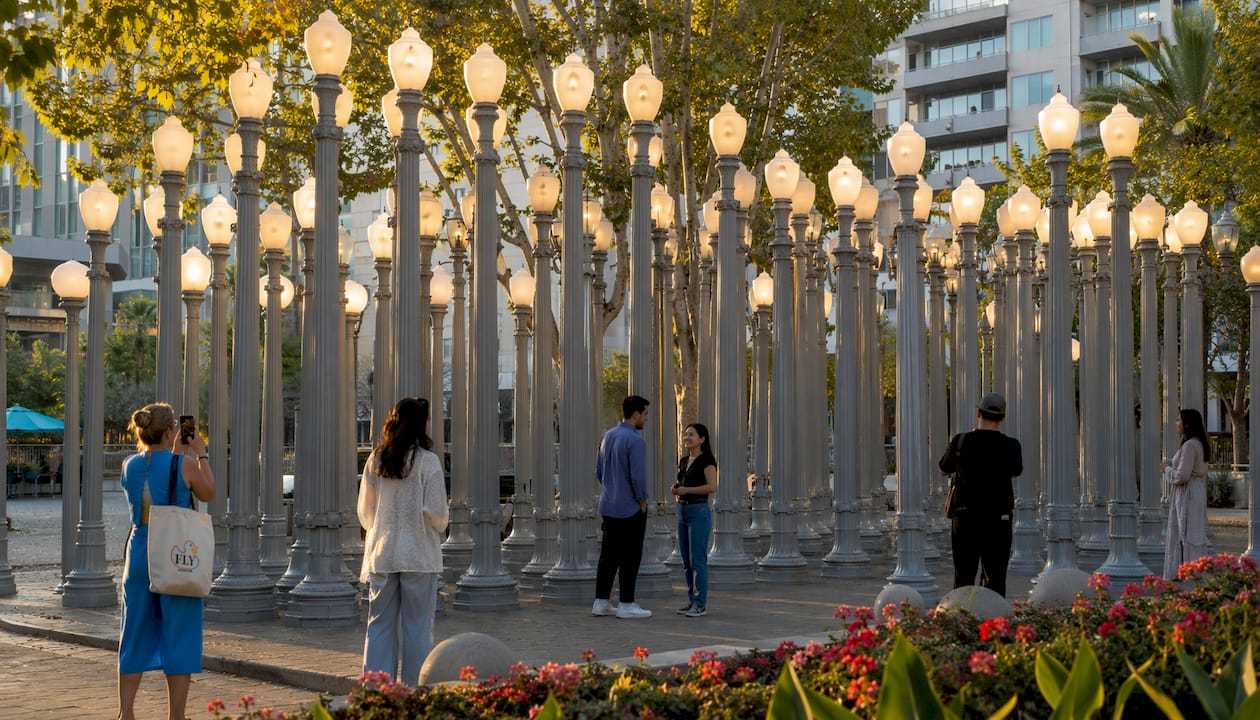
- Urban Light — Los Angeles, CA (LACMA): Chris Burden’s restored cast-iron lampposts became a LACMA signature and a pop-culture icon.
- LOVE — Philadelphia and multiple U.S. sites: Robert Indiana’s four-letter sculpture holds broad institutional recognition across American cities.
- Watsonville Brillante — Watsonville, CA: A 12,500-square-foot community mosaic, the largest of its kind in California history, winner of the 2025 Helen Putnam Award.
- LEVENSLICHT — Netherlands: Studio Roosegaarde’s luminescent stones honoring Holocaust victims, winner of the Media Architecture Biennale Award.
- Seven Magic Mountains — Nevada: Ugo Rondinone’s stacked-boulder installation, towering and extended beyond its original run due to public demand.
- River Lines — urban revitalization context: embedded light rings and 12 custom audio tiles with no visible hardware, winner of landscape and special design awards.
Recognition for these works flows through bodies like Americans for the Arts and the Public Art Network, as well as the International Award for Public Art (IAPA). Flymiami (FLY Miami Art, led by Facundo Yebne) is an active commissioning option for collectors seeking UV-reactive, pop-art-scale public sculptures.
Table of Contents
- The best public art examples, case by case
- What makes public art award-worthy today
- How to commission or buy award-caliber public sculpture
- How to verify awards and provenance before you buy
- Notable public art beyond U.S. borders
- Flymiami brings UV-reactive pop art to collector-grade commissions
- Key Takeaways
- Why pop art and UV-reactive sculpture belong in your collection
- Useful sources for further research
The best public art examples, case by case
Cloud Gate (2006) — Chicago, IL. Anish Kapoor’s large polished steel ellipse reflects the Chicago skyline and every passerby who stands beneath it. Its genius is the inversion: the city becomes the artwork. For collectors, it illustrates how material choice (mirror-finish stainless steel) drives both longevity and perpetual public engagement. Maintenance requires regular polishing and structural inspection, but the material resists corrosion well in temperate climates.
Urban Light (2008) — LACMA, Los Angeles, CA. Chris Burden arranged over two hundred restored antique street lamps into a forest of cast iron. The piece works because it recontextualizes discarded civic infrastructure as monumental sculpture. Collectors should note: site-bound works like this are not transportable, but the concept of repurposed industrial objects translates well to private commissions.
The Bay Lights (2013, reinstalled 2016) — San Francisco. Leo Villareal programmed a vast number of white LED nodes across the Bay Bridge’s western span. The reinstallation after its original run signals something collectors should watch for: public appetite that outlasts a temporary permit is a strong provenance signal.
LOVE (1970–present) — Philadelphia and U.S. sites. Robert Indiana’s sculpture has appeared in multiple American cities. Its longevity across decades and institutional placements makes it one of the clearest examples of how a graphic pop-art form achieves civic permanence. Editions and reproductions exist; always verify provenance and edition documentation before acquisition.
Watsonville Brillante — Watsonville, CA. Kathleen Crocetti led a multi-year community fabrication process involving hundreds of local residents. The result: a 12,500-square-foot mosaic across downtown Watsonville that won SAMA and CMA2 Best in Show awards, plus the 2025 Helen Putnam Award for the City of Watsonville. Large community mosaics can take multiple years from concept to final installation. Budget that timeline into any commission of comparable scale.
LEVENSLICHT — Netherlands. Studio Roosegaarde embedded 104,000 light-emitting stones into a public memorial, each representing one Holocaust victim. Custom software drives the luminescence. It won the Media Architecture Biennale Award. The piece demonstrates that light-based memorials can carry both technical and humanitarian award criteria simultaneously.
Seven Magic Mountains — Nevada. Ugo Rondinone stacked fluorescent-painted boulders more than 30 feet high in the Mojave Desert. Originally temporary, its run extended due to visitor numbers. Temporary large-scale installations require removal and relocation planning from day one. Collectors considering public-to-private transitions should request engineering and deinstallation plans upfront.
River Lines — urban revitalization. This project embedded light rings and multiple custom audio tiles into a public plaza with no visible hardware, engineered to resist outdoor conditions permanently. It won landscape and special design awards. The hidden-technology approach is a model for collectors who want interactive public art without visible infrastructure clutter.
Pro Tip: Before commissioning a site-specific work, ask whether the piece can be deinstalled and relocated. Truly site-bound works have no secondary market; transportable editions retain value and flexibility.
What makes public art award-worthy today
Juries prize site-specificity and community connection above almost everything else. A sculpture that could sit anywhere rarely wins. One that could only exist in one place, shaped by that place’s history, almost always gets noticed.
UAP’s 2025 curation highlighted ecological attunement and interactivity as the dominant trends in award selections. Works that respond to a site’s natural conditions — light, wind, water, seasonal change — score higher than works imposed onto a landscape.
Community engagement during fabrication creates a durable civic ownership that juries and municipal bodies reward. Projects like Watsonville Brillante, where residents fabricated the mosaic tiles themselves, demonstrate this directly. The community becomes a stakeholder, not just an audience.
Modern award criteria, distilled:
- Site-specificity: the work could not exist elsewhere without losing its meaning.
- Community collaboration: residents participated in concept, fabrication, or both.
- Technical innovation: hidden hardware, custom software, UV-reactive or light-based materials.
- Ecological attunement: the work responds to, rather than overrides, its natural setting.
- Durability and maintenance planning: juries increasingly ask how a work survives 20 years.
For collectors evaluating sculpture’s role in urban placemaking, these criteria double as a commissioning checklist.
How to commission or buy award-caliber public sculpture
Three routes exist: commission a site-specific work, purchase an existing public artist edition, or acquire a temporary installation for private display. Each has a different timeline, budget, and permit burden.
Step-by-step commissioning checklist:
- Define scope: indoor vs. outdoor, permanent vs. temporary, site dimensions, and audience.
- Select artist or studio: review award history, exhibition record, and material expertise.
- Secure site and permits: city approvals, ADA/accessibility compliance, and insurance.
- Engineering and fabrication: structural review, material sourcing, and fabrication timeline.
- Installation: crane logistics, foundation or anchoring, electrical or tech integration.
- Conservation plan: maintenance schedule, weather sensitivity notes, and condition reporting.
Typical timelines vary sharply by scale. A transportable pop-art sculpture can move from commission to delivery in three to six months. A mid-size outdoor piece with city permits typically runs nine to eighteen months. A large community-fabricated mosaic like Watsonville Brillante can span multiple years. Budget the timeline, not just the fabrication cost.
For large-scale installation logistics, plan for crane access, foundation engineering, and electrical permits separately from the artwork budget itself. UV-reactive or light-based works add electrical and weatherproofing requirements.
Pro Tip: Commission a temporary or pilot version of a large work before committing to a permanent installation. Seven Magic Mountains ran as a temporary piece before its extensions — that model protects both collector and artist.
Check public sculpture development readiness before signing any commission contract.
How to verify awards and provenance before you buy
Always verify award claims through primary sources. A vague “award-winning” label on a studio’s website is not documentation.
Verification checklist:
- Request the award name, year, and awarding body in writing.
- Cross-check against IAPA records or the Public Art Network’s database.
- Pull municipal commission archives or city press releases for publicly funded works.
- Review the artist’s CV and exhibition history for institutional commissions.
- Request a condition report and maintenance log for any existing installation.
- Ask for engineering reports and original fabrication contracts.
Red flags: award claims with no named body, missing institutional records, and condition reports that describe deferred maintenance. Major awards like the Media Architecture Biennale and IAPA leave verifiable paper trails through awarding bodies and city press releases.
Pro Tip: For light-based or tech-integrated works, request the software documentation and hardware replacement schedule. A piece that depends on discontinued components is a conservation liability.
Notable public art beyond U.S. borders
The strongest international examples show what American collectors can learn from different commissioning cultures.
LEVENSLICHT (Netherlands) already appears above, but its commissioning model is worth isolating: Studio Roosegaarde worked directly with the Dutch government on a memorial brief, producing a work where technology and civic memory are inseparable. That government-artist partnership model is increasingly available to private collectors through cultural foundations.
Pou Tu Te Rangi (Auckland, New Zealand, 2011) by Chris Bailey uses traditional Māori way-finding forms at civic scale, recognized by the IAPA. It demonstrates how indigenous cultural frameworks can anchor a contemporary public commission.
Biodiversity Tower (Willebroek, Belgium) by SEADS, Kris Mys, and Compostmeesters Willebroek is a sustainable installation functioning as a habitat for insects and plants on a historically charged site. It won IAPA recognition for ecological and community impact. The dual function — art object and living ecosystem — is a model gaining traction with sustainability-focused collectors.
Antony Gormley’s Close (Bukhara, Uzbekistan, 2025) used 95 tons of hand-made sun-dried earth bricks, fabricated with local craftspeople inside a 1598 mosque ruin. The UAP-curated 2025 list flagged it as one of the year’s most ambitious site-specific commissions. For collectors, it illustrates how material sourcing from the site itself becomes a provenance story.
Dakota Spirit Walk (St. Paul, Minnesota, 2024) by Marlena Myles uses augmented reality to surface Indigenous stories along a walking path, recognized by the IAPA. It sits at the intersection of digital technology and land-based cultural memory — a direction several U.S. collectors are now actively commissioning.
Flymiami brings UV-reactive pop art to collector-grade commissions
If the works above show what award-caliber public art looks like at civic scale, Flymiami shows what that energy looks like at collector scale. Facundo Yebne’s studio produces handcrafted, UV-reactive pop-art sculptures that reveal hidden patterns and colors under blacklight — the same immersive, light-responsive logic that makes LEVENSLICHT and River Lines compelling, applied to transportable, install-ready editions.
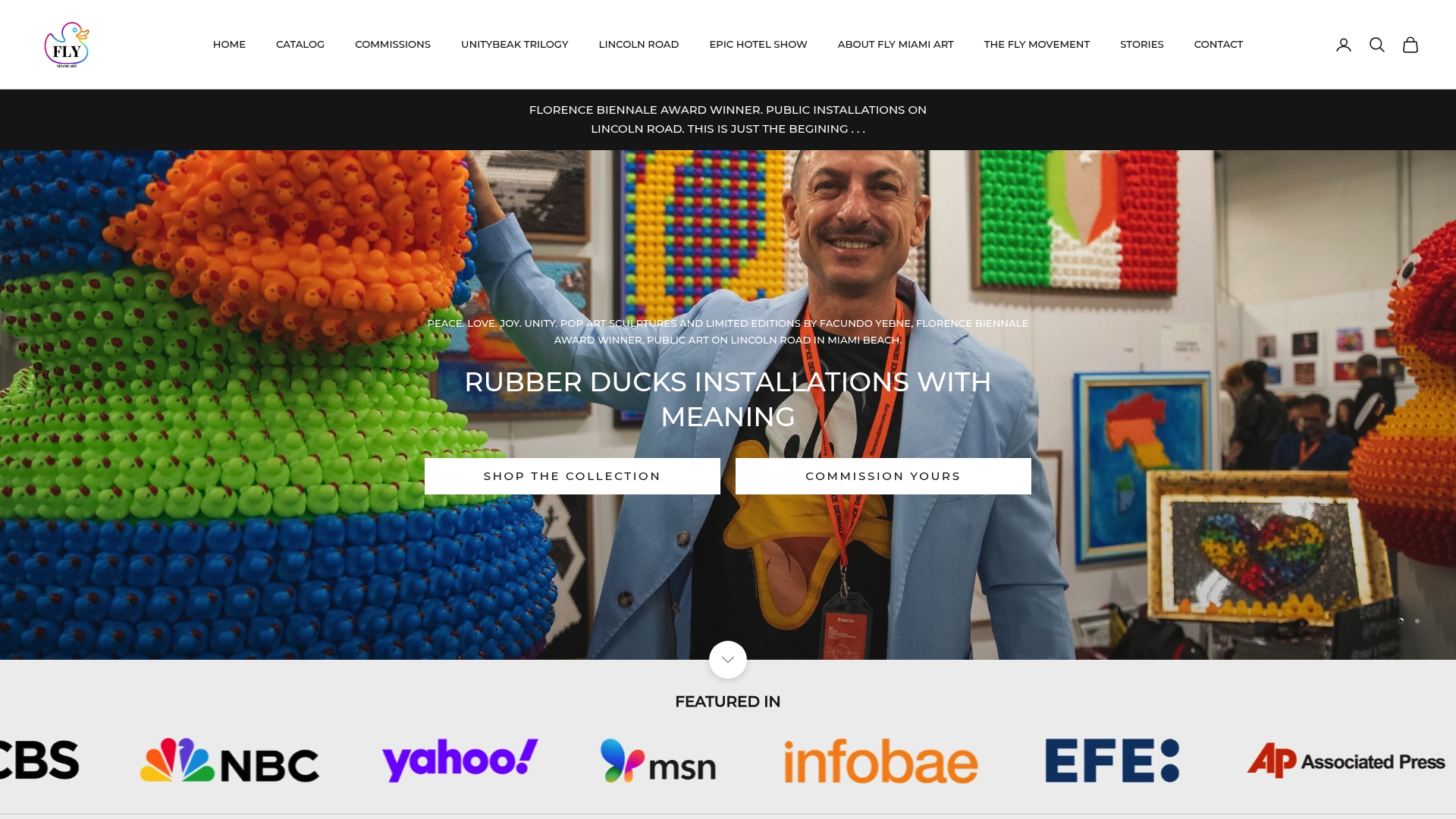
Flymiami’s sculpture collection includes pieces like Nocturnal Ascension and The Touch of Creation, both designed for private display and institutional settings. The studio’s UV-reactive works shift between vivid pop-art color in daylight and glowing, hidden-pattern reveals under blacklight. For collectors who want the immersive experience of a light-based public installation without the civic permitting process, these editions are a direct route. Contact Flymiami at flymiami.art to discuss a commission or browse available works.
Key Takeaways
Award-winning public art succeeds through site-specificity, community engagement, and technical durability — and collectors who verify those three signals before commissioning will avoid the most common acquisition mistakes.
| Point | Details |
|---|---|
| Site-specificity wins awards | Juries consistently favor works that could only exist in one place, shaped by that site’s history and conditions. |
| Community fabrication adds provenance | Projects like Watsonville Brillante, built with hundreds of residents, carry civic ownership that strengthens long-term recognition. |
| Verify awards through primary sources | Cross-check claims against IAPA records, Public Art Network databases, and municipal commission archives before any acquisition. |
| Plan for maintenance from day one | Request condition reports, maintenance logs, and hardware replacement schedules, especially for light-based or tech-integrated works. |
| Flymiami offers collector-scale commissions | Facundo Yebne’s UV-reactive sculptures deliver immersive, light-responsive public art impact in transportable, install-ready editions. |
Why pop art and UV-reactive sculpture belong in your collection
Most collectors underestimate how much of what makes a public artwork “award-winning” is actually about the viewer’s physical experience of light and space. Cloud Gate works because you see yourself in it. LEVENSLICHT works because the light is the memorial. River Lines works because the sound comes from nowhere visible. The common thread is sensory surprise — the moment when a material does something the viewer did not expect.
UV-reactive sculpture operates on exactly that logic. A piece that reads as bold pop art in daylight and transforms under blacklight is not a gimmick. It is a structural decision about how a work lives in two different lighting environments, which is precisely what public art juries are now rewarding in light-based and ecologically attuned installations.
Collectors who focus only on static, single-state objects are missing the direction the field is moving. The works that earn institutional recognition today — and hold value over time — tend to be the ones that change depending on conditions: time of day, season, viewer proximity, or light source. That is the case for commissioning UV-reactive work now, not as a novelty, but as a forward-looking acquisition decision.
Useful sources for further research
Primary sources collectors should consult directly:
- Public Art Archive — IAPA case studies: Searchable database of IAPA-recognized works, filterable by region, material, and theme. Use it to verify award claims and explore comparable projects.
- UAP 2024/2025 public art highlights: Annual curatorial list from UAP with full project documentation and curator commentary. Strong for trend research and award context.
- Artsy — Best Public Art 2025: Covers UAP’s 2025 selections with artist statements and installation details.
- Watsonville Brillante project page: Full documentation of the mosaic’s fabrication process, community participation, and award history.
- Studio Roosegaarde — LEVENSLICHT: Technical and conceptual documentation for the memorial installation, including award citations.
- River Lines — Int.design project page: Engineering and award documentation for the audio-tile installation.
- Seven Magic Mountains project site: Lifecycle and extension documentation for the Nevada boulder installation.
- Flymiami — studio and commissions: Landing page for Flymiami’s UV-reactive sculpture practice, installation portfolio, and collector commissioning inquiries.
,%20The%20Bay%20Lights%20(San%20Francisco),%20Urban%20Light%20(Los%20Angeles),%20LOVE%20(Philadelphia%20and%20...)