Artist Monopoly for Collectors: Commission Exclusive Pop-Art Sculptures
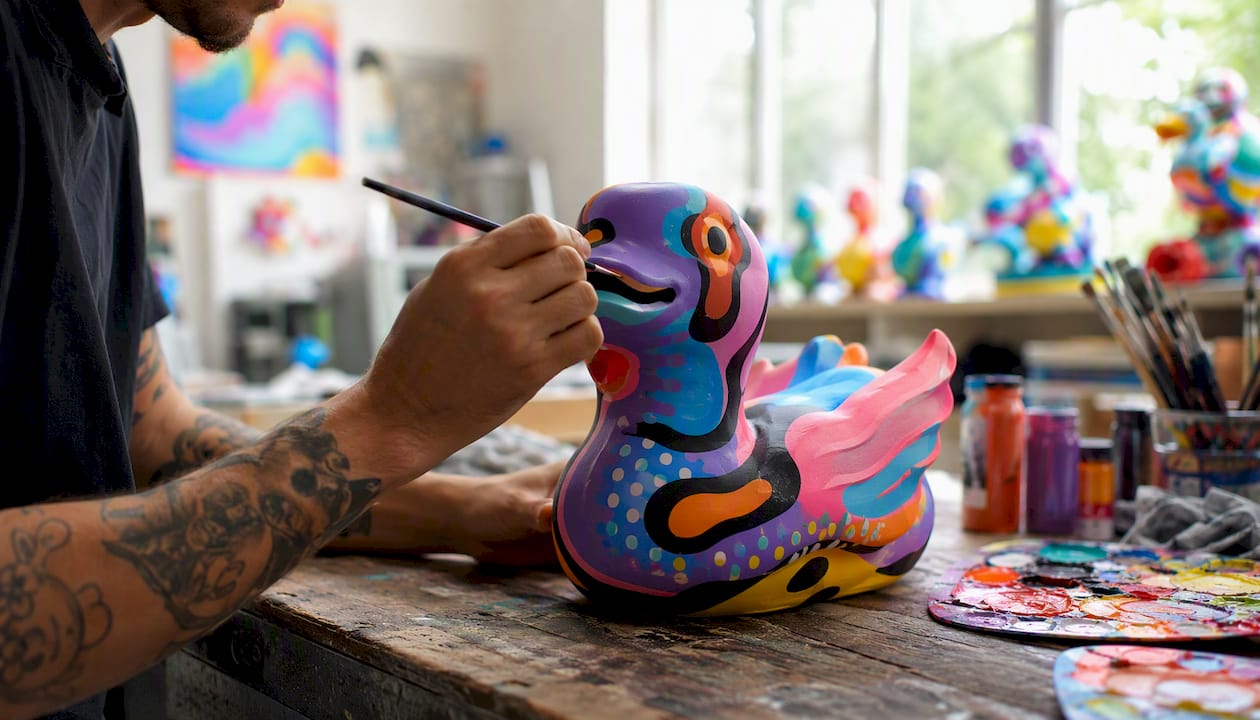
An “artist monopoly” in the collector’s sense means one thing: you secure exclusive rights to a limited-edition or one-of-a-kind UV-reactive pop-art sculpture from a single artist, with no identical piece going to anyone else. The immediate next step is to contact Facundo Yebne at FLY Miami Art with a short brief, site photos, and your target budget. The studio’s How It’s Made documentation shows exactly how each piece moves from concept to finished glowing sculpture.
What exclusivity gives you as a buyer:
- Edition control: your piece carries a numbered certificate (e.g., 1/3) that limits how many versions exist
- Provenance from day one: studio-issued Certificate of Authenticity, signed by Facundo, with materials and dimensions on record
- Resale premium potential: scarcity drives secondary-market interest for documented, limited-run works
- Direct artist relationship: approvals, revisions, and installation support come straight from the studio
Pro Tip: Send your brief before you finalize your budget. Studios like FLY Miami Art can often suggest a scale or edition size that fits your ceiling without sacrificing the exclusivity you’re after.
Key Takeaways
An artist monopoly arrangement gives collectors verifiable scarcity, direct provenance, and a documented exclusivity agreement that holds value through resale.
| Point | Details |
|---|---|
| Clarify exclusivity rights | Confirm edition size, reproduction rights, and any territorial clause in writing before signing. |
| Confirm materials and maintenance | Ask for a UV pigment test panel and a written maintenance schedule before fabrication begins. |
| Secure a signed COA | Require artist name, edition number, dimensions, materials, date, and a photograph on every certificate. |
| Budget for logistics and insurance | Reserve contingency for engineering, shipping, permits, and transit plus installation-day insurance. |
| Start with a concise brief | Send site photos, dimensions, budget, and timeline to Flymiami to open the commission conversation. |
Table of Contents
- What does “artist monopoly” mean for buyers of exclusive pop art?
- Why do collectors, galleries, and institutions choose exclusive single-artist works?
- How do you buy or commission an exclusive UV-reactive pop-art sculpture?
- What materials and technical factors should you confirm before signing?
- How do you verify authenticity and plan for resale?
- What logistics do you need to plan for shipping and installation?
- How are prices set, and how should you budget?
- What questions should you ask before commissioning or buying?
- What Facundo Yebne’s studio approach means for exclusive commissions
- FLY Miami Art: where to start your exclusive commission
- Sources
What does “artist monopoly” mean for buyers of exclusive pop art?
In this guide, “artist monopoly” refers to the commercial arrangement where a collector, gallery, or institution secures exclusive access to a specific artist’s output in a defined form: a unique commissioned original, a tightly numbered limited edition, or a contractual exclusivity clause that prevents the artist from producing similar works for a competing buyer or territory.
The concept covers three commercial forms:
- Unique commission: one piece, one buyer, no edition. The artist agrees not to reproduce the work.
- Limited numbered edition: a small run (commonly 3, 5, or 10) with each piece signed, numbered, and accompanied by a COA. Edition size directly affects price and resale value, so clarify this before signing.
- Territory or channel exclusivity clause: the artist agrees not to sell the same or substantially similar work through a competing gallery, region, or platform for a defined period.
This article is specifically about UV-reactive pop-art sculptures. It is not about any other artist or street-art use of the phrase.
Why do collectors, galleries, and institutions choose exclusive single-artist works?
Scarcity is the oldest value driver in the art market, and a documented limited edition makes scarcity verifiable. For a gallery, holding an exclusive edition means controlling the local supply of a work that generates press. For a hotel or institution, a site-specific UV-reactive sculpture becomes a signature piece no competitor can replicate.
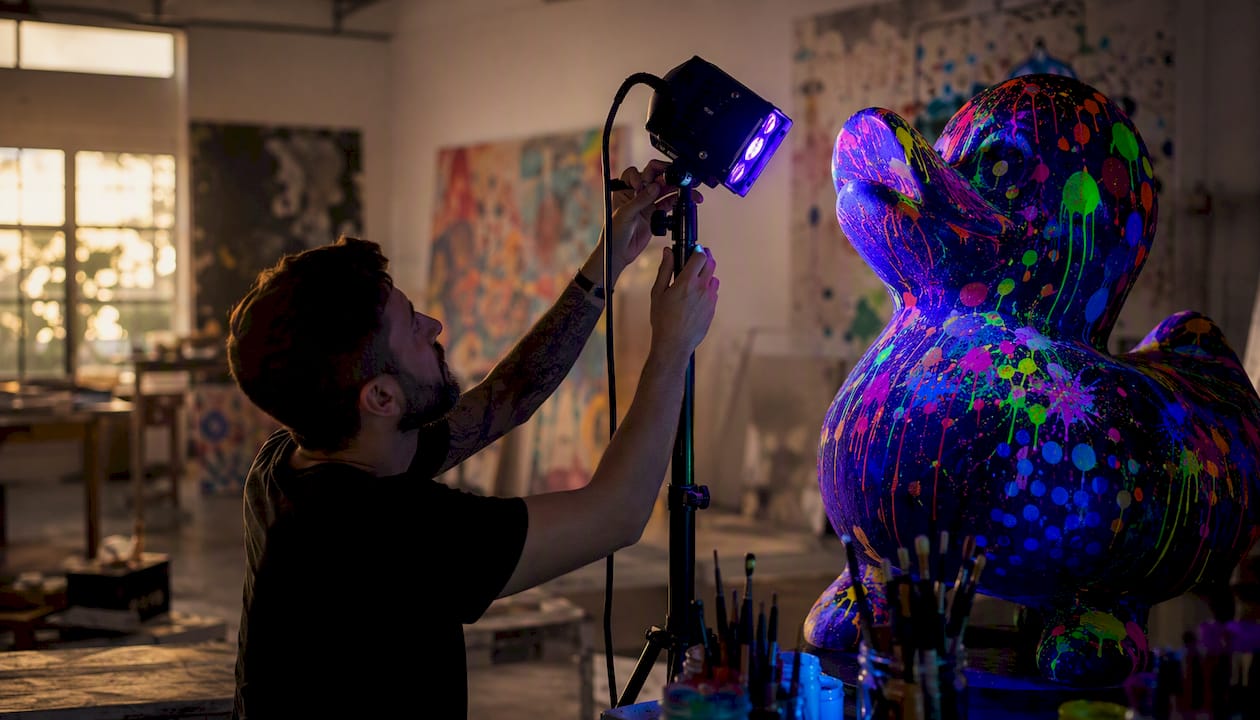
The non-financial case is just as strong. A direct artist relationship means the piece carries a narrative: the collector knows the studio, the process, and the intent behind the work. That story travels with the piece through every future exhibition or resale. FLY Miami Art’s UV Glow Art collection shows how blacklight-reactive finishes create an immersive display impact that standard sculptures simply cannot match under gallery or event lighting.
Factors that add measurable uplift to a work’s value:
- Documented exhibition history at prestigious venues
- Low edition numbers (1/3 commands more than 7/10)
- Artist awards and media coverage on record
- Condition reports filed at acquisition and at each subsequent installation
A numbered edition of 3 with a signed COA and a documented exhibition history is not just a purchase. It is a provenance file that compounds in value each time the work is shown publicly.
How do you buy or commission an exclusive UV-reactive pop-art sculpture?
The process follows a clear sequence. Skipping a stage typically costs more time and money than the stage itself would have taken.
- Initial inquiry. Send the studio a brief that includes site photos, room or wall dimensions, material preference (resin, fiberglass, coated metal), target budget, timeline, and your internal approval chain. A clear first inquiry with this information reduces redesigns and speeds the assessment.
- Concept development. The studio returns sketches or mood boards. For larger pieces, expect CAD renderings or a maquette. Treat maquette sign-off as your last meaningful revision point before fabrication costs lock in.
- Contract and payment. Sign before fabrication begins. Deposits typically run a substantial portion of the total fee. Milestone payments follow at defined fabrication stages, with the final balance due on delivery or installation sign-off.
- Fabrication. The studio builds the piece, with progress updates at agreed milestones. For UV-reactive works, this includes layering base pigment, UV pigment, and protective clearcoat.
- Delivery and installation. Coordinate crating, freight, site prep, and installation day. Final sign-off triggers the release of the COA and any remaining payment.
Typical phase durations (private commissions):
| Phase | Small piece | Mid-scale | Large/site-specific |
|---|---|---|---|
| Brief to concept approval | 2–3 weeks | 3–4 weeks | 4–6 weeks |
| Fabrication | 6–10 weeks | 10 weeks | 16 weeks |
| Shipping and installation | 1–2 weeks | 2–3 weeks | 3–6 weeks |
| Total typical range | 2–4 months | 4–6 months | 6 months |
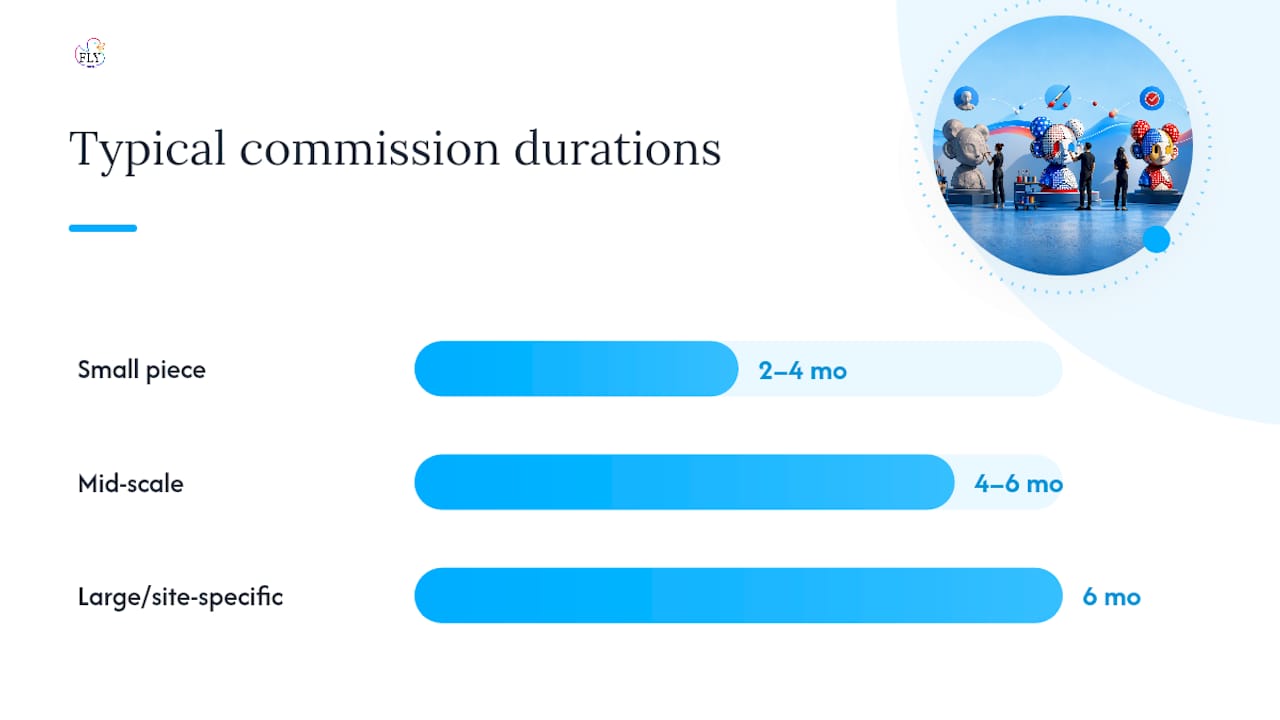
Source: Chandler McLellan Sculpture + Design; Caswell Sculpture for large bronze and metal works.
Commission agreement checklist: edition limits and reproduction rights, change-order fees, cancellation terms, delivery and installation responsibilities, warranty period, and COA issuance timing.
What materials and technical factors should you confirm before signing?
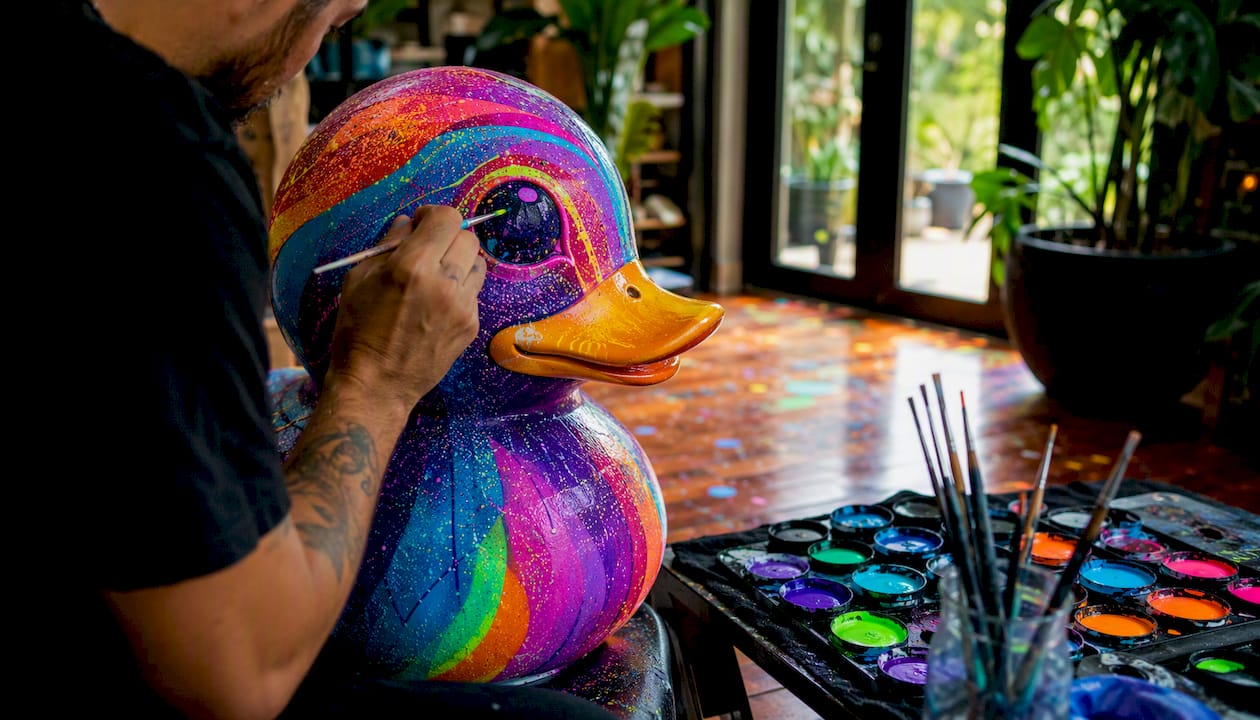
UV-reactive sculptures rely on a specific layering system. The base pigment sets the daytime color; the UV pigment layer determines glow intensity and hue under blacklight; the protective clearcoat controls how the piece responds to cleaning, humidity, and light exposure over time. Getting these layers wrong affects both appearance and longevity.
Common substrate materials and their tradeoffs:
- Painted fiberglass: lightweight, takes UV pigment well, suitable for indoor and sheltered outdoor display
- Coated resin: high detail resolution, moderate weight, more fragile under impact
- Treated wood: warm texture, heavier, requires sealed UV-stable coating to prevent yellowing
- Coated metal: durable, heavy, best for outdoor or high-traffic installations with proper anchoring
For large pieces, confirm internal armature design, anchor point engineering, and whether the studio handles outdoor weatherproofing in-house. Electrical coordination matters if the piece incorporates integrated UV lighting rather than relying on external blacklights.
Display checklist:
- Position blacklight fixtures at 45° to the sculpture surface for maximum glow effect
- Control ambient light: even moderate incandescent light washes out UV glow
- Use a pedestal or plinth that allows 360° viewing where the piece warrants it
- Ask the studio for a recommended cleaning agent and a maintenance schedule (typically annual inspection)
Materials checklist to confirm with the studio before signing:
- Warranty period and what it covers (fading, structural, surface)
- Expected UV pigment fade rate and under what light conditions
- Recommended cleaning agents and prohibited chemicals
- Outdoor suitability rating and weatherproofing method
Pro Tip: Ask to see a sample panel of the UV pigment and clearcoat combination the studio plans to use. A 6-inch test panel under a blacklight tells you more than any written specification.
How do you verify authenticity and plan for resale?
A robust Certificate of Authenticity contains: artist’s full name, edition number and total edition size, title, dimensions, materials, date of completion, studio contact information, a photograph of the work, and the artist’s original signature. Missing any of these elements weakens the document’s standing with auction houses and future buyers.
Edition type determines both scarcity and pricing. A unique work commands the highest price and the clearest provenance. A limited numbered edition (e.g., 1/5) is collectible but requires tracking where the other editions are held. An open edition has no scarcity value and generally does not appreciate.
Reproduction rights are a separate negotiation. The artist typically retains the right to photograph and publish the work for portfolio purposes. If you need to restrict that, negotiate it explicitly in the contract. Territorial exclusivity clauses, where the artist agrees not to sell similar works to buyers in your region or through competing channels, are increasingly common for institutional buyers.
Provenance checklist for institutional buyers:
- Gallery invoice or studio receipt with line-item description
- Signed COA with edition number
- Condition report at acquisition
- Exhibition history log (venue, dates, curator contact)
- Registration with an art advisor or database for high-value pieces
Pro Tip: If you plan to consign the work within five years, register it with an art advisor at acquisition. The paperwork you file now is the paperwork that speeds the consignment process later.
What logistics do you need to plan for shipping and installation?
Custom crating is non-negotiable for any sculpture above tabletop scale. The crate should be built to the piece’s exact dimensions with foam-lined interior supports, and the exterior should be marked with orientation arrows and fragility warnings. Before the crate ships, measure every door, elevator, and corridor on the delivery route.
Installation planning for larger works:
- Confirm plinth or foundation load capacity with a structural engineer if the piece exceeds 200 lbs
- Identify rigging needs (chain hoists, forklifts) and book licensed riggers in advance
- Coordinate electricians if the installation requires dedicated UV lighting circuits
- Run a pre-installation site visit with photos and share them with the studio
Insurance: transit insurance should cover replacement value, not depreciated value. Request a condition report from the studio before the piece ships, and conduct your own condition check on arrival before the crate is removed. Installation-day coverage is a separate policy from transit coverage; confirm both are in place before work begins.
Pro Tip: Designate one person on your team as the installation lead. A single point of contact between the studio, the shipper, and your site contractors prevents the miscommunications that cause delays and damage.
How are prices set, and how should you budget?
Cost drivers, in rough order of impact: artist reputation and exhibition record, edition size, material and substrate choice, fabrication complexity, engineering requirements, finishing (UV pigment layers and clearcoat), and installation.
Typical price shapes for UV-reactive pop-art sculptures:
- Small collectible editions (tabletop to 24 inches): entry-level collectible range, driven primarily by edition size and artist profile
- Mid-scale commissioned pieces (2–5 feet): fabrication and material costs become significant; engineering adds cost if wall-mounted or freestanding with a narrow base
- Large site-specific installations (6 feet and above): foundry or structural fabrication fees, engineering sign-off, and installation logistics push total project costs substantially higher
For large institutional commissions, a three-payment structure (deposit, mid-fabrication, delivery) is standard.
Budget contingency items buyers frequently underestimate:
- Structural engineering fees for wall anchoring or outdoor footings
- Permit fees for public or semi-public installations
- Conservation and maintenance costs over a 5–10 year horizon
- Insurance premium increase after acquisition
Negotiation note: longer lead times, fewer revision rounds, and phased delivery across multiple pieces all give studios room to work within tighter budgets without cutting material quality. Asking for a discount on materials or finishing is the one ask that tends to backfire.
What questions should you ask before commissioning or buying?
Operational questions to ask every studio:
- Who fabricates the piece — in-house, or third-party? If third-party, who inspects quality at each stage?
- What is included in the quoted price: crating, domestic shipping, installation, and permits?
- How many revision rounds are included, and what is the fee for additional rounds?
- What is the cancellation policy, and at what fabrication stage does the deposit become non-refundable?
- What is the expected lead time, and what triggers a timeline extension?
Rights questions to resolve in writing:
- What is the edition limit, and will the artist produce similar works after this edition closes?
- Who retains reproduction rights, and may the artist use images of your piece for portfolio or press?
- Is territorial exclusivity available, and at what additional cost?
Red flags to walk away from:
- Refusal to provide references from past buyers or galleries
- No written commission agreement offered before deposit is requested
- Vague or verbal-only timelines with no milestone dates
- All fabrication outsourced with no transparency about who the fabricators are
- No COA process described or offered
Pro Tip: Hold the final payment until you have received the COA, conducted a condition inspection, and signed off on installation. Studios that object to this structure are telling you something important about how they handle disputes.
What Facundo Yebne’s studio approach means for exclusive commissions
Exclusivity is not just a commercial arrangement at FLY Miami Art. Facundo Yebne’s position is that a tightly limited edition is a creative commitment: the artist is saying this specific configuration of materials, scale, and UV-reactive finish will not be repeated. That constraint shapes the work itself, pushing the studio toward more deliberate material choices and more precise fabrication at every stage.
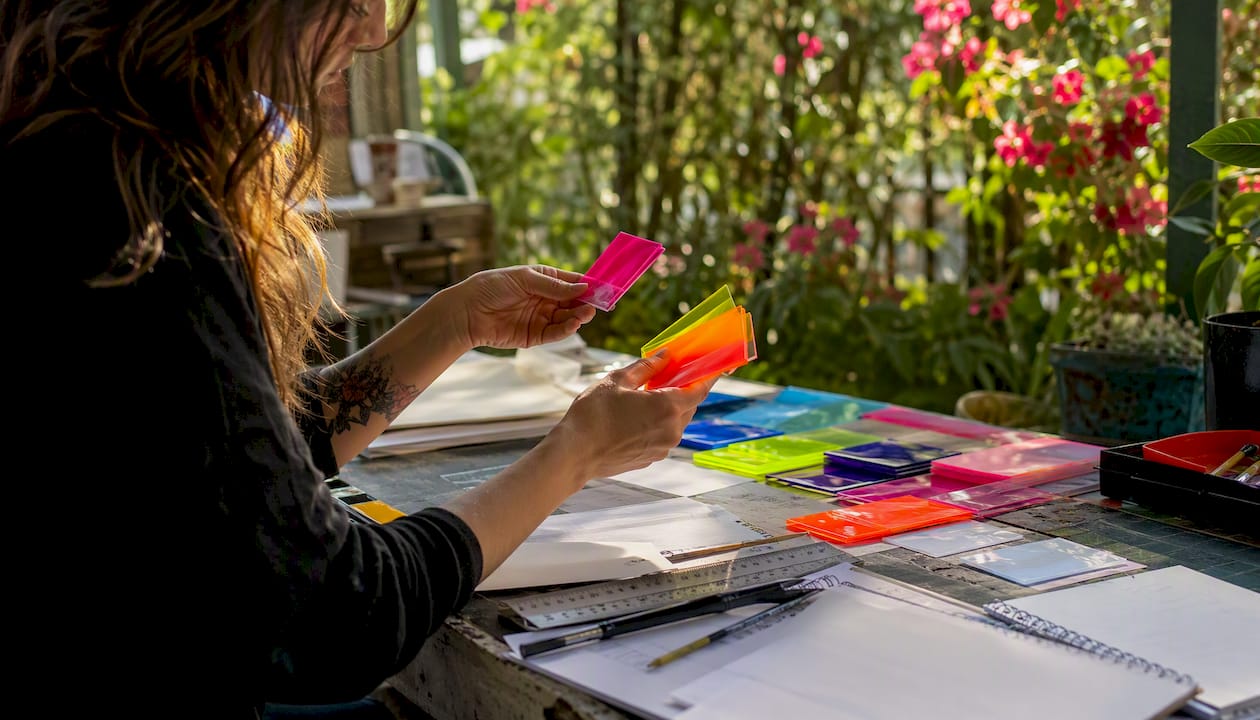
The studio’s in-house UV material expertise, documented through the studio process pages, means buyers get direct access to the artist’s fabrication decisions rather than a hand-off to an anonymous production facility. For collectors who want to understand what they own, that transparency is the difference between a purchase and a relationship.
Working directly with Facundo also means the editioning decisions, COA language, and installation support come from the person who made the piece. That chain of custody, from studio to collector, is what gives a limited-edition UV-reactive sculpture its provenance integrity.
FLY Miami Art: where to start your exclusive commission
Flymiami offers the full range of services a serious collector or institution needs: bespoke commissions with negotiated edition limits, available sculptures from existing limited editions, UV-reactive and blacklight-glow pieces with documented fabrication, and end-to-end shipping and installation coordination.
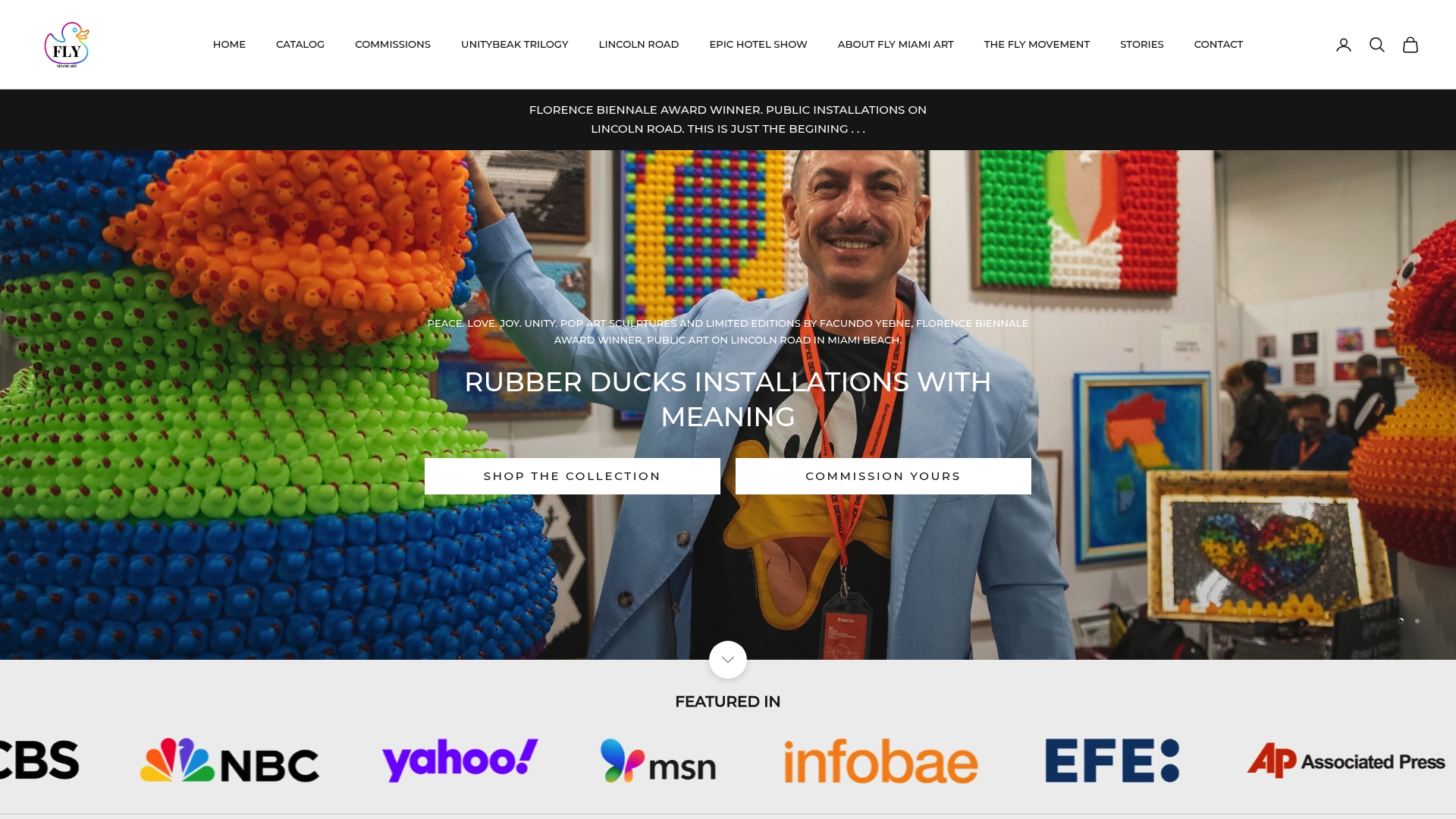
The studio’s acquisition guide walks through practical steps for securing limited-edition pop art, and the UV Glow collection shows the material range available now. For institutions exploring partnership or collab structures, Wynwood Blvd’s collab framework offers a useful model for how artist-venue exclusivity agreements are structured in practice.
To start, send Flymiami a brief with your site dimensions, timeline, and budget range. The studio responds with a concept direction and a clear scope before any commitment is required. Browse the UV Glow Art collection or go directly to the sculpture catalog to see what is available now.
Sources
Resources for buyers moving from research to acquisition:
- Collabs — Wynwood Blvd
Request COA templates and commission agreement drafts directly from the studio. These links are starting points; the contract and provenance documents you negotiate directly with Facundo are what protect your investment.