The Role of Public Art in Tourism Development for Planners
Public art reliably increases destination visibility, visitor dwell time, and local business spillover when a city treats it as part of the tourism value chain rather than a standalone civic gesture. The evidence backs this up from multiple directions: UNWTO sustainability guidance frames cultural assets as diversification tools, a comparative Hangzhou study using Visual Exposure Rates (VER) and the Comprehensive Assessment of Artworks and Surroundings (CAAS) found that artwork quantity alone doesn’t guarantee tourism gains without spatial design, and a Perak town survey found 88.3% of residents see public art as valuable for both cultural identity and visitor attraction.
The near-term move: pick one high-footfall corridor, commission a single photogenic mural or sculpture, and lock in a 12-month measurement plan before the paint dries.
- Site: a connector street between a transit stop and a commercial strip, not an isolated park.
- Partner: one local business association or BID to co-fund and co-promote.
- Baseline metric: pedestrian counts and geo-tagged social posts, captured before installation.
Key Takeaways
Public art works as tourism infrastructure only when site selection, community input, funding, and measurement are planned together as one system, not sequential afterthoughts.
| Point | Details |
|---|---|
| Site selection drives outcomes | Choose corridors with existing foot traffic between transit and commercial areas, not isolated locations. |
| Quantity is not the goal | The Hangzhou VER/CAAS study found spatial design outperforms sheer number of installations. |
| Resident support underpins success | 88.3% resident agreement in the Pekan Parit study shows cultural buy-in and tourism value align. |
| Maintenance is a budget line, not an option | Build lifecycle costs into the original project brief to avoid unplanned neglect. |
| Measurement needs a baseline | Capture footfall, dwell time, and social geo-tags before installation, then follow up at 3 and 12 months. |
Table of Contents
- What Is the Role of Public Art in Tourism Development?
- How Does Public Art Convert Attention Into Visits and Spending?
- What Are the Steps to Plan Public Art for Tourism Outcomes?
- How Do You Measure Public Art’s Impact on Tourism?
- What Are the Risks of Public Art Projects and How Do You Mitigate Them?
- Case Studies: What Do Successful Public Art Tourism Projects Look Like?
- How Can Public Art Engage Diverse Tourist Demographics?
- How Does Digital Technology Enhance Public Art’s Visitor Experience?
- How Does Public Art Support Local Artists and Cultural Heritage?
- What Marketing Tactics Work Best for Public Art Installations?
- What Is the Typical Timeline for a Public Art Tourism Project?
- Frequently Asked Questions
- Sources
What Is the Role of Public Art in Tourism Development?
Public art functions as low-cost, high-visibility infrastructure for tourism. It draws people to specific corridors, keeps them there longer, and gives them a reason to spend at nearby businesses. Here’s the concrete benefit list planners actually use to justify budget lines:
- Destination branding. A distinctive installation becomes shorthand for a place, the way a mural or sculpture ends up on every visitor’s phone before they’ve even checked into a hotel.
- Increased dwell time and footfall. People slow down, take photos, and linger, which extends the time they’re exposed to nearby retail and food options.
- Wayfinding and routing. Art can anchor a walking route between transit and attractions, spreading visitor traffic rather than concentrating it at one landmark.
- Business spillover. Egypt’s 2025 national tourism strategy treats art corridors as a deliberate lever to divert foot traffic toward local shops, calling it low-cost relative to heritage-site development.
- Portfolio diversification. Cities without major heritage sites can still build a tourism identity around commissioned art rather than waiting on historical assets they don’t have.
Visibility and social sharing show up almost immediately after installation. Business spillover and repeat visitation take longer, usually six to eighteen months, and depend on whether the surrounding retail mix and signage were planned alongside the art itself.
How Does Public Art Convert Attention Into Visits and Spending?
The pathway runs attention to engagement to experience to spend, and skipping any link in that chain is why some installations get admired but never move an economy. A striking piece earns social shares and search visibility first. Whether that translates into a paying visitor depends on what happens next.
- Discoverability: geo-tagged social posts, tourism board features, and local press coverage that put the piece on a visitor’s radar before arrival.
- Physical engagement: seating, interactive elements, or a designed photo spot that turns a glance into a five-minute stop.
- Service integration: nearby cafes, guided tours, or a printed map that connects the art to something a visitor can buy.
- Conversion triggers: a festival weekend, a scavenger-style art trail, or a discount tied to a check-in that nudges a looker into a spender.
Cultural researchers describe this as an “economy of attention,” where a photogenic installation functions as a digital marketing channel that costs far less than a traditional ad buy and reaches people who are already planning travel.
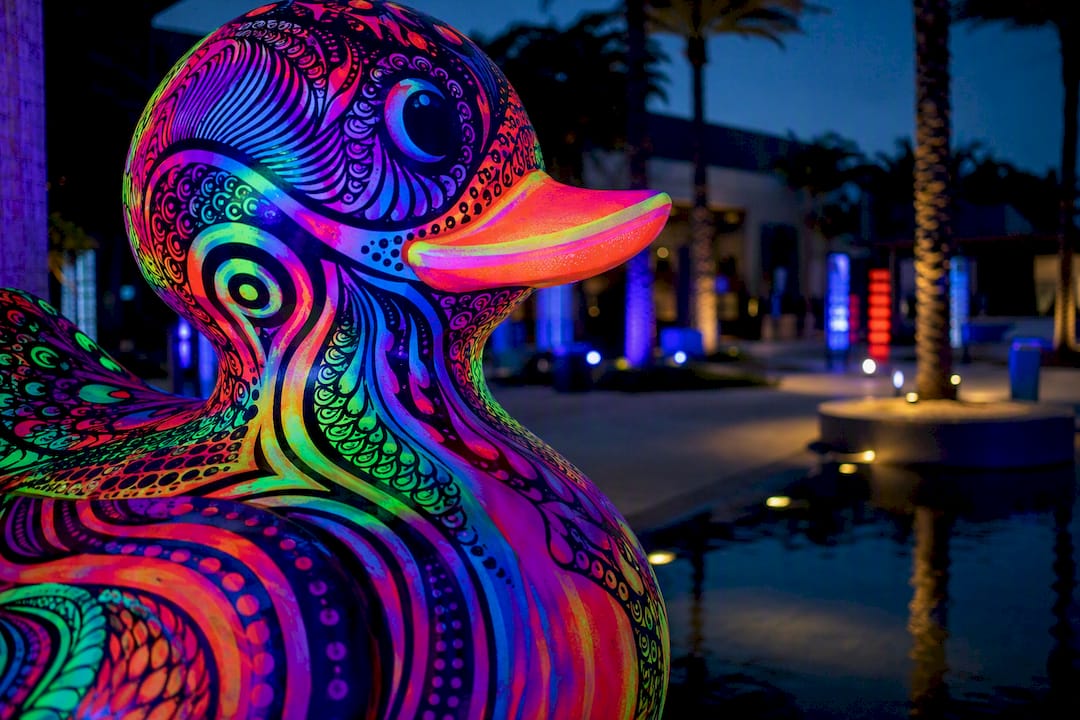
Pro Tip: Design for shareability without flattening cultural meaning. Check sightlines from the most likely phone-camera angle, and check nighttime lighting, since UV-reactive and blacklight-activated pieces often outperform daytime-only work on evening foot traffic and repeat photo shares.
What Are the Steps to Plan Public Art for Tourism Outcomes?
Five steps turn a commissioned piece into a working tourism asset rather than a photo op that fades from relevance within a season.
- Map and site-select. Objective: identify a corridor with existing or plausible foot traffic. Key actors: tourism board, urban planning department. Typical duration: 4 to 8 weeks. Checklist: confirm sightlines and pedestrian volume data before locking a location, using guidance on spatial layout for large installations.
- Community co-creation. Objective: align content with local identity, not just visitor appeal. Key actors: local artists, resident associations, cultural nonprofits. Typical duration: 6 to 12 weeks. Checklist: hold at least one public design review before fabrication begins.
- Funding and partnership model. Objective: secure a mix of capital and ongoing maintenance funding. Key actors: municipal grants office, business improvement district, private sponsors. Typical duration: runs parallel to steps 1 and 2.
- Installation and compliance. Objective: meet permitting, safety, and accessibility codes. Key actors: public works, permit office, fabricator. Typical duration: 2 to 6 weeks depending on scale.
- Activation and programming. Objective: build a recurring calendar of events tied to the art. Key actors: tourism marketing team, local businesses. Typical duration: ongoing.
Funding sources differ by context. Small towns tend to lean on public grants and business micro-sponsorship because tax-levy mechanisms need a larger visitor base to justify. City cores can layer in tourism taxes and private commissions, especially where hotels or commercial developers benefit directly from the added foot traffic.
Governance needs a named owner for each function: a cultural organization for artistic direction, a tourism board for marketing, a maintenance lead for upkeep, and a separate owner for signage and interpretation so visitors understand what they’re looking at.
Pro Tip: Treat the maintenance budget as non-negotiable, not a stretch goal. Build a lifecycle cost estimate into the original project brief so a five-year repaint or repair isn’t a surprise line item nobody planned for.
How Do You Measure Public Art’s Impact on Tourism?
Track a small core set of indicators: footfall, dwell time, social media mentions and geo-tags, a business sales proxy, and short visitor surveys. For deeper rigor, the VER and CAAS framework used in the Hangzhou tourism village comparison measures how visually exposed an artwork is within its surroundings and scores its aesthetic and spatial fit, which is worth adopting when a project needs academic-grade evaluation for a grant application.
Three low-cost methods work for most municipal budgets:
- Pedestrian counters or manual counts at the site before and after installation.
- Short intercept surveys asking visitors why they stopped and whether the art influenced their route.
- Social listening on Instagram and TikTok, tracking geo-tagged posts and hashtag volume tied to the location.
Capture a baseline before installation, then follow up at 3 months and again at 12 months. Triangulate at least two data sources, since foot traffic alone can be misleading if a nearby event skews the count.
What Are the Risks of Public Art Projects and How Do You Mitigate Them?
Public art delivers real tourism upside, but it also carries predictable risks that planning has to account for up front rather than fix after the fact.
- Displacement and gentrification: rising rents near a newly popular corridor can push out the residents and small businesses that gave the area its character. Mitigate with community benefit agreements tied to the project approval.
- Cultural mismatch: art that ignores local history reads as imposed rather than reflective. Mitigate with a content review panel that includes resident representatives, not just curators.
- Maintenance backlog: a mural that fades or a sculpture that rusts undercuts the brand it was meant to build. Mitigate with a dedicated maintenance reserve fund set at the outset, following the lesson from mural-based tourism research that unplanned upkeep undermines long-term impact.
- Vandalism: anti-graffiti coatings and community stewardship reduce this more effectively than surveillance alone.
- Overcommercialization: turning every surface into a sponsored ad backdrop erodes the authenticity that made the piece shareable in the first place.
Fold monitoring into the local planning approval process itself, and require a maintenance bond as a condition of permit issuance, not an optional add-on.
Case Studies: What Do Successful Public Art Tourism Projects Look Like?
Three examples illustrate transferable patterns. In Muar Town, murals became informal check-in points, and a survey of 392 residents found moderate satisfaction with current work but stronger optimism about future mural development, a signal that early wins build political support for expansion. In Pekan Parit, Perak, 88.3% of surveyed residents rated murals and installations as valuable for both cultural preservation and visitor attraction, showing that resident buy-in and tourism value aren’t competing goals. In Hangzhou, the comparative VER/CAAS study of two tourism villages found that one location with fewer but better-sited artworks outperformed the other on visitor engagement, proving quantity is a weaker lever than placement.
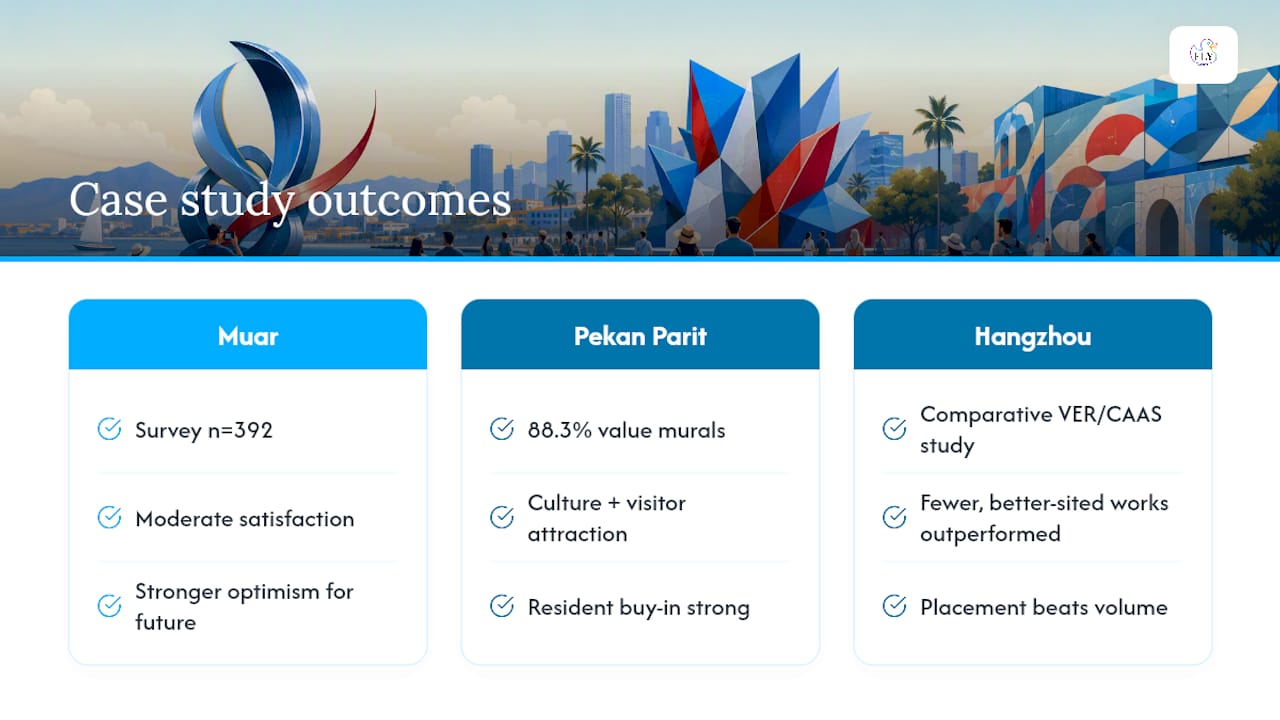
The transferable lesson across all three: local ownership and thoughtful siting outperform sheer volume of installations every time.
A workable pilot blueprint for a small city: one corridor, one to three artworks, a budget in the low five figures to mid five figures depending on scale and material, and a 6 to 12 month window before the first formal evaluation. Cite these studies directly in grant proposals or council reports where evidence of resident support or measurable outcomes is required.
How Can Public Art Engage Diverse Tourist Demographics?
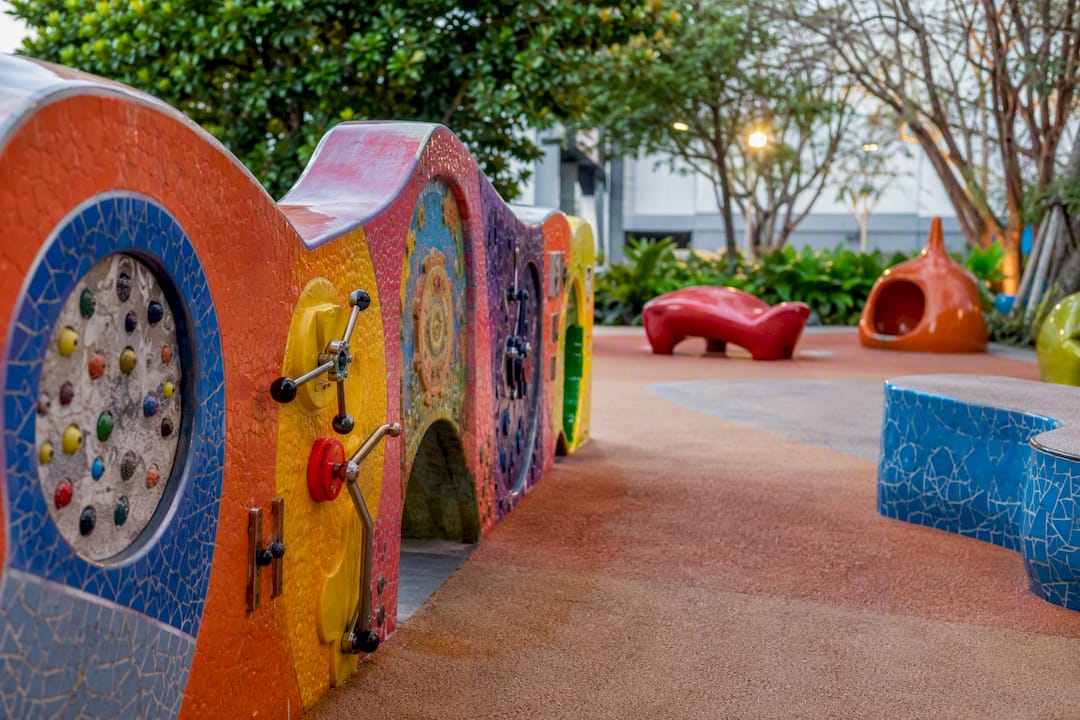
Different visitor segments respond to different design choices, and treating “tourists” as one audience wastes an installation’s potential reach. Families gravitate toward interactive, hands-on pieces with safe, open sightlines. Younger travelers and social-media-driven visitors respond to bold color, movement, and after-dark visibility, which is part of why UV-reactive and blacklight-glow artwork tends to generate disproportionate nighttime foot traffic and photo shares compared to daytime-only pieces.
Cultural heritage travelers look for work that connects to local history or craft traditions rather than generic decorative pieces, so pairing an installation with interpretive signage or a QR-linked story matters more for this group than for casual visitors. Accessibility also determines who gets to participate at all: wheelchair-accessible viewing areas, tactile elements for visitors with low vision, and multilingual signage widen the audience without adding significant cost.
Seasonal and event-based programming reaches yet another segment. Tying an installation to a festival weekend or a themed art trail draws repeat visitors who might otherwise see the corridor once and never return. Partnering with cultural trip curators, similar to the personalized itinerary approach used in cultural travel curation, helps route different demographic segments toward the specific pieces and stories most likely to resonate with them.
The practical takeaway: design one signature piece for broad appeal, then layer in smaller interventions, signage, and programming aimed at the specific segments a destination most wants to grow.
How Does Digital Technology Enhance Public Art’s Visitor Experience?
Physical installations increasingly pair with digital layers that extend their reach well past the people standing in front of them. Augmented reality overlays let a visitor point a phone at a mural and see an animated version, a historical photo, or an artist interview, turning a static piece into a repeatable experience across visits. QR codes on interpretive signage link to artist background, funding partners, or a self-guided walking trail, all without the cost of printed brochures that go out of date.
Interactive elements built directly into the artwork, motion sensors, sound triggers, or lighting that responds to touch, keep visitors engaged longer than passive viewing does, which matters directly for the dwell-time metric tied to nearby business spillover. UV-reactive materials serve a similar function without needing any electronics at all: the artwork itself transforms under blacklight, giving daytime and nighttime visitors two distinct experiences from a single installation, which is part of why interactive civic art examples increasingly favor materials that shift rather than static paint.
Geo-tagged digital art trails, built through a city’s own tourism app or a third-party platform, let visitors collect a set of installations across a district, which extends a single-site visit into a multi-hour or multi-day itinerary. The technology layer costs little relative to fabrication, and it’s often the difference between an installation people photograph once and one they return to.
How Does Public Art Support Local Artists and Cultural Heritage?
Commissioning local artists rather than importing outside talent does two things at once: it builds authentic connection to place, and it keeps a larger share of the project budget circulating in the local economy. Visitors can tell the difference between art that reflects a place’s actual history and generic decorative work dropped in for foot traffic, and cultural heritage travelers specifically seek out the former.
Public art projects also function as a career pipeline. A commissioned mural or sculpture gives an emerging local artist visible, high-traffic exposure that a gallery show rarely matches, and it often leads directly to further commissions from businesses or private collectors who saw the public piece first. This is the same dynamic behind FLY Miami Art’s approach to sculpture in public placemaking: a strong civic piece builds an artist’s reputation well beyond the installation site itself.
Cultural heritage integration works best when the artist collaborates with local historians, elders, or cultural organizations rather than working from a brief alone. A mural referencing a town’s founding industry or a sculpture drawing on regional folklore carries interpretive weight that a purely decorative piece doesn’t, and it gives tourism marketing a genuine story to tell instead of a manufactured one. Municipal plans increasingly formalize this connection directly. The Limerick tourism strategy embeds public realm art projects into its destination alignment policy rather than treating them as isolated one-off commissions.
What Marketing Tactics Work Best for Public Art Installations?
An installation only drives tourism if people know it exists before they arrive, which makes marketing as much a part of the project as the fabrication budget. Coordinated launch events, timed to a festival weekend or paired with a local restaurant or hotel promotion, generate an initial spike of social coverage that a quiet unveiling never produces.
Hashtag campaigns and designated photo spots give visitors an easy way to tag a location, feeding the geo-tagged social data planners can later use for measurement. Tourism boards that pre-brief local press and influencers ahead of an unveiling see faster visibility ramp-up than boards that wait for organic discovery. Packaging the art into a broader itinerary, a self-guided art trail brochure, a partnership with a local walking tour operator, or a discount bundle with nearby cafes, converts a photo opportunity into an actual spending occasion.
Cross-promotion with adjacent sectors extends reach further. Pairing an art trail with urban food tourism experiences, for instance, lets a destination market culinary and visual attractions as a single package, doubling the reasons a visitor books a trip. The Egypt strategy report frames this exact kind of bundling, art corridors linked to retail districts, as one of the lowest-cost ways to diversify a tourism offering without new infrastructure spending.
What Is the Typical Timeline for a Public Art Tourism Project?
A public art project built for tourism outcomes typically runs 6 to 18 months from concept to full activation, depending on scale and permitting complexity. The first 4 to 8 weeks cover site selection and feasibility, confirming pedestrian data and sightlines before any artist is engaged. Community co-creation and artist selection generally take another 6 to 12 weeks, running design reviews and gathering resident input before fabrication locks in.
Funding and partnership arrangements often run in parallel with design, since grant cycles and sponsorship agreements rarely align neatly with a fabrication schedule. Installation and compliance, covering permits, safety review, and physical build, typically takes 2 to 6 weeks for a mid-scale piece, longer for large sculptural work requiring structural engineering sign-off.
Activation is not a single event but an ongoing phase: the first formal marketing push and launch event happen at installation, with a full measurement cycle (baseline, 3-month, and 12-month follow-up) extending well past the physical completion date. Planners should budget for at least a full year of programming and evaluation after unveiling, since the tourism impact data that justifies future funding rarely materializes in the first few weeks.
A Practitioner’s Note on What Actually Moves the Needle
I’ve watched enough public art projects succeed or stall to know the difference usually comes down to two things: photogenic sightlines and a maintenance plan nobody skipped. The art that gets shared is the art that was designed to be seen from where people actually stand, not from a rendering.
Pro Tip: Time your unveiling to an existing festival weekend, and partner with a nearby restaurant or café for a launch package. Borrowed foot traffic from an event you didn’t have to build is the cheapest marketing you’ll ever get.
Frequently Asked Questions
What is the role of public art in tourism development? Public art increases destination visibility, extends visitor dwell time, and drives spending at nearby businesses when it’s integrated into routes, marketing, and local partnerships rather than installed as a standalone piece.
How does public art attract tourists? It attracts tourists primarily through photogenic, shareable design that spreads on social media before visitors even arrive, combined with physical placement along routes tourists already walk.
What metrics should planners use to measure public art’s tourism impact? A core set works for most budgets: pedestrian footfall, dwell time, social media geo-tags, a business sales proxy, and short visitor surveys, with VER/CAAS methodology available for deeper academic-grade evaluation.
How much does a public art tourism project typically cost? Costs vary widely by scale and material, but a small city pilot with one to three artworks along a single corridor typically runs in the low to mid five figures, not counting long-term maintenance reserves.
What are the biggest risks in public art tourism projects? Gentrification, cultural mismatch, maintenance neglect, and overcommercialization top the list, and each has a specific mitigation, from community benefit agreements to dedicated maintenance funds, that should be built into the project brief from the start.
Sources
These sources support the evidence used throughout this guide and translate directly into grant proposals or council reports.
- Efficacy assessments of public artworks intervening in rural built environments for tourism developments: a comparative study of two tourism villages in Hangzhou
- PUBLIC ART AS A CATALYST FOR CULTURAL REVITALIZATION AND TOURISM IN SMALL TOWNS: A CASE STUDY OF PEKAN PARIT, PERAK
- Academic article on culture, attention, and digital sharing (economy of attention)
- Egypt taps public art to boost tourism and urban revitalisation
For commissioning original sculpture, wall art, or custom installations designed for public visibility and after-dark activation, FLY Miami Art works directly with municipalities, cultural organizations, and commercial partners on public commissions.