
What Bespoke Sculpture for Interiors Means, and How to Commission One
Bespoke sculpture for interiors is a made-to-brief piece designed, sized, finished, and installed for one specific room, not adapted from an existing mold or catalog. It exists because a client and a studio agreed on a subject, a scale, a material, and a finish before a single tool touched raw material.
Get it right and you gain three things: a piece that fits its wall or corner the way tailored clothing fits a shoulder, a visual story tied to your space rather than a generic gallery theme, and an asset that tends to hold or grow in value because no one else owns a copy. Start by measuring your site (ceiling height, sightlines, clear floor space) or gathering three to five inspiration images, then bring both to a designer or studio for an initial conversation.
Key Takeaways
Bespoke interior sculpture succeeds when the brief starts with the room itself, moves through staged approvals, and matches material to the space’s light, weight limits, and daily use.
| Point | Details |
|---|---|
| Bespoke means negotiated, not selected | Subject, scale, material, and finish are agreed upon for your specific space, not chosen from preset options. |
| Measure before you design | Confirm ceiling height, sightlines, and clearance with a physical mockup before fabrication starts. |
| Approvals protect your budget | Sign off at the sketch and maquette stages to avoid costly late-stage scope changes. |
| Material choice drives both cost and care | Bronze, steel, resin, and wood each carry different weight, maintenance, and lighting needs. |
| Flymiami adds a UV-reactive layer | Its commissions can shift in appearance between daylight and blacklight, a distinct option within the sculpture collection. |
Table of Contents
- What Is Bespoke Sculpture for Interiors, Exactly?
- Materials and Finishes for Indoor Bespoke Sculpture
- Sizing and Placing a Sculpture for Your Room
- How the Commissioning Process Works, Step by Step
- What Bespoke Sculpture Actually Costs
- Making Sure the Installation Is Structurally Sound
- Keeping Your Sculpture Looking Its Best for Decades
- Choosing the Right Artist or Studio for Your Commission
- Case Study: Commissioning a Bespoke Piece With Flymiami
- Why Physical Sculpture Still Matters in a Digital Age
- Ready to Start Your Own Bespoke Commission?
- Frequently Asked Questions
- Sources
What Is Bespoke Sculpture for Interiors, Exactly?
“Bespoke” gets thrown around loosely in home decor marketing, often to describe a piece you picked from three preset colors. That’s customization, not bespoke. True bespoke work is a negotiated brief where the subject, scale, material, and finish are worked out between you and the studio for your particular architecture and sight lines, according to Decorilla’s design guide. One industry critique in the Observer makes the same point more bluntly: bespoke should mean a collaborative dialogue between client, artist, and space, not a styled commodity with a fancier price tag.
Here’s the practical difference:
- Mass-produced/catalog art: same design sold to any buyer, sized for a generic space, no input on materials.
- Customization: you choose from existing options (a size variant, a color swatch, a base finish) within a fixed template.
- True bespoke: the concept itself is built around your room, your light, your walls, and often your personal story or brand identity.
That distinction matters because interiors live or die on spatial harmony. A sculpture sized for a showroom rarely reads correctly in a residential foyer with an 8-foot ceiling. Bespoke work solves that by designing for your dimensions from the first sketch, which is also why three-dimensional pieces tend to anchor a room’s design in ways flat wall art often can’t.
Pro Tip: Before you contact any studio, write down your project goals, your must-see sightlines (the spots people will actually view the piece from), and a firm budget ceiling. Studios waste less of your time, and their own, when the brief arrives with real constraints attached.
Materials and Finishes for Indoor Bespoke Sculpture
Material choice shapes weight, cost, maintenance, and how light behaves around the piece, so this decision deserves more thought than picking a color.
- Bronze: warm, durable, develops a living patina over decades. Heavy, so it needs floor or wall reinforcement. Suits libraries, studies, and traditional interiors where a sculpture should feel permanent.
- Stainless steel: reflective, contemporary, resists tarnishing indoors. A mirror-polished finish reads sharp under gallery lighting, which is why it shows up so often in modern lobbies and corporate atriums.
- Resin and fiberglass: lightweight, cost-effective for large forms, easy to pigment or texture. Less heat-tolerant near direct sun exposure through glass, so placement matters.
- Wood: tactile and warm, but sensitive to humidity swings, meaning climate-controlled interiors serve it better than sunrooms or entryways with fluctuating temperatures.
- Mixed media: combines two or more of the above, often used when a concept needs contrast, like polished metal against raw timber.
- Painted and UV-reactive surfaces: standard paint gives full color control; UV-reactive pigments add a second layer that only reveals itself under blacklight, a specialty Flymiami builds entire commissions around.
Pairing material to use case avoids expensive regrets. A mirror-polished stainless piece anchors a minimalist lobby with strong overhead lighting, while a patinated bronze figure suits a dim, book-lined study where warmth matters more than shine. UV-reactive finishes bring something neither can: a piece that shows one story under daylight and a completely different one under blacklight, which works especially well in lounges, media rooms, or any space designed for evening entertaining. Fabrication techniques for custom interiors sculpture span casting, forging, laminating, and welding, and the finish stage (patination, powder coating, UV pigment layering) is where a lot of the visual personality actually gets built. Ask any studio how they handle finish durability indoors, since that’s a fair proxy for how seriously they take the details.
Sizing and Placing a Sculpture for Your Room
Scale mistakes are the most common regret in commissioned art, and they’re almost entirely avoidable with a tape measure and a bit of patience before fabrication begins.
Walk the room first and note:
- Clear floor area available, including a buffer zone for foot traffic
- Ceiling height and any overhead obstructions (beams, fixtures, sprinkler heads)
- Door widths and hallway turns the piece must pass through during install
- Sightline heights from both seated and standing viewpoints
Then test the scale before committing fabrication resources to it:
- Cut a cardboard silhouette or use painter’s tape on the floor and wall to outline the piece’s footprint and height.
- Live with that mockup for a few days, walking past it from different entry points in the room.
- Photograph it from your main seating area and your typical arrival point (front door, stairwell, hallway) to check how it reads at a glance.
- Adjust the outline and repeat until the scale feels resolved, not just acceptable.
Circulation, lighting direction, and backdrop color all change how a sculpture reads. A piece that looks bold against a plain white wall can disappear against a patterned one, and a form lit only from above will cast shadows that a side-lit version never would. Large-scale single statements consistently outperform multiple small pieces in both visual impact and installed cost efficiency, a lesson that applies just as well to a residential entry as to a corporate lobby.
Pro Tip: Check sightlines from where people actually sit and arrive, not just from the doorway you happen to be standing in when you first imagine the piece. A sculpture that looks perfect from a single photo angle can feel oddly placed from the sofa every guest actually uses.
How the Commissioning Process Works, Step by Step
Every serious bespoke commission follows roughly the same sequence, whether you’re working with an independent sculptor or a full studio. According to a buyer’s guide to sculpture commissions, the process typically runs:
- Discovery and brief: you share the space, budget, style references, and intent. Good studios start with the site itself rather than jumping straight to subject matter, a principle David Harber’s commissioning guide treats as foundational.
- Concept sketches: the artist proposes two or three directions based on your brief.
- Maquette or 3D model: a scaled physical or digital model lets you approve form and proportion before full fabrication starts.
- Fabrication: the piece is built at full size in the chosen material.
- Finishing and patination: surface treatment, coloring, or UV pigment work happens here.
- Delivery and professional installation: many studios handle crating, freight, and site install directly rather than handing that risk to you.
Your contract should nail down more than price. Require a written deliverables list, defined approval stages tied to the steps above, a payment schedule split across milestones, clear IP and resale/edition terms, and confirmation of insurance covering transit and install. This isn’t paperwork for its own sake. Approvals locked in at the sketch and maquette stages are what prevent a $40,000 scope change from surfacing after the bronze has already been poured, a risk commercial procurement guidance treats as a primary reason to specify materials and sizing early rather than mid-project.
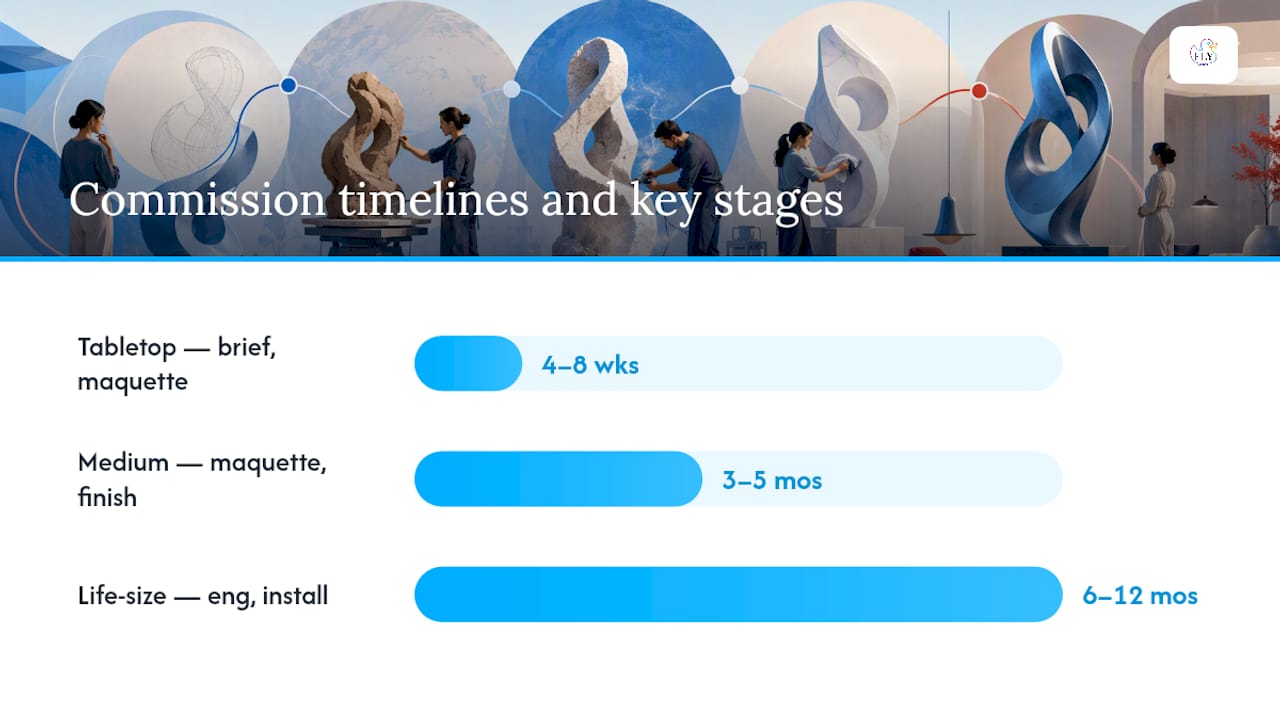
Timelines vary widely by scope. A tabletop commission might run 4 to 8 weeks from brief to delivery. A medium freestanding piece, say 4 to 6 feet, often takes 3 to 5 months once you account for maquette approval and finish curing. A life-size or architecturally built-in work can run 6 to 12 months, particularly when custom engineering or on-site installation coordination is involved.
What Bespoke Sculpture Actually Costs
Price swings enormously in this category, and the variables are worth understanding before you request a quote so the number doesn’t feel arbitrary.
The main drivers are material choice (bronze costs far more than resin per pound), overall scale and weight, engineering requirements for anything freestanding or wall-mounted above a certain height, finish complexity (hand patination and multi-layer UV pigment work both add hours), tooling and mold-making for cast pieces, the artist or studio’s own rate, and shipping plus professional installation.
Rough bands, based on typical market scope rather than any single studio’s price list:
- Small tabletop commission: a compact piece under roughly 2 feet, simpler material like resin or small-scale metal casting, with a shorter production window.
- Medium freestanding piece: a 3 to 6 foot statement piece, often the centerpiece of a living room, lobby, or stairwell landing, involving a full maquette approval cycle.
- Large life-size or built-in work: pieces integrated into architecture or exceeding 6 feet, requiring structural engineering, custom crating, and a coordinated install team.
Pro Tip: Build in a contingency for engineering revisions, crating, and install logistics, and split payments at each approval milestone rather than paying a lump sum upfront. It protects both you and the studio if the scope shifts after the maquette stage.
Making Sure the Installation Is Structurally Sound
A sculpture that looks stunning in a maquette photo can become a liability if the mounting hardware or floor loading wasn’t engineered for its actual weight. This is not a step to skip or delegate casually.
Before installation, confirm:
- Load-bearing capacity of the floor or wall where the piece will sit or hang
- Mounting hardware rated specifically for the piece’s material and weight, not generic picture hooks or anchors
- Anti-tip bracing for any tall or top-heavy freestanding form, especially in homes with children or pets
- Protective base finishes in high-traffic zones where foot contact or vacuum cleaners are likely
When vetting an installer or engineer, ask about their experience with similar weights and materials, request proof of insurance, and ask for a written method statement describing exactly how they’ll secure the piece. For anything freestanding above roughly 5 feet or any wall-mounted piece over 40 pounds, a professional engineer’s sign-off is worth the fee. Delicate finishes like hand-applied patina or UV-reactive pigment layers also deserve a specific crating strategy discussed upfront, not figured out on delivery day. Structural engineering guidance for public sculpture covers many of the same fixing principles that apply at residential scale, just with lower stakes.
Keeping Your Sculpture Looking Its Best for Decades
Care routines differ by material, and getting this wrong is how a beautiful patina turns patchy or a resin surface goes cloudy within a couple of years.
- Bronze: dust regularly, apply wax coating every 12 to 18 months to protect the patina, avoid direct handling with bare hands (skin oils accelerate uneven tarnishing).
- Stainless steel: use a soft microfiber cloth and a steel-specific polish; avoid ammonia-based glass cleaners, which can dull the finish over time.
- Resin and fiberglass: clean with mild soap and water; keep away from prolonged direct sunlight, which can yellow the surface.
- Wood: dust with a dry cloth, control humidity between roughly 40 and 55 percent, and avoid placing near heating vents or exterior doors.
Never use abrasive scrubbers or generic household cleaners on a patinated or painted surface. UV-reactive pigments in particular can degrade under excessive direct sunlight exposure, so placement away from unfiltered south-facing windows extends their life.
Pro Tip: Schedule a professional inspection every 3 to 5 years for pieces with complex finishes or mechanical mounts. Small issues like a loosening bracket or a hairline patina crack are cheap to fix early and expensive to fix after they’ve caused damage.
Choosing the Right Artist or Studio for Your Commission
Not every talented sculptor runs a process built for client commissions, and that gap is where most disappointing projects come from.
Look for a documented process: sketches, maquettes, 3D models, and ideally photos of past finished installs in real homes or venues, not just studio shots. Ask for references you can actually call, not just a testimonials page. Confirm they carry insurance and either handle installation directly or work with vetted installers.
Ten questions worth asking any studio before signing:
- What does your typical timeline look like for a piece this scale?
- How many approval stages happen before fabrication starts?
- What materials do you recommend for my space, and why?
- Who handles installation, and are they insured?
- What happens if I want changes after the maquette stage?
- What’s your payment schedule structure?
- Do I own exclusive rights, or could this design be reproduced?
- What warranty or aftercare do you offer?
- Can I see engineering documentation for freestanding or wall-mounted work?
- What’s your policy if the piece is damaged in transit?
Red flags include vague timelines with no milestone dates, no staged approval process (meaning you don’t see the piece until it’s finished), unclear language around intellectual property or resale rights, and reluctance to put payment terms in writing.
Case Study: Commissioning a Bespoke Piece With Flymiami
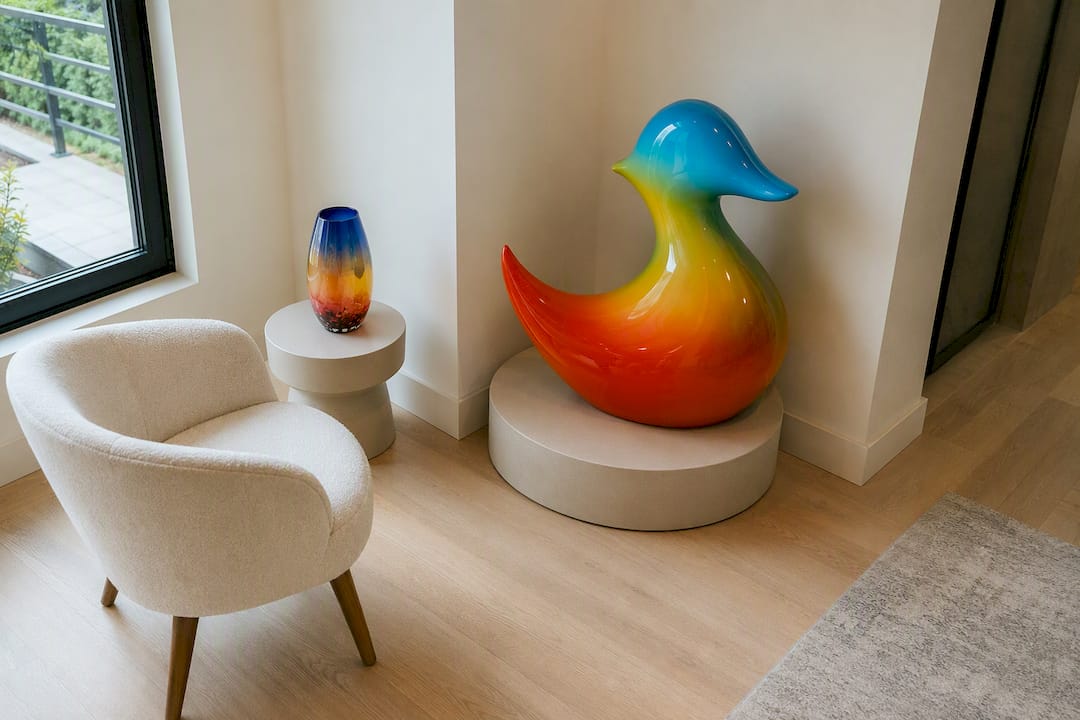
A recent residential commission illustrates the workflow in practice. The client brief called for a statement piece for a media lounge, something that would read as vibrant pop art in daylight and transform completely once the room’s blacklight fixtures switched on for evening use. Concept sketches moved to a scaled maquette within a few weeks, giving the client a chance to approve proportion and color direction before full fabrication began. The final piece combined a mixed-media base with UV-reactive pigment layering, a signature approach documented on Flymiami’s studio process page. Before the install, the corner felt like unused space.
Before the install, the corner felt like unused space. Afterward, it became the room’s focal point twice over, once under normal lighting and again after dark.
The piece behaves like two different sculptures depending on the hour. During the day it’s bold and graphic. At night, under blacklight, patterns emerge that you’d never guess were there. Guests notice the shift within seconds of the lights changing.
That kind of dual experience is difficult to achieve with a catalog piece, and it’s exactly the kind of narrative depth a true bespoke brief makes possible.
Why Physical Sculpture Still Matters in a Digital Age
Screens can simulate almost anything now, but they can’t replicate walking past a piece a hundred times and noticing something new on the hundred-and-first. Physical presence creates memory in a way a scrolling feed doesn’t. A sculpture holds light differently depending on the hour, gathers a faint patina of your household’s daily life, and anchors a room’s atmosphere in a way that’s hard to describe until you’ve lived with one.
Flymiami’s focus on UV-reactive works pushes that idea further: a single piece that tells two visual stories depending on the light in the room feels less like decor and more like an ongoing conversation with the space itself.
Ready to Start Your Own Bespoke Commission?
Flymiami works directly with homeowners, designers, and commercial clients to build sculpture and wall art around a specific room rather than adapting an existing piece to fit. The studio’s specialty, UV-reactive pop art that shifts under blacklight, gives you an option no catalog collection offers: one sculpture, two distinct visual experiences, day and night.
If you’re ready to talk through a commission, the fastest path is a short initial conversation. Come prepared with photos of the room, rough measurements (ceiling height and available floor or wall space matter most), and two or three style references that capture the mood you’re after. From there, Flymiami can walk you through concept direction and realistic timelines for your scope. Browse the current sculpture collection to see finished work and get a feel for scale and style before your first conversation, then reach out to start your own brief.
Frequently Asked Questions
What does “bespoke sculpture for interiors” actually mean? It means a sculpture designed, sized, and finished specifically for one interior space, negotiated between you and the studio rather than picked from an existing collection.
How is bespoke different from a customized piece? Customization lets you pick from preset options like size or color. Bespoke starts the design process from scratch around your room, budget, and story.
How long does a bespoke sculpture commission take? Small tabletop pieces typically have shorter production windows. Medium freestanding work generally requires several months, and large or built-in pieces can take about half a year or more, especially with engineering involved.
Do I need a structural engineer for an indoor sculpture? For freestanding pieces above roughly 5 feet or heavy wall-mounted work, yes. A professional sign-off protects both the piece and your home.
What makes UV-reactive sculpture different from standard finishes? UV-reactive pigments reveal hidden patterns and colors under blacklight, giving the piece two distinct appearances depending on the lighting in the room.
Sources
For deeper background beyond this guide, these sources are worth a look depending on your role in the project: