What Is Participatory Art in Galleries: A Clear Guide
Participatory art is defined as an artistic practice where audience involvement is not optional but constitutive. The work does not exist without the visitor’s contribution. This is the central idea behind what is participatory art in galleries, and it separates this practice from every other form of contemporary exhibition. Rooted in relational aesthetics, a theoretical framework developed by curator and critic Nicolas Bourriaud in the 1990s, participatory art treats social interaction as the medium itself. The finished object matters far less than the exchange it generates. For art enthusiasts, educators, and students, understanding this distinction is the first step toward engaging with these works on their own terms.
What is participatory art in galleries, and what does it look like?
Participatory art in galleries takes many forms, but the defining quality is always the same. Audience participation is a core element, not a bonus feature layered on top of a finished piece. The work is incomplete without the visitor. That is a radical departure from traditional gallery practice, where the viewer stands at a respectful distance and observes.
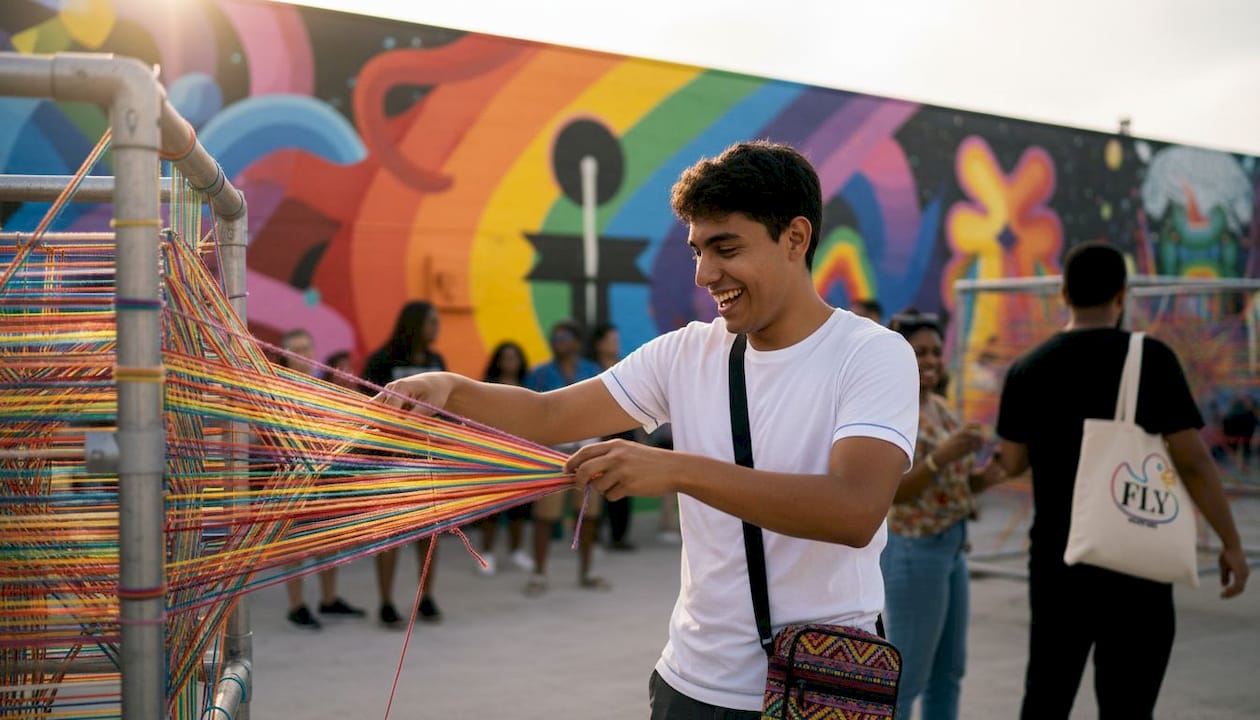
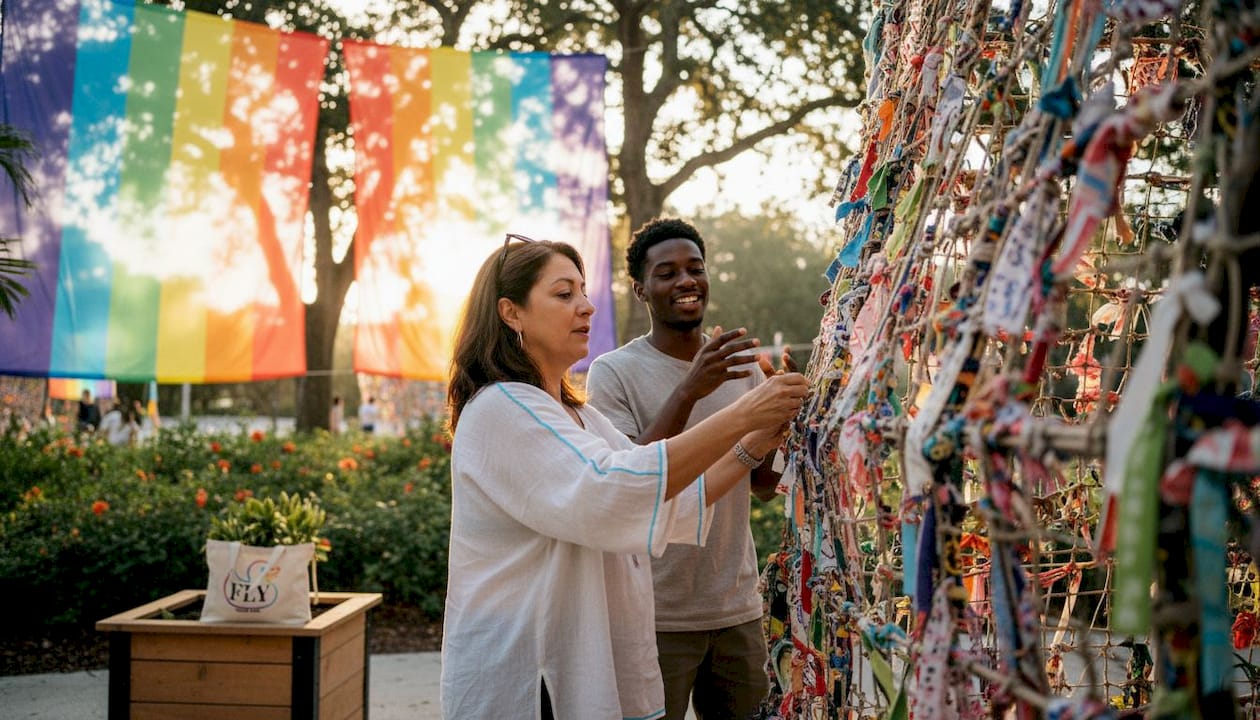
The range of engagement levels is wide. Some works ask for a single gesture. Others require weeks of commitment. Artist JR’s large-scale community tapestry at the Venice Biennale invited thousands of participants to contribute hand prints, collectively forming a monumental image of community care. Maarten Baas’s People’s Clock at Schiphol Airport is a 12-hour live performance where performers manually update a clock face in real time, making every passerby a witness and participant in the passage of time. Lina Lapelytė’s cube installation invited gallery visitors to inhabit a shared physical space over multiple months, building a collective presence that evolved with each new participant.
These examples share a structure: the artist sets the conditions, and the audience completes the work.
- Single-interaction works: Visitors touch, move, or respond to a prompt once. The contribution is brief but still constitutive.
- Workshop-based projects: Participants sign up in advance and return over days or weeks, building something collaboratively.
- Technology-driven installations: Interactive technologies respond to movement, sound, or physical input, creating a unique evolving story shaped by each visitor’s engagement.
- Community archive projects: Participants contribute personal objects, stories, or images that become part of a growing collective record.
Pro Tip: When you visit a participatory work, read the artist’s statement before engaging. Understanding the intended framework changes the quality of your contribution and deepens the experience.
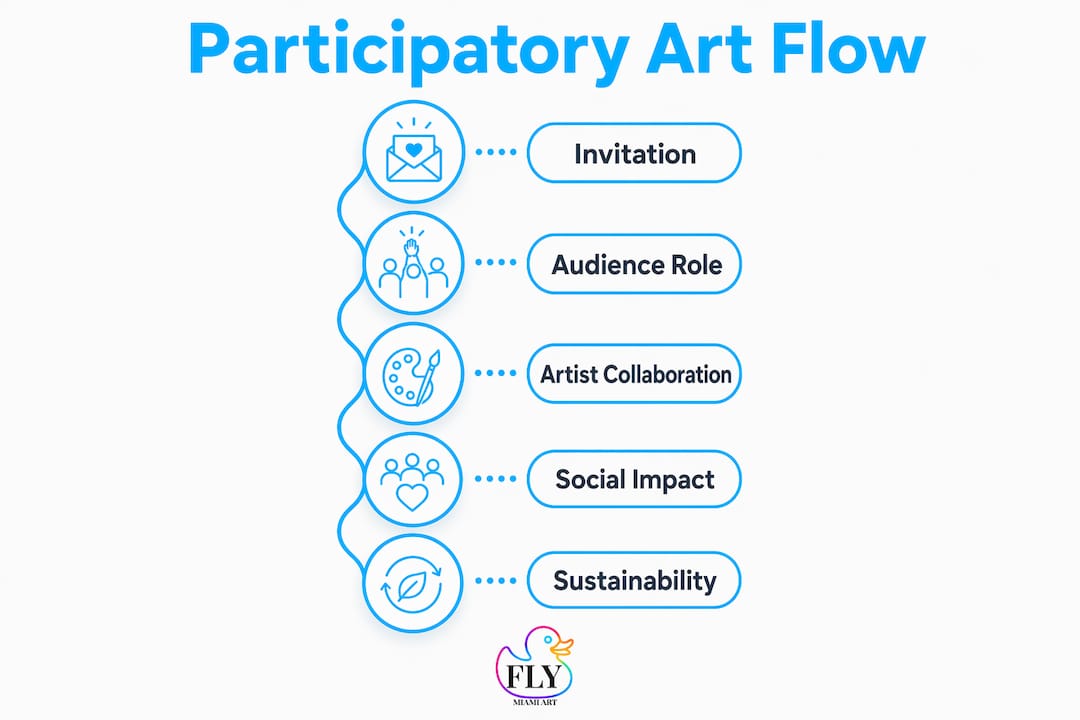
The scale of these works also varies. Some fit inside a single gallery room. Others, like JR’s Venice project, spread across entire public plazas and require months of logistical planning. The sustainability of materials used in these installations is increasingly a design consideration. Wooden cubes, facade panels, and printed surfaces are often donated or relocated after an exhibition closes, extending the social life of the work beyond its gallery run.
How participatory art redefines the artist’s role
The artist in a participatory work is not the sole creator. The role shifts to that of a social choreographer, someone who designs the conditions for interaction rather than producing a finished object for contemplation. This shift is fundamental to understanding why participatory art generates such strong reactions, both positive and resistant.
Nicolas Bourriaud’s relational aesthetics framework describes this precisely. The artwork is not the object on the wall. It is the social interaction it generates. Visitors who arrive expecting a beautiful thing to look at often feel confused or even cheated. That confusion is itself part of the work’s argument: that the communicative act between people holds more artistic value than any static surface.
“The artist’s role shifts to social choreographer, focusing on how participant interactions create communal narratives central to the artwork’s meaning. The audience is not an observer of the artwork. The audience is the artwork.”
This reframing has real consequences for how galleries present these works. Wall labels and audio guides become insufficient. Institutions need facilitators, trained staff who can guide visitors into meaningful engagement without scripting their responses. The artist becomes a rule-setter, and the participants become co-authors. Their contributions, whether physical, verbal, or behavioral, carry genuine artistic weight.
The distinction from traditional object-based art is not just philosophical. It changes the legal, logistical, and curatorial responsibilities of everyone involved. Who owns a work that thousands of people helped create? How do you document it? These questions do not have settled answers, and that open-endedness is part of what makes participatory practice one of the most contested and generative areas in contemporary art.
What are the social and community benefits of participatory art?
Participatory art does more than produce interesting gallery experiences. It functions as a tool for social repair, community building, and the amplification of voices that traditional art institutions have historically excluded.
Co-created artworks reflect diverse local identities and give communities shared ownership over cultural narratives. This is not a minor benefit. When a mural or installation is built by the people who live near it, the result carries a different kind of authority than one installed by an outside artist. The community recognizes itself in the work.
The social benefits of participatory art in galleries include:
- Inclusion and democratization: Participatory works actively lower the barrier between professional art and everyday experience. Anyone can contribute, regardless of training or background.
- Dialogue and consensus-building: The process of making something together requires negotiation. That negotiation is itself a form of civic practice.
- Support for marginalized voices: Projects focused on identity, migration, or memory give participants a platform to share experiences that mainstream culture often ignores.
- Community cohesion: Participatory art fosters community cohesion and cultural exchange, helping address socio-cultural urban development challenges in ways that conventional public art cannot.
- Collective memory creation: Archives, murals, and collaborative performances become records of a community’s shared history, preserved in a form that is both public and personal.
Sustainability is now woven into the social impact conversation. Artists increasingly plan the afterlife of their materials before a project begins. JR’s Venice installation used materials that were redistributed to community organizations after the exhibition closed. That decision extended the work’s social reach well beyond the gallery walls.
The institutional side of this equation is more complicated. Galleries face real pressure to balance open participation with coherent artistic structure. Too much structure and the work becomes a scripted performance. Too little and it collapses into chaos. Institutions face challenges balancing open participation with coherent structure to ensure meaningful artistic experiences. The best participatory works solve this problem through careful design, not through control.
How to engage with participatory art during a gallery visit
Engaging with participatory art requires a different mindset than visiting a traditional exhibition. The most common mistake visitors make is treating participation as optional. It is not. Participation is the art itself. Your contribution is not helping the artist. It is completing the work.
Here is how to approach these works with intention:
- Arrive without a fixed agenda. Participatory works resist passive consumption. Come ready to be changed by the experience, not just to observe it.
- Read the framing materials. Artist statements, facilitator introductions, and printed guides exist to orient you. Use them.
- Engage fully, not ironically. Half-hearted participation produces a diminished experience for you and for other participants. The work depends on genuine investment.
- Notice what the work asks of you. Some works ask for physical labor. Others ask for emotional disclosure. Understanding the ask helps you respond with appropriate depth.
- Reflect on your contribution afterward. What did you add? What did the interaction reveal? These questions are part of the artistic experience, not afterthoughts.
Pro Tip: If a participatory work offers a sign-up option for extended engagement, take it. Works like Maarten Baas’s People’s Clock show that sustained participation produces a qualitatively different experience than a single visit.
A common misconception is that participatory art is inherently accessible or easy. Some works are. Others make significant demands on participants’ time, emotional energy, or physical presence. Large-scale participatory projects require detailed logistics, including workshops and participant scheduling, to maintain engagement over time. Knowing this in advance helps you decide how deeply to commit and sets realistic expectations for what the experience will involve.
Key Takeaways
Participatory art is defined by the audience’s active contribution as a constitutive element of the work, not a supplement to it.
| Point | Details |
|---|---|
| Audience as co-creator | Participation is the art itself; visitors complete the work, not just observe it. |
| Relational aesthetics | Social interaction is the medium; the finished object is secondary to the exchange it generates. |
| Social and community impact | Participatory works build cohesion, amplify marginalized voices, and create shared cultural memory. |
| Artist as choreographer | The artist designs conditions for interaction, not a finished product for contemplation. |
| Engagement requires intention | Meaningful participation demands genuine investment, not passive or ironic involvement. |
Why participatory art is harder than it looks
I have spent years watching galleries struggle with participatory works, and the honest truth is that most institutions underestimate what they require. The logistical demands alone are significant. You need trained facilitators, flexible scheduling, and a clear framework that guides participants without scripting them. Get any one of those wrong and the work falls apart.
What strikes me most is how participatory art exposes the gap between what galleries say they value and what they actually support. Institutions claim to want community engagement and diverse voices. Participatory art delivers exactly that, and then galleries discover they are not structurally equipped to handle it. The work demands ongoing labor, not just an opening night.
The sustainability question is one I find genuinely exciting. Artists like JR are now designing the afterlife of their materials into the project from day one. That is a real shift in how artists think about social impact. The work does not end when the exhibition closes. It continues in the communities that receive the materials, the stories, and the shared memory of having made something together.
Participatory art also challenges collectors and enthusiasts to rethink what ownership means. You cannot hang a social interaction on your wall. What you can do is support the artists and institutions that make these works possible, and carry the experience of participation into how you think about all art. That shift in perspective is, I would argue, the most lasting benefit of the form. Exploring immersive pop art curation can show you how these principles translate into exhibition design that actually works.
— Facundo
Art that invites you in: Flymiami’s approach to immersive creativity
Flymiami’s work sits at the intersection of visual impact and experiential engagement. Artist Facundo Yebne builds sculptures and paintings that change depending on how you encounter them. Under standard light, the pieces are vivid and bold. Under blacklight, hidden patterns and colors emerge, making the viewer’s presence and movement part of how the work reveals itself.
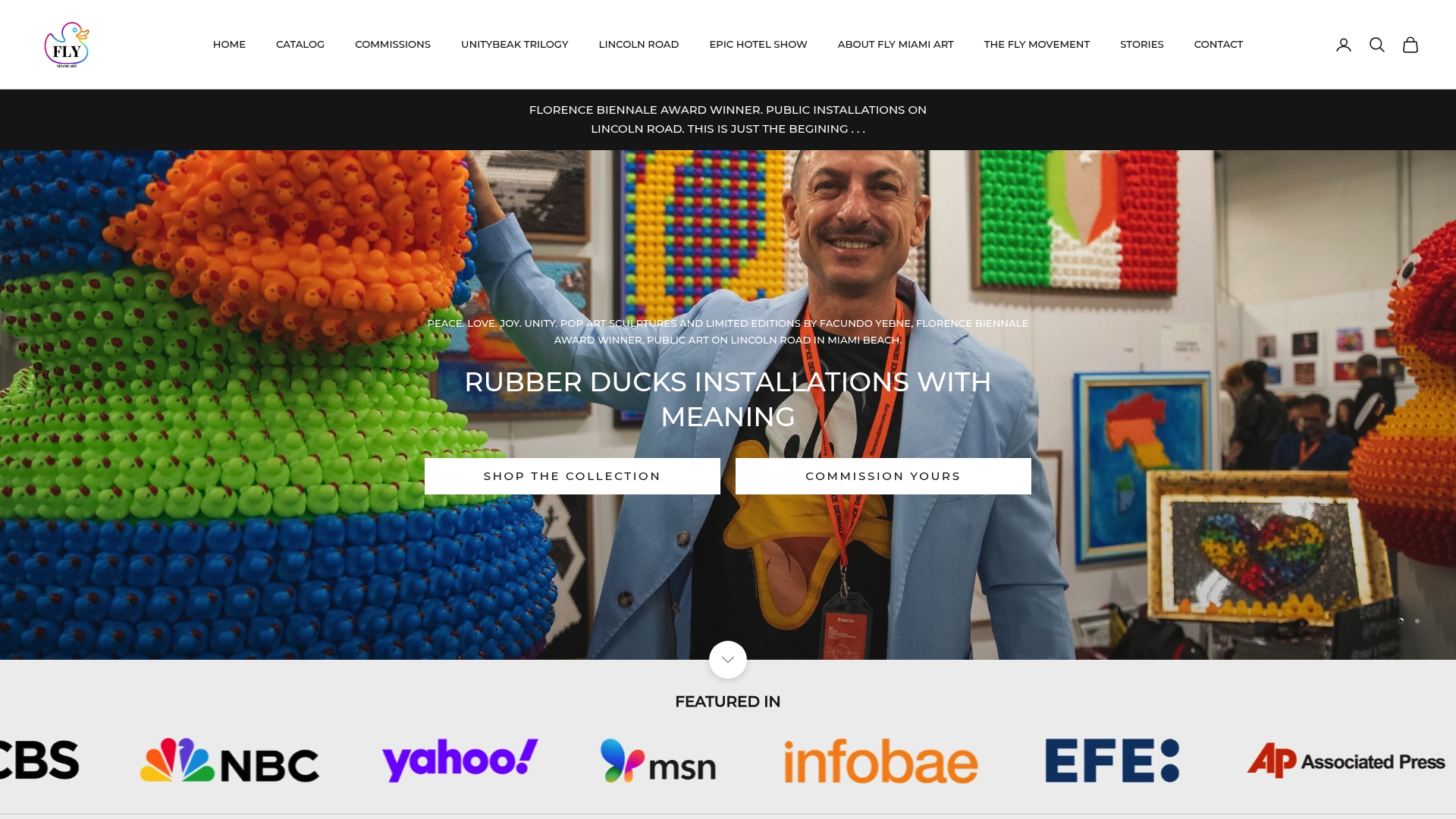
That responsiveness to the viewer is a form of participatory design. The work is not static. It shifts with you. Flymiami’s wall art collection and sculpture series are built for collectors who want art that does something, not just something that hangs quietly. If participatory art has taught you that your presence matters in a gallery, these pieces bring that same principle into your own space.
FAQ
What is the definition of participatory art?
Participatory art is defined as an artistic practice where audience involvement is a constitutive element of the work, not an optional addition. The artwork does not exist in its complete form without the visitor’s active contribution.
How is participatory art different from interactive art in galleries?
Interactive art responds to the viewer, often through technology, but the work remains essentially fixed. Participatory art goes further: the audience’s contributions shape the work’s meaning, content, or physical form, making viewers co-authors rather than just triggers.
What are some well-known participatory art examples?
JR’s 10,000-hand community tapestry at the Venice Biennale, Maarten Baas’s People’s Clock at Schiphol Airport, and Lina Lapelytė’s multi-month cube installation are widely cited examples of participatory works at different scales and engagement levels.
What are the benefits of participatory art for communities?
Participatory art builds community cohesion, amplifies marginalized voices, and creates shared cultural memory. Research shows it promotes inclusion, dialogue, and consensus-building in ways that traditional static art cannot.
How should I engage with participatory art during a gallery visit?
Arrive ready to contribute genuinely, read the artist’s framing materials, and treat your participation as the art itself rather than a supplement to it. Sustained engagement, when the work offers it, produces a qualitatively deeper experience than a single brief interaction.