How to Manage Hotel Art Procurement From Brief to Install
Hotel art procurement is the process of sourcing, commissioning, specifying, and installing artwork as a managed supply chain project, not a decorating afterthought. It runs on the same discipline as any other capital purchase: a brief, a vendor, a purchase order, a delivery window, and a sign-off. Before you touch a gallery catalog or an artist’s Instagram, request four things from any supplier: the artwork dossier, a lead-time matrix, a written sample policy, and a certificate of authenticity. Assign ownership early. Someone runs procurement, someone approves concepts, and someone signs off on installation. Those can be three different people, but they cannot be nobody.
Watch for risk points that bite late: commissioned pieces with long fabrication windows, customs delays on international shipments, and fragile glass-glazed work headed into high-traffic corridors.
- Request the artwork dossier and lead-time matrix before approving any concept
- Confirm the sample and mockup policy in writing
- Get a certificate of authenticity for every commissioned or limited-edition piece
- Name one approver for concept, one for budget, one for installation sign-off
Key Takeaways
Hotel art procurement succeeds when the installation date is locked first and every supplier delivers a dossier, sample, and condition report before production begins.
| Point | Details |
|---|---|
| Anchor the timeline | Lock the installation date and schedule every milestone backward from it. |
| Match lead times to category | Budget 2 to 6 weeks for stock prints and 8 weeks or more for commissioned installations. |
| Specify materials in writing | Require glazing, mounting, and lightfastness details in every purchase order. |
| Document condition before shipping | Photographic condition reports prevent disputes and speed damage claims on arrival. |
| Consider a studio partner | Flymiami handles brief-to-installation commissions with sampling and white-glove delivery built in. |
Table of Contents
- How Do You Turn Brand Identity Into an Art Direction?
- What’s a Realistic Procurement Timeline for Hotel Art?
- What Technical Specs Belong in Every Art Purchase Order?
- What Do Packing and Insurance Actually Require?
- How Should You Budget and Structure Art Purchase Orders?
- Where Should You Source Hotel Art?
- What Should Artists and Galleries Include in a Hotel Pitch?
- How Does a Working Studio Handle a Hotel Commission?
- Procurement Protects What Curation Creates
- Start a Hotel Art Commission With Flymiami
- Sources
How Do You Turn Brand Identity Into an Art Direction?
Art direction starts with the guest journey, not a mood board. Arrival, circulation, rest, and dining each ask something different from the work on the wall, and treating them identically is the fastest way to end up with a hotel that feels like a furniture showroom.
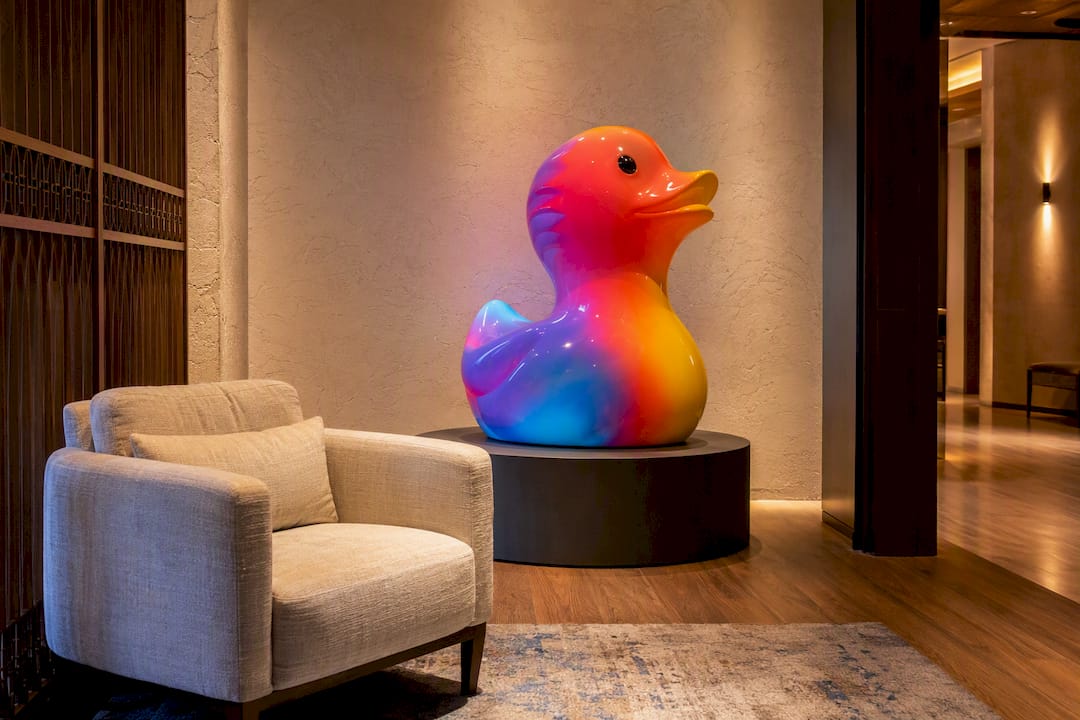
The lobby needs a statement piece, something with enough visual weight to anchor a first impression in the ten seconds a guest spends checking in. Guest rooms want the opposite: calming, repeatable work that won’t wear out its welcome after a three-night stay. Corridors take the most physical abuse in the building, so they need resilient materials and a rhythmic hang, pieces that read as a series when viewed in sequence rather than a random scatter of frames. Hospitality research backs this zone-based thinking: cultural installations shape guest experience directly enough that procurement teams need to get involved before the design freeze, not after.
Series logic solves the variety-versus-cohesion problem. Instead of sourcing 40 unrelated prints for 40 rooms, work in editions, a repeating color thread, or a single artist’s series scaled across floors. It reads as intentional and it’s dramatically easier to reorder or replace later.
Five roles need clear deliverables before production starts:
- Art consultant or curator — delivers the art brief and artwork matrix
- Procurement manager — owns the PO, timeline, and vendor communication
- Interior designer — provides elevations showing exact placement and scale
- Artist or supplier — produces mockups and the technical dossier
- Installer — executes and documents final placement
Curatorial thinking about pacing and guest engagement is worth studying before you write the brief; the approach to curating an immersive show applies just as well to a 200-room property as it does to a gallery floor.
Pro Tip: Ask every vendor for a one-page artwork matrix before you approve anything. If they can’t produce one showing dimensions, finish, and lead time per piece, they’re not set up for a multi-room hospitality order.
What’s a Realistic Procurement Timeline for Hotel Art?
Work backward from the installation date. That’s the single fix that prevents most hotel art disasters: teams build a timeline forward from “when we started shopping” instead of anchoring to the date the general contractor hands over the floor.
The milestone sequence looks like this: brief, concept approval, sample or mockup approval, PO issuance, production, pre-shipment inspection, delivery, and installation. Skip a gate and you’re doing rework on-site with a punch list crew standing around waiting.
Lead times vary enormously by category, and this is where most budgets get blown:
| Artwork type | Typical lead time |
|---|---|
| Ready-made prints (in stock) | 2 to 6 weeks |
| Made-to-order prints and custom framing | 4 to 10 weeks |
| Commissioned works and large installations | several weeks to months |
A 150-room property doing full rollout with commissioned lobby pieces should assume the art timeline starts before flooring selections are even finalized. Hospitality projects in particular run on compressed schedules where procurement needs to engage early because the art line item tends to get pushed to the end of planning meetings and then collides head-on with the opening date.
Sampling strategy matters more than most procurement managers give it credit for. Digital renderings are fine for early concept review, but insist on a physical sample before committing to a full order, especially for anything involving texture, metallic finish, or color that a monitor can’t render accurately. Pilot one room type first. Hang the actual pieces, check how they read under the installed lighting, and confirm housekeeping can clean around them without incident before you approve 150 identical units.
- Lock the installation date first and count backward
- Approve concept, then insist on a physical sample, not just a rendering
- Issue the PO only after sample sign-off in writing
- Schedule pre-shipment inspection as a hard milestone, not an afterthought
- Build in a buffer week between delivery and installation for damage claims
Contract terms matter here too. A clearly structured commission agreement should spell out what happens if a milestone slips, because vague delivery language is how an 8-week commission quietly becomes a 16-week one.
What Technical Specs Belong in Every Art Purchase Order?
Every PO needs material, framing, glazing, and mounting specs written down, not implied. Verbal agreements about “something durable” produce inconsistent results across a 200-piece order.
Match material to zone. Canvas works well in low-touch public areas; framed prints behind glazing suit guest rooms where housekeeping staff move through daily; metal prints hold up in high-humidity spaces like pool decks or spa corridors; sculpture finishes need a separate conversation about outdoor exposure if the piece sits on a terrace.
Glazing choice is a safety decision as much as an aesthetic one. Acrylic glazing in guest rooms cuts breakage risk substantially compared to glass, and it eliminates a housekeeping hazard that glass simply carries. Reserve true glass for low-touch public spaces where breakage risk is minimal and the reflective clarity matters more.
- Specify ink permanence and substrate lightfastness ratings, not just “archival quality”
- Confirm mounting hardware and anchor type per wall substrate (drywall, concrete, tile backing)
- Request weight and load verification with a documented safety factor on fixings
- Require a maintenance plan: spare pieces, cleaning instructions, and a touch-up policy in writing
Mounting specifications aren’t optional paperwork. Established FFE and mounting procedures exist for a reason: technical mounting and installation guidance covers load verification and fixture standards that keep a 40-pound metal print from becoming a liability claim. Ask your fabricator directly what fix-percentage safety margin they build into wall anchors for high-traffic corridor installs.
What Do Packing and Insurance Actually Require?
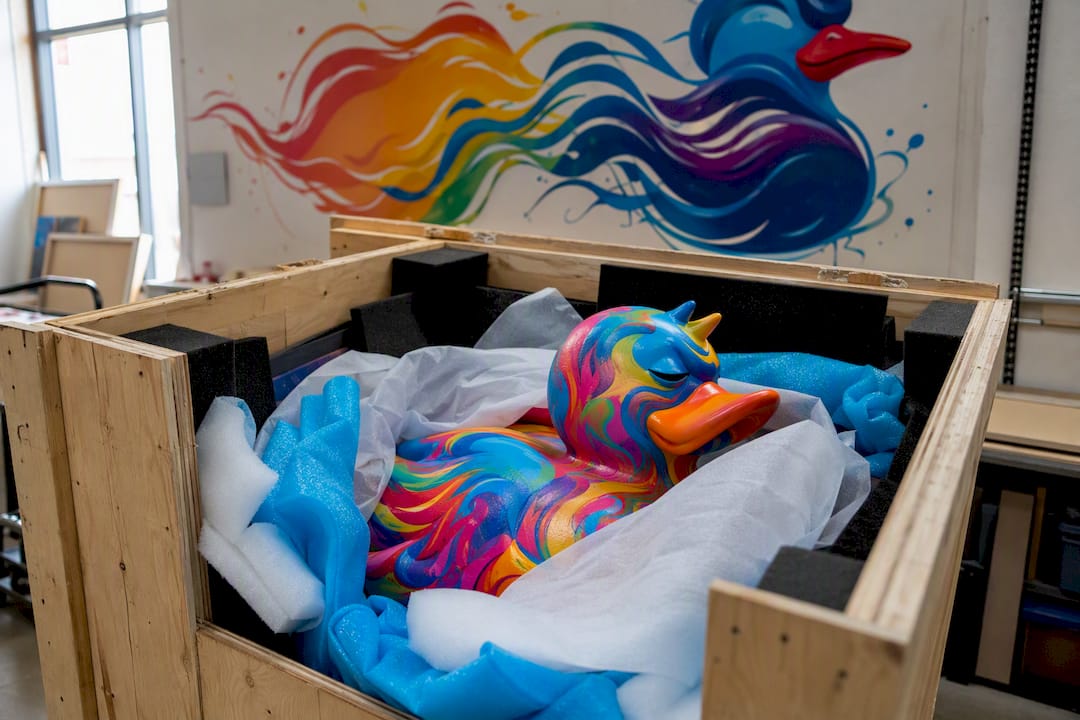
Museum-grade crating isn’t overkill for hotel art. It’s the standard that prevents the shipping damage that eats budgets and delays openings.
Every crate needs standardized labeling, and every piece needs a pre-shipment condition report with photographic evidence attached before it leaves the studio. This single document does more to prevent disputes than any contract clause: documented condition reports and museum-grade packing create the paper trail that resolves a damage claim in days instead of weeks. The practical handling and shipping procedures used across public art projects apply directly to hospitality rollouts of any scale.
- Require photographic condition reports at pickup and again at delivery
- Confirm all-risk transit and storage coverage, naming the hotel ownership entity and the artist or studio
- Get commercial invoices and, for international shipments, confirm whether CITES applies to any organic materials
- Assign a customs broker for cross-border shipments before production finishes, not after
On-site handover needs its own checklist: white-glove delivery, a formal installation sign-off form, and a defined resolution timeline for any defect found during walkthrough, typically 5 to 10 business days.
Pro Tip: Require the pre-shipment condition report before the crate ships, not after. A photo taken the moment the piece leaves the studio is your only leverage if it arrives damaged.
How Should You Budget and Structure Art Purchase Orders?
Public areas deserve a heavier budget weighting than guest rooms, since lobby and restaurant pieces do more work per square foot in shaping first impressions. Guest room art needs to look intentional at scale across 100+ units, which usually means a lower per-unit cost paired with better repeatability.
Adjust the ratio for boutique properties chasing a fully bespoke identity, where the split might run closer to even.
- Negotiate sampling allowances and staged delivery terms before signing the PO
- Confirm warranty and return terms in writing, including pricing for reorder runs
- Build a contingency line of 8 to 12% into the budget for damage, rework, or schedule slips
- Set a clear approval gate: who signs POs above a given dollar threshold, and how changes get logged
Guest perception research backs the investment case here: hospitality art programs shape guest satisfaction and require lifecycle planning that extends well past opening day, which is exactly why a maintenance line belongs in the original budget, not a future capital request.
Where Should You Source Hotel Art?
Four channels dominate hotel art sourcing, and each solves a different problem. Galleries bring curation and provenance, useful for lobby statement pieces where authenticity documentation matters. Direct artist commissions deliver uniqueness, the one-of-a-kind sculpture or mural nobody else’s property will have. Trade platforms offer scale and made-to-order consistency across hundreds of rooms. Stockists provide the most predictable lead times when you need 150 identical framed prints by a fixed date.
Run every potential supplier through the same checklist before you commit; consider resources like the Art Concierge services to ensure white-glove delivery and impeccable supplier coordination:
- What’s the confirmed lead time, in writing, not verbally quoted
- Can they repeat this exact piece at the same quality across 100+ units
- What packaging and freight options do they offer, and do they handle white-glove delivery
- Are trade terms negotiable, including sampling allowances and staged payments
- Do they offer no-minimum or drop-ship options for a phased, multi-property rollout
Commission when you need something no one else has. Buy made-to-order stock when consistency and speed matter more than exclusivity. For an RFP, ask suppliers directly for references from prior hospitality projects, not retail or residential work; the production and packaging demands are different.
What Should Artists and Galleries Include in a Hotel Pitch?
Procurement managers move fast on pitches that arrive hospitality-ready. That means a specification pack with dimensions, finish options, lead times, and maintenance notes attached, not a portfolio link and a hopeful email.
Contracts need specific clauses spelled out: delivery windows with penalty terms for slippage, an acceptance test defining what counts as a passable installation, public display rights, and clear liability assignment if a piece is damaged during install. A sample public art contract structure offers a useful starting template for these clauses even outside the municipal context it was built for.
- Include per-room and editioned pricing options, plus a separate commission fee for site-specific work
- Offer physical samples or mockups before the property commits to a full order
- Propose a site visit if the piece involves custom mounting or unusual scale
- Attach a one-page specification sheet to every initial pitch, not just a portfolio PDF
How Does a Working Studio Handle a Hotel Commission?
FLY Miami Art, led by artist Facundo Yebne, builds UV-reactive pop art sculptures and immersive installations that shift under blacklight, revealing hidden colors invisible in normal light. The studio’s hotel art installation work follows the same procurement sequence outlined above: brief, mockup approval, production, pre-shipment inspection, then white-glove installation on-site.
A commissioned piece only earns its place in a hotel lobby if it survives the gap between concept rendering and physical installation, that’s where most procurement mistakes actually happen.
- Briefing starts with brand alignment and guest journey mapping, not a material list
- Mockups and physical samples come before production begins, matching the sampling discipline procurement managers should demand from any supplier
- Pre-shipment inspection and documented condition reports travel with every piece
Engage a studio like this for statement pieces: lobby installations, feature walls, or immersive spaces where a signature commission needs to anchor the guest experience.
Procurement Protects What Curation Creates
Art procurement isn’t paperwork bolted onto a creative decision. It’s the discipline that keeps a curator’s vision intact through fabrication, shipping, and a five-year housekeeping cycle. The most common failure isn’t a bad concept. It’s a good concept executed with no dossier, no sample, and no plan for what happens when the first frame cracks.
— Facundo
Start a Hotel Art Commission With Flymiami
Flymiami gives procurement teams a single point of contact for concept, sampling, production, and installation, instead of coordinating separately with a gallery, a framer, and a freight broker. The studio’s UV-reactive sculptures and wall pieces are built for the exact statement-piece role a lobby or feature wall demands, and every commission follows the sample-then-produce sequence this guide recommends.
Browse the wall art collection for made-to-order pieces suited to guest room rollouts, or explore the sculpture collection for lobby and public-space commissions. Properties chasing something more experiential can look at the UV glow art line, built specifically for immersive installations that shift character under different lighting conditions. To start a commission, request a physical sample and a dossier the same way this guide recommends for any supplier, then confirm your installation date so the studio can build the production timeline backward from it.
Sources
- NPS: Handling, Packing & Shipping (Museum Handbook, Ch.6)
- WBDG: UFGS 12 00 00 FFE / Specification guidance
- Denver Public Art: Sample artist contract
- PublicArtist: Handling, Packing, Shipping resource
- Tourism & Hospitality research: cultural installations and guest experience