60 Retail Art Installation Ideas for Retailers: Put Merchandising First
The most effective retail art installations are merchandised, site-specific, and interactive: designed to stop passersby, hold them for a beat, and connect straight back to product or brand story. Track stop rate, dwell time, social shares, and downstream sales, in that order. Pick a category below, then run it through the commissioning checklist that follows before you sign off on materials or budget.
TL;DR:
- Interactive installations should be designed for quick engagement under 30 seconds to prevent lines and enhance customer flow.
- Budget ranges vary from moderate for window art and murals to over $150,000 for immersive rooms and large off-the-wall sculptures.
- All installations require thorough site audits, engineering sign-off, and safety checks before fabrication to avoid costly redesigns.
- UV-reactive and blacklight elements add visual interest and dual experiences but must be tested under real lighting conditions for effectiveness.
- Successful projects connect directly to merchandising, using motifs across multiple touchpoints to reinforce brand messaging and drive sales.
Table of Contents
- Categories of Retail Art Installations, and When to Use Each
- 60 Ideas for Every Category, Category by Category
- The Commissioning Checklist: From Site Audit to Maintenance
- Matching Materials and Technology to Your Budget
- Keeping an Installation Running in a Live Retail Environment
- What Recent Retail Installations Got Right
- A Studio Note on Merchandising-First Art
- Commission a Piece That Sells, Not Just Decorates
- Sources
- FAQ
Categories of Retail Art Installations, and When to Use Each
Every category below does a different job. Match the format to your traffic pattern, ceiling height, and tenant mix before you fall in love with a concept.
- Window art: Lives behind glass, works for pedestrian traffic, and exists to convert a glance into a stopped foot. Alex Chinneck’s surreal streetscapes for Dior’s storefronts show how far a single window motif can carry a brand message when it extends the facade’s language rather than sitting apart from it. Implementation cue: build for the sightline of someone walking, not standing. Budget band: typically varies within a moderate range depending on scale and lighting.
- Immersive rooms: A dedicated space, pop-up, or converted retail bay that wraps the visitor in one idea. These need ceiling height, controlled lighting, and real square footage, so they suit flagship stores or shopping-center event spaces more than a narrow storefront. Implementation cue: design the exit to funnel toward product. Budget band: $30,000 to $150,000-plus.
- Interactive kiosks: Touch tables, motion-triggered walls, or single-station digital pieces that ask for a physical action. They fit anywhere with power and a few square feet, and they scale well across a mall’s common areas. Implementation cue: keep the interaction under 30 seconds so lines don’t form. Budget band: often starting at a low to mid five-figure range for a single station.
- Murals: Large-format wall work, indoor or outdoor, that anchors a corridor, parking structure, or exterior wall. They need almost no ongoing maintenance once sealed, which makes them a strong choice for property managers who want visual impact without a service contract. Implementation cue: match the palette to seasonal merchandising so the mural doesn’t fight the windows. Budget band: usually falls within a moderate range depending on size and complexity.
- Seasonal activations: Time-boxed installations, like modular flower facades, holiday light works, or Pride-themed displays, tied to a calendar moment. Yinka Ilori’s modular flower installation for Bloomingdale’s shows how a repeated motif can carry a single emotional idea across facade, windows, and furniture at once. Implementation cue: design for fast strike and reinstall. Budget band: commonly ranges in the tens of thousands depending on scope and duration.
- Off-the-wall installations: Sculptural pieces that hang, float, or project into open atrium or plaza space rather than sitting flush against a surface. These demand engineering sign-off early. Implementation cue: get a structural engineer involved before you finalize concept sketches. Budget band: can range from mid-five figures to high six figures for larger atrium-scale pieces.
60 Ideas for Every Category, Category by Category
Here’s a working idea bank organized by format. Each entry names the merchandising tie-in, a materials or tech note, and a safety or accessibility cue, since those three details are what separate a concept sketch from something you can actually build.
Window art (1 to 10)
- Suspended product silhouettes cut from acrylic, backlit at dusk. Tie-in: silhouette shape matches the season’s hero SKU. Note: check glare angle from the sidewalk at peak walk-by hours.
- A single oversized sculptural object bursting through the glass plane (trompe l’oeil). Tie-in: object references the category (shoe, bottle, bag). Note: needs structural review if it appears to breach the pane.
- Rotating mannequin dioramas on a slow turntable. Tie-in: outfit changes weekly with new arrivals. Note: motor noise should stay under ambient street level.
- UV-reactive window decals invisible by day, revealed under blacklight at night. Tie-in: hidden pattern echoes packaging art. Note: verify blacklight placement won’t blind drivers.
- Layered paper-cut dioramas creating false depth. Tie-in: scenes tell a brand origin story. Note: fire-rate the paper stock per local code.
- Kinetic wind-driven sculptures visible through glass. Tie-in: motion draws the eye toward a featured display table just inside. Note: secure against interior HVAC drafts.
- Projection-mapped window animation after dark. Tie-in: animation cycles through product benefits. Note: schedule content updates seasonally to avoid staleness.
- Mirror-fragment installations that multiply a single product. Tie-in: one hero item, infinite reflections. Note: edge-guard all mirror fragments.
- Hanging typographic sculpture spelling a brand value. Tie-in: word choice mirrors current campaign language. Note: weight-test the rigging point twice a year.
- Seasonal color-block gradients built from stacked merchandise itself. Tie-in: the product is the art. Note: use non-slip risers if the display sits at floor level.
Immersive rooms (11 to 20)
- A mirrored infinity room with product pedestals at the center. Tie-in: pedestal rotates weekly hero SKUs. Note: mark floor transitions clearly for visually impaired visitors.
- A scent-and-sound chamber matched to a fragrance or home line. Tie-in: leads directly into the fragrance counter. Note: post an allergen advisory at the entrance.
- A blacklight tunnel revealing hidden murals as guests walk through. Tie-in: exit opens onto the UV/glow product wall. Note: dim adjacent lighting for contrast without creating a trip hazard.
- A walk-through “brand history” corridor with archival objects. Tie-in: ends at the newest collection. Note: rope-line pinch points to control flow.
- A suspended cloud installation of recycled packaging. Tie-in: sustainability message tied to the product line. Note: fire-test all suspended material.
- A living-wall room built from artificial or preserved plants. Tie-in: works for wellness or garden retailers. Note: check local fire code on foliage density.
- A “color lab” room where guests choose a hue that changes ambient lighting. Tie-in: matches customizable product options. Note: provide a non-flashing mode for photosensitive visitors.
- A sound-reactive light installation triggered by ambient noise. Tie-in: activates near the audio or electronics department. Note: cap peak volume for hearing safety.
- A mini-gallery rotating local artists tied to community programming. Tie-in: features products made regionally. Note: budget for quarterly changeover labor.
- A “backstage” immersive set showing how a product is made. Tie-in: leads to a demo station. Note: keep walkways at ADA-compliant width throughout.
Interactive kiosks (21 to 32)
- A touch table that lets shoppers “paint” a virtual version of a customizable product.
- A motion-sensor wall that shifts pattern as shoppers pass. 23. An AR mirror overlaying outfits or colorways in real time. 24. A gesture-controlled light sculpture near the entrance. 25. A “build your own” digital configurator tied to in-store pickup. 26. A social-share photo booth with a branded backdrop. 27. A pressure-sensitive floor that triggers light patterns underfoot. 28. A voice-activated storytelling kiosk near a heritage brand’s flagship item. 29. A QR-triggered augmented mural that animates on a phone screen. 30. A tactile wall for texture-based product lines (fabric, leather, wood). 31. A “spin to win” kinetic wheel tied to loyalty program perks. 32. A live data visualization wall showing real-time store activity or sustainability stats.
Each interactive piece needs a stated multi-user behavior and reset logic before launch, since a kiosk that jams during a Saturday rush does more brand damage than no installation at all.
Murals, seasonal activations, and off-the-wall pieces (33 to 60)
- A hand-painted mural extending a packaging illustration across an entire back wall. 34. A parking-structure mural visible from the street to pull traffic inward. 35. A UV mural that reveals a second image only under blacklight, timed to evening hours. 36. Modular flower or geometric facade panels swapped seasonally, echoing the Bloomingdale’s approach of one motif carried across facade, window, and furniture. 37. A holiday light sculpture built from repurposed shipping materials. 38. A Pride Month installation using color-shifting panels and rotating product tie-ins. 39. A suspended kinetic mobile made from a signature product silhouette. 40. A community mural wall where local artists paint over a quarterly rotation. 41. An oversized inflatable sculpture anchoring a mall atrium during a launch week. 42. A shipping-cube sculptural activation, following the same logic as Nuuly’s cube installation at Urban Outfitters, which turned a purely functional object into a photographed landmark through internal armature and floor-flange engineering. 43. A pop-art sculpture series scattered through common areas as a scavenger-style trail. 44. A blacklight-reactive sculpture garden for a themed weekend event. 45. A suspended paper-crane or origami installation tied to a wellness campaign. 46. A living topiary sculpture shaped like a brand mascot. 47. A neon-and-acrylic wordmark installation for a rebrand launch. 48. A recycled-materials sculpture built from a season’s actual packaging waste. 49. A rotating sculpture plinth program for local artist partnerships. 50. A glow-in-the-dark mural activated by a daily light cycle. 51. A textile-based hanging installation for home goods retailers. 52. A mirrored kinetic sculpture for a jewelry or watch flagship. 53. A “wishing wall” interactive mural where guests add a tag or token. 54. A sculptural bench series doubling as seating and brand storytelling. 55. A projection-mapped facade for a nighttime grand-opening event. 56. A suspended chandelier built entirely from a signature product. 57. A seasonal ice or faux-ice sculpture for winter activations. 58. A community-cause mural with proceeds tied to a local nonprofit. 59. A rubber duck or mascot-themed sculpture series in UV-reactive pigment for a pop-culture retail moment. 60. A rotating “artist residency” window that changes monthly, keeping repeat foot traffic curious about what’s next.
The Commissioning Checklist: From Site Audit to Maintenance
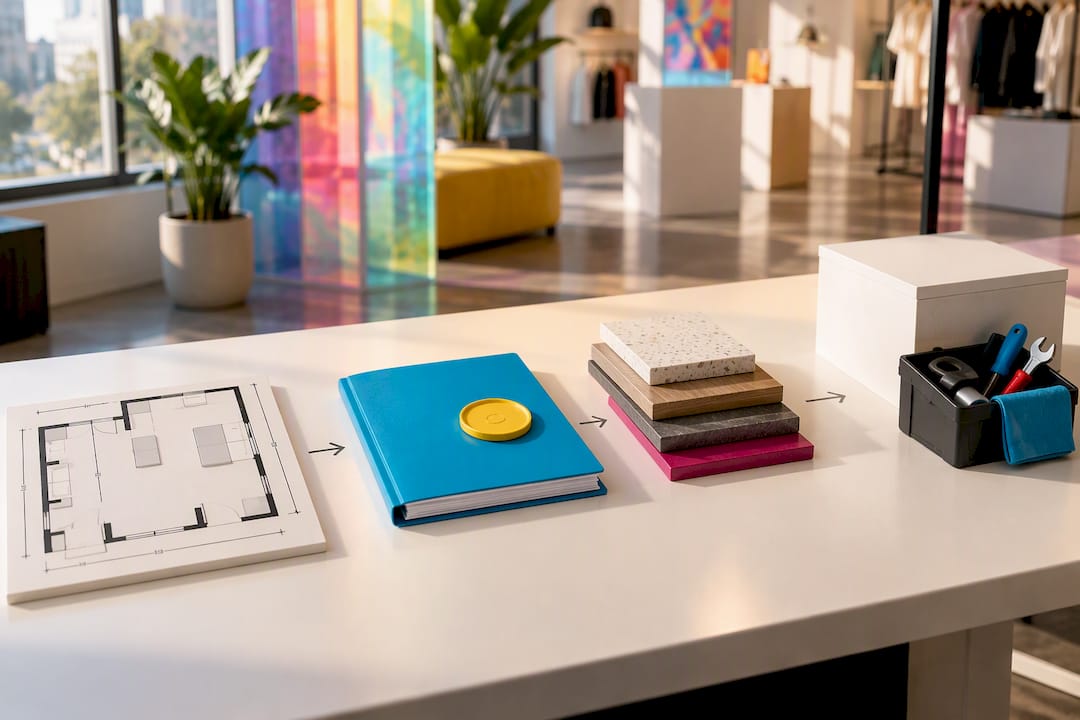
A good installation dies in production when the workflow skips steps. Here’s the order that actually works, drawn from how practitioners run these projects end to end.
- Define objectives and KPIs first. Decide whether you’re chasing stop rate, dwell time, social shares, or straight sales lift, and get marketing, visual merchandising, and property management to agree on the number before design starts.
- Audit the site. Walk it for sightlines, rigging points, power access, ambient lighting, acoustics, floor and wall load capacity, ADA clearance, and existing landlord or permit restrictions.
- Select the installation type and artist. Match the format to what the audit revealed, not the other way around.
- Produce sketches, then a scaled model. A physical or digital scale model catches proportion problems no sketch will show you.
- Prototype the interaction. If there’s a sensor, touch surface, or motion trigger, build and test it small before you build it big.
- Run material tests, including UV/blacklight tests under real ambient light. A pigment that glows beautifully in a dark studio can read as flat under mall skylights.
- Get engineering sign-off, insurance, and permits locked before fabrication starts. This is the step most commonly rushed and most commonly regretted.
- Install within an agreed access window, test on-site under live conditions, train staff on reset and basic troubleshooting, then schedule a maintenance cadence and an end-of-life or removal plan.
Pro Tip: Book your engineering and permit review before you finalize the concept sketch, not after. Reworking a beautiful design to satisfy a fire marshal costs more time than designing around the constraint from day one.
For a fuller breakdown of the approvals stage specifically, this 7-stage public art proposal guide walks through what commissioners and property managers need before a single material order goes out.
Matching Materials and Technology to Your Budget
Every material choice trades cost against durability, novelty, and maintenance load. Here’s how the common options actually compare in practice.
- UV-reactive pigments and blacklight fixtures: Low running cost, dramatic visual payoff after dark, but flat and unremarkable under standard daytime retail lighting, so they work best paired with a daytime-visible base design.
- Projection mapping: Highly flexible content that updates without touching the physical install, but it needs a controlled-light environment and ongoing content production budget.
- LED architecture: Durable and increasingly affordable, though complex programming and firmware updates add a technical maintenance line most retail teams don’t budget for upfront.
- AR overlays: Cheap to distribute once built, but adoption depends entirely on whether shoppers actually pull out their phones and scan.
- Touch tables and motion sensors: The interaction itself is the draw, but sensor complexity is the single biggest driver of both upfront cost and ongoing support calls.
Single-station interactive builds tend to start around $20,000, while room-scale interactive installations can run $150,000 or more, with sensor complexity, content volume, fabrication, and rigging as the main cost drivers. Static murals and window pieces sit well below that range. Before committing to dynamic or generative content at full scale, pilot it physically first; virtual testing has shown stronger word-of-mouth response for dynamic art, but that finding still needs confirmation in a real store before you roll it out center-wide.
Keeping an Installation Running in a Live Retail Environment
An interactive piece is only as good as the team resetting it after the third jam of the day. Assign one staff member per shift who knows the reset sequence and knows when to call it out of service rather than let it degrade the experience.
- Post clear, simple instructions at eye level for any interactive element, with a non-touch alternative for visitors who can’t or won’t engage physically.
- Design queue space and seating with sightlines that don’t block circulation, and make sure at least one interaction mode doesn’t require standing or fine motor control.
- Track stop rate (people who pause versus people who pass), dwell time, completion rate for interactive pieces, and social mentions using the installation’s own hashtag or geotag.
- Connect downstream sales data from the nearest register or department to the installation’s active dates to see if foot traffic actually converted.
- Log every incident and reset event from week one; that log becomes your maintenance contract negotiating tool by month three.
What Recent Retail Installations Got Right
A few recent projects show the pattern worth copying more clearly than any framework could.
- Dior’s surreal storefronts. Alex Chinneck’s window work for Dior extended a single visual idea across facade, glass, and interior fixtures instead of treating the window as a separate decorative moment. What to copy: pick one motif and let it travel through every touchpoint, not just the window.
- Bloomingdale’s modular flower facade. Yinka Ilori’s installation for Bloomingdale’s turned a repeated geometric flower into a coherent emotional statement across the entire storefront. What to copy: modularity lets you scale one motif up or down depending on the space you’re given.
- Nuuly’s shipping-cube activation. The oversized cube sculpture at Urban Outfitters turned a mundane shipping object into a selfie landmark, but only because internal armature and floor flanges made it structurally sound enough to stand near. What to copy: the engineering is the part nobody photographs, and it’s the part that makes the photographable part possible.
- UV/blacklight installations in a studio setting. Studio work built around UV-reactive pigment reveals a second, hidden layer of pattern and color once the lighting shifts, which gives a single piece two distinct experiences depending on the hour. What to copy: design the daytime version and the blacklight version as two intentional compositions, not one design that happens to glow.
A Studio Note on Merchandising-First Art
Art that just decorates a wall is wasted budget in a retail environment. The pieces that earn their square footage are the ones built to work with product, not around it, which is why every commission worth doing starts with the merchandising question first and the aesthetic second. UV-reactive work adds a layer most retail teams overlook: a piece that reads one way under normal light and reveals an entirely different pattern under blacklight gives a shopper two reasons to come back, and two reasons to photograph it. One recurring lesson from studio commissions: the interaction people remember longest is rarely the flashiest one. It’s the one that connects cleanly back to the product they came in for.
— Facundo
Commission a Piece That Sells, Not Just Decorates
A retail commission done well is merchandised, site-specific, and built to hold up under both daylight and blacklight. That combination, an original handcrafted piece with UV-reactive pigment revealing hidden pattern and color, separates these installations from standard art dealer orders.
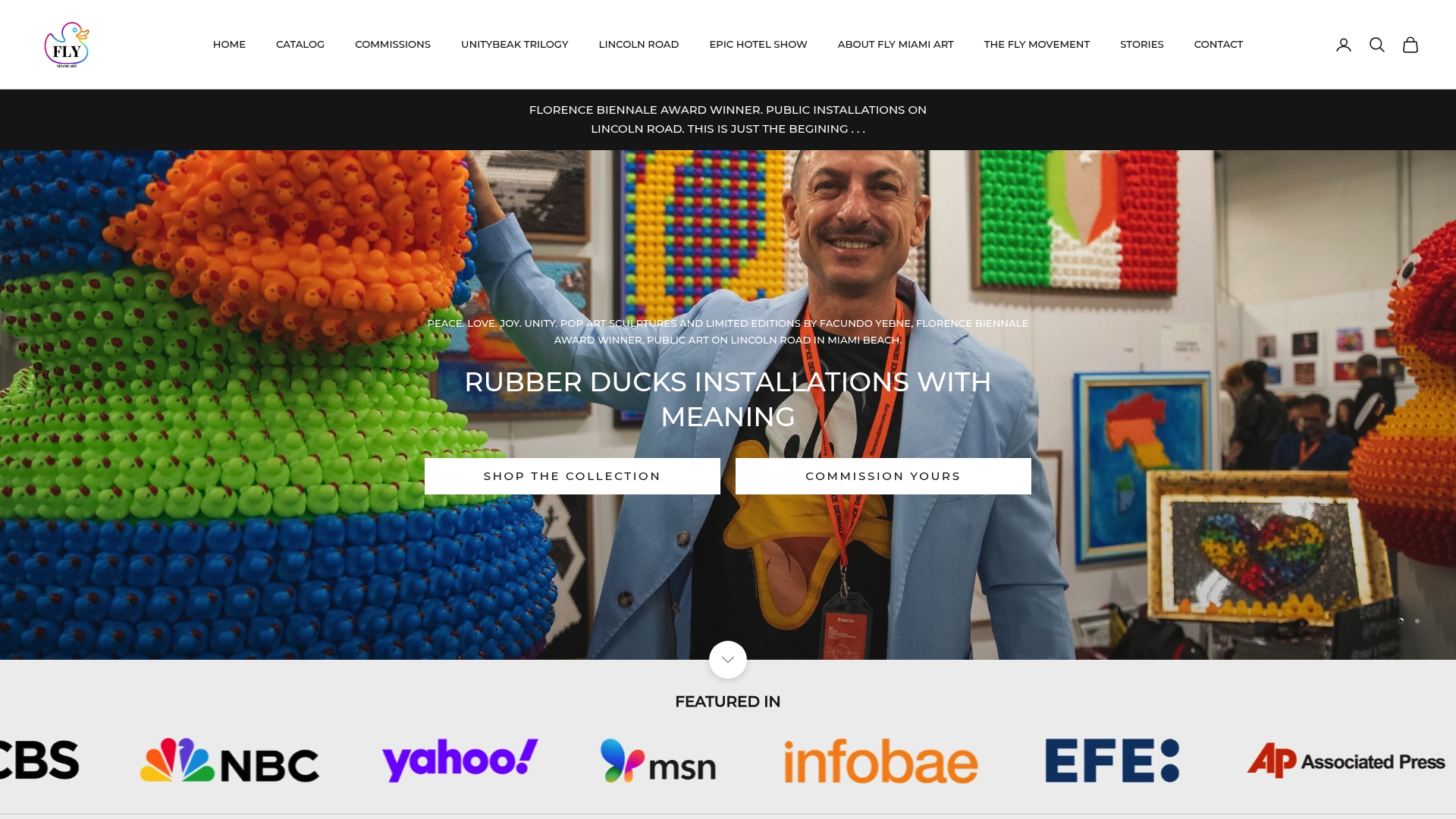
Every piece is handmade and original rather than mass produced, backed by Facundo Yebne’s exhibition history and media coverage. If you’re weighing a custom glow piece for a flagship window or atrium activation, or want to browse finished sculpture and wall art for a faster turnaround, start by reaching out through the commissions page with your site audit details and target install date. That single step gets your project into the same production workflow outlined above, with a studio that already knows how to make UV-reactive pigment work under real retail lighting.
Sources
For readers who want the original coverage behind the ideas above: Dezeen’s report on Alex Chinneck’s Dior windows covers site-specific facade design, Cornell’s study on generative art in virtual shopping covers congruence and word-of-mouth research, and Utsubo’s interactive installation cost guide breaks down realistic budget ranges.
- Cornell reporting on generative art and virtual shopping experiments
- Nuuly at Urban Outfitters – Visual Merchandising and Store Design
- Interactive Museum Installations: ROI, Costs & Real Examples (2026)
FAQ
What are some ideas for simple, low-budget installation art?
A single sculptural object in a window, a hand-painted mural on an existing wall, or a modular panel facade built from repeatable shapes all deliver visual impact without complex engineering. A wall panel system can also give you a flexible, reconfigurable surface for rotating seasonal art without new construction each time.
What are some creative ideas for retail displays that use art?
The strongest displays extend a single motif across the window, the fixtures, and the product itself, rather than treating the art as separate decoration. Modular flower facades, oversized sculptural objects, and UV-reactive pieces that change under blacklight all tie directly back to what’s for sale nearby.
What are the main types of installation art used in retail?
Retail installations generally fall into five types: site-specific architectural work, sculptural or object-based pieces, multimedia or digital work, participatory or interactive installations, and time-based performance or sound work. Most successful flagship projects combine two or three of these rather than sticking to just one.
What are some creative ideas for interactive art installations?
Touch tables that let shoppers customize a product virtually, motion-sensor walls that shift pattern as people pass, and AR mirrors that overlay colorways in real time all work well because the interaction stays under 30 seconds. Every interactive piece needs defined reset logic and a staff member trained to handle a failure, or the installation becomes a liability instead of an asset.
How much does a custom retail art installation cost?
Costs range widely by format: window art typically varies within a moderate range depending on scale and lighting, while interactive installations start around $20,000 for a single station and can exceed $150,000 for room-scale builds. Flymiami’s commissions are priced individually based on scale and materials, with details available directly through the commissions page.