Public Art and Property Value: What Developers Need to Know
Yes, public art raises property value, and the effect shows up in hard numbers, not just goodwill. Properties within a five-minute walk of New York’s High Line gained roughly 35% in value between 2007 and 2018. A 2023 hedonic-pricing study of prewar commercial buildings found that every additional sculpture within 100 meters correlated with an 8.32% price premium, with front-facing pieces adding another 1.13% on top of that. The Miami Design District saw visitor traffic climb about 47% after murals and sculptures went in, and neighborhoods with murals generally see weekend foot traffic rise around 30%, according to University of Cincinnati research.
None of this happens automatically. The uplift depends on art type, placement, visibility, and whether the piece is part of a coherent placemaking strategy or just decoration bolted onto a lobby wall. A sculpture tucked behind a loading dock does nothing for foot traffic. The same piece at a building’s front entrance, visible from the sidewalk, starts pulling its financial weight. That distinction, more than any single statistic, determines whether a public art investment pays for itself in eighteen months or sits there as a sunk cost.
Key Takeaways
Public art raises property value when it is placed for visibility, tied to measurable KPIs, and paired with community engagement that reduces displacement risk.
| Point | Details |
|---|---|
| Verdict is evidence-backed | Properties near the High Line gained about 35% in value over a decade, and sculptures within 100 meters add measurable price premiums. |
| Placement beats budget | Front-facing, high-visibility pieces consistently outperform larger but less visible installations in price studies. |
| Measure before you install | Establish foot-traffic and sales baselines before the art goes up, so ROI claims hold up later. |
| Mitigate displacement early | Pair investment with community benefits agreements or local-artist programs to reduce gentrification pushback. |
| FLY Miami Art fits landmark and experiential goals | Its sculpture and UV Glow Art collections target the branding and after-dark foot-traffic mechanisms the research identifies as strongest. |
Table of Contents
- Why Public Art Raises Property Value: The Core Mechanisms
- What Does the Research Actually Show?
- Does Art Type and Placement Change the Financial Outcome?
- How Do You Measure ROI on Public Art?
- How to Integrate Public Art Into a Development Project
- What Are the Risks of Investing in Public Art?
- What Should You Measure Before and After Installation?
- Why We Design Public Commissions the Way We Do
- Commissioning Public Art With FLY Miami Art
- Frequently Asked Questions
- Sources
Why Public Art Raises Property Value: The Core Mechanisms
Public art doesn’t raise property value through some vague cultural halo effect. It works through specific, traceable pathways that show up in leasing data, retail sales, and appraisal reports.
- Curb appeal and visibility: A striking piece signals investment and intentionality, the same way landscaping or updated signage does, but at a scale that stops pedestrians and drivers.
- Foot traffic and tourism: Murals and sculptures give people a reason to walk a specific block instead of the parallel one, and that reason compounds when the piece is Instagram-worthy or part of a public art program driving tourism.
- Branding and tenant demand: A signature installation gives a building or district an identity that leasing brokers can point to in a pitch deck, which shortens the sales cycle for retail and office tenants alike.
- Perceived safety and reduced vacancy: Well-maintained, well-lit public art areas read as cared-for, and cared-for areas rent faster because tenants assume management is attentive elsewhere too.
- Experience-based premiums: Environments that engage the senses, sometimes called experience-based design, tend to command higher rents because occupants associate the space with quality of life, not just square footage.
Each pathway eventually lands in the same place: net operating income. More foot traffic means higher retail sales for ground-floor tenants, which supports higher percentage rents. Stronger branding shortens vacancy periods, which reduces the discounted cash flow hit that comes from months of empty space. Improved perceived safety reduces turnover, which cuts leasing commissions and downtime. Appraisers then capitalize that higher NOI into a higher valuation. The University of Exeter research cited by REBusinessOnline found workplace productivity rose as much as 32% in art-rich, plant-rich environments, a data point landlords increasingly use to justify premium office rents.
Pro Tip: Match the art form to the mechanism you’re targeting. Murals and street-level clusters are foot-traffic tools, best placed where pedestrians already move. Sculptural landmarks work better for branding and wayfinding, since they need to be visible from a distance and recognizable as a fixed point of reference.
What Does the Research Actually Show?
The headline numbers are compelling, but developers should understand where they come from before citing them in an investment memo. Most of this evidence comes from three research methods: hedonic pricing (isolating the price effect of a specific amenity while controlling for other variables), difference-in-differences studies (comparing price changes in treated versus untreated areas over time), and direct foot-traffic sensor counts.
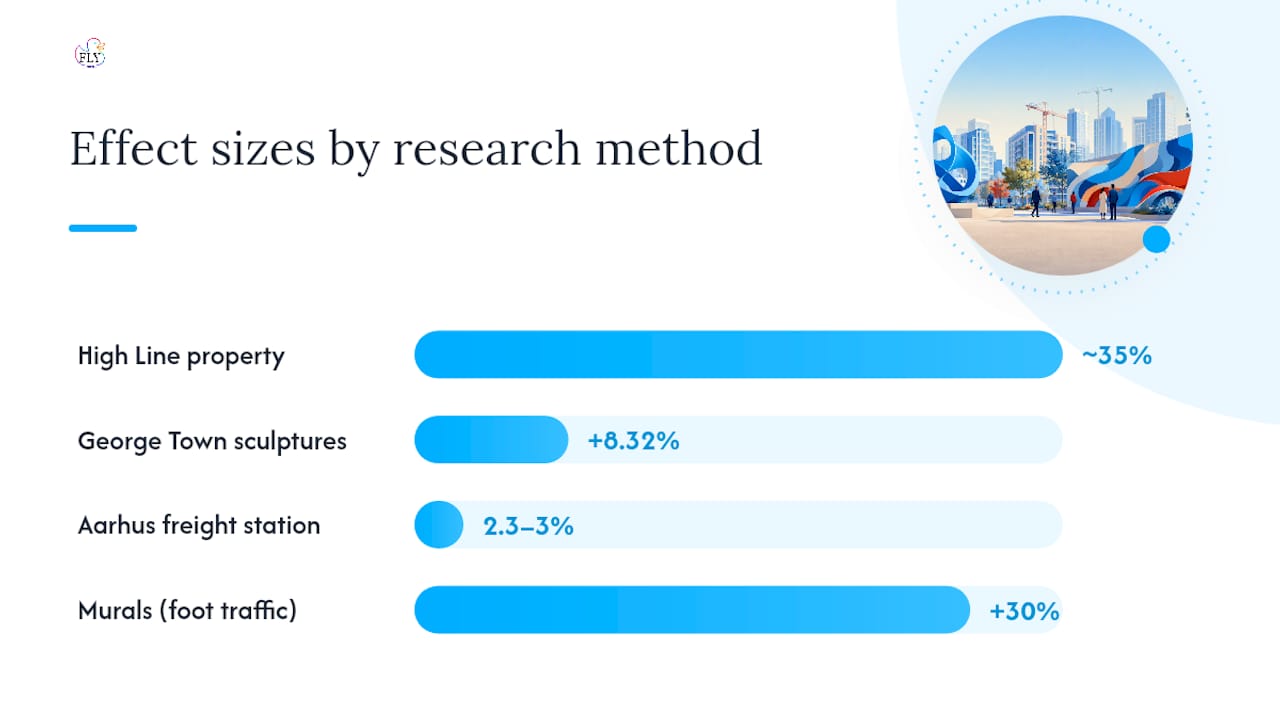
The High Line case is the most cited example in the field, and for good reason. Property values within a five-minute walk of the elevated park rose about 35% from 2007 to 2018, a period that overlaps almost exactly with the park’s phased construction and public art programming. Researchers are careful to note that the High Line also triggered zoning changes and private investment that compound the pure “art effect,” so the number reflects a broader placemaking push, not sculpture alone.
The George Town hedonic-pricing study offers cleaner isolation. Researchers found that each additional sculpture within 100 meters of a prewar commercial building added 8.32% to its price, and sculptures placed at the front of buildings, rather than tucked into courtyards, added a further 1.13%. That is about as close as this field gets to a controlled experiment, because the study isolated sculpture density and placement from other neighborhood variables.
The Aarhus freight station case adds a European data point. Converting an industrial freight depot into an arts and culture center produced apartment price increases of roughly 2.3% to 3% relative to the rest of the city, a more modest but still measurable gain tied to adaptive reuse rather than new construction.
“Neighborhoods with murals recorded about a 30% rise in weekend foot traffic, and the Miami Design District saw visitor traffic climb roughly 47% after murals and sculptures were introduced.” This finding from the University of Cincinnati study is one of the few in this space built on direct sensor counts rather than retrospective price modeling.
| Study/Case | Method | Effect Size | Context | Key Caveat |
|---|---|---|---|---|
| High Line, NYC | Hedonic/case comparison | ~35% property value rise (5-min walk, 2007–2018) | Elevated park with integrated public art | Overlaps with zoning changes and private investment |
| George Town sculptures | Hedonic pricing | +8.32% per sculpture within 100m; +1.13% front-facing | Prewar commercial buildings | Small sample of building types |
| Aarhus freight station | Difference-in-differences | +2.3% to 3% apartment prices | Adaptive reuse, arts/culture center | Effect tied to redevelopment, not art alone |
| Miami Design District / murals | Foot-traffic sensors | +30% weekend traffic (murals); +47% visitors (Miami Design District) | Urban mural and sculpture clusters | Traffic gains don’t always convert to price data |
The biggest limitation across this body of research is endogeneity: cities and developers tend to install public art in neighborhoods already trending upward, making it hard to fully separate the art’s causal effect from the area’s existing momentum. Treat these figures as strong directional evidence, not laboratory-grade proof, and always pair them with local market context.
Does Art Type and Placement Change the Financial Outcome?
Not all public art performs the same job, and treating a mural and a monumental sculpture as interchangeable investments is where a lot of commissioning budgets go to waste.
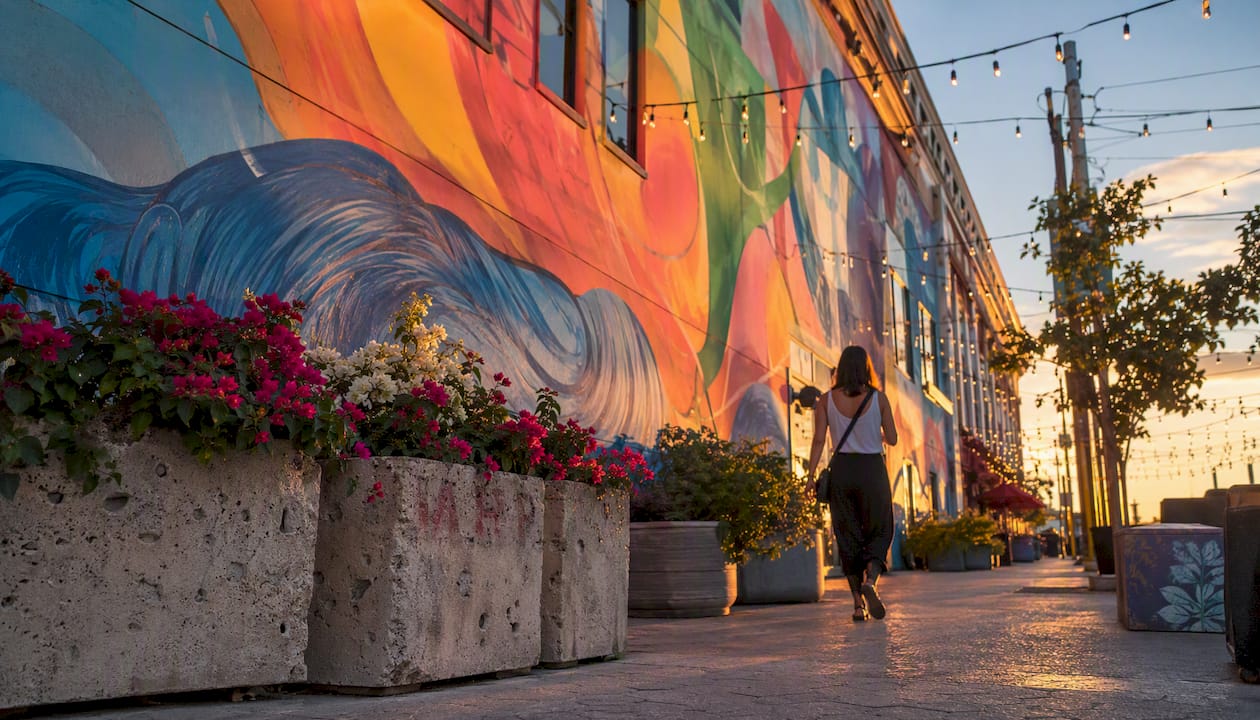
- Murals: Cheapest to produce, fastest to install, and best suited to driving pedestrian foot traffic on a specific corridor. They also have the shortest lifespan and highest exposure to weathering and graffiti.
- Street art clusters: A concentration of smaller works across several blocks creates a “trail” effect that extends dwell time and encourages repeat visits, which retail tenants value more than a single traffic spike.
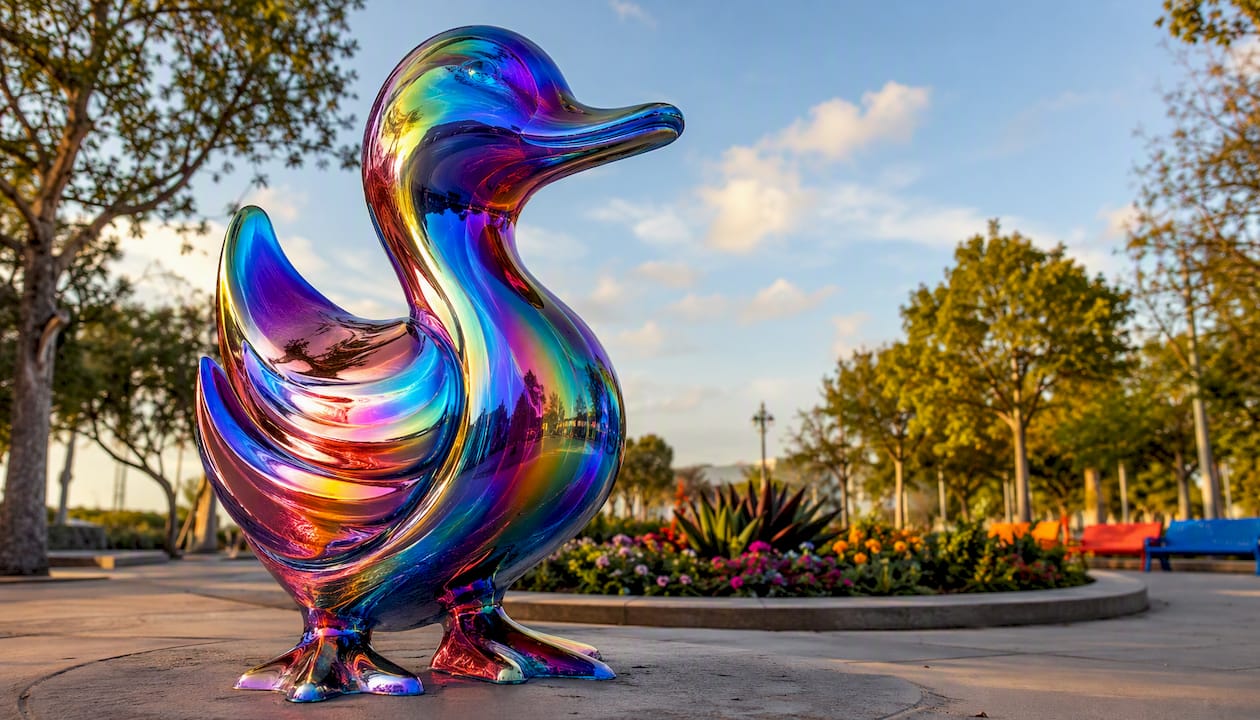
- Large sculptures and landmarks: Higher upfront cost, but they function as long-term branding anchors and wayfinding markers, visible from a distance and recognizable in marketing materials for years.
- Installations and interactive works: These generate outsized social-media reach relative to cost, since interactivity drives the kind of content people voluntarily share, but they typically demand more maintenance and technical oversight.
Placement follows a fairly consistent rule across the research: proximity and visibility drive value more than the art’s size or cost. The George Town study’s finding that sculptures within 100 meters correlate with meaningfully higher price premiums, and that front-facing placement adds further upside, holds up across multiple similar analyses. A six-figure sculpture in an interior courtyard that visitors rarely see will underperform a modest mural on a street-facing wall.
Timing matters too. Temporary works, rotating murals, or pop-up installations create novelty and repeat foot traffic without the long-term maintenance commitment of a permanent piece. Permanent signature works, by contrast, anchor a brand identity that a development can build marketing around for a decade or more. The strongest programs tend to combine both.
Pro Tip: Pair a rotating program of smaller, lower-cost works with one signature permanent piece. The rotation keeps the location feeling fresh and gives you a reason to bring people back; the signature piece gives the property a fixed identity that outlasts any single artist’s tenure. Reviewing what makes a sculpture exhibition engaging is a useful exercise before finalizing a placement plan.
How Do You Measure ROI on Public Art?
Developers need numbers they can put in front of a lender or an investment committee, not just a sense that the plaza “feels nicer now.” Four measurement approaches cover most of what you’ll need.
- Hedonic pricing: Compares sale prices of similar properties with and without proximity to public art, controlling for square footage, age, and location. This is the gold standard for long-term value claims but requires a large enough comparable dataset.
- Difference-in-differences: Tracks price or rent changes in your target area against a similar untreated area over the same period, isolating the art’s marginal effect from broader market trends.
- Foot-traffic counts: Baseline measurements before installation, then repeated counts at 30, 90, and 180 days after, using mobile location data or simple pedestrian counters.
- Lease-up speed and vacancy tracking: Compare average days-on-market and vacancy duration before and after the art program launches, holding unit type and pricing constant.
Timelines vary by outcome type, and setting the wrong expectation with stakeholders is a common mistake. Foot-traffic and social-media lift typically show up within weeks to a few months of installation, since novelty drives immediate curiosity. Retail sales lift generally takes two to three quarters to stabilize as word of mouth spreads. Full property-value capitalization, the kind reflected in appraisals and comparable sales, tends to take one to three years, because it depends on enough transaction volume in the surrounding area to move comps.
Pro Tip: Build your baseline measurement into the project timeline before the art goes up, not after. Without a genuine “before” number, every foot-traffic or sales claim you make afterward is just an estimate, and lenders and investment committees know the difference.
Useful data sources include mobile foot-traffic analytics providers, county assessor records for comparable sale tracking, local Business Improvement District reports, and lease comp databases most commercial brokerages already subscribe to. A simple ROI study checklist: establish a baseline period of at least 90 days, define your comparison area, pick two or three KPIs you can actually measure consistently, and commit to re-measuring on a fixed schedule rather than whenever convenient.
How to Integrate Public Art Into a Development Project
Turning the evidence into an actual program means moving through a fairly predictable sequence. Skipping steps, especially community engagement, is the fastest way to end up with an expensive piece nobody wanted.
- Define objectives first. Decide whether the primary goal is branding, foot traffic, tenant attraction, or straightforward placemaking compliance. This decision drives every choice that follows, including budget and art type.
- Set measurable KPIs before you commission anything. Tie them to the objective from step one: foot-traffic counts for a traffic goal, leasing velocity for a branding goal.
- Establish the budget and funding model. Percent-for-art programs, which tie a fixed share of development costs to art commissioning, date back to Philadelphia’s 1959 ordinance and remain a common structure. Other developers fund art directly from the project budget or pursue public-private partnerships with local arts councils.
- Select the artist and curatorial approach. An open RFP process invites more submissions and public buy-in but takes longer; a curated direct commission moves faster and suits developers who already know the aesthetic they want.
- Clear legal and permitting requirements. Public art on private property visible from a public right-of-way often triggers design review, and murals in particular can intersect with sign ordinances depending on content and size, so confirm zoning classification early.
- Install and document. Photograph and measure baseline conditions immediately before installation so your later ROI comparisons hold up.
- Plan maintenance and programming from day one, not as an afterthought once the piece starts showing wear.
A few tactical points matter more than they seem at first glance:
- Contracts should specify maintenance obligations explicitly, including who repairs UV fading, graffiti, or structural wear, and over what time period.
- Insurance and warranty terms need to cover both the artwork and any liability tied to public interaction, especially for climbable or touchable installations.
- Community engagement early in the design phase, before a design is finalized, reduces approval friction dramatically compared with presenting a finished concept for public comment.
Pro Tip: Hold at least one community input session before finalizing artist selection, not after. Projects that let neighbors weigh in on theme and placement early face far less pushback at the permitting stage than projects that unveil a finished concept and ask for feedback.
What Are the Risks of Investing in Public Art?
Public art isn’t a risk-free lever, and developers who ignore the downside end up with either a public relations problem or an unbudgeted maintenance bill.
- Gentrification and displacement: Rising property values are good for owners and bad for existing renters if the same investment prices out long-term residents. Academic literature on cultural capitalization consistently links amenity investment to displacement risk when it isn’t paired with housing protections.
- Backlash over content or theme: Public art is, by definition, public, and pieces that misjudge community values or history can generate lasting reputational damage that outweighs any foot-traffic gain.
- Vandalism and repair costs: Street-facing works, especially murals, are exposed to weather and graffiti, and repair costs that aren’t budgeted for upfront become a recurring drain on operating expenses.
- Maintenance and insurance liabilities: A sculpture that looks stunning on installation day can become a liability if lighting fails, materials degrade, or a public safety issue emerges later.
Mitigation strategies exist for each of these, and the strongest developers build them into the program from the outset rather than reacting after a problem surfaces. Community benefits agreements, which formally commit a portion of project gains to local housing or workforce programs, address displacement concerns directly. Rotating local-artist programs keep commissioning dollars circulating in the community rather than exclusively funding outside artists, which softens some of the “outsider imposing culture” criticism that fuels backlash. Dedicated maintenance budgets, ideally 1% to 2% of the art’s installed value annually, along with anti-graffiti coatings on murals, keep repair costs predictable instead of catching a property manager off guard. Clear stakeholder governance, meaning one accountable party for approvals, maintenance, and community complaints, prevents the finger-pointing that stalls repairs and erodes public trust. On the legal side, always confirm your art installation’s classification under local zoning and sign ordinances before fabrication begins, since a piece reclassified as signage mid-project can trigger costly redesign.
What Should You Measure Before and After Installation?
A short toolkit developers can bring into a meeting with artists, curators, or city planning staff, focused on what actually needs tracking.
- Foot-traffic change (baseline vs. 90 and 180 days post-installation)
- Retail sales lift for ground-floor or adjacent tenants
- Lease-up speed compared with the pre-art average
- Vacancy rate change over a 12-month window
- Social-media and earned-media impressions tied to the installation
- Maintenance spend as a percentage of the art’s installed asset value
When meeting with artists or consultants, a handful of questions separate a well-managed commission from a future liability: What is the realistic fabrication and installation timeline? Who owns the long-term maintenance plan, and what does it cost annually? What community engagement process, if any, informed the concept? And what are the intellectual property and reproduction terms, especially if the piece will appear in marketing materials?
Why We Design Public Commissions the Way We Do
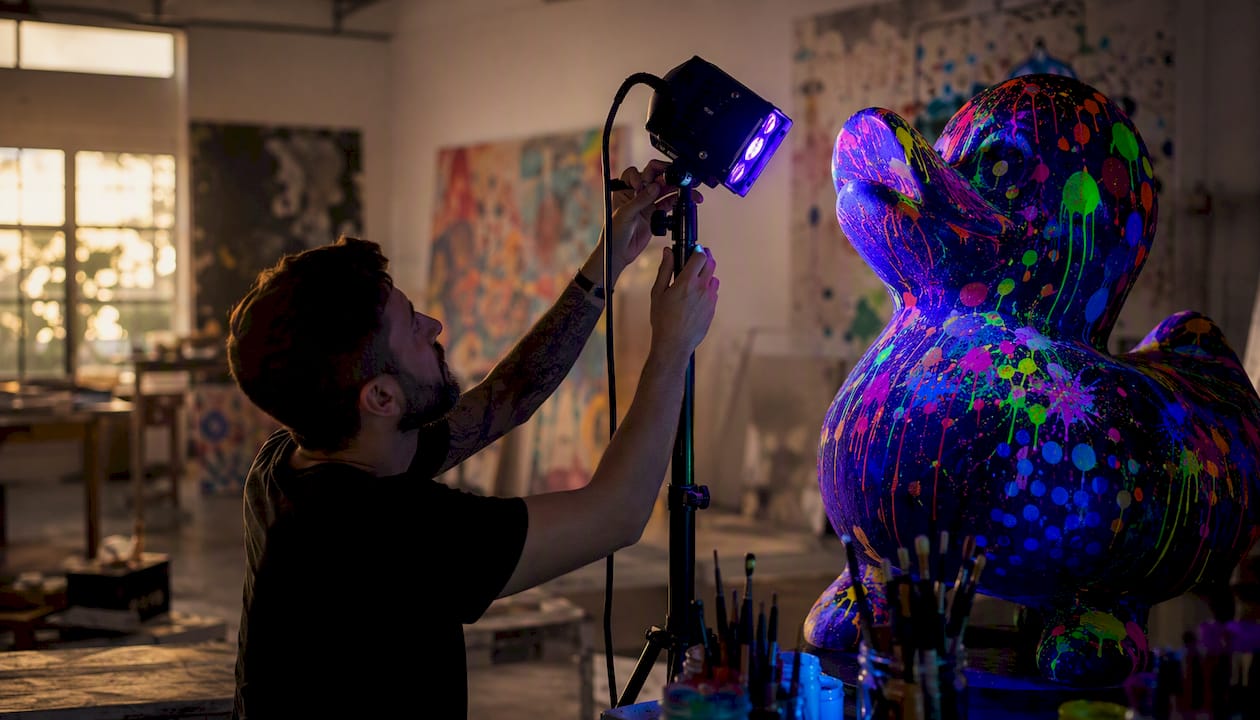
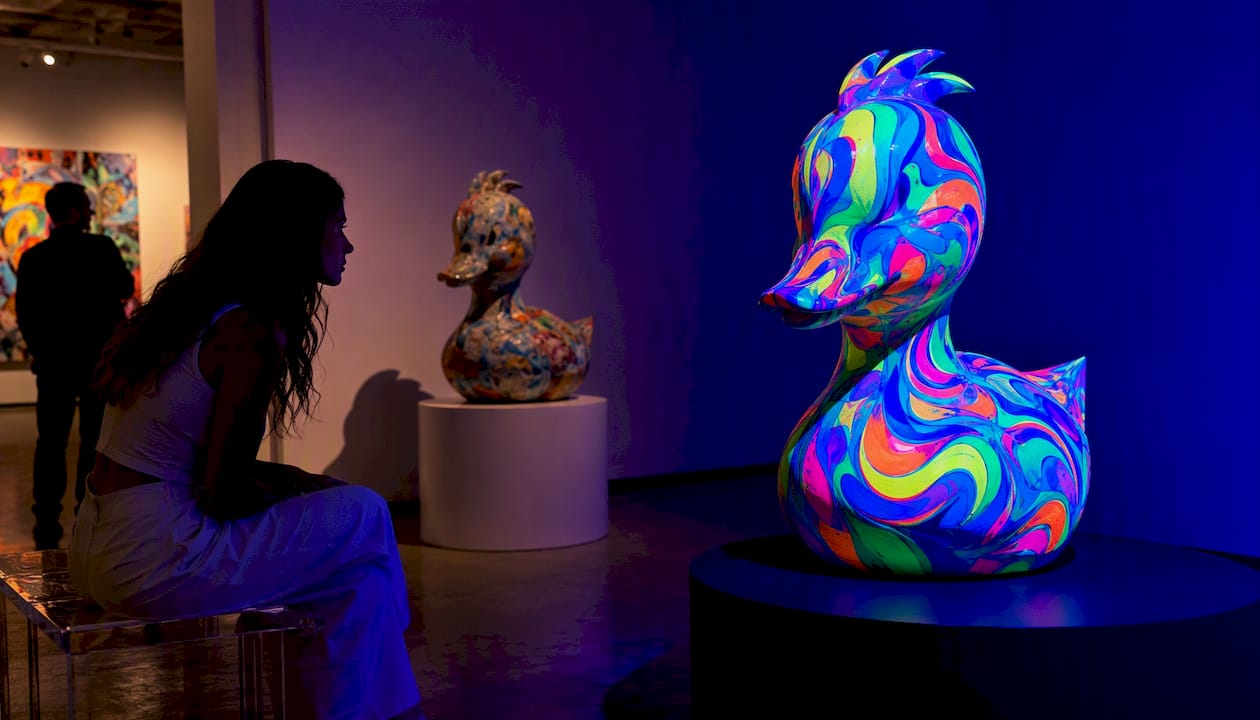
Public art only earns its place in a development when it does more than look good in renderings. At FLY Miami Art, every public and semi-public commission starts with a simple question: what is this piece going to make someone feel or do differently as they walk past it? Our UV-reactive, blacklight-glow works exist because static daylight-only pieces stop working the moment the sun goes down, and most retail corridors, hospitality districts, and entertainment zones do their best business after dark.
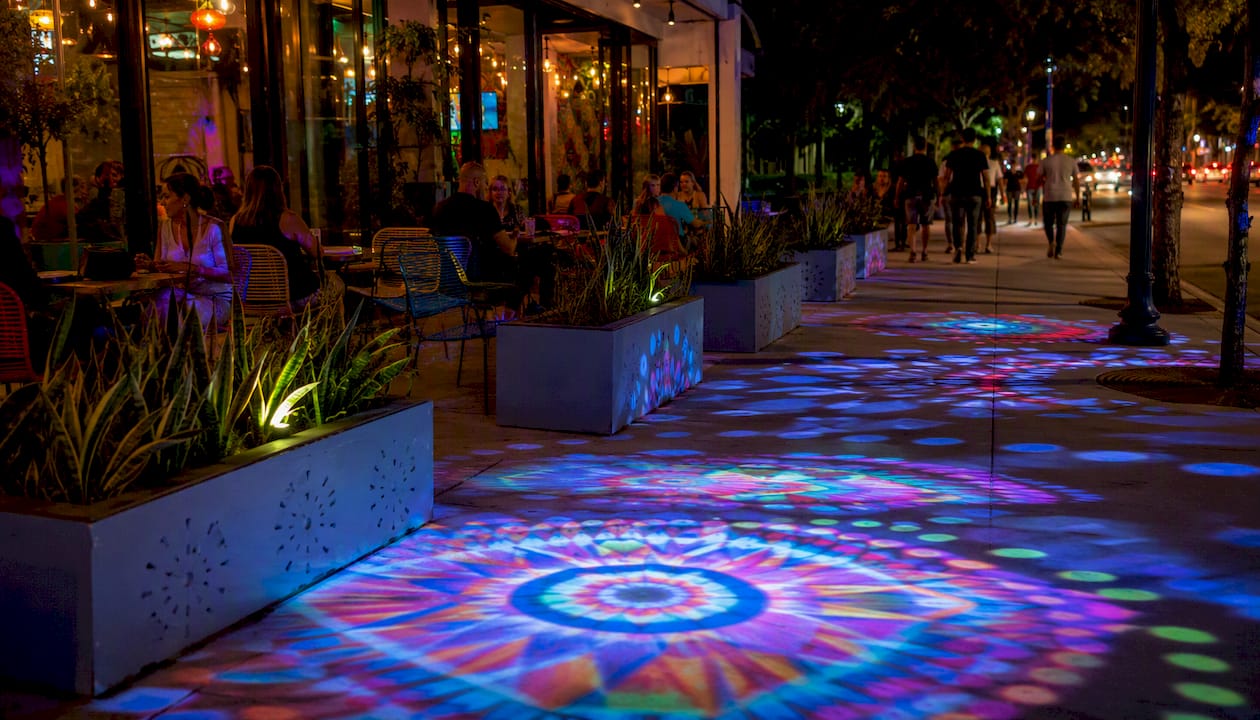
One installation that stuck with me involved a hospitality client who wanted a lobby piece that would photograph well during the day but had no plan for evening ambiance. We proposed a UV-reactive alternative that revealed hidden patterns under blacklight, turning the same fixed budget into two distinct visual experiences depending on the hour. The lesson wasn’t about the technology. It was about recognizing that a single static commission often leaves half its potential value on the table simply because nobody asked how the space actually gets used at night versus day.
Themes matter as much as materials. We build around peace and unity because those ideas travel across cultures and neighborhoods without alienating anyone, which matters enormously when a piece will sit in a public or semi-public space for years and needs to hold up to scrutiny from residents who didn’t choose it. If you want a sense of how this plays out across different formats, our piece on award-winning public art projects walks through several approaches worth studying before you commission your first work.
Commissioning Public Art With FLY Miami Art
If the research above has you thinking about a mural, a sculpture, or a signature installation for your next project, FLY Miami Art works directly with developers, hospitality groups, and commercial property owners on commissions built for exactly this kind of outcome.
Our sculpture collection is built for landmark and wayfinding placements, the kind the George Town study and High Line data show driving the strongest price premiums. For properties looking to extend foot traffic into evening hours, our UV Glow Art collection creates an entirely different visual experience after dark without requiring a second capital investment. And if your project calls for a facade or lobby centerpiece rather than a standalone sculpture, our wall art collection offers mural-scale options designed for exactly that role.
The process runs in five stages: an initial consultation to define your objectives and budget, a concept phase where we design around your site’s actual foot traffic and sightlines, fabrication using UV-reactive and blacklight-responsive materials, professional installation, and an ongoing maintenance conversation so the piece holds its value for years, not just its first season. Facundo Yebne leads every commission personally, which means the piece you approve in concept is the piece that arrives on-site. If you’re weighing options for an upcoming development or renovation, start a project inquiry and we’ll walk through what fits your site and budget.
Frequently Asked Questions
Does public art actually increase property value, or is that just marketing? The effect is measurable and documented across multiple independent studies using different methods. Hedonic pricing, difference-in-differences analysis, and direct foot-traffic sensors all point the same direction, though the size of the effect depends heavily on placement and visibility.
How much does public art typically raise property value? Effects range widely by context. The High Line case shows roughly 35% over a decade within a five-minute walk, while individual sculptures near commercial buildings add closer to 8.32% per piece within 100 meters. Treat these as directional benchmarks, not guarantees for every site.
How long does it take to see a return on a public art investment? Foot-traffic and social-media lift often show up within weeks to a few months. Retail sales gains generally stabilize over two to three quarters. Full property-value capitalization, reflected in appraisals and comparable sales, typically takes one to three years.
What’s the biggest mistake developers make with public art commissions? Skipping community engagement until after a design is finalized. Projects that gather neighborhood input during the concept phase face far less approval friction and backlash than ones that unveil a finished piece and ask for reaction afterward.
Are percent-for-art programs mandatory? They vary by jurisdiction. Some cities require them for qualifying development projects, while others treat them as voluntary. The model itself dates back to Philadelphia’s 1959 ordinance and remains one of the most common funding structures nationally, but confirm the specific requirement with your local planning department before budgeting.
Does the type of art matter more than its cost? Generally, yes. A well-placed, visible mural often outperforms an expensive sculpture tucked into a low-traffic courtyard. Match the art form to your objective: murals and clusters for foot traffic, landmark sculptures for branding and wayfinding.
Sources
A short reading list for anyone building an internal memo or investment case around public art.
- How street murals impact communities — University of Cincinnati
- Industrial heritage revitalization and cultural reuse: The Aarhus freight station case — Frontiers in Sustainable Cities