Art Commission Deposit: How Much, When, and What Terms
A deposit on a custom artwork is usually between a quarter and a half of the total price. It is paid after you approve the concept and sign a written agreement, and it is normally non-refundable once the artist has started work. What matters more than the percentage is what the deposit is labeled as, what it covers, and what happens if either side walks away.
This guide is for both sides of the table: collectors, designers and public-art buyers who are about to pay one, and artists who are about to ask for one.
TL;DR
- Expect a deposit of roughly 25% to 50% of the total. Some artist-business guides put the range at a third to a half, paid before work starts.
- Deposits are usually non-refundable and tied to milestones such as design or materials, and the contract should say so in plain words.
- Never start, and never pay, without a signed agreement covering payment milestones, revisions and cancellation.
- Pay by a method with a paper trail and dispute options, not a peer-to-peer app.
Table of Contents
- What a commission deposit actually does
- How much is a typical deposit?
- Refundable or non-refundable? What the label has to say
- What to do before you pay
- How to pay a deposit safely
- The buyer’s side: when you want out
- Our perspective: what a deposit means in a glow-art studio
- Clauses worth adding beyond the deposit
- Commission a glow piece with us
- FAQ
What a commission deposit actually does
A deposit does three jobs. It books the artist’s calendar, it pays for materials and early design time, and it makes the commitment real on both sides. A custom piece does not exist yet, so nobody can resell it easily if the buyer disappears.
That last point is why the deposit is rarely refundable. Many commission guides treat non-refundable down payments and kill fees as a basic protection for the artist, alongside a detailed contract and a rule not to start work before it is signed.
For the buyer, the deposit is not a fee for nothing. It buys a reserved slot, a defined scope and an artist who has started thinking about your piece. The trade is simple: you accept some risk of losing the deposit, and in return you get a schedule and a price that will not drift.
How much is a typical deposit?
There is no legal standard. Practice varies with the size of the job and the medium.
| Project type | Common deposit | Why |
|---|---|---|
| Small or digital piece | Often 50% or more | Low total, so a smaller deposit would not cover time lost |
| Medium custom original | 30% to 50% | Covers materials and design, balance on approval |
| Large sculpture or installation | Staged: deposit, then milestone payments | Materials, fabrication and installation come in phases |
| Public or commercial project | Deposit plus scheduled draws set by contract | Budgets, approvals and insurance are involved |
These ranges are common practice, not rules. Sources vary: one commission guide for artists says a 20% to 50% deposit is standard in some cases, while the sample wording in another guide uses a 50% non-refundable deposit with the balance due on completion, before delivery or shipping. Treat any single number as a starting point for a conversation.
Why large pieces use milestones
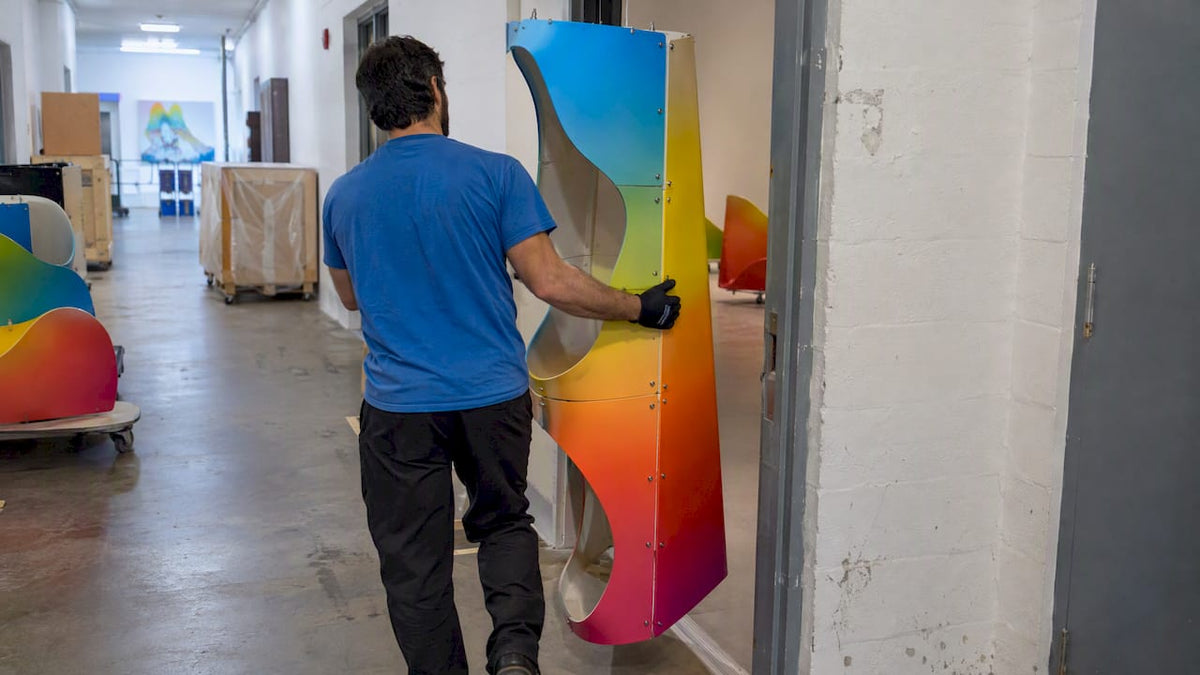
A life-size sculpture can involve resin, fabrication, finishing and crating. Asking for 50% on day one, then 50% at the end, leaves a long stretch with money out and nothing to show for it on either side. Splitting the price into stages (concept approved, build underway, finished and ready to ship) keeps the exposure balanced. To start a conversation about a FLY Miami piece, use our commissions page.

Refundable or non-refundable? What the label has to say
The word you use matters. Legal guidance on commission agreements notes that a deposit is often labeled non-refundable and tied to specific milestones such as initial design or materials purchase. A vague label like “partial payment” can leave both sides arguing later about what was promised.
So the contract should answer four questions in writing:
- What is the deposit called, and is it refundable?
- What does it cover: design time, materials, scheduling, administration?
- At what point does the artist’s work become something the buyer can no longer cancel for a refund?
- What happens to the deposit if the artist cannot deliver?
The fourth question is the one buyers forget. A fair agreement is not one-sided. If the artist misses the date by a wide margin, cannot complete the piece, or changes the agreed design without consent, the buyer needs a remedy: a refund of the unused portion, or a revised schedule you both sign.
Kill fees: what if the project stops halfway?
A deposit protects the start of a project. A kill fee protects the middle. One practitioner guide describes a two-tier structure: 50% of the total fee due if the client cancels before the final stage, and 100% if the work is already complete. Without something like this, the artist absorbs the labor cost of a half-built piece.
If you are the buyer, this is a good thing to see in the contract. It tells you the artist has thought through the process, and it gives you a clear price for changing your mind.
What to do before you pay
Use this order. It works for a $500 commission and a $50,000 one.
- Agree the concept. Sketches, references, size, materials and finish. For glow-in-the-dark or blacklight work, agree how the piece should look in daylight and under UV, since those are two different artworks. For a worked example of a commission brief, see our custom wall sculpture guide.
- Get the total price as one clear number. The fee should be broken out into creative labor, materials and included revisions. Extra revision rounds should have their own price.
- Read the cancellation and revision terms. Know what happens if you request a major change after approval.
- Sign the agreement. One art-business guide treats a contract as essential for any custom work, and says a client who hesitates to sign payment and cancellation terms is a red flag.
- Pay the deposit and keep the receipt. The timeline should start the day it clears, not before.
- Pay the balance on approval, before delivery. Shipping and insurance are a separate conversation, and for fragile sculpture it is worth settling white-glove delivery early. Crating and shipping are separate costs, as our sculpture crate shipping guide explains.
How to pay a deposit safely
Choose a method that leaves a record and gives you somewhere to go if something fails. A bank transfer, a card payment on an invoice, or a check all leave a trail.
Be careful with peer-to-peer apps. They often lack the buyer and seller protections found on merchant platforms and invoice-based systems, and transfers are often treated as final. For a high-value commission, that matters on both sides: the buyer cannot easily reverse a payment if the artist does not deliver, and an artist can be left in a dispute with no clear process.
If you are the artist, a professional invoice that states the deposit, the balance and the due dates is better than a text message with an app handle.
The buyer’s side: when you want out
Suppose you commissioned a piece and no longer want it. The best move is to speak to the artist immediately and honestly. Depending on the piece, an artist may be able to repurpose or sell it on, and some will adjust the scope, pause, or credit part of the payment against another work. None of that is guaranteed, and a non-refundable deposit means they owe you nothing, but a quick conversation gives you the best odds.
A few practical rules:
- Raise concerns at the design stage, when changes are cheap.
- Ask about revision rounds before approving anything.
- Keep requests in writing so there is a record.
- Do not wait until the piece is finished to say it is not what you pictured.
Our perspective: what a deposit means in a glow-art studio
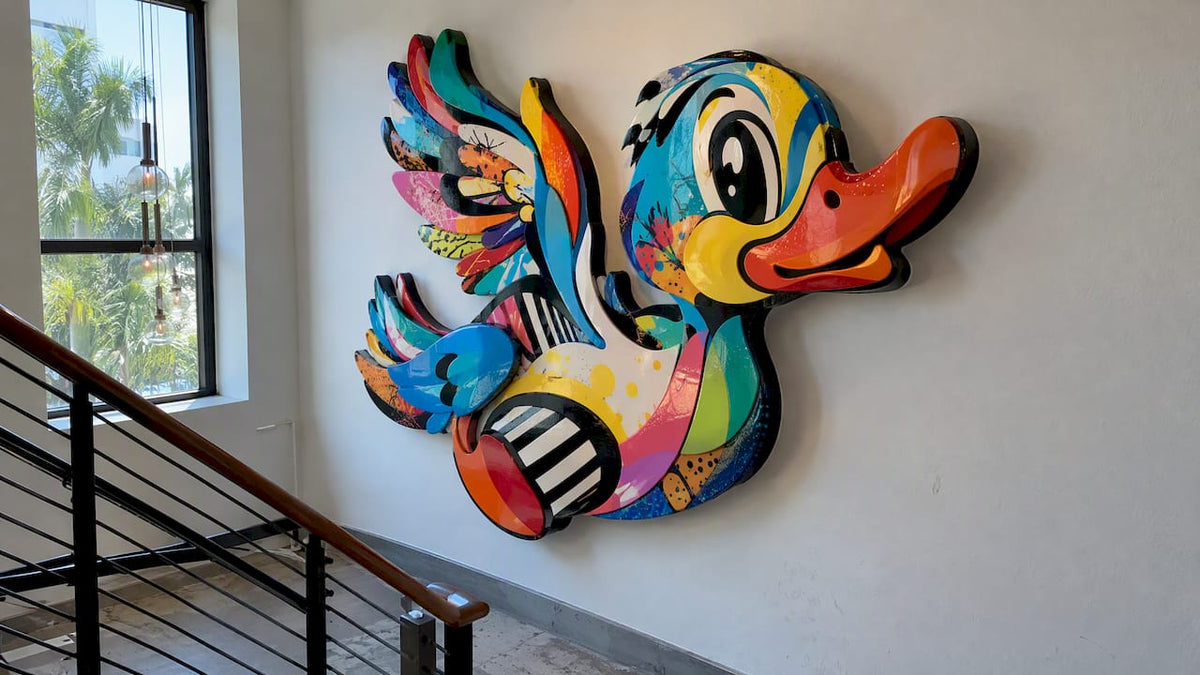
I make handmade pop art sculptures in my Miami studio, and most of my work is UV reactive and glows under blacklight.
A custom piece is not a print run, so the early stage of a commission, the conversation about the idea, the setting and the lighting, is real work. Ask any artist, including me, what the deposit covers before you pay it.

Whoever you commission, you should see the scope, the schedule and the payment terms before you commit anything. The same goes for outdoor work, where weatherproofing terms belong in the agreement, and for developers who want to compare commission agreement structures.
Our advice, whoever you commission from: pay a deposit only against a written agreement that says what it covers, and walk away from anyone who will not put the terms in writing.
— Facundo
Clauses worth adding beyond the deposit
The deposit is one line of the agreement, and our art commission contract terms guide covers the rest. These are the other clauses that prevent most disputes:
- Scope and specifications: size, materials, finish, and, for glow work, how it should look under blacklight.
- Timeline: start date, milestones and an estimated delivery window. Say that the clock starts when the deposit is received.
- Revisions: how many rounds are included and what extra rounds cost.
- Approval: how and when you sign off, and what triggers the final payment.
- Copyright and usage: by default the artist usually keeps copyright while the buyer owns the physical piece. If you plan to reproduce the image or license it, read how licensing differs from commissioning.
- Delivery, installation and insurance: who pays, who arranges, and who carries risk in transit. Installation can be a major line item, so see how to control sculpture installation costs. Our modular sculpture installation guide lists the line items to request.
- Cancellation and kill fee: the two-tier approach described above, or whatever you both agree.
For larger public projects, deposits sit inside a longer process of proposals, approvals and budgets. Our public art proposal guide walks through those stages.
Commission a glow piece with us
If you are looking for a custom sculpture, a wall piece or a rubber duck themed work that comes alive under blacklight, you can start with our custom glow piece page or browse the commission collection. To start a commission, use our commissions page. If you would rather see finished work first, our UV/Glow Art and Sculpture collections show what the studio makes. Commission pricing is discussed per project, so there is no fixed price list to quote here.
FAQ
Is an art commission deposit refundable?
Usually not once work has begun. The deposit typically covers design time, materials and a reserved slot in the artist’s schedule. Whether any of it comes back depends on the written agreement, so check the wording before you pay. If the artist fails to deliver, the contract should give you a remedy.
How much should a deposit be for a custom artwork?
Most artists ask for between a quarter and a half of the total, with 50% a common figure for medium pieces. Large sculptures and public projects often use staged payments instead of one large deposit. Ask the artist to explain how the percentage relates to materials and labor.
Do I need a contract for a small commission?
Yes, even a short one. It can fit on one page: price, deposit, balance due date, number of revisions, delivery estimate and cancellation terms. A written record protects both of you, and a buyer who will not sign even a simple agreement is a warning sign for the artist.
What happens to the deposit if I cancel?
If the agreement says it is non-refundable, the artist keeps it. Some contracts also include a kill fee, for example a larger share of the total if you cancel before the final stage and the full price if the work is finished. Tell the artist as early as possible, since a piece that has not been started leaves more room to negotiate.