Article: Art for Grey Walls: Terracotta, Navy, and Texture That Adds Depth
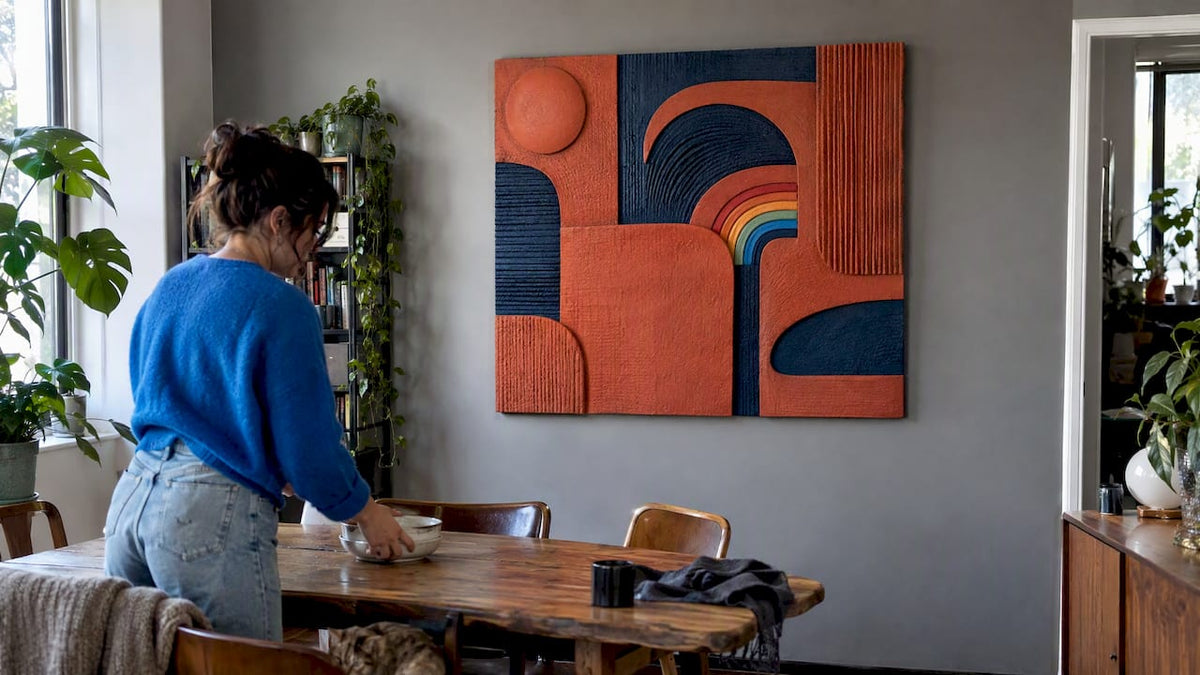
Art for Grey Walls: Terracotta, Navy, and Texture That Adds Depth
Match your art to your wall’s undertone or contrast it on purpose. Terracotta and textured canvas warm up warm greys, soft blues and navy suit cool greys, and pale, high-contrast pieces stand out on charcoal. Size each piece in proportion to the furniture below it. At our studio, we also add texture, because depth beats flat color.
TL;DR:
- Test the wall beside white and cream swatches in morning and evening light, since grey can shift toward blue as daylight changes.
- Keep artwork noticeably lighter or darker than the paint; similar values can disappear into the wall even when their colors complement its undertone.
- For gallery walls, anchor the arrangement with one or two larger works, keep frame and mat widths consistent, and leave 2–3 inches between pieces.
- Protect specialty art from direct sun, humidity, and heat; dust it with a soft, dry cloth and use a dedicated blacklight only when needed.
Table of Contents
- 1. How do you find your grey’s undertone and pair colors with it?
- 2. Which art styles and textures add depth to grey walls?
- 3. How big should art be, and where should it hang?
- 4. Which frames and finishes soften or sharpen grey?
- 5. How should you light art on grey walls?
- 6. What styling recipes work on grey walls?
- 7. How do you care for UV-reactive and specialty art on grey walls?
- 8. What studio-tested tips do I give for grey walls?
- 9. Where can you find art made for grey walls?
- FAQ
- Sources
1. How do you find your grey’s undertone and pair colors with it?
Hold a white swatch and a cream swatch against the wall in natural light, then add a wood sample. If the grey leans beige, yellow or brown next to them, it is warm. If it leans blue or green, it is cool. Designers describe grey as a receding palette that lets the artwork become the focal point, so your color choice does a lot of work.
Practical pairings, based on palette guidance for grey walls:
- Warm grey: terracotta, ochre, warm botanical greens, dusty rose.
- Cool grey: soft blues, sage green, dusty lavender, navy.
- Charcoal: pale creams, gold, and black-and-white pieces with strong contrast.
Value matters as much as hue. If a piece is about as light or dark as the wall, it sinks into the background, even when the colors seem right. Make the artwork noticeably lighter or darker than the paint.
Pro Tip: Check your swatches at morning and evening light. A grey that looks neutral at noon can turn blue by dusk.
2. Which art styles and textures add depth to grey walls?
Grey backdrops reward tactile work. Flat prints can look thin against a quiet wall, while texture catches light and gives the eye something to read. Design examples show that oversized, textured or mixed-material pieces create impact against slate and mid-tone greys.
- Gallery-wrapped canvases with visible brushwork add shadow and movement.
- Mixed-media pieces layer paper, paint and relief in one frame.
- Woven hangings soften hard edges and suit cool greys especially well.
- Small sculptural wall pieces project off the surface. We explain why in our piece on sculptural art versus flat decor.
- Black-and-white photography is a dependable default on cool greys. The tonal logic is old: grisaille is art built entirely from shades of grey, with tone and value doing the work that color usually does.
When a room feels too quiet, bring in loud color: a large abstract or a botanical print with bold greens. Keep the frame simple so the color carries the energy.
3. How big should art be, and where should it hang?
Scale is where most grey rooms go wrong. A small piece on a wide wall looks lost, and the paint color gets blamed. Use these steps:
- Measure the width of the sofa, bed or console.
- Use the furniture width as a guide for choosing a proportionate target width for a single piece or a grouped arrangement.
- Hang the center of the piece at roughly eye level, with some space above the furniture.
- Tape paper templates to the wall and live with them before drilling.
Choose an oversized hero piece when the wall is large and you want one clear focal point. Choose a grid or salon wall when you have several smaller works. For a gallery wall, anchor the arrangement with one or two larger works, keep mat and frame widths consistent, and space everything evenly to avoid clutter.
Pro Tip: Arrange the gallery wall on the floor first, photograph it, then transfer the layout with paper templates.
4. Which frames and finishes soften or sharpen grey?
Frames connect the art to the wall. Pick them to correct the wall’s temperature or to sharpen contrast:
- Matte black frames give cool greys a crisp, graphic edge.
- Warm wood or brass and gold frames warm up dark or neutral greys.
- White matting or light frames give artwork breathing room on charcoal, so it does not blur into the paint.
- Small metallic accents in gold or copper lift the look. Use them sparingly, in one or two places, so the room feels curated instead of busy.
Keep finishes consistent within a group. Mixing three metals and four wood tones on one wall tends to read as accidental.
5. How should you light art on grey walls?
Flat, cool overhead light drains grey walls and hides texture. Warm, directional light does the opposite.
- Use picture lights or adjustable spots angled to graze the surface, which reveals brushwork and relief.
- Choose warm bulbs to counter a cold grey, and avoid harsh white light that turns paint dull.
- Go lighter on dark walls and deeper on pale ones so the art always separates from the paint.
- Pick anti-reflective glazing for framed pieces so glare does not wash out the image.
Rooms with grey walls also benefit from layers around the art. Home-design editors suggest greenery, textured fabrics and warm lighting to keep a grey room from feeling dreary.
Specialty option: UV-reactive pieces can glow under blacklight, which works well for entertaining spaces and mood-driven rooms. It is a stylistic choice, not a rule for every grey room. For more, see our guide to UV blacklight tips and scale rules and our lighting guide.

6. What styling recipes work on grey walls?
Hero piece: Pick one large work, give it plenty of empty wall on each side, and let one color in the piece echo something in the room, such as a pillow or a vase.
Gallery wall: Choose one frame and mat family, anchor with one or two big works, keep gaps at 2–3 inches, and balance light pieces with dark ones.
Triptych: Matching panels spread evenly across a sofa wall create rhythm without needing one huge canvas.
Layered accents: Add a mirror, a plant, a sculptural object or a textile. For ideas, our conversation piece guide shows how mixed pieces spark interest. Bright primary-color artworks can also energize a grey palette when warm materials and rounded furniture balance them.
| Grey type | Art color | Frame | Lighting |
|---|---|---|---|
| Warm grey | Terracotta, ochre, dusty rose | Warm wood or brass | Warm picture light |
| Cool grey | Soft blue, sage, navy | Matte black | Warm directional spots |
| Charcoal | Cream, gold, black and white | White or light frame, white mat | Bright accent light |
7. How do you care for UV-reactive and specialty art on grey walls?
UV-reactive pieces are tough, but they last longer with simple habits.
- Limit direct sun. Strong daylight fades pigments over time, so hang pieces away from bare south and west windows.
- Dust gently. Use a soft, dry microfiber cloth. Skip sprays and wet wipes, which can dull finishes or lift paint.
- Charge the glow with the right light. Use a purpose-made blacklight, and run it only when you want the effect so you reduce wear.
- Keep sculptural parts secure. Check wall hardware every few months, especially on heavier pieces.
- Avoid humidity and heat. Bathrooms and spots near radiators are poor homes for specialty art.
- Hang with care. Use anchors rated for the weight, and let a second person help with larger works.
If you are unsure about a particular piece, ask the maker for care notes before you hang it.
8. What studio-tested tips do I give for grey walls?

I am Facundo, an artist who works with textured and UV-reactive pieces. In my studio, I see the same thing again and again: grey walls are not cold by nature. They go cold when the art is flat and the light is flat.
Add relief and warm accent light, and the same paint suddenly feels softer. A sculptural piece throws small shadows that make a grey wall read as warmer, and a warm bulb finishes the job. When a client needs an exact color or scale match, a commission is often easier than hunting for the perfect ready-made piece.
— Facundo
9. Where can you find art made for grey walls?
We make original wall pieces, UV-reactive glow art and sculpture, all handmade and not mass produced. Browse our wall art collection or our UV/Glow Art pieces to see how texture and color sit on grey.
A commission makes sense when you need an exact scale, a palette tuned to your undertone, or a glow effect built for your room. Tell us your wall color and dimensions through our custom glow piece page, and we will take it from there.

FAQ
What looks good with gray walls?
Warm colors such as terracotta, ochre and dusty rose work well on warm greys, while soft blues, sage and navy suit cool greys. Textured art and wood or brass frames add warmth to almost any grey.
What are some famous grey paintings?
Whistler’s “Arrangement in Grey and Black No. 1,” known as his portrait of his mother, is a famous example. It is a historic case of art that emphasizes tone and value over color.
What is gray art?
Gray art, also called grisaille, is work painted entirely in shades of grey. It focuses on light, shadow and form instead of color.
How big should art be above a sofa on a grey wall?
Choose art in proportion to the sofa, whether you use one large piece or a grouped arrangement. This helps balance the composition with the furniture and the wall.
Sources
- Jean Auguste Dominique Ingres - Odalisque in Grisaille - The Metropolitan Museum of Art
- Billy Cotton Helps Artists Craft Their Own Idiosyncratic Visions of Domestic Bliss | Architectural Digest
- 32 Wall Décor Ideas Designers Swear By