Bathroom Safe Artwork: What Holds Up and What to Avoid
Yes, you can put art in a bathroom. The art has to be chosen for the room, though. Nonporous pieces such as aluminum-mounted prints, ceramic, porcelain, sealed sculpture and acrylic-glazed frames cope with humidity far better than paper, wood, canvas or anything irreplaceable. Hang them on a dry wall, away from the shower spray, and run the exhaust fan.
This guide covers what the damage looks like, which materials and frames hold up, where to hang, and how to treat UV-reactive and glow pieces, which most bathroom guides skip.
TL;DR
- Humidity cycling, not a single splash, is what ruins art. Paper, wood, canvas supports, mats and adhesives swell and shrink at different rates.
- Safest choices: aluminum-mounted prints, ceramic or porcelain tile art, sealed sculpture, and frames with acrylic glazing, a metal or plastic frame and a sealed back.
- Keep irreplaceable originals, heirloom photos and works on paper in drier rooms. Use a reproduction in the bathroom.
- Hang art above the toilet, beside the mirror or above a towel bar, never in the shower’s splash path, and use the fan.
- A glow effect does not mean water resistance. Keep blacklight fixtures and wiring away from splash zones and ask the artist what the piece tolerates.
Table of Contents
- Why bathrooms are hard on art
- What to put in a bathroom, material by material
- How to frame art for a bathroom
- Where to hang it
- Glow and blacklight art in a bathroom
- Our perspective
- Bringing a glow piece into your bathroom or powder room
- A quick plan before you buy
- FAQ
- Sources
Why bathrooms are hard on art
The U.S. EPA notes that a bathroom is often the dampest area of a home, and that ventilating and drying damp surfaces matters because moisture leads to mold. Its guidance is to dry water-damaged items within 24 to 48 hours to help prevent mold growth.
Art reacts to that moisture in a particular way. According to U.S. General Services Administration collection care guidance, artwork materials seek equilibrium with the surrounding air and move at different rates. A work can look fine on its face and still fail behind it, where a stretcher bar, mat, backing board or adhesive absorbs moisture. Typical results are cockling, warping, flaking, delamination, foxing and mold.
That is why the label “water-resistant” on a front coating rarely settles the question. You have to judge every component of the piece, not only the surface you see.
The same GSA document says mold growth is promoted above roughly 70% relative humidity. The EPA’s training material suggests keeping indoor humidity below 60%, ideally between 30% and 50%. A bathroom after a hot shower can swing well beyond both numbers, then dry out again. The cycle is the enemy.

What to put in a bathroom, material by material
Think in terms of porous and nonporous. The more of a piece that is nonporous, the more forgiving the room will be.
| Material | Bathroom verdict | Why |
|---|---|---|
| Print or photo mounted to aluminum | Good | Nonporous support, replaceable if it ever fails |
| Ceramic or porcelain tile art | Very good | Made for wet rooms, easy to wipe |
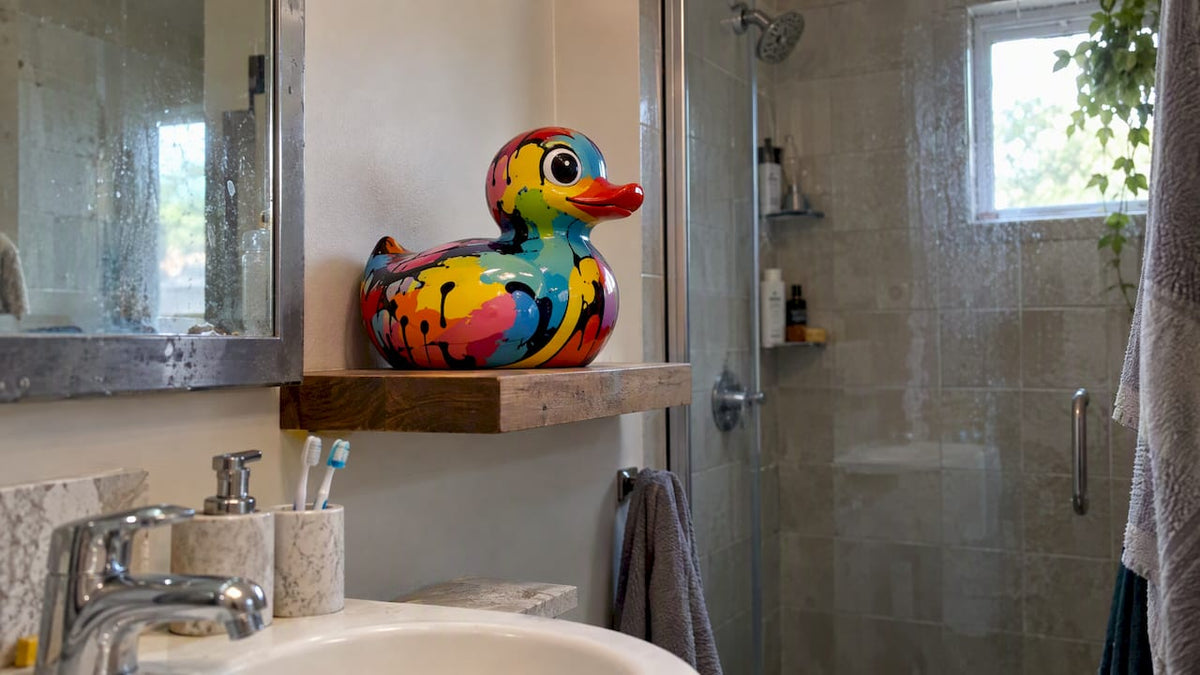
| Sculpture in metal, ceramic, glass or sealed polymer | Very good | No glazing needed, no paper or wood to swell |
| Framed print with acrylic glazing, metal or plastic frame, sealed back | Good, with inspection | Reduces exposure, does not eliminate risk |
| Canvas with a protective coating | Fair | The coating helps, but stretcher bars and canvas still absorb moisture |
| Original works on paper, antiques, heirloom photos | Avoid | Irreplaceable and highly sensitive to humidity swings |
| Unsealed wood, driftwood, fabric | Risky | Moves with humidity, can mold |
The Metropolitan Museum of Art’s care guidance explains the logic. Metals can corrode in humid, contaminated environments, while organic components react dimensionally to changing relative humidity. Mixed-media pieces are harder than single-material ones because the weakest part decides how long the whole lasts.
Why sculpture is a smart bathroom choice
A sculpture has no glass to fog and no paper to cockle. Architectural Digest recommends sculpture that does not need glazing for exactly this reason. A sealed, nonporous piece on a shelf or ledge can also be lifted down for cleaning. If you like the idea of three-dimensional pieces in general, our note on why sculptural art beats flat wall decor explains what depth adds to a room.
How to frame art for a bathroom
If you want a framed piece, specify it like a small engineering project. House Beautiful’s designer roundup points to aluminum-mounted prints, acrylic glazing, sealed backing, ceramic pieces and metal or plastic frames as better suited than unprotected paper, wood or glass-heavy framing.
Here is the checklist:
- Use a replaceable image. A reproduction, print or photograph you can reorder. Keep the one-of-a-kind work in the hallway or bedroom.
- Choose acrylic over ordinary glass. It is lighter and does not shatter into shards if a hook fails over a tub or sink.
- Pick a metal or high-quality plastic frame. Raw wood frames can swell and warp.
- Seal the back. It slows the exchange of moisture with the room.
- Add spacers or bumpers so air can move behind the frame and the piece does not sit flush against a damp wall.
- Inspect it. Look at the back from time to time for condensation, mold, loose tape or swollen matboard.
That last step matters because sealing is not magic. The GSA guidance cautions that if moisture does get inside a frame, a seal can slow the exchange while trapping the problem. Acrylic, a tolerant frame, a spacer and ventilation work together as a system. No single coating makes irreplaceable paper art bathroom-safe.
If you are also thinking about light damage, our guide for framers on UV protection glazing covers that side of glazing. For bathrooms, moisture is usually the larger worry.
Where to hang it
Placement is half the battle, and it costs nothing.
- Above the toilet. The classic spot. It is out of the shower path and usually the driest large wall.
- Beside the mirror. Good for a small piece or a pair.
- Above a towel bar. Works if the bar is not directly across from the shower.
- A dry blank wall. Pick the wall furthest from the tub or shower.
Avoid the splash path of the shower, the wall behind a tub faucet, and any wall where a plumbing leak could reach. Also avoid exterior walls with condensation problems and walls that share a pipe chase. If you are mounting something heavy, use proper anchors. Our guide on hanging heavy art like a museum covers how to read the weight and wall before you drill. For living areas, see our guide to art for grey walls.
Ventilation is part of the art plan
The EPA recommends using a ventilation fan to control bathroom moisture. In practice that means running it during the shower and for a while afterward, and wiping or drying wet surfaces promptly. A fan that works protects the art indirectly by lowering the moisture load on every surface in the room. A powder room with a window and a small fan is a gentler home for art than a windowless bathroom with a weak fan.
Glow and blacklight art in a bathroom
This is the part ordinary bathroom guides leave out. UV-reactive art adds two questions: what the piece is made of, and how it is lit.
The piece. Glowing under blacklight says nothing about water resistance. The pigment, the sealing coating, the adhesive and any embedded electronics all need to tolerate humidity. A nonporous sculpture with sealed surfaces is far more forgiving than a mixed-media panel with wood, paper or fabric in it.

The light. Blacklight fixtures need electricity, and electricity and splash zones do not mix. Keep fixtures and connections out of splash areas, use appropriately rated fixtures, and have a qualified electrician do the installation. The 2023 National Electrical Code changes summary from the U.S. Consumer Product Safety Commission is a useful starting point for what an electrician will check. Local code and your electrician’s judgment decide the details.
Two of our own guides go deeper on these points: UV art safety for artists and collectors and a five-step blacklight art lighting plan. Our blacklight art care guide covers lighting habits that protect the glow.
Our perspective
I make handcrafted pop art sculpture, and most of my work is UV reactive, so the question comes up whether a piece can live in a bathroom. Our honest answer is: it depends on the piece and the room, and we would rather tell you that than sell you a promise.
The visible face is rarely the question. The question is the whole build: what is under the pigment, what holds it together, and how it will be lit. A sculpture is generally a more forgiving bathroom guest than a flat work, because there is no glazing to fog and no paper to move. A one-of-a-kind original is a different matter. Even if it could survive, we would hang it where you can enjoy it for decades, and put something replaceable in the room where the shower runs.
Our advice to collectors and designers: decide the environment first, then the piece. Tell the artist about the plumbing, the fan, the distance to the shower and whether you plan to add blacklight. Those four facts change what we would recommend, and a good artist should ask for them.
For public or commercial restrooms, the checklist grows: cleaning chemicals, mounting loads, access for inspection and who is responsible for maintenance. Our guide on contract terms for weatherproof glow art lists what commissioners should put in writing.
— Facundo
Bringing a glow piece into your bathroom or powder room
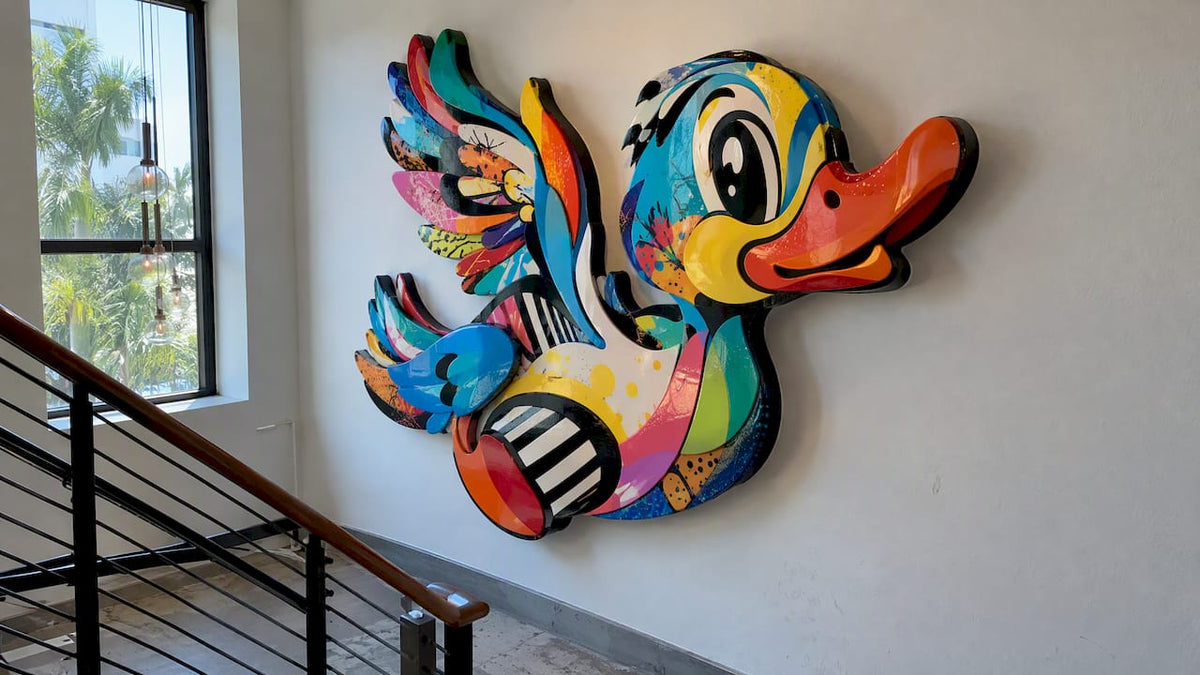
If you want pop art with a hidden glow in a room like this, we can talk through the setting first. Browse our sculpture collection or the UV/Glow Art collection, or ask about a custom glow piece made for your space, including a rubber duck theme if that suits a bathroom. Tell us about the room, and we will say plainly what we think it can handle. Our wall art is a better fit for dry walls and living areas.
For a powder room or narrow hall, see our small space sculpture guide. For a piece made for a specific wall, see our custom wall sculpture guide. To ask about a custom piece, use our commissions page.
A quick plan before you buy
- Rate the bathroom. Windowless, weak fan and daily hot showers is the toughest case. A powder room with a window is the easiest.
- Choose the wall. Pick the driest one, away from the spray and from plumbing.
- Pick nonporous first. Sculpture, ceramic, aluminum or a sealed piece. Use acrylic-glazed framing only if you want a flat work.
- Keep originals elsewhere. Put works on paper and heirloom photos in a drier room and use a reproduction here.
- Plan the light. If you want blacklight, have a professional place and wire it outside splash zones.
- Check it twice a year. Look at the back and edges for moisture, mold or loose tape, and move the piece if anything shows.
FAQ
Can you put art in a bathroom?
Yes, if you choose carefully. Nonporous work such as aluminum-mounted prints, ceramic, sealed sculpture and acrylic-glazed frames suits the room. Keep irreplaceable originals and works on paper in drier spaces, and hang everything away from the shower spray.
What art is safe for a bathroom?
Pieces made of metal, ceramic, porcelain, glass or sealed polymer are the most forgiving. Framed prints can work with acrylic glazing, a metal or plastic frame and a sealed back. These choices reduce risk but do not remove it, so inspect the piece from time to time.
How do you make art safe for a bathroom?
Start with the room: use the exhaust fan during and after showers and fix any leaks. Then use a replaceable image, a sealed frame with acrylic, and a dry wall. Check the back of the frame for moisture now and then.
Is glow-in-the-dark or blacklight art bathroom safe?
Not automatically. Glowing under UV says nothing about moisture tolerance. Ask the artist what the pigments, coatings and adhesives can handle, keep lighting and wiring out of splash zones, and have a qualified electrician install any fixtures.
Sources
- U.S. EPA: Interactive Tour of the Indoor Air Quality Demo House
- U.S. General Services Administration: Care and Maintenance of fine art collections
- The Metropolitan Museum of Art: The Care and Handling of Art Objects (2019)
- U.S. CPSC: 2023 National Electrical Code Changes