UV Art Safety for Artists and Collectors: 50 µW/L, Safe Handling
The most effective way to prevent UV damage is to combine measured UV-filtering glazing or a final UVLS varnish with controlled light intensity and duration, then follow proper ventilation and PPE rules when handling UV inks or resins. Museum light standards measured in µwatts per lumen and OSHA safety data on acrylate monomers both back up why these three controls matter most.
TL;DR:
- Ask for glazing or film rated at 50 µwatts per lumen or lower, then verify samples with a UV meter under the actual display lighting.
- Keep very light sensitive works around 50 lux, measure at the artwork with protection installed, and retest films because performance fades before visible change.
- Apply UVLS varnish only as the top coat; test adhesion and appearance first, and choose removable varnish for unglazed work that may need future cleaning.
- Ventilate UV resin work outdoors or in an enclosed curing station; add an organic vapor respirator if needed, and wear nitrile gloves and UV rated eye protection.
Table of Contents
- Glazing, acrylics and window films: what they filter and how to test them
- Varnishes and UVLS coatings: correct use and compatibility testing
- Studio safety for UV inks and UV-curing resins
- How to measure and plan display exposure
- Quick display and storage rules for handlers and collectors
- What responsible studios owe buyers of UV-reactive art
- See our UV-reactive originals and commission options
- FAQ
- Sources
Glazing, acrylics and window films: what they filter and how to test them
UV-filtering glass offers strong clarity and holds up well in high-traffic spaces, but it is heavier and more prone to shattering than acrylic. UV-filtering acrylic is lighter and safer for shipping or large-scale installations, though it scratches more easily and can show more surface glare. Either works, depending on whether the priority is durability, weight, or optical clarity.
Museum testing protocols measure in µwatts per lumen, since that figure accounts for the full UV range reaching the artwork.
A few steps make glazing choices verifiable rather than a guess:
- Ask for a measured rating of 50 µwatts per lumen or lower whenever possible.
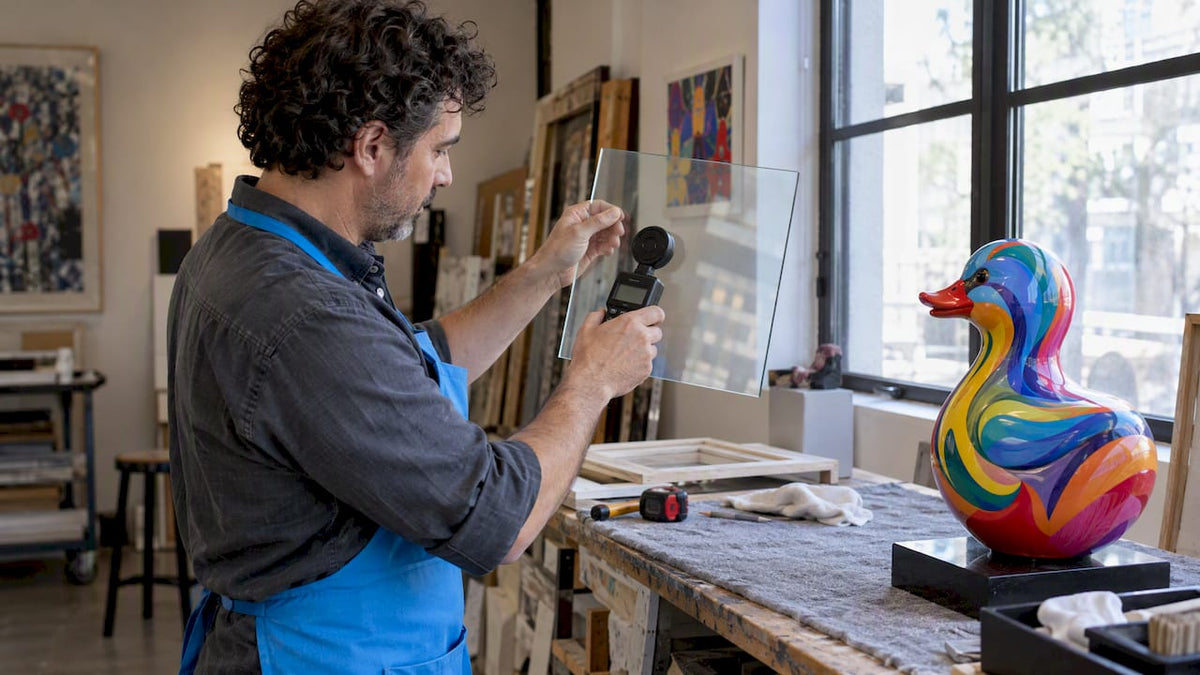
- Test film or glazing samples with a UV meter before committing to a full installation.
- Plan on replacing films after their expected service life, since UV-blocking performance degrades over time.
For collectors who want a deeper look at glazing specifications before working with a framer, our glazing protection guide breaks down what to request.
Pro Tip: Test glazing samples at different times of day if the display area gets direct sun, since UV intensity through a window can shift significantly between morning and afternoon.
Varnishes and UVLS coatings: correct use and compatibility testing
UV-stabilizing varnishes only work when applied correctly. GOLDEN’s guidance on UVLS gel topcoats is clear on this: the UV Light Filters and Stabilizers need to sit as the topmost layer. Mixing UVLS additives into underlying paint layers significantly reduces their protective effect, a mistake many studios make without realizing it.
For unframed or unglazed work, a removable varnish as the final coat is the safer long-term choice, since it allows future cleaning or re-coating without disturbing the paint underneath. A permanent coating may suit commercial or high-traffic pieces where removability matters less.
Before applying any topcoat to an important work:
- Test on a sample or inconspicuous area for adhesion and visual change.
- Check water sensitivity, since some acrylic surfaces react differently than oils.
- Label the piece with care instructions and note what was applied, for future conservation reference.
Studio safety for UV inks and UV-curing resins
Handling liquid UV materials safely starts with engineering controls, not personal gear. Set up exhaust ventilation to the outside or work inside a dedicated curing cabinet before reaching for a respirator or gloves.
- Ventilate first: exhaust fumes outside or use an enclosed curing station rather than relying on an open window.
- Add a NIOSH-approved respirator with organic-vapor cartridges when ventilation alone can’t clear fumes fast enough.
- Wear UV-rated eye protection and nitrile gloves any time you’re mixing, pouring, or curing resin.
- Cure resin under a proper UV lamp in a controlled enclosure, never in direct sunlight, and let pieces cool before opening the cabinet.
- Avoid sanding or drilling partially cured resin, since that releases monomer-laden dust that shouldn’t be inhaled.
Even “low-odor” UV resins can release measurable VOCs in small spaces, according to a 2025 NIOSH study cited in resin safety guidance, which is why ventilation matters even when a product doesn’t smell strong.
Safety data sheets for methyl methacrylate and related acrylate monomers call for eyewash stations nearby, proper grounding when transferring liquid monomer, and awareness that prolonged skin or lung exposure can cause sensitization over time.

How to measure and plan display exposure
Standards only help if they translate into something you can actually measure at home or in a gallery. Conservation guidance points to specific numbers worth targeting:
- Keep UV proportion at or below 50 µwatts per lumen wherever glazing or film protection is in place.
- Limit very light-sensitive works to around 50 lux, a figure commonly referenced in museum collection care.
- Take meter readings at the artwork surface itself, with the glazing or film in place, under the actual light source the piece will face.
- Retest films and coatings periodically, since UV-blocking performance fades well before the material looks any different.
- Replace films after their expected service life, and keep a simple log of cumulative exposure to plan rotation schedules.
Quick display and storage rules for handlers and collectors
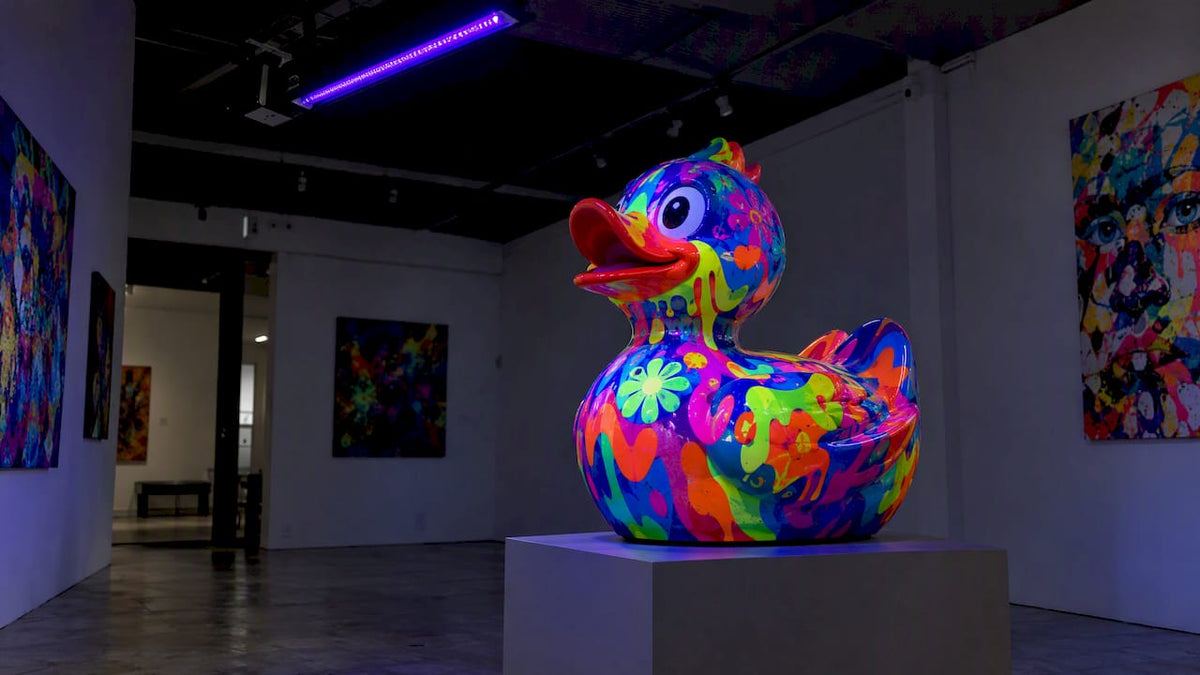
A few consistent habits do more than any single product upgrade. Keep light-sensitive pieces dimly lit and rotate them out of display periodically rather than leaving them under constant exposure. Timers or motion sensors cut down on unnecessary runtime for both standard lighting and blacklight fixtures.
- Store sensitive works in cool, dark spaces with stable humidity, away from windows and heat sources.
- Never place light-sensitive pieces in direct sunlight, even briefly, since cumulative exposure adds up fast.
- Use timers or motion sensors on display lighting rather than leaving fixtures on continuously.
- Watch for early fading or color shift on high-value works and act before damage progresses.
Mixed-media pieces, unstable modern materials, or any high-value work showing early fading are worth a conservator’s opinion before you try a fix yourself. For blacklight-specific display questions, our guide on blacklight damage and display practices covers the details that differ from standard UV exposure.
What responsible studios owe buyers of UV-reactive art
Working with UV-reactive pigments for years has shown that the glow effect means nothing if a buyer doesn’t know how to protect it. Studios that sell UV-reactive work should hand over clear care guidance at the point of sale: recommended lighting type, a maximum lux target, whether the piece is meant for blacklight exhibition or ambient display, and any handling notes for mixed materials like resin over wood or metal. Collectors deserve that information before they hang a piece, not after it starts fading.
— Facundo
See our UV-reactive originals and commission options
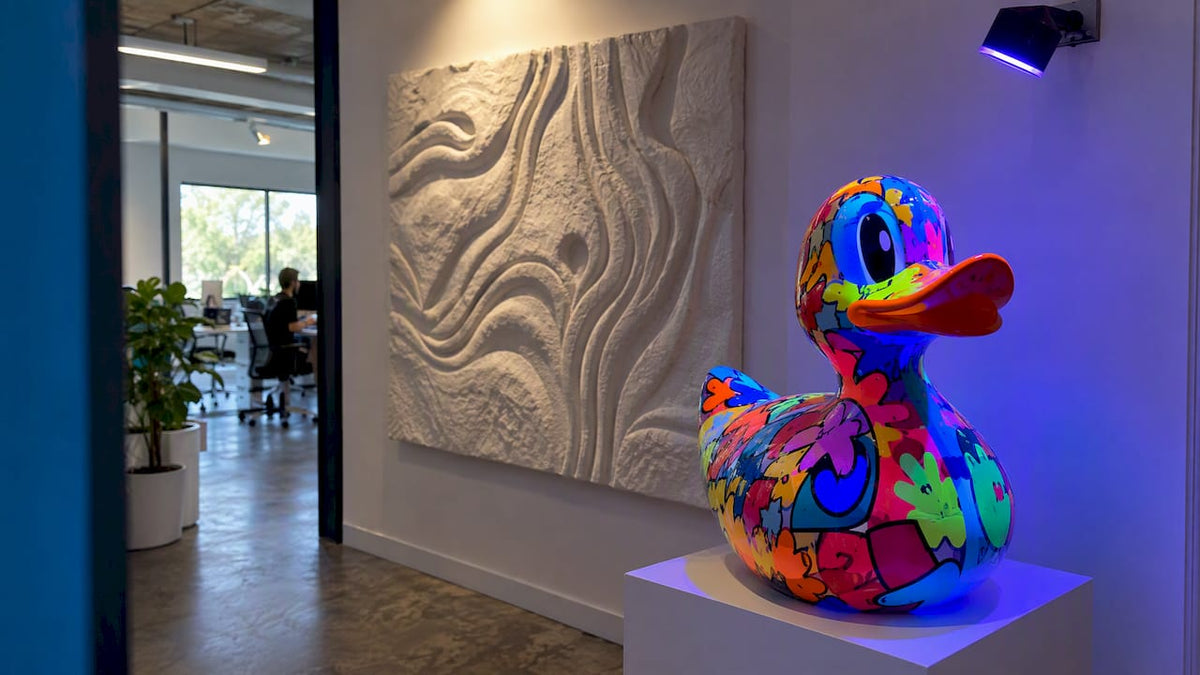
We create each piece by hand using UV-reactive pigments, so the glow you see under blacklight is part of the material itself, not a surface trick. Each original, wall piece, or sculpture in our UV/Glow Art collection comes with guidance on lighting and display so the color stays vivid for years, not months.

| What we offer | Where to look |
|---|---|
| Originals and wall art | Originals, Wall Art |
| Sculpture and glow art | Sculpture, UV/Glow Art |
| Custom commissions | Custom glow piece |
If you’re drawn to how UV-reactive pigments compare to naturally fluorescent minerals, this overview of UV mineral fluorescence is a useful companion read. When you’re ready to commission a piece built around your space or collection, start a commission request and we’ll walk you through lighting and care details specific to your piece.
FAQ
How much UV exposure is safe?
There’s no single universal number, but museum guidance targets UV proportion at or below 50 µwatts per lumen for protected display. Very light-sensitive works are often kept to around 50 lux of visible light as well, with rotation schedules reducing cumulative exposure.
How do I protect a painting from sunlight?
The most reliable combination is UV-filtering glazing or a final UVLS varnish paired with placement away from direct sun exposure. Testing glazing or film with a UV meter before installation, as conservation guidance recommends, confirms the protection is actually working rather than assumed from packaging claims.
What is the 70/30 rule in art?
This term isn’t a recognized conservation or museum lighting standard, so definitions vary depending on the source. If you’ve seen it referenced for composition or display balance, it’s worth confirming the original context before applying it to UV safety decisions.
Which is better for UV filtering, glass or acrylic?
Both can filter UV effectively when manufactured for that purpose, but they serve different needs. UV-filtering glass offers better scratch resistance and clarity for stationary display, while UV-filtering acrylic is lighter and more shatter-resistant, making it a common choice for shipping or large installations.
Is UV-reactive art safe to display long-term?
Yes, when the piece uses stable UV-reactive pigments and is displayed following the lighting guidance provided at purchase. Keeping blacklight exposure controlled and avoiding constant runtime helps preserve the glow effect over years rather than months.
Sources
Not every light source carries the same risk. Direct sunlight delivers the highest UV load, followed by UV transmitted through untreated glass windows, then standard gallery or home lighting, and finally dedicated blacklight (UV-A) fixtures used to activate glow pigments. Each source needs a different response.
Some materials break down fast under UV exposure, while others barely react:
- Gel Topcoat w/UVLS | Golden Artist Colors
- Conserve O Gram: Choosing UV-Filtering Window Films (NPS)
- Methyl methacrylate SDS / OSHA resource
- Ultimate UV Resin Safety Guide (2025) | Resin Art Basics
- Preserving the Present — Smithsonian Asian Art Museum
Two measurements make the rest of this guide useful. Lux measures visible light intensity, the brightness you can see. Micro-watts per lumen measures the proportion of damaging UV riding along with that visible light, which is the number conservation guidance actually relies on when evaluating glazing and films.