Gallery Installation Requirements: A Pre-Install Checklist
Most galleries and exhibition spaces ask for the same things: an approved plan weeks ahead, clear exits and walkways, secure hardware, trained handling, and a space returned to its original condition. The exact numbers change from venue to venue, so treat the figures below as real examples from US institutions, then get your host’s own written rules before you load in.
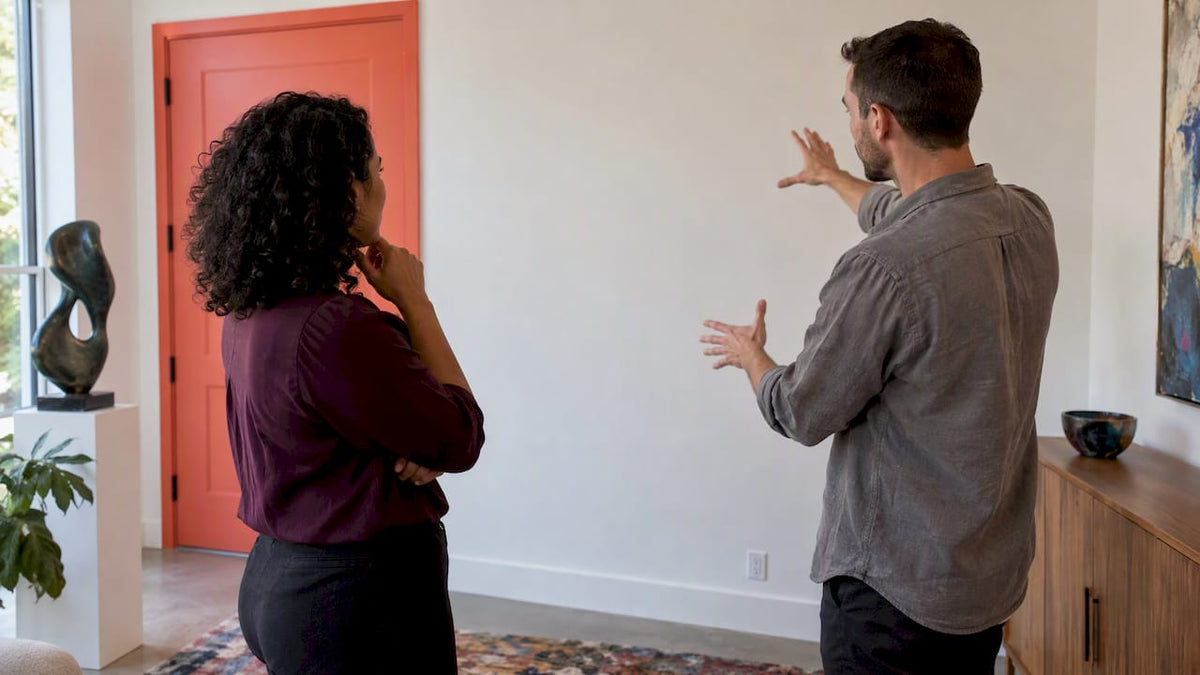
This guide walks through what to prepare, in the order a registrar, curator or facilities manager will ask for it. It covers wall work, sculpture and immersive pieces, plus the approvals condo residents need before hanging art at home.
TL;DR
- Submit your plan early. One college gallery asks for floor plans or written proposals at least four weeks before the show, and another requires a walkthrough a month ahead.
- Keep exits, aisles and sprinkler heads clear. Published campus rules set specific clearances, such as 36 inches below a sprinkler head and 80 inches of headroom for suspended work in walkways.
- Expect rules on hardware: many venues ban adhesives, hammering and drilling unless the gallery approves them.
- Plan the de-installation and wall repair before the install, because the owner usually pays for both.
- In a condo, get written association consent before showing art where the common areas or exterior can see it.
Table of Contents
- Start with the approval timeline
- Check the space itself
- Fire, egress and accessibility clearances
- Hanging two-dimensional work
- Sculpture, large-scale and immersive pieces
- Handling, shipping and insurance
- Plan de-installation before you install
- Condo art rules
- Perspective
- Work with us on your installation
- FAQ
- Sources
Start with the approval timeline
The single most common requirement is advance review. CCA’s General Exhibition Handbook asks for a floor plan or written proposal at least four weeks before the exhibition, and tells exhibitors to consider fire, health and safety codes. It also says the installation window is for bringing in and installing work, so preparation has to be finished beforehand.
Cornell AAP’s gallery guidelines go further: installation plans must be approved before anything is hung, and a walkthrough is required at least one month prior. OTIS College’s guide sets a shorter floor, an approved Exhibition & Facilities Use Contract at least 48 hours before installation, and says installations involving specialized wall mounting, suspension or electrical connection face a safety inspection.
What to send with your request:
- A dimensioned floor plan showing each piece, its footprint and the walking space around it.
- Weight, mounting method and hardware for every wall or ceiling piece.
- Power needs, if any, including blacklight or other lighting.
- Your install and removal dates, crew size and equipment.
- Labels, signage and any didactic text.
Respect the install window
Time limits are strict. CCA’s handbook says the exhibition must be fully installed, cleaned up and signed by the end of the window, and anything not fully installed will be removed. Build a schedule with a buffer, load in the heaviest items first and leave labels and cleanup for the last hours.
Check the space itself
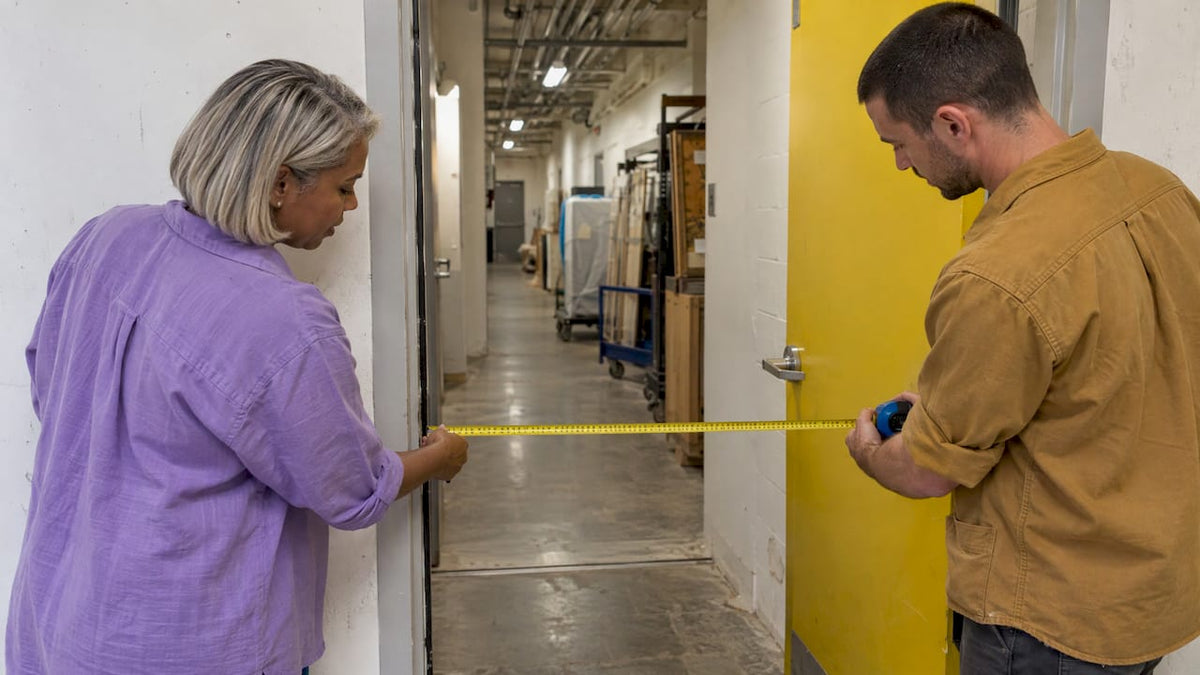
Before you design the layout, collect the facts about the room. Ask for the facilities report: loading access, elevator and doorway widths, ceiling heights, wall construction and floor load. A piece that fits the room but not the freight elevator is a failed install.
Also confirm the room is the right kind of space. The Smithsonian’s National Museum of American History preservation guidelines state that objects may not be displayed in lobbies, hallways, commercial spaces or multiple-use spaces. They belong in limited-access galleries dedicated to exhibition. That is a museum standard, but it shows why a lobby or shared corridor often needs a separate approval.
Fire, egress and accessibility clearances
This is where installs most often get stopped. Published rules from US institutions are consistent on the principles:
- Exits stay open. Portland State University’s guidelines say exits and egress paths must be unobstructed, uncovered, unlocked and unimpaired, unless a special events permit on the approved floor plan says otherwise.
- Sprinklers stay free. The same document says nothing may hang from sprinkler piping or heads, and nothing may sit closer than 36 inches below a sprinkler head.
- Fire routes are protected. OTIS prohibits blocking fire exits, escape paths, fire-rated corridors, aisles, doors and stairwells.
- Walkways are accessible. CCA lists ADA floor clearance of 32 inches wide by 48 inches deep and says components may not obstruct pathways.
- Headroom and projections. OTIS requires ceiling-suspended work in foot-traffic areas to hang at least 80 inches above the ground and limits projections over walking surfaces to 4 inches. It also calls for three-foot-wide aisles and doorways.
These are institutional policies, not a universal code. Your local building and fire authority sets the binding rules, so ask the venue which codes apply. For public sculpture the accessibility rules are deeper, and our ADA guide for public sculptures goes through them.
Hanging two-dimensional work
Wall pieces are the simplest to install and the easiest to get wrong. Start with the venue’s hardware rules. Cornell prohibits adhesives of any kind, including tape, foam mounting squares and glue, and also prohibits painting, hammering or drilling without express permission. Never assume you can put a nail in a gallery wall.
For the work itself, Arts WA’s framing guide is a useful model:
- Smaller works need security hardware that secures the frame to the wall. Its example is two security brackets at the top of the strainer and a bracket at the bottom for a t-screw, for works typically under 30 inches wide and not unusually heavy.
- Directly hinging or taping artwork to a backing board is a last resort. Corners, edge strips or mounting strips are preferred in most situations.
Heavier pieces need wall-appropriate anchors and a plan for the stud or backing behind the wall. We cover weights, anchors and French cleats in hanging heavy art like a museum.
Before a piece goes on the wall, wipe down glazing, frames and any display accessories so you are not leaving fingerprints and dust on the opening night. A display cleaning checklist gives a useful routine for keeping display surfaces presentable.
Sculpture, large-scale and immersive pieces
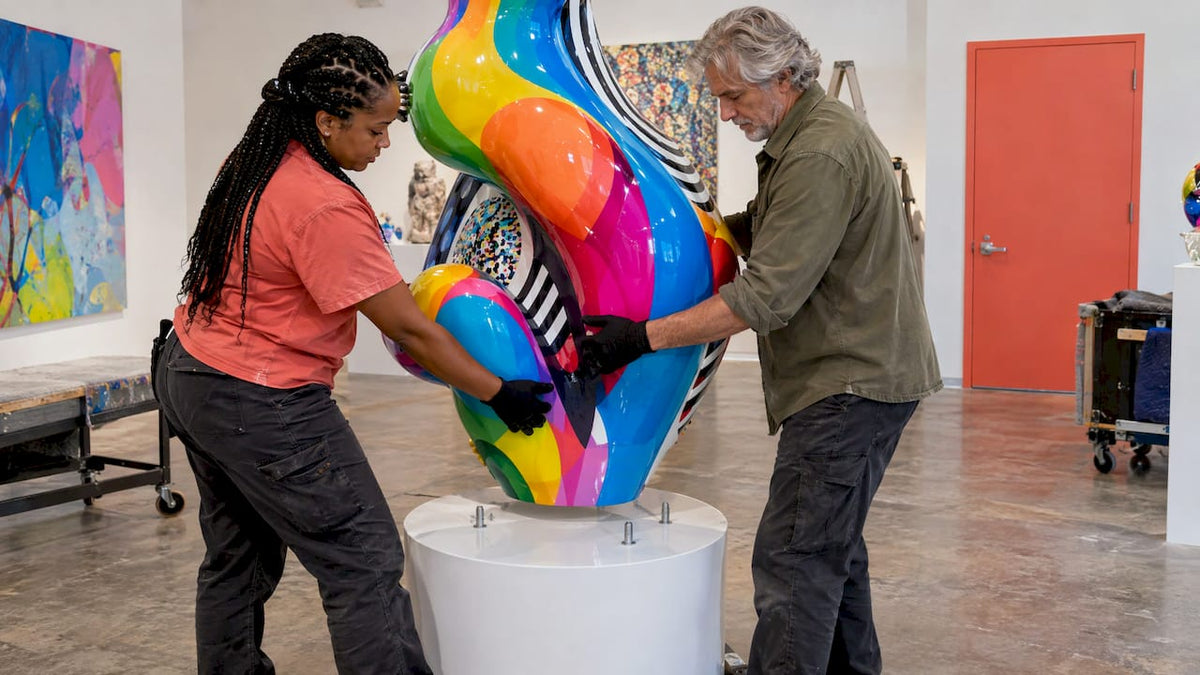
Three-dimensional work adds weight, balance, floor load and sometimes power. The Broad’s conservation toolbox suggests keeping an artwork upright, the way it was designed to carry its own weight, and laying a top-heavy object in a more stable position where possible. Mounts and bases should be designed around that.

University policy shows how reviewers think about anything freestanding or hung. Berkeley’s policy on indoor art installations requires compliance with seismic, fire and life-safety codes, no hazard to occupants or building structure, proper support for anything hung from a wall or ceiling, and consultation with the campus Fire Marshal for freestanding work so egress impact can be evaluated.
What to prepare for immersive work
Immersive and light-based pieces raise extra questions. Plan these early:
- Power and lighting. Say what plugs in, how many outlets, and how cables run without creating trip hazards. Electrical connection is exactly the kind of thing OTIS subjects to inspection.
- Darkness and wayfinding. Blacklight rooms are dim, so egress routes and exit signs must stay visible and clear.
- Crowd flow. Check that the footprint leaves the aisle widths above.
- Staging. Large or modular works arrive in sections, so confirm access routes and the order of assembly. See our modular sculpture installation guide and our overview of displaying large-scale art installations.
If you are planning a whole immersive gallery, our curator’s guide to common mistakes is a good companion.
Handling, shipping and insurance
Who touches the work matters. The NMAH guidelines require that objects be unpacked, handled, installed and deinstalled only by experienced professional museum object handlers, and say trained conservators may be required for some collections as a loan condition. Even where the host is less formal, professional handlers protect your insurance position.
Berkeley’s policy states that artworks remain the property of the owner, that the owner pays for installation, maintenance, security, removal and repair of walls and other site property, and that the university is not responsible for loss or damage during the exhibition. In plain terms: arrange your own insurance and budget for the whole cycle.
Useful reading before the truck shows up:
- Crating requirements for collectors
- White glove delivery for collectors
- Shipping large sculptures safely
- The registrar checklist for art loans
Plan de-installation before you install
The exit is part of the contract. Cornell requires the gallery to be returned to its original condition and emptied by a set deadline (Friday at 2 p.m. unless otherwise specified). Berkeley requires funding to be secured before installation to repair or restore the site after removal, and advance approval from Facilities Services if the expected repair is more than minimal.
A simple de-installation plan:
- Photograph walls, floors and ceilings before you start, and again after you finish.
- Keep the original crates and packing materials on site or scheduled for return.
- List every anchor, bracket and cable so nothing is left behind.
- Book the handlers and the freight elevator for removal day, not only for load-in.
- Walk the room with the gallery manager and get sign-off in writing.
Condo art rules
Hanging art inside your own unit is usually your business. Showing art where the building can see it is different. Association documents tend to restrict anything visible from common areas or the exterior.
Two published examples show the pattern. The Versailles Condominiums rules say residents must not display or affix an advertisement, sign, artwork, notice or lettering within view of the common areas or building exterior without prior written consent of the Manager. The Hidden Creek condominium rules say no signs, advertisements or lettering may be exhibited or affixed outside a unit or on common elements without prior written consent of the Association.
These are individual associations’ rules, so yours may differ. Do this before buying or installing:
- Read your declaration, bylaws and rules, and note anything about windows, balconies, hallways and exterior walls.
- Ask the manager or board in writing, and keep the reply.
- Ask whether drilling into walls, ceilings or shared structure needs approval, and what the building’s work hours are.
- For a heavy piece, ask a licensed contractor to confirm what the wall can carry.
If the piece is going into a bathroom, humidity matters too, and our bathroom safe artwork guide covers what holds up.
Perspective
Every install we have worked through comes down to the same thing: the artwork should arrive to a room that is already ready for it. Pieces that glow under blacklight add a few questions that flat work never raises, such as where the light sits, how dark the room gets, and whether people can still read the exits.
Our work is handmade and original, with UV-reactive pigments that reveal hidden patterns and colors under blacklight. We design for that experience, and we would rather talk to your facilities team early than solve a problem at load-in. A clear plan, a clear path and the right handlers protect the work and the people viewing it.
Whether the setting is a private collection, a gallery, a hotel lobby or a public site, the best installs we have seen started with the venue’s rules on the table at the first conversation.
Facundo
Work with us on your installation
If you are placing a glowing piece in a home, gallery, commercial space or public site, we can plan around your venue’s requirements from the start. Explore UV and glow art, browse sculpture, or start a custom glow piece for your space.

For commissions for galleries, hotels, brands or public institutions, reach us through our commissions page with your venue details and timeline.
FAQ
How far ahead should I submit installation plans?
As early as the venue allows. Published examples include a floor plan or proposal at least four weeks before an exhibition at CCA, and a walkthrough at least one month prior at Cornell AAP. Ask your venue for its own deadline in writing.
Can I drill or use adhesive on gallery walls?
Only with permission. Cornell prohibits adhesives such as tape, foam squares and glue, and prohibits hammering or drilling without express permission. Ask the gallery manager what hardware is approved and who repairs the walls.
How much clearance do I need around a sculpture?
It depends on the venue and code. Published campus examples include three-foot-wide aisles, 32 by 48 inches of ADA floor clearance, and 36 inches below a sprinkler head. Confirm the figures with the venue and local fire authority.
Do I need a permit for an art installation?
Possibly. Work involving specialized wall mounting, suspension or electrical connection is subject to a safety inspection at some venues, and freestanding work may need fire marshal review. Ask the venue’s facilities manager which approvals apply.
Can I hang art on a condo balcony or in a hallway?
Only if your association agrees. Published condo rules require prior written consent for artwork visible from common areas or the exterior. Check your own rules and ask the manager or board in writing.
Sources
- CCA General Exhibition Handbook
- Cornell AAP Gallery Guidelines
- OTIS Artwork Installation/Presentation Guide
- NMAH General Preservation Guidelines
- Portland State University Art and Installation Safety Guidelines
- Arts WA Framing Guide
- The Broad DAP toolbox
- Berkeley Policy on Installations of Indoor Art
- Versailles Condominiums rules
- Hidden Creek condominium rules
- Showroom display cleaning checklist